Abai Village
아바이마을
They came from North Korea to Sokcho in 1950 to wait for the war to end. Their grandchildren are still waiting.


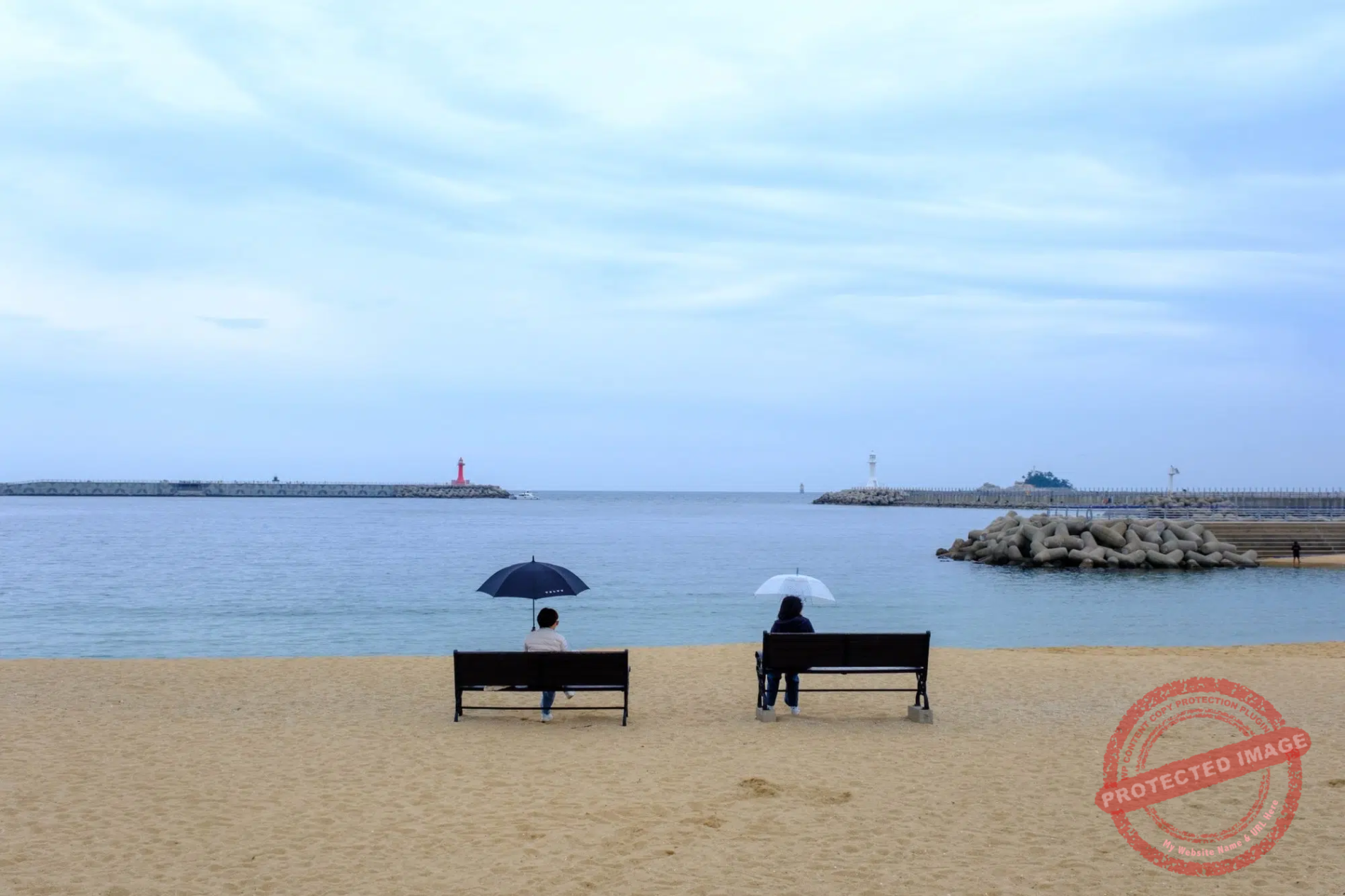
November rain over Abai Maeul’s beach in Sokcho (November 2024).
One of my favourite places in South Korea is the city of Sokcho, situated at the foot of the superb Seorak mountains and on the Sea of Japan – called the East Sea by the Koreans.
It may not be the most beautiful place in the country, but the town has a unique maritime atmosphere, both rugged and friendly, perhaps due in part to its turbulent history and the fact that the region was part of North Korea for five years. My favorite district in Sokcho and also one of the most endearing and moving places I’ve ever been to is Abai Village.
Sokcho fell in the northern part of the Korean Peninsula in 1945, at the end of the Japanese rule, when the country was split in two between the pro-Soviet north and the pro-American south at the stroke of a pen along the 38th parallel. The town was taken by the U.S.-led United Nations forces during the Korean War (1950-1953) and has remained South Korean ever since.
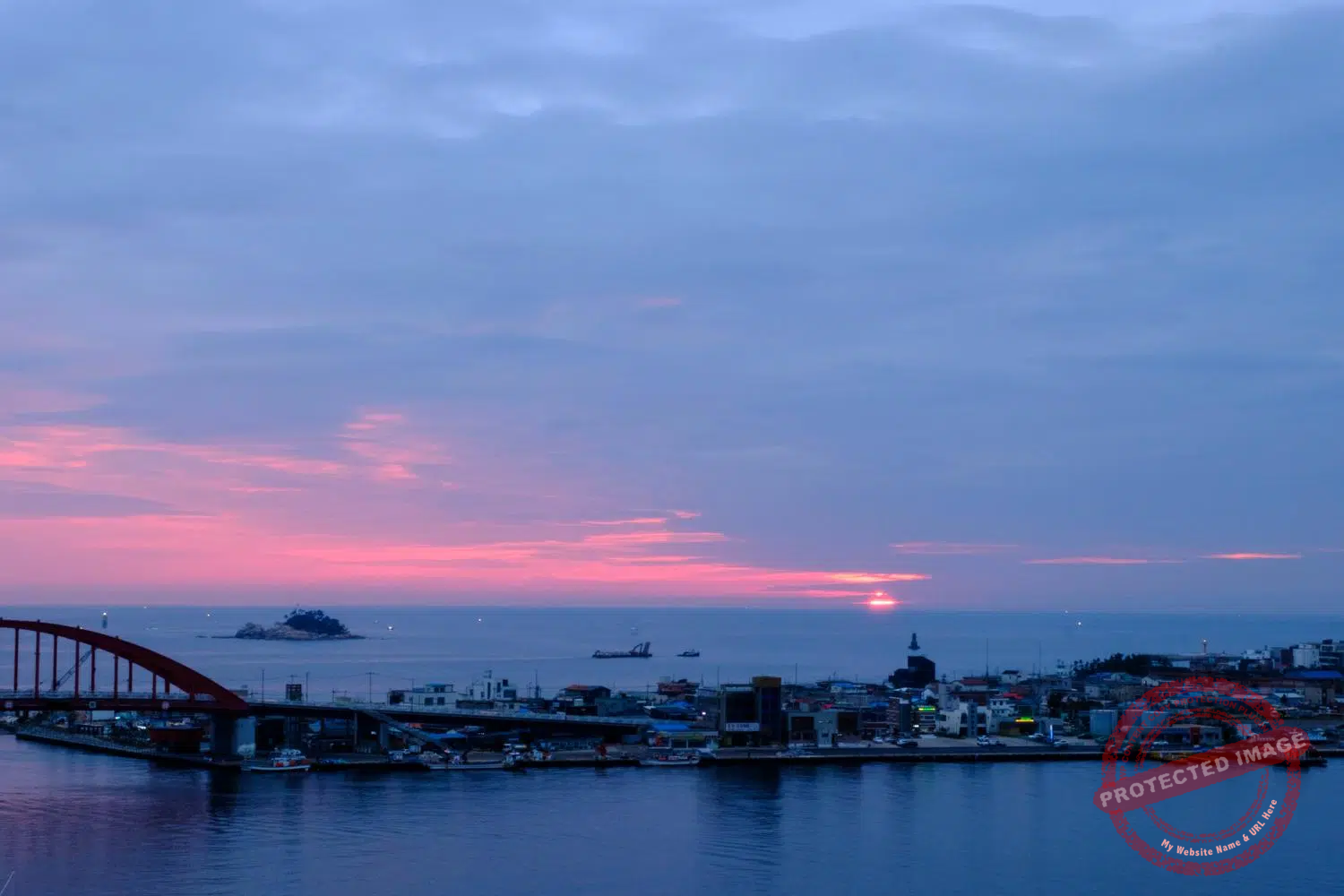
The southern half of Abai Village in Sokcho, at dawn (November 2024).
The creation of Abai Village is a direct consequence of the third phase of the Korean War, which began in November 1950.
At that moment, the North Korean People’s Army, on the brink of defeat while U.N. troops had conquered most of the north right up to the Chinese border, was suddenly reinforced by a gigantic force of Chinese volunteers, which changed the course of the war.
In December, the Chinese launched a massive ground assault in the rugged North Korean mountains against U.S., British and South Korean forces.
Surrounded and outnumbered, caught in sub-zero temperatures and heavy snow, more than 100,000 U.N. soldiers fought fiercely in the Chosin Reservoir area for 17 days, and managed to break the encirclement and to retreat towards the port city of Heungnam, about 80 kilometers to the south.
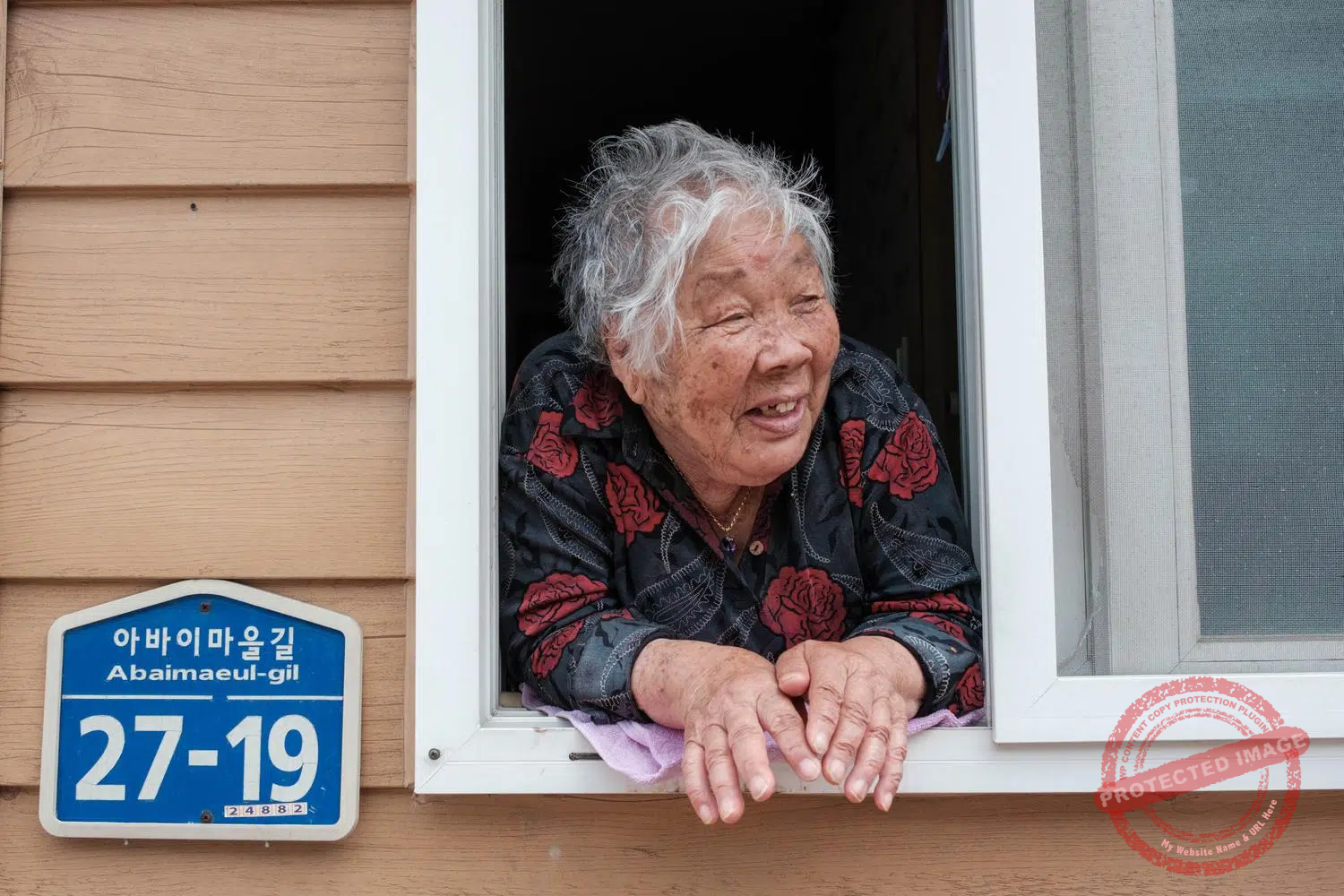
An Abai Village resident looks out of her window (May 2025).
In the introduction to a South Korean book published to mark the 70th anniversary of the evacuation of Heungnam, South Korea-based historian and U.S. Marine veteran Ned Forney, wrote what happened next:
“Tens of thousands of North Korean men, women, and children were also fleeing to the sea, desperately following the retreating US Marines and soldiers. With a few personal possessions, and in some cases, babies strapped to their backs. North Korean farmers, shopkeepers, doctors, factory workers, and students from villages and towns throughout the war-torn region, had left their families and were walking towards Heungnam. They would return in a few days, they told their loved ones.
“Having lived under Communist rule for five years, they had seen firsthand the North Korean Communist regime’s brutality and oppression. (..) The refugees making their way towards Heungnam feared for their lives and were hoping the Americans would save them.
“By December 10th, UN forces, with the Chinese in close pursuit, began arriving where US Navy and merchant ships were waiting to evacuate them for redeployment to the South. There was a problem, however: over 100,000 North Korean refugees were also in Heungnam, and the limited availability of military ships made it nearly impossible for the refugees to leave. (…)
“As military personnel and equipment withdrew throughout December, the refugees, waiting patiently in the brutal cold, grew increasingly fearful. With December 24th, the evacuation deadline, quickly approaching, it didn’t look promising. The Chinese were getting closer by the day.
“But after much deliberation (…), a decision was made: as many North Korean civilians as possible would be evacuated from Heungnam. On December 23, after days of loading ships with refugees in, under, and on top of vehicles, equipment and supplies, the last civilians to leave Heungnam boarded the SS Meredith Victory. In what would be called the ‘greatest rescue operation ever by a single ship’, the vessel, designed to carry less than sixty people, sailed from Heungnam with fourteen thousand passengers.
“The next day, Christmas Eve, the largest seaborne military evacuation of civilians in United States’s history was over. The ‘better angels of our nature’ had prevailed. 92,000 North Korean men, women and children were rescued at Heungnam, and today it is estimated that over a million descendants of these refugees live in freedom throughout the Republic of Korea, the United States, and countless countries around the world.”
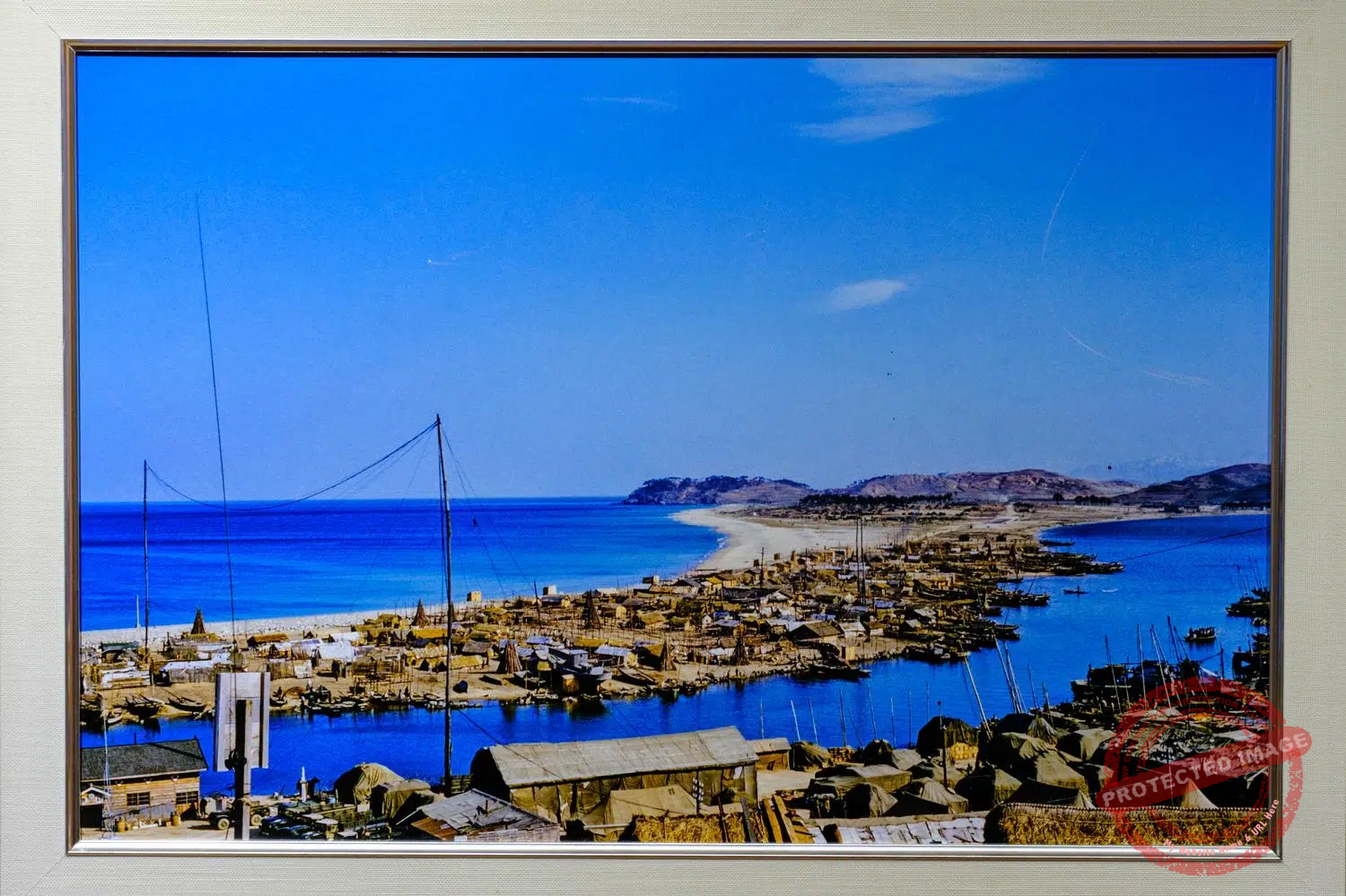
A picture on display in the Abai Village Community Center shows the settlement at its beginnings, probably in the 1950s.
It was at this time that about 6,000 of them resettled in Sokcho with the hope of returning home at the end of the war.
They settled on a muddy isthmus that was uninhabited at the time. On this undevelopable land, they built makeshift shacks, always with the idea that this was a temporary solution and that they would return home after the war.
Their community was soon nicknamed ‘Abai Village’ (Abai Maeul in Korean), abai (아바이) meaning ‘old man’ in the Hamgyeong province dialect, due to the high number of elderly people among them.
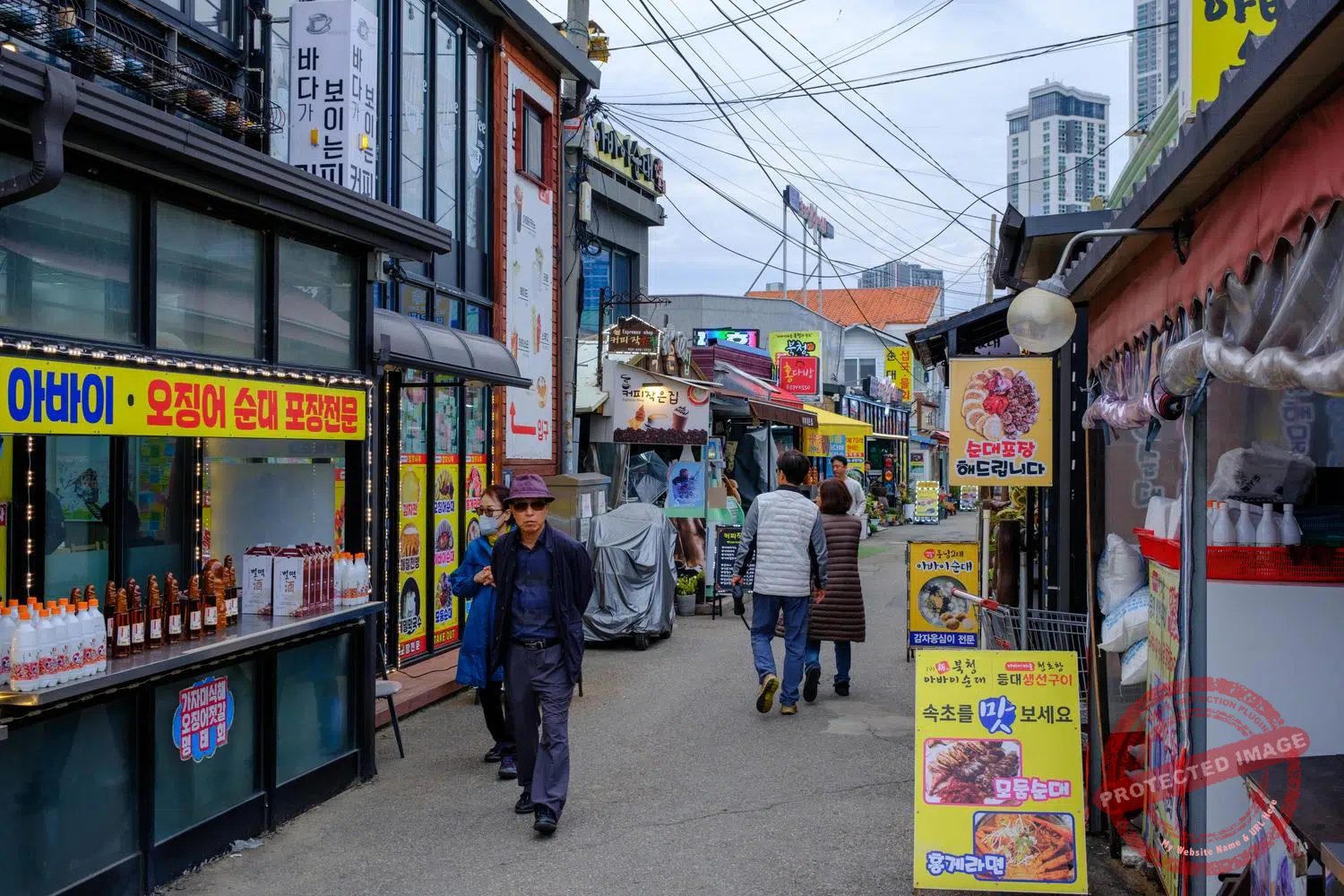
Abai Village’s main street, lined with numerous restaurants serving North Korean specialties (November 2024).
The settlers mainly subsisted on fishing. The village continues to be known today for its seafood restaurants serving hearty North Korean specialities such as Sikhae (fermented flounder), squid blood sausage, or Hamheung-style cold buckwheat noodles with spicy pollock.
At the end of the Korean War in 1953, the villagers found themselves unable to return to their region of origin in the North, and their move to Abai Village became permanent.
Barely a dozen of the village’s original inhabitants were still alive as of 2025. But still more than half of Abai Maeul’s current residents are descendants of North Korean refugees. They form a unique, close-knit community with a tragic history and a strong character, even though tourism and gentrification are gradually transforming their village.
The most common way to reach Abai Village from downtown Sokcho is to cross the 50-metre sound on board the Gaetbae (boat without engine), which has been in service since the 1950s.
The ferry is moved manually by the captain who, with the help of randomly designated passengers, pulls on a long rope linking the two banks of the channel during the five-minute crossing. For decades, this raft was the village’s main lifeline for supplies. It’s still widely used today, not only by tourists but also by residents, as it’s the easiest way to get to and from the city center on foot or by bike.
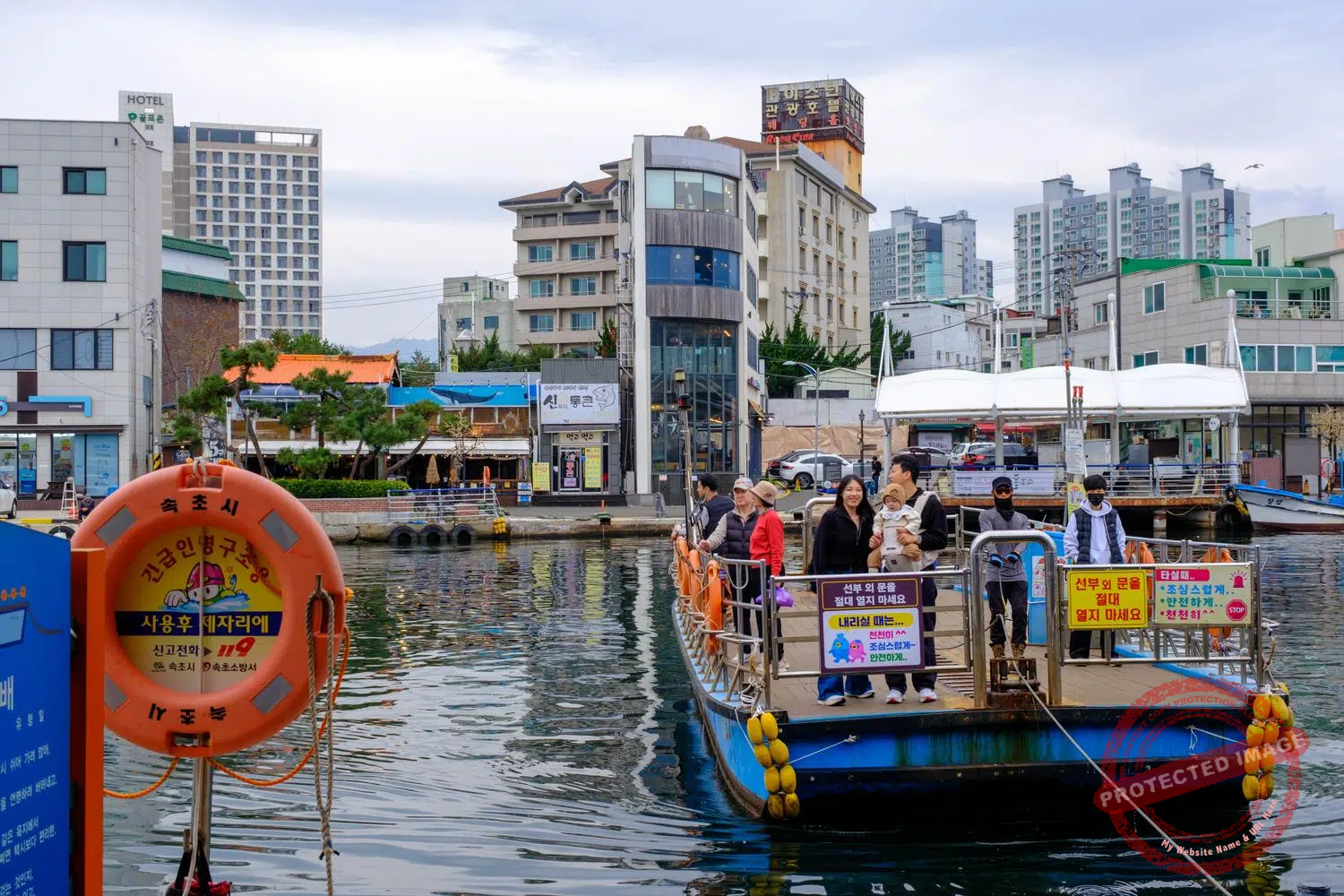
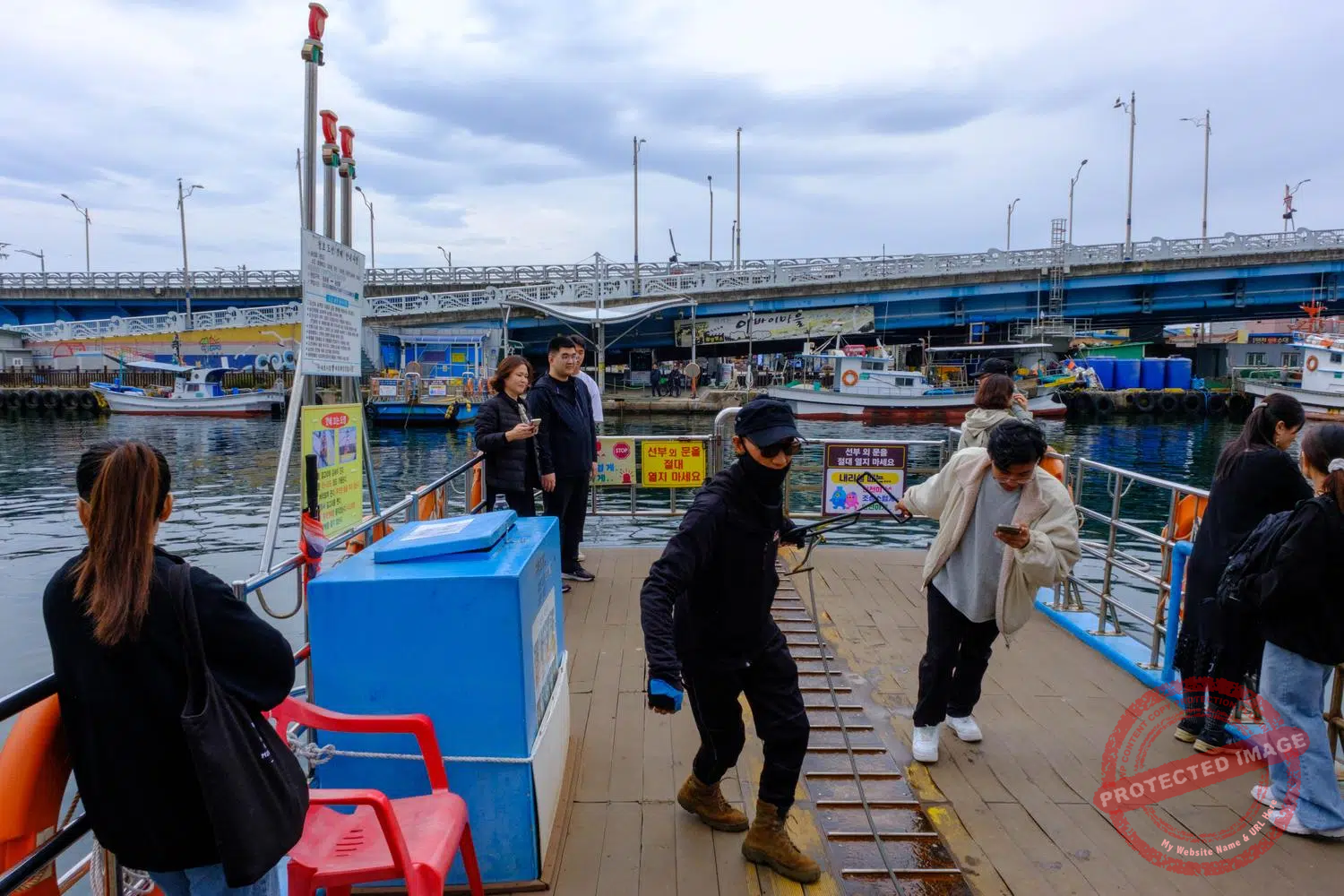
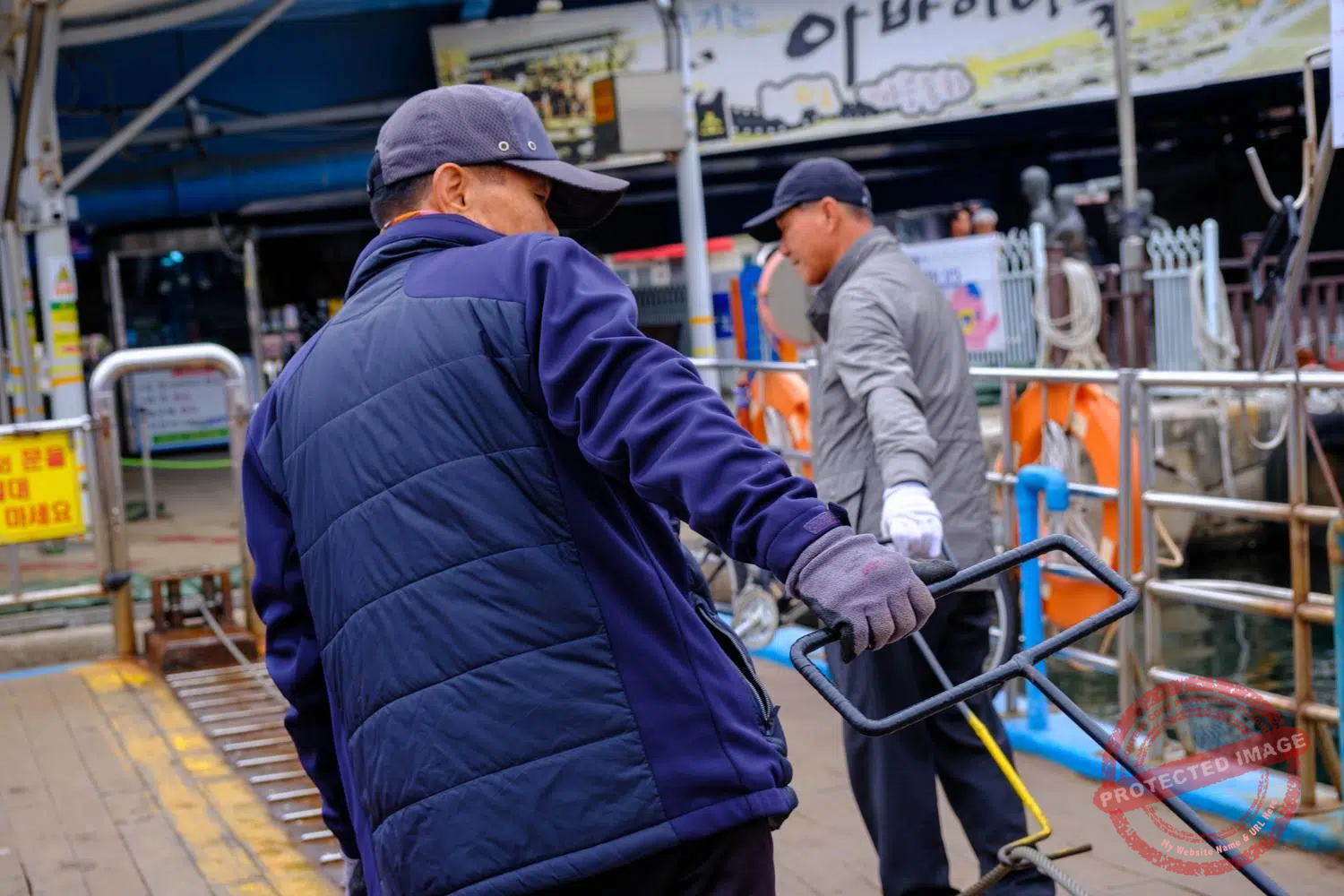
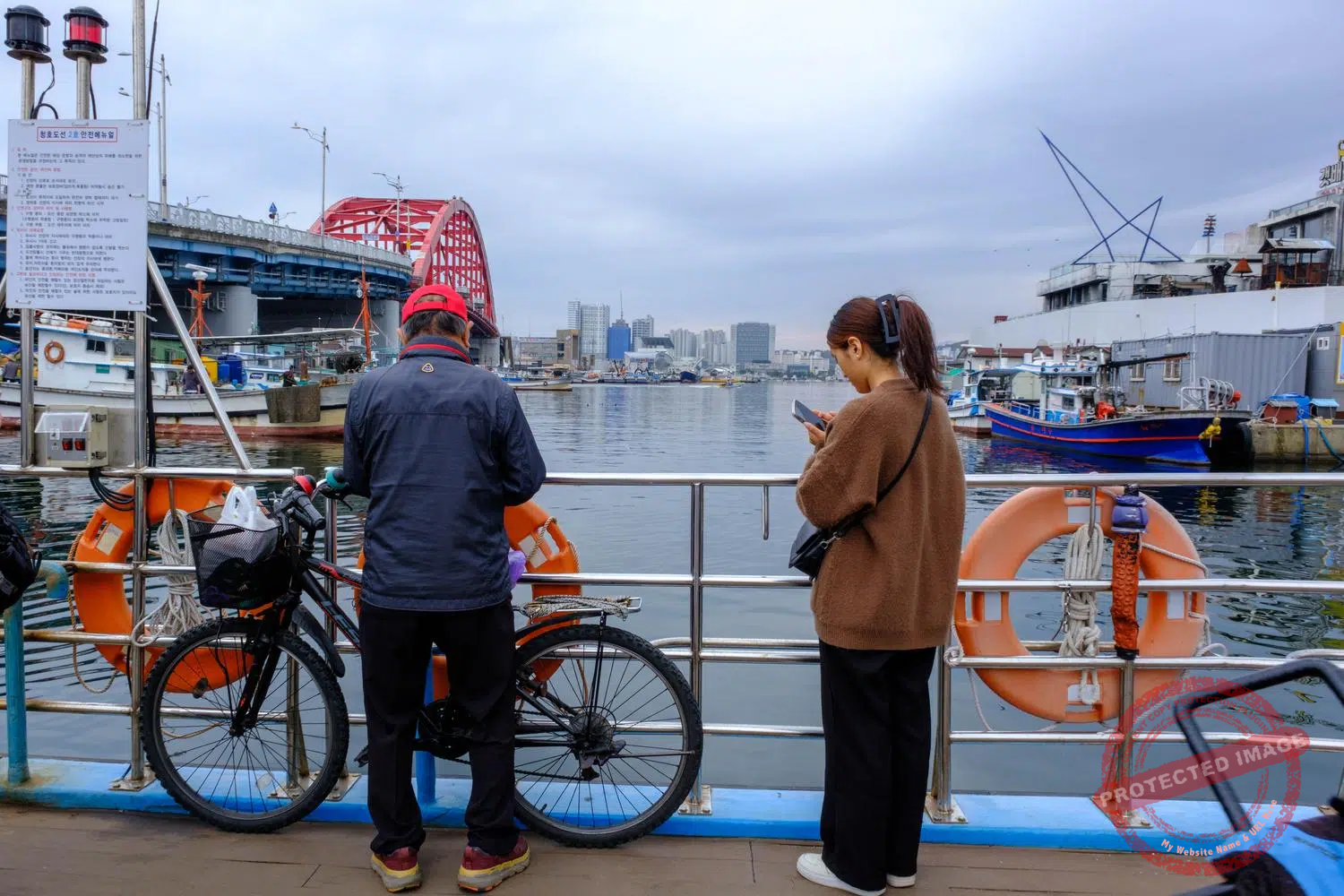
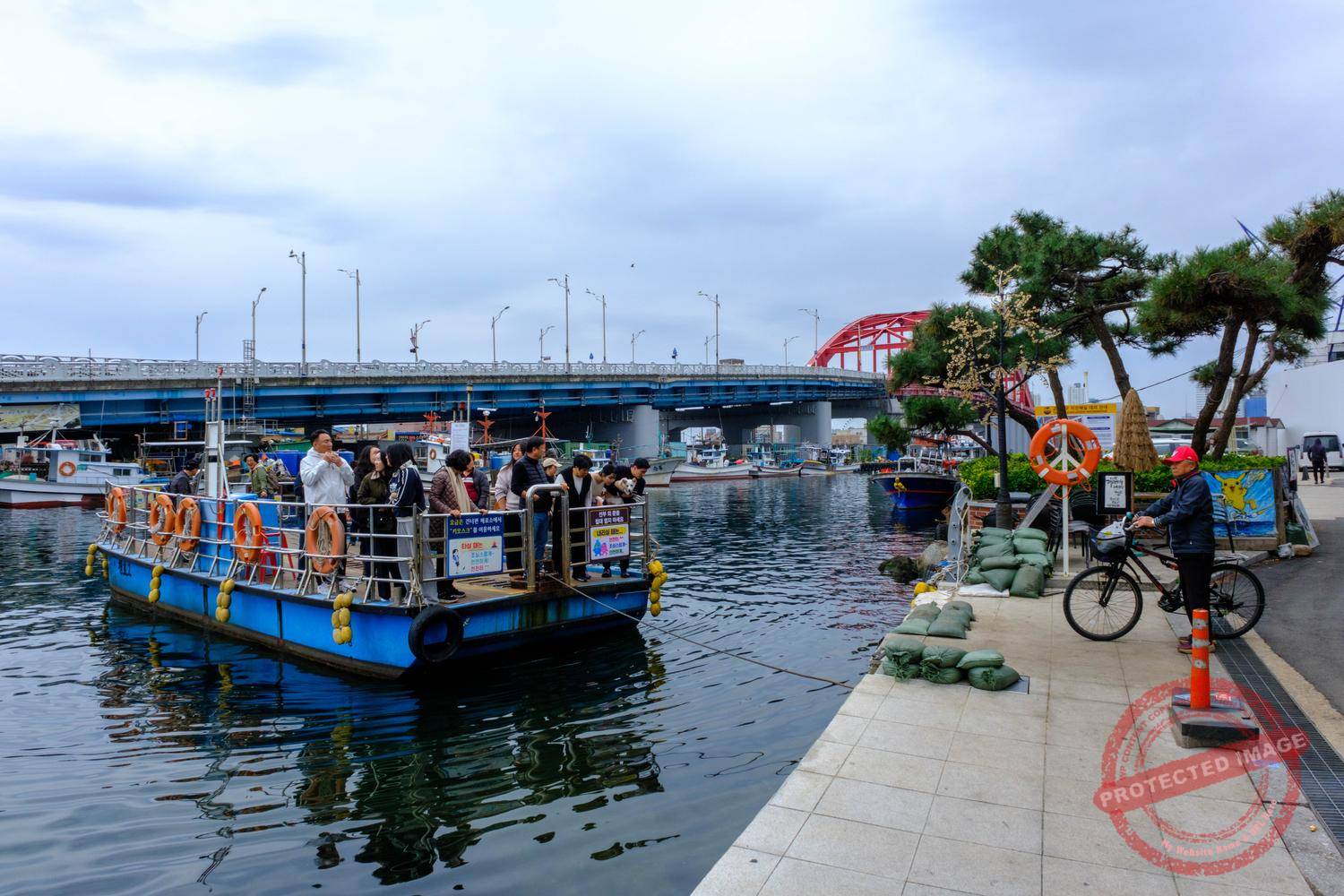
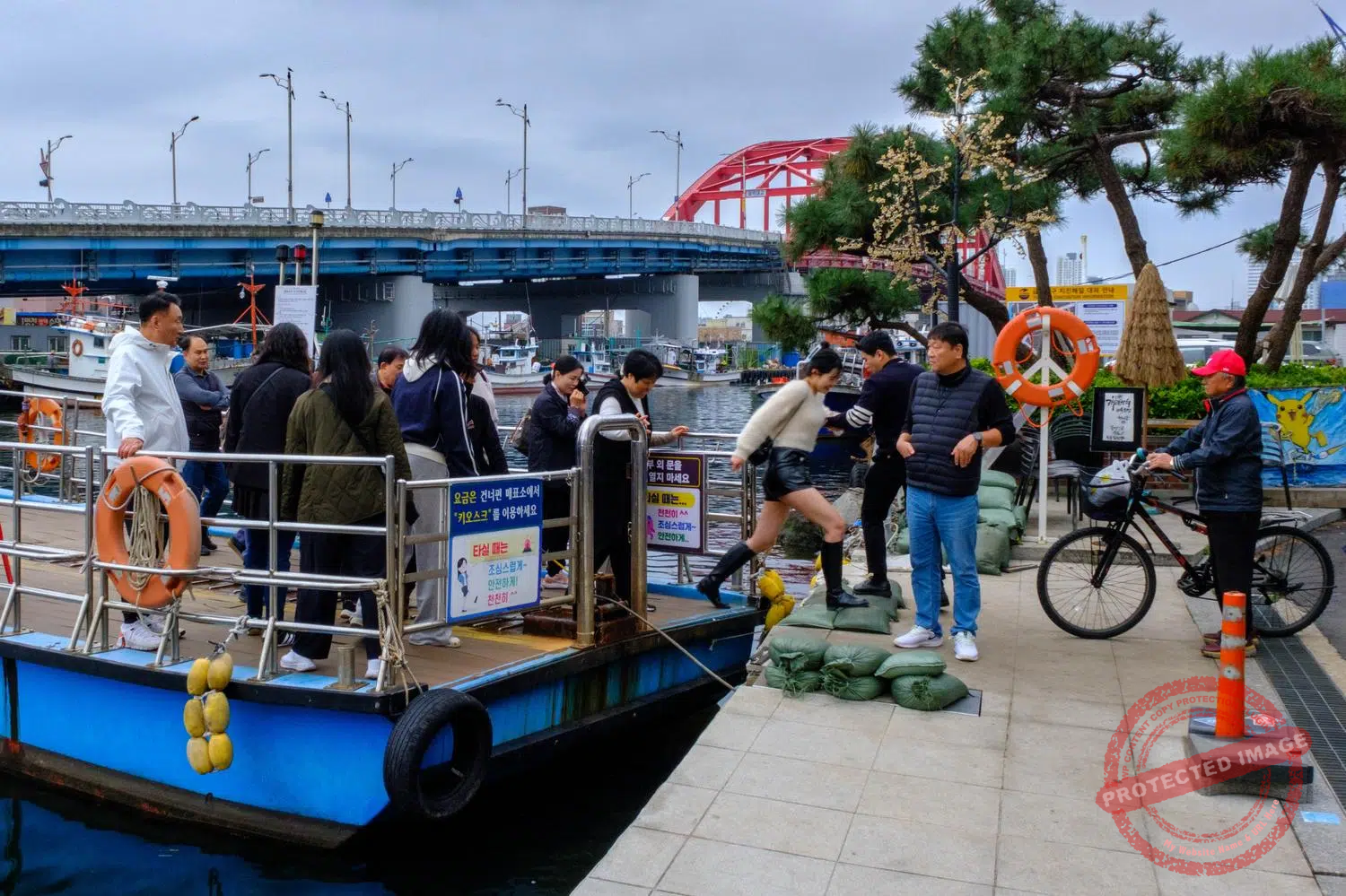
The Gaetbae Boat, the hand-pulled ferry linking Abai Village to downtown Sokcho (November 2024).
The sandy peninsula on which Abai Village was founded separates the sea from Cheongchoho, a lagoon around 5 km in circumference at the mouth of a small river. This lagoon was connected to the sea only by the narrow 50-metre channel – the one that the Gatbae Boat crosses.
In the 2010s, the Sokcho municipal planners reckoned that Cheongchoho’s restricted tidal connectivity limited water exchange, risking stagnation and ecological stress. Engineering efforts were launched to excavate an artificial channel between the lagoon and the open sea.
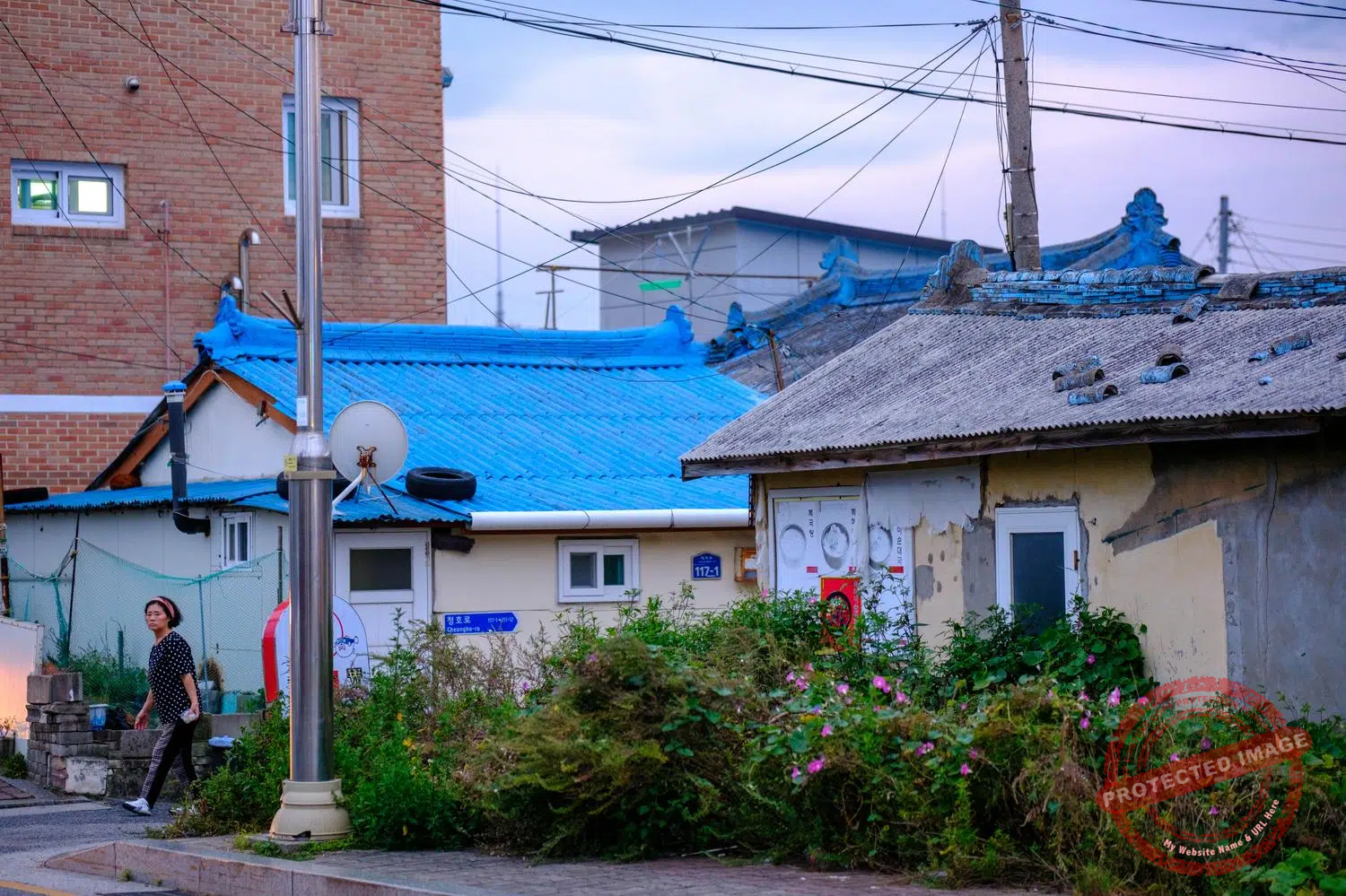
In the southern part of Abai Village, you can still find a few shacks that certainly date back to the community’s beginnings (November 2024).
By enhancing tidal flushing, the project improved water quality, reduced silt accumulation and fostered a richer marine‑freshwater habitat continuum. The purpose was also to transform the natural lagoon into a functional inner harbor, enabling the docking of large fishing boats and other vessels.
But the project had the effect of cutting Abai Village in two. The imposing Seorak Bridge, opened in 2012, now links the northern part of the village, the most popular with tourists (especially since a hugely popular romantic K-drama, Autumn in My Heart, was filmed there in 2000), with the much lesser-known southern part.
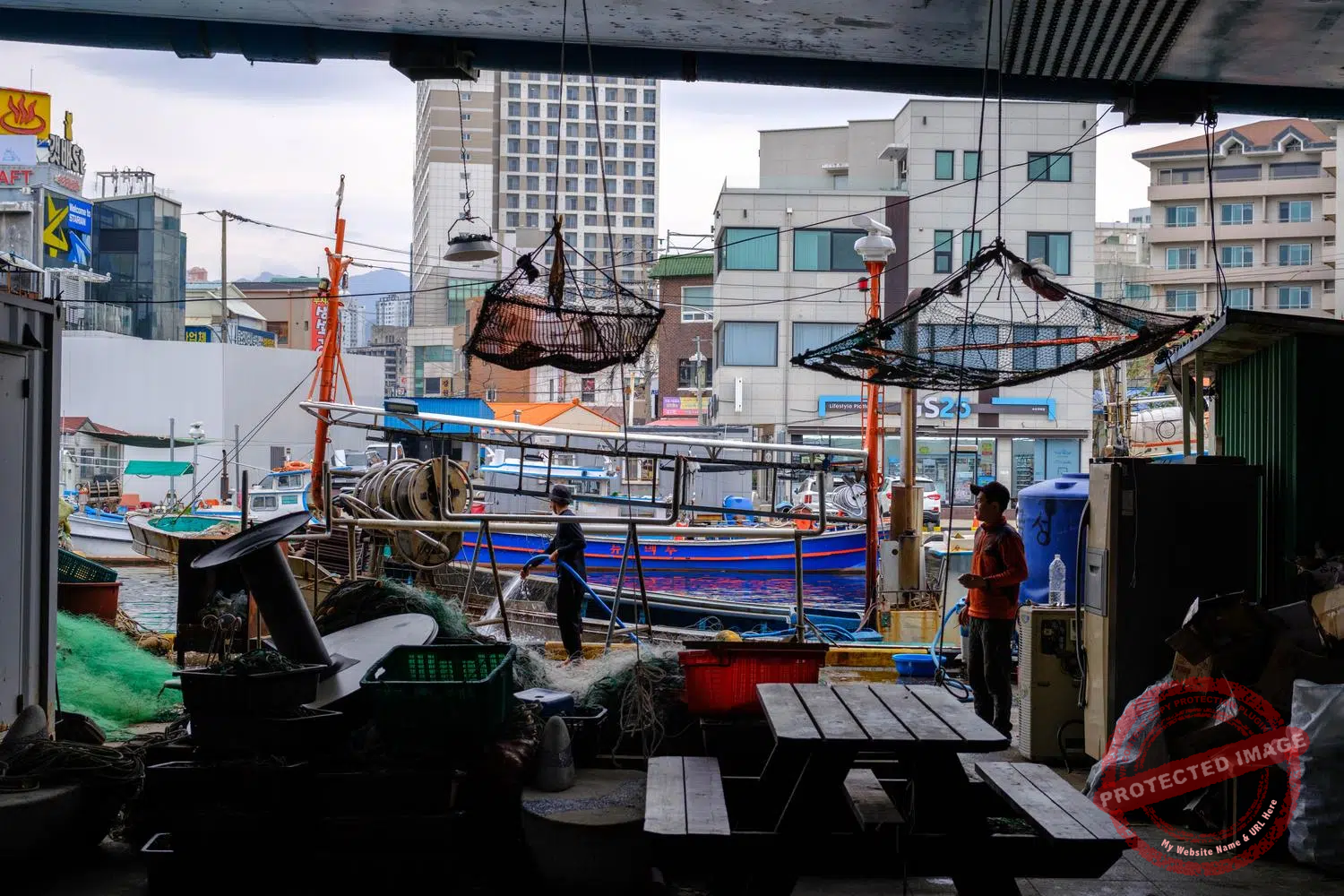
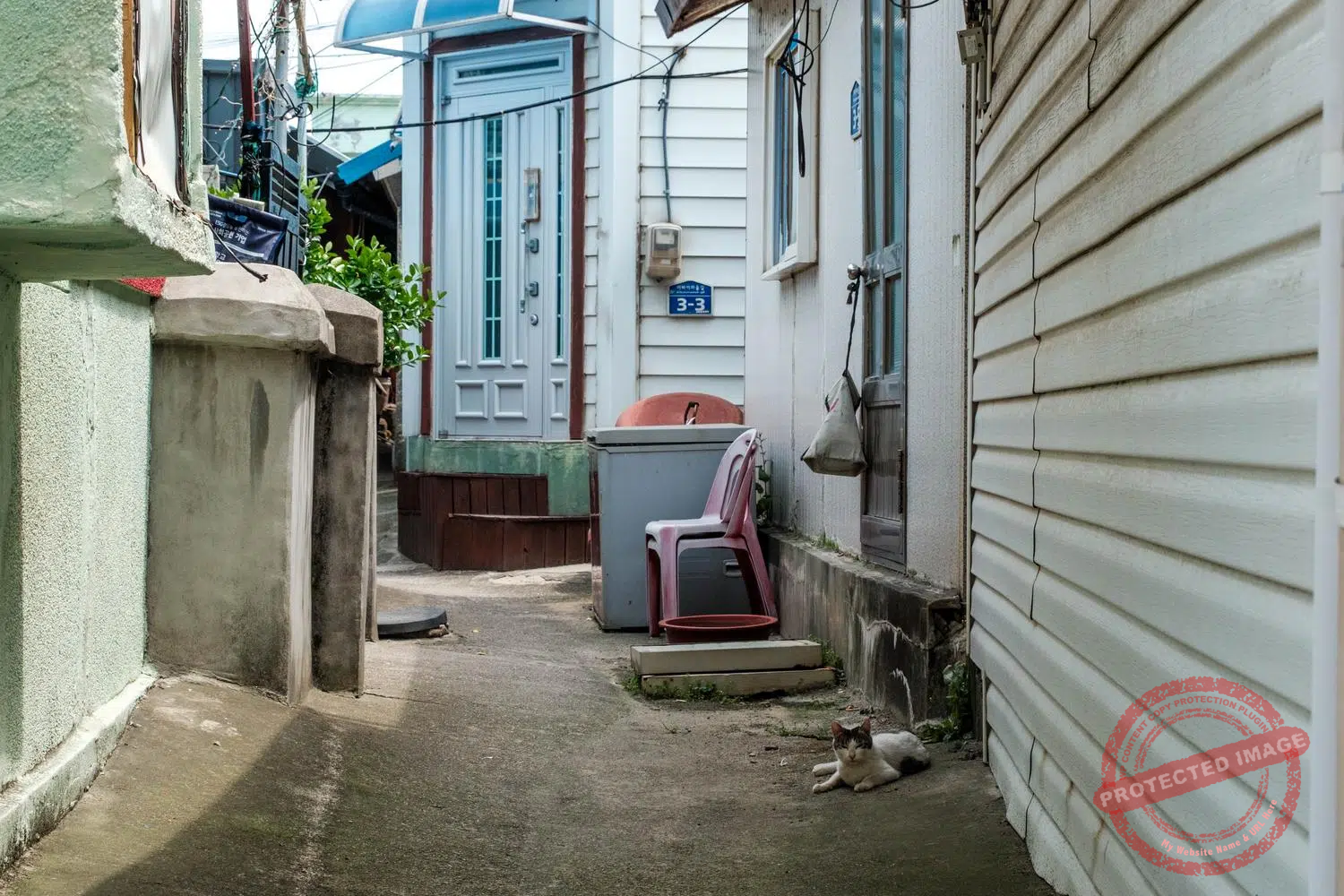
The southern half of the peninsula is the site of the village school – whose North Korean pupils were once feared by those in other Sokcho schools because of their physical strength and strong character. This is also where you’ll find the last few old, half-ruined shacks dating back to the early days of the village, as well as many amazing murals in the backstreets.
Abai Village and its last inhabitants to have experienced life in North Korea were beautifully documented in 2023 by the Philadelphia-based, Canadian-Korean photographer Hannah Yoon.
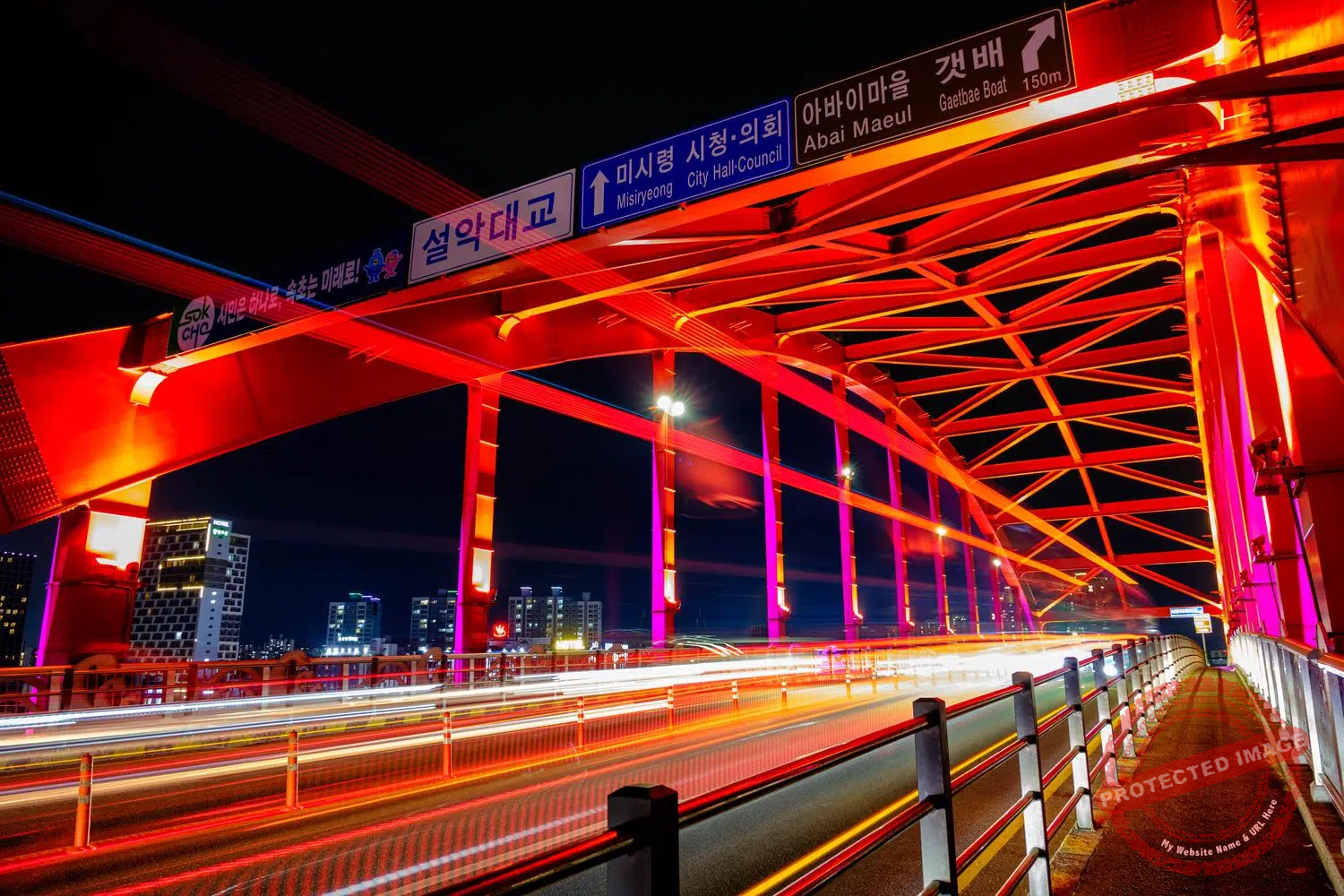
The Seorak Bridge, spanning the channel that cut Abai Village in two in 2012 (November 2024).
I myself had the privilege, in May 2025, of meeting one of the last ten survivors of the Abai Village foundation, Kim Sang-ho, who arrived here in 1950, at the age of 10, with the evacuees from Heungnam.
Mr. Kim has spent his whole life in Abai Village, living from fishing, and has experienced all the transformations of the small community. To round off this series of images and stories about the Korean Division, I invite you to meet him and listen to his moving testimony in the video below.
(Video by Jung Chan-moon and Roland de Courson. Translation and subtitles by June Bird).
This post was last updated on : April 29, 2026.