Enemy Cemetery
적군묘지
The hidden graveyard, 5 kilometres from the border, where South Korea buries soldiers and spies from the North who were killed on its territory.


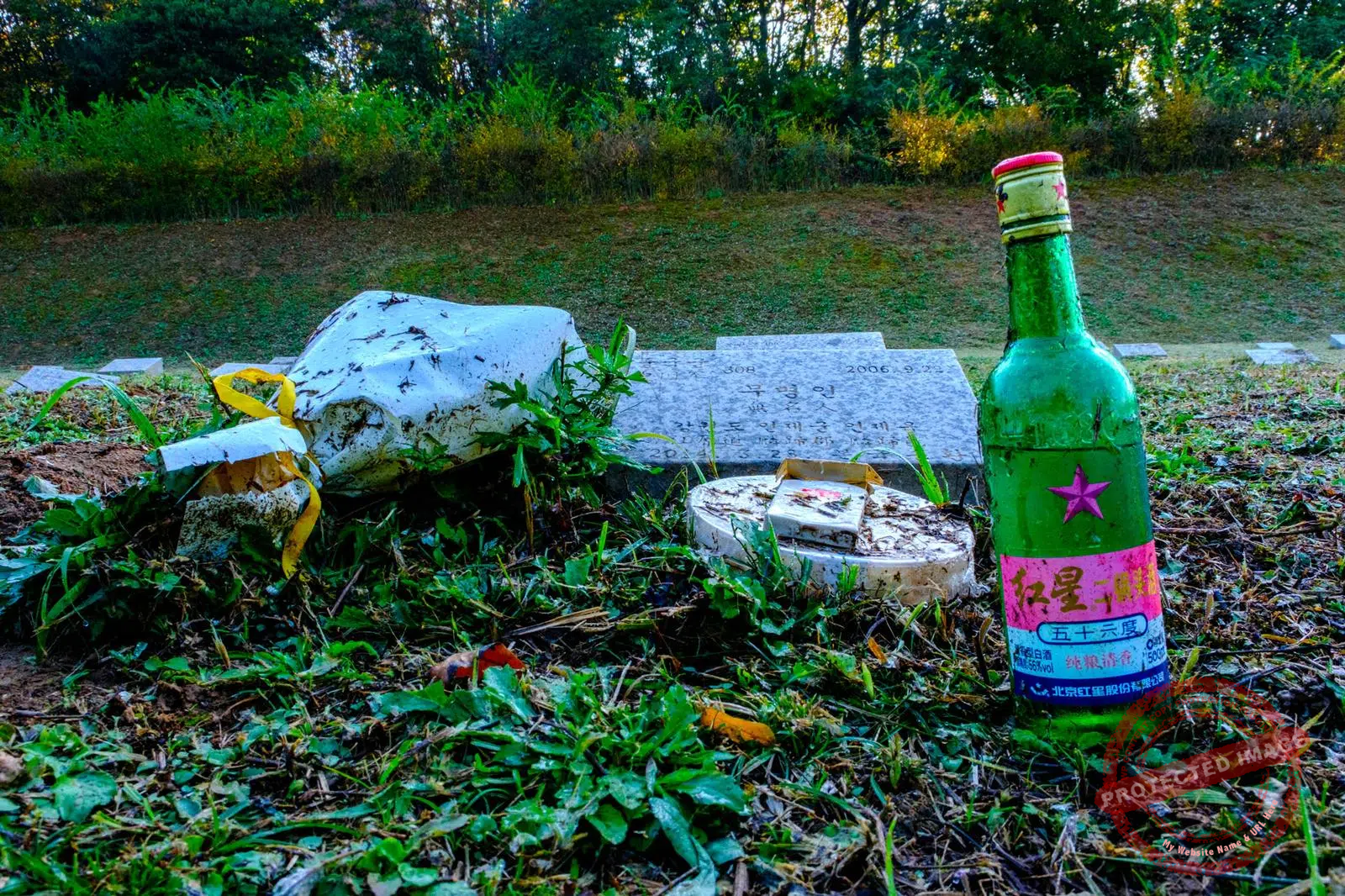
Offered by an unknown admirer, a bottle of Chinese liquor, a pack of cigarettes (also Chinese) and a bouquet of faded flowers honour the grave of an anonymous North Korean soldier (October 2024).
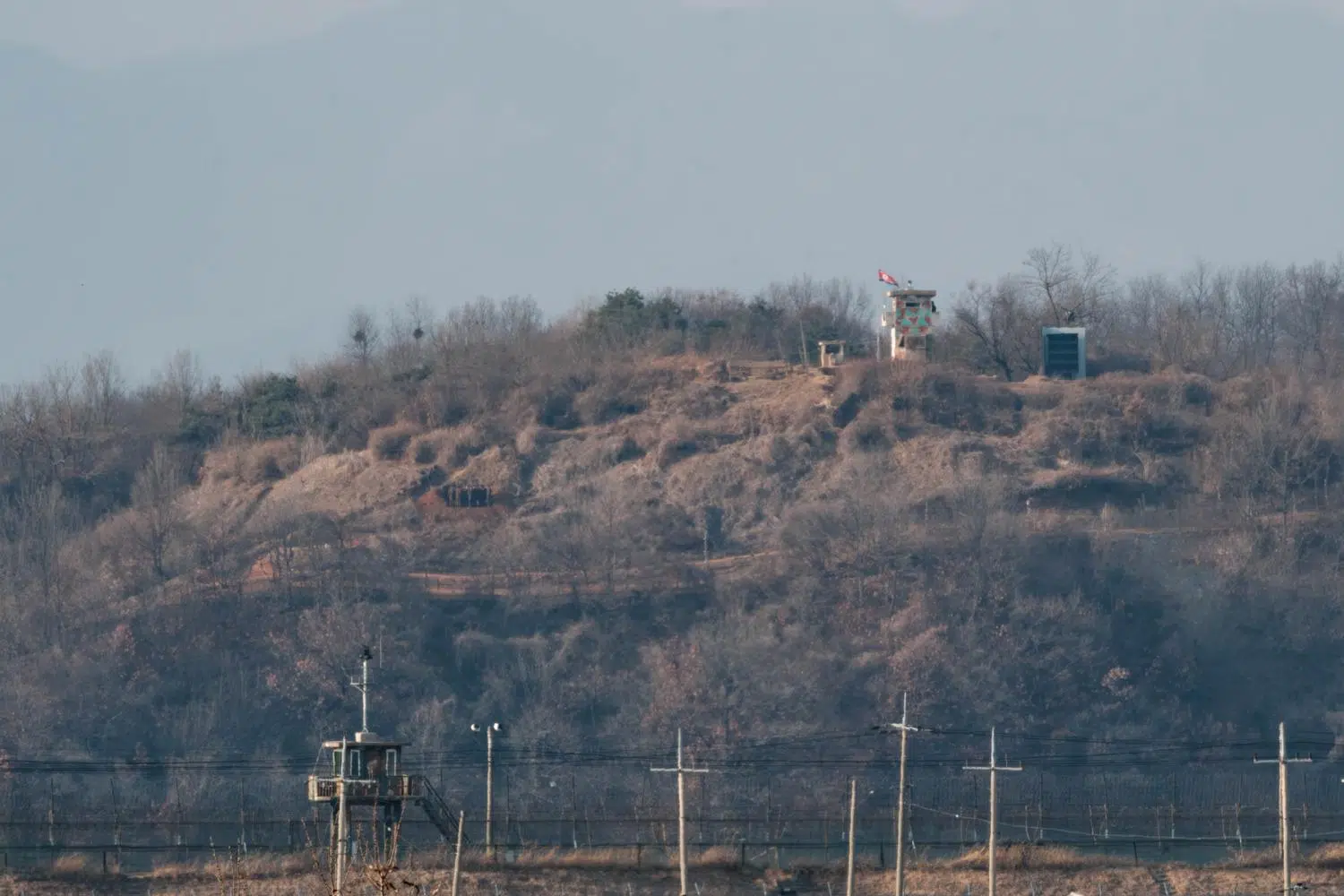
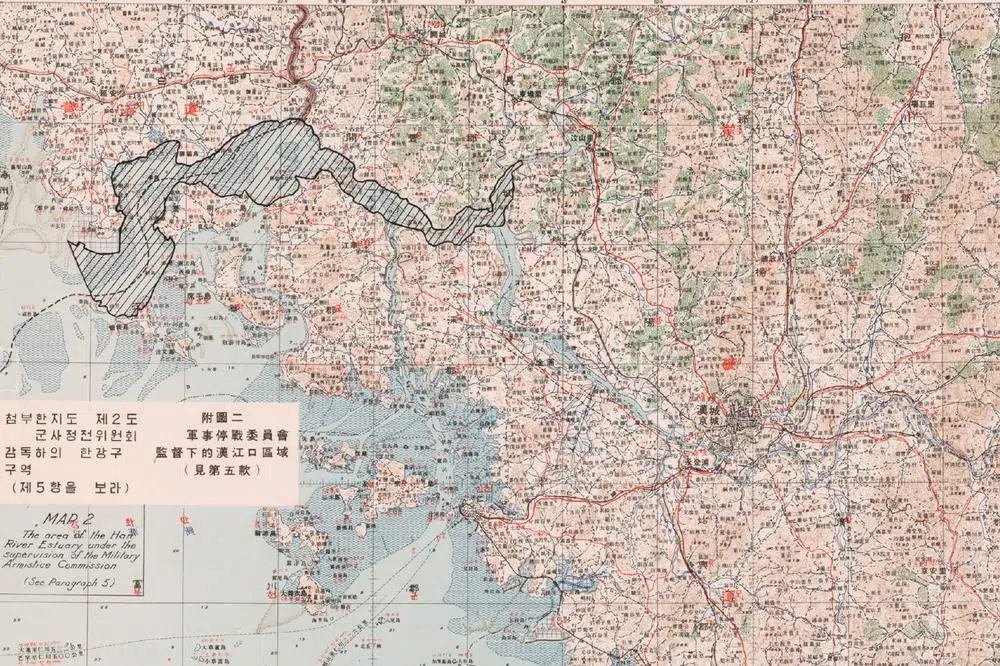
Almost unknown and virtually hidden, the Military Cemetery for North Korean Soldiers — known locally as the “Enemy Cemetery” — sits on a quiet hilltop in Paju City, near Seoul, just south of the inter-Korean Demilitarized Zone (DMZ).
There are no signs indicating how to get to these two neighboring graveyards, perched in Papyeong-myeon and surrounded by rice paddies and vegetable gardens.
In Graveyard II, South Korea buries the bodies of North Korean soldiers killed during the Korean War (1950-1953) and recovered on its territory during battlefield excavations. Infiltrators and spies killed in the South from 1953 to the present rest in Graveyard I.
The cemetery was established in July 1996. Its 6,000 square meters hold more than 770 graves, all of them facing north as a sign of respect. The majority are marked 무명 (mumyeong, meaning “anonymous”), while those of North Korean agents are marked with 간첩 (gancheop, meaning “spy”) followed by the name if known.
North Korea, which is only 5 km away, has never claimed the bodies — partly because it considers them already buried in Korean soil, but mostly because doing so would mean admitting responsibility for the long string of bloody clandestine operations against the South whose perpetrators now enjoy eternal rest here.
The site was also the burial ground for 541 Chinese volunteers killed during the Korean War. They were later repatriated in successive batches, and now rest in the “Resist America and Aid Korea Martyrs Cemetery” in Shenyang, China.
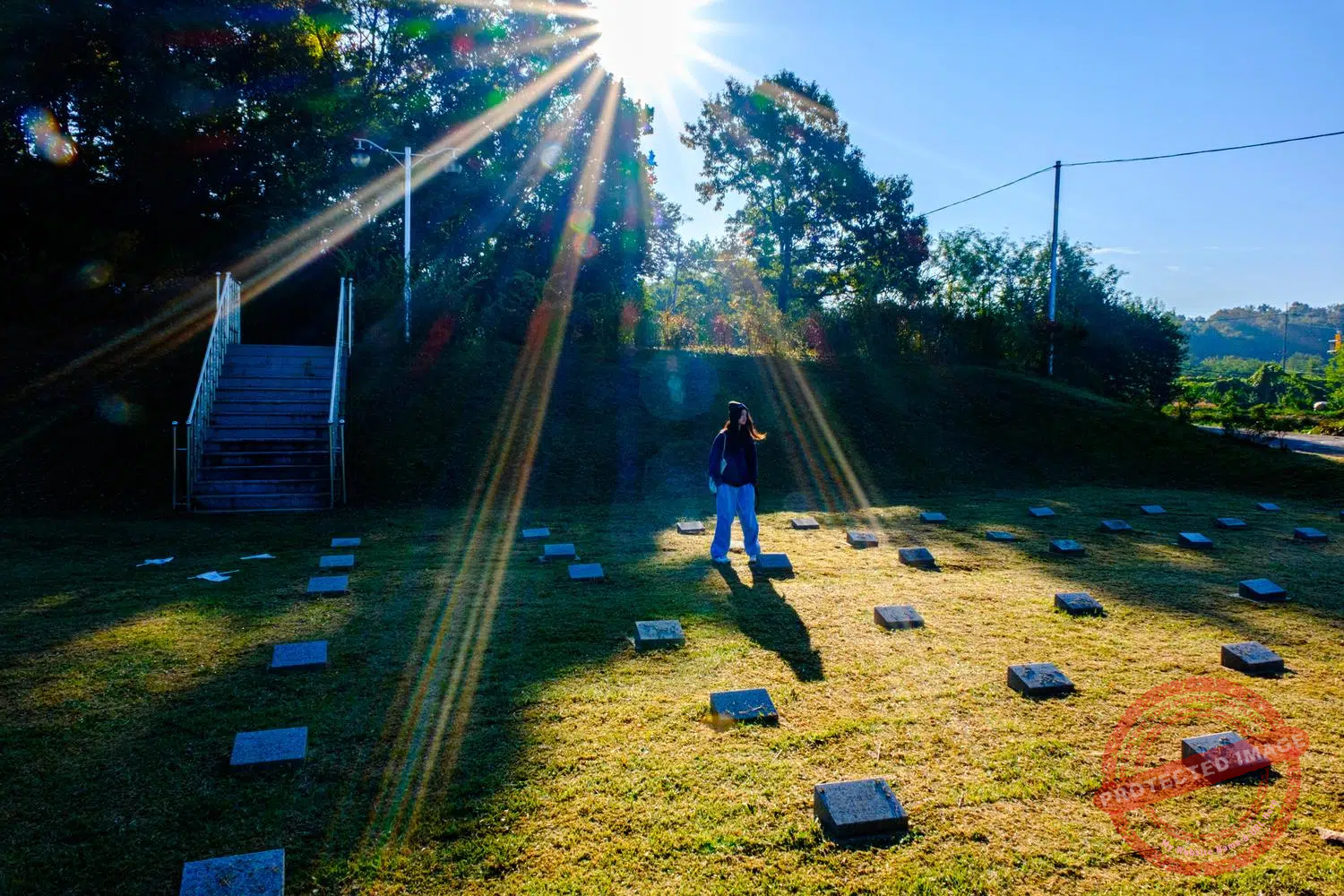
The graves of unknown North Korean soldiers face North as a sign of respect (October 2024).
For many years, the cemetery was little more than rows of crude earth mounds topped with plain wooden markers. A Buddhist monk used to come here to beat on a drum and chant, easing the suffering of the spirits of the dead. The mounds have since been flattened, the wooden markers replaced by simple stone slabs lying flush with the ground.
Following the inter-Korean and US-North Korea summits of 2018-2019, responsibility for managing the site was transferred from the ROK Army’s 25th Infantry Division to Gyeonggi Province, and authorities discreetly began discouraging the use of the name “Enemy Cemetery.” On Korean maps, the site is now referred to simply as the Military Cemetery for North Korean Soldiers (북한군 묘지).
The site is maintained to a minimum, and obviously receives few visitors. Rumor has it that the South Korean intelligence services have placed hidden cameras in the cemetery to spot and identify communist sympathizers who have come to pay their respects.
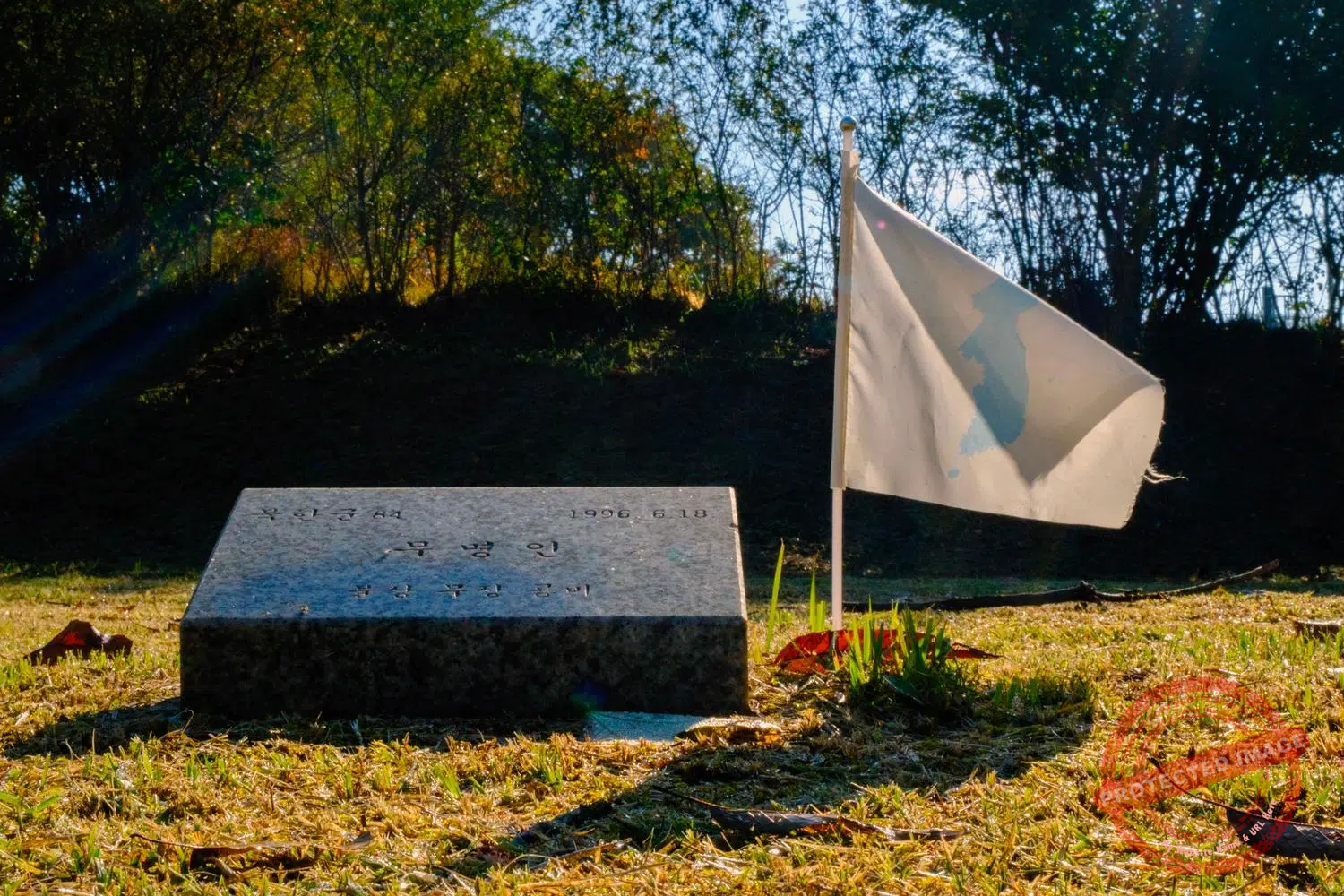
A faded Korean Unification Flag – the one that has been used since 1991 at international sporting events when the two sides compete within a unified team – flies over the grave of an unidentified North Korean infiltrator (October 2024).
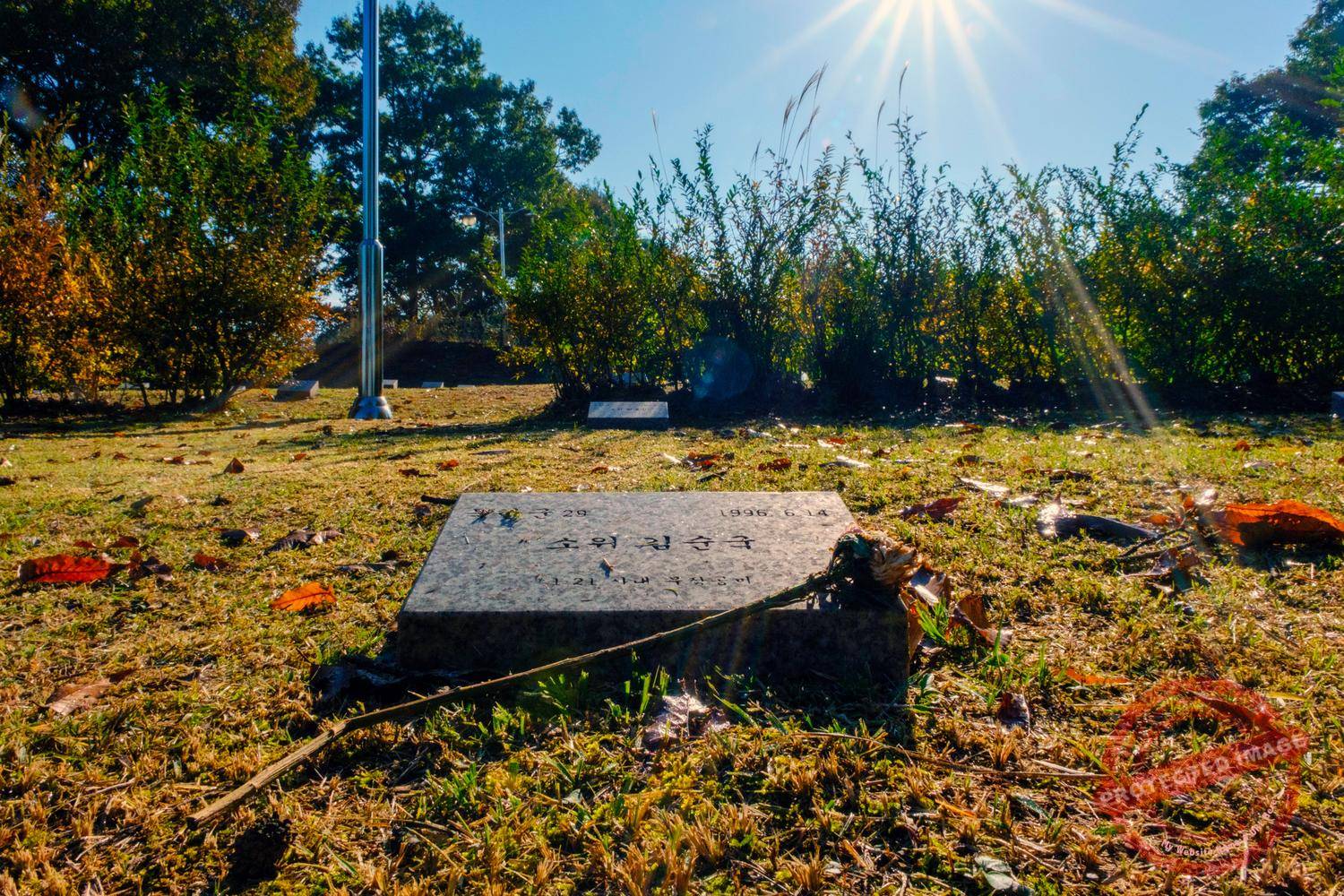
These sympathizers do exist. Occasionally, wilted flowers and offerings of booze and cigarettes can be found on some of the flat graves with engraved stone markers.
Among the “celebrities” buried here is Kim Sung Il, the North Korean agent who co-perpetrated the mid-air bombing of Korean Air Flight 858 between Baghdad and Seoul in November 1987, killing all 115 people on board. Kim, 70, died by biting into an ampule of cyanide hidden in a cigarette case during his arrest in Bahrain. The other perpetrator, Kim Hyon Hui, 25, survived. She was sentenced to death, pardoned, and now lives a normal life in South Korea.
Also resting here are the nine sailors of a North Korean Yugo-class mini-submarine that got entangled in a South Korean fishing net off Sokcho in June 1998. When the vessel was salvaged, investigators discovered that the four commandos on board had shot the five regular sailors before turning their guns on themselves — preferring suicide to capture, in line with North Korean military culture.
Graveyard I is also the final resting place of 29 of the 31 members of Unit 124, which infiltrated South Korea in January 1968 with the aim of assassinating dictator Park Chung Hee, but was neutralized after an intense manhunt (I will tell you the whole story in the next post).
Of the two soldiers who survived that failed mission, one made it back to North Korea. The other, Kim Shin-jo, remained in the South, became a Protestant pastor and died in Seoul on April 9, 2025, at the age of 82.
Nobody knows if he ever visited the cemetery to pay his respects to his fallen former comrades.
This post was last updated on : May 18, 2026.