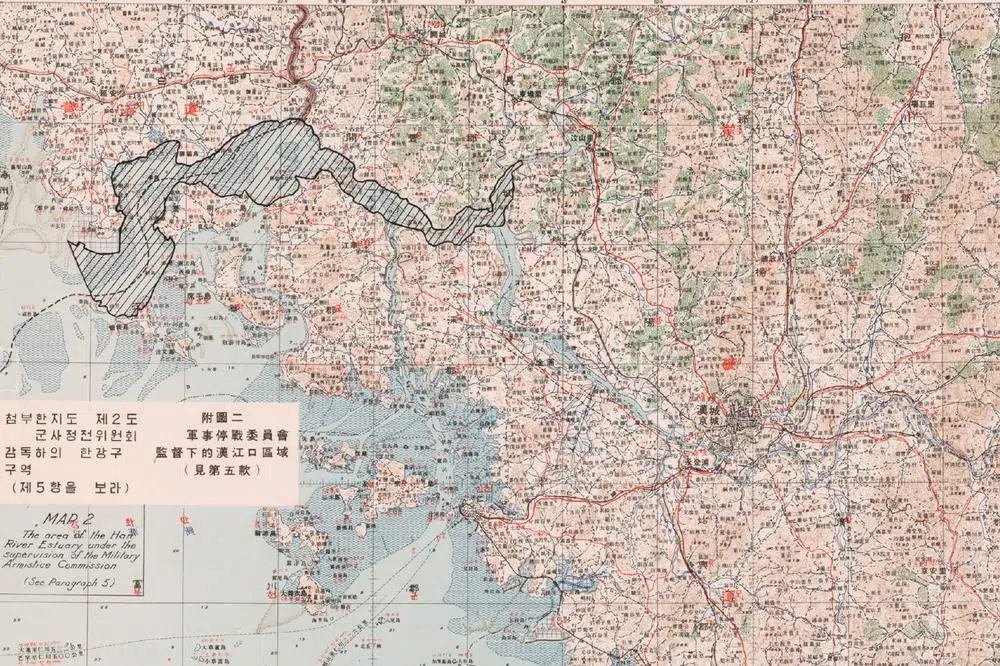
Peace Dam
평화의 댐
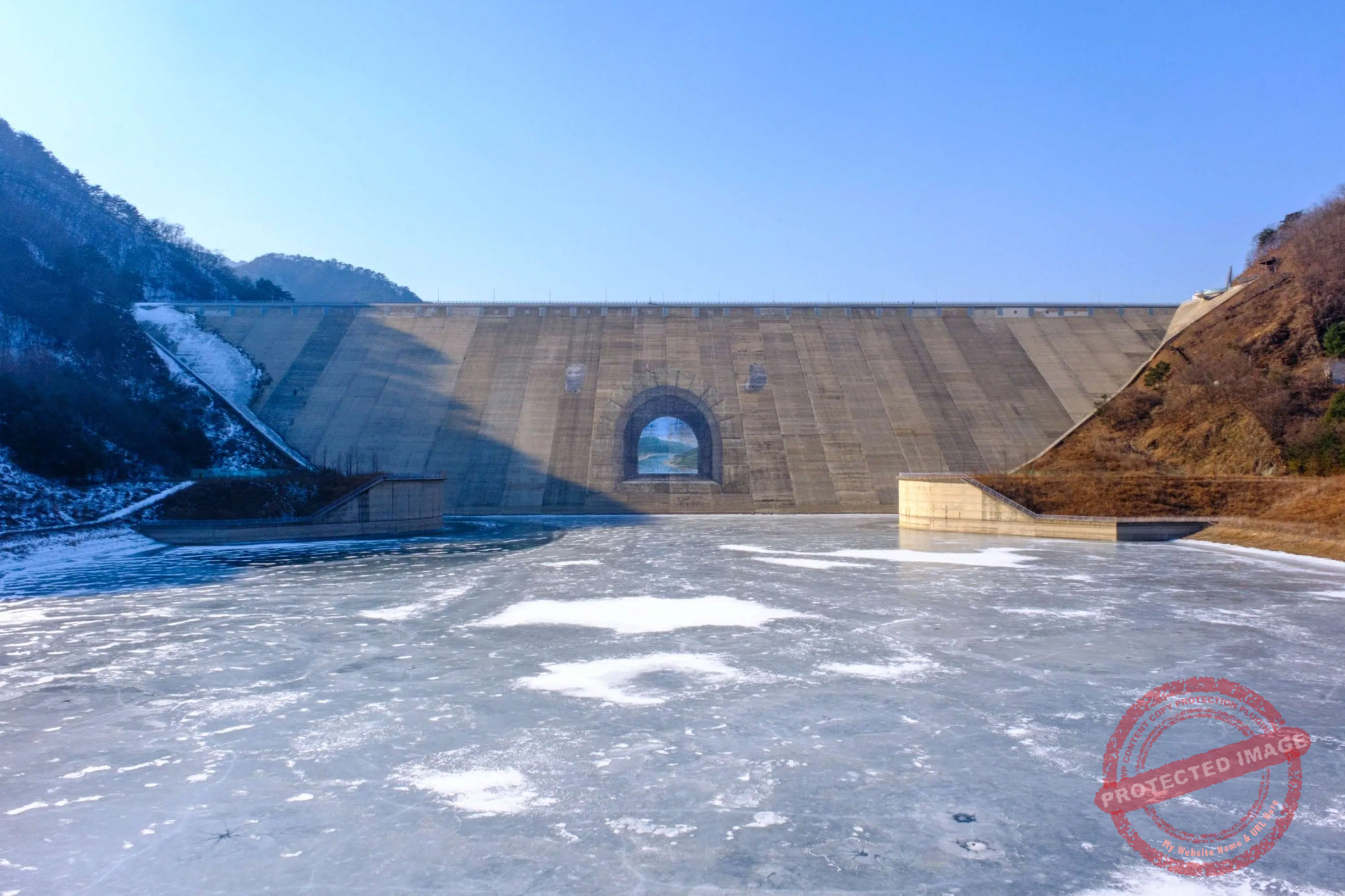
The enormous Peace Dam, whose sole purpose is to prevent a hypothetical “water nuclear bomb” coming from the North (February 2025).
Just as the Demilitarized Zone is in fact the most militarized zone in the world, the story of the Peace Dam is anything but peaceful.
This gigantic concrete wall blocking the course of the Bukhan river, lost in the Taebaek mountain range less than 12 kilometers from the North Korean border, costed 400 billion won, the equivalent of 290 million US dollars. But it has no holding reservoir, and produces no electricity.
Its sole purpose is to contain a hypothetical “water bomb”: a catastrophic flood unleashed upstream by North Korea to annihilate the metropolis of Seoul, some 200 kilometers downstream.
The psychosis was launched in 1986 by South Korean military dictator Chun Doo-hwan, faced with a powerful wave of internal protest, to divert attention and unite the country against the communist arch enemy two years before the 1988 Seoul Summer Olympic Games.
That year, North Korea had begun building the Imnam dam, 24 kilometers north of the border on the Bukhan River. The Bukhangang flows southwards and is a tributary of the Han River, that runs through Seoul 200 kilometers downstream before emptying in the Yellow Sea.
Location of the Imnam (North Korea) and Peace (South Korea) dams. Zoom in on the satellite map for a closer look.
According to Chun Doo-hwan, the North Korean reservoir had a planned capacity of 20 billion cubic meters of water, enough to submerge most of Seoul in a matter of hours if the dam was blown up, and was the centerpiece of a secret plan to destroy the South Korean metropolis during the Olympic Games.
Chun’s government even claimed that if this plan were carried out, the water level in central Seoul would reach the middle of the 63 Building, an iconic 249.6-metre-high skyscraper on the southern bank of the Han River and a symbol of South Korea’s “economic miracle”.
So in February 1987, South Korea frantically began building its “Peace Dam” on the Bukhan River, 36 kilometers downstream from the threatening Imnam Dam. A massive fundraising campaign was launched to finance the project, while the national media bombarded the population with alarmist information, comparing the effects of the coming flood with those of an atomic bomb, aided by artist’s views of Seoul drowned under North Korean muddy waters.
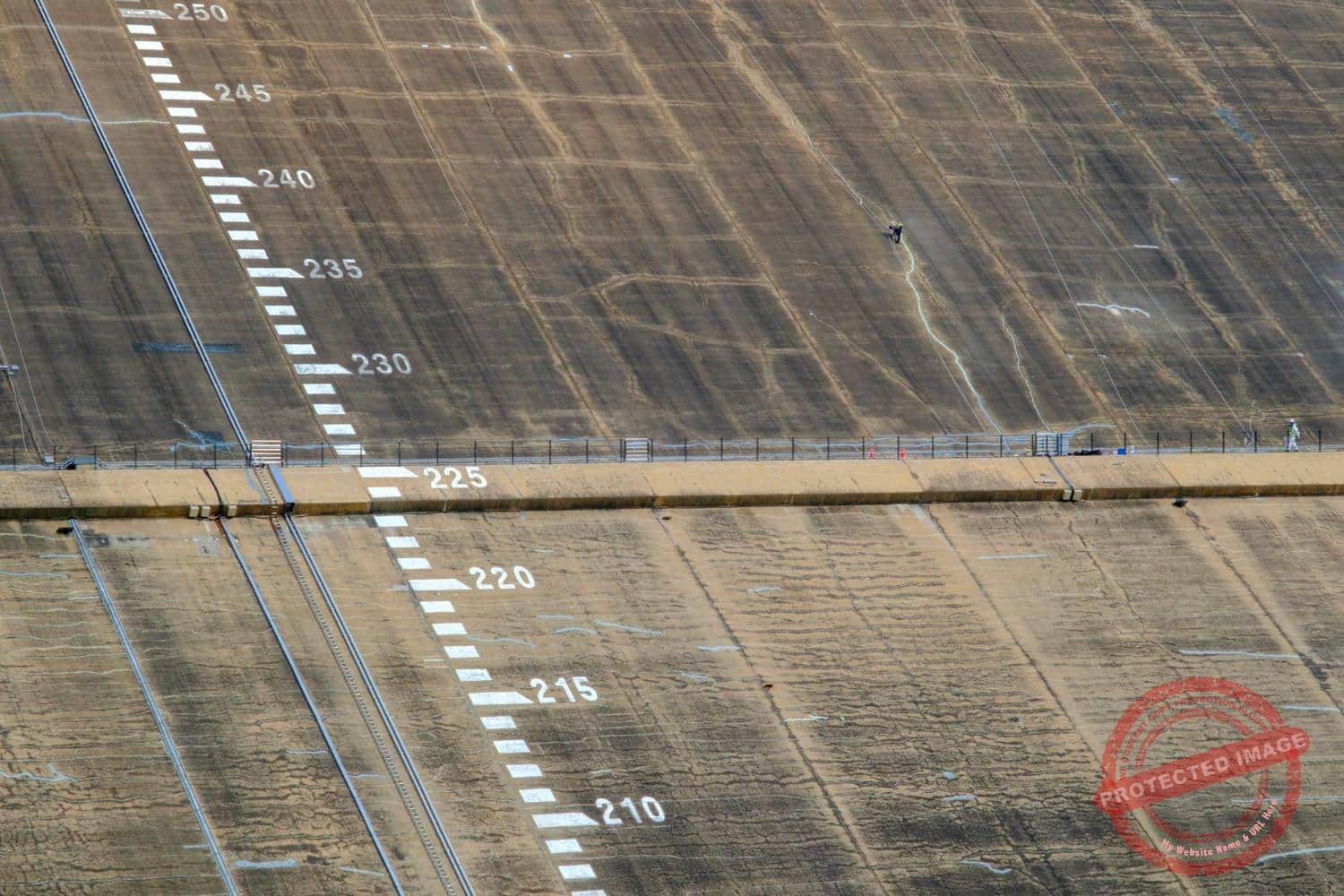
Workers carry out maintenance duties on the northern side of the dam (June 2025).
The first phase of the Peace Dam was completed in time for the Olympics. But it soon became clear that North Korea did not have the nefarious intentions that Chun Doo-hwan had claimed.
The dam’s reservoir capacity was only 2.62 billion cubic meters of water, eight times less than the Chun’s administration’s estimate. This water was being peacefully channelled towards a hydro-electric power station on North Korea’s east coast, and was not intended to drown the Olympic Games. In fact, the opposite happened. After the construction of the Imnam dam, the water inflow to the Han river decreased by 12%, causing water shortages in the Seoul metropolitan area.
Work stopped in 1989, when the Peace Dam was already 80 metres high, when democracy had been restored in Seoul and when many South Koreans were feeling completely duped by Chun Doo-hwan. In 1993, an investigation by the Board of Audit and Inspection of Korea, an independent public institution whose mission is to control government accounts, concluded that Chun, faced with increasingly massive protests against his authoritarian regime, had indeed exaggerated the threat to bamboozle everybody.
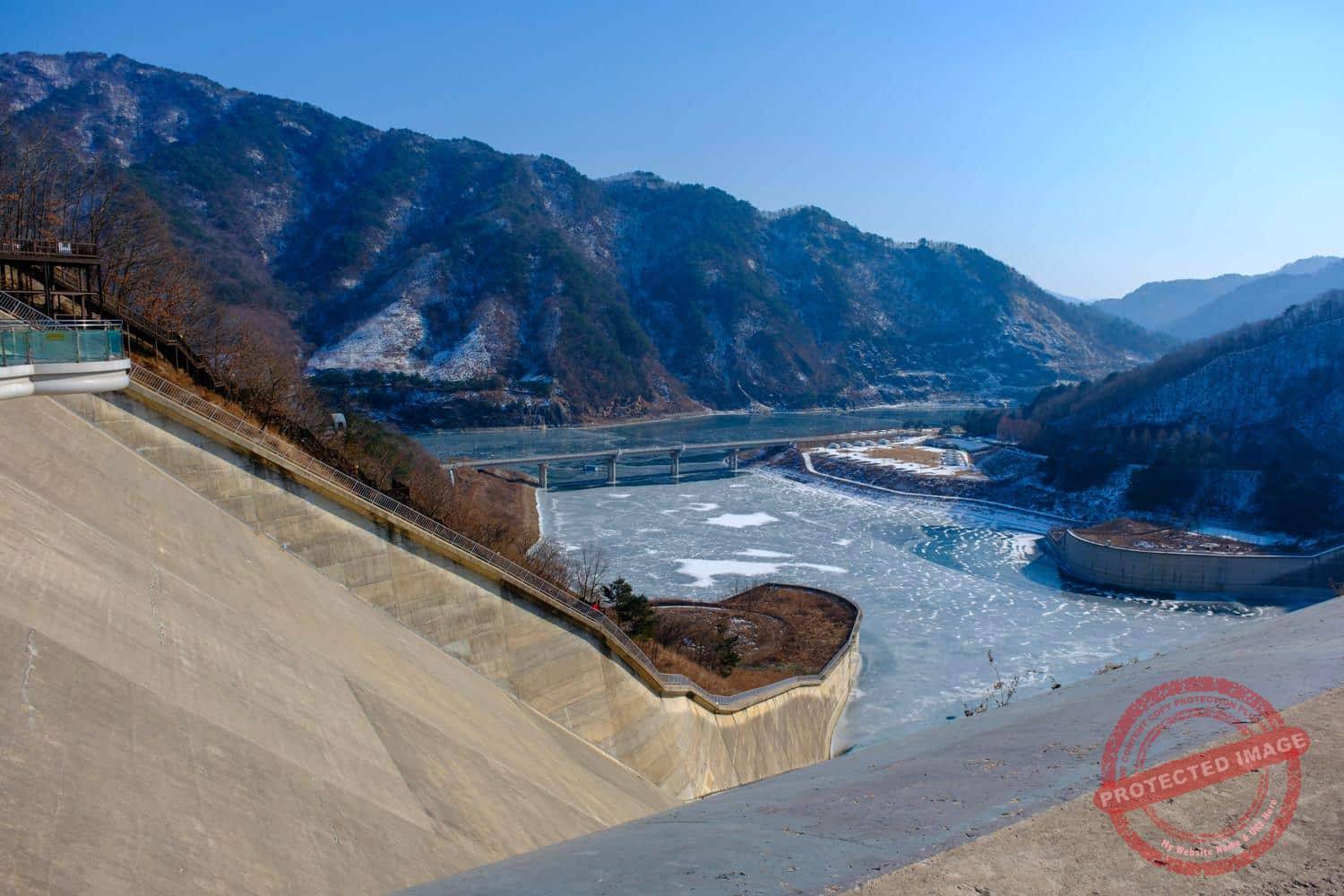
Looking South from the top of Peace Dam (February 2025).
But the story doesn’t end there.
In the years that followed, the Peace Dam proved useful in containing natural catastrophic floods in 1996 and 1999. And then, in 2002, satellite images revealed worrying cracks in the North Korean Imnam dam, raising fears of a collapse, and reawakening the old psychosis just as South Korea was preparing to co-host another major sporting event: the football World Cup.
North Korea eventually repaired its dam – but not before emptying the reservoir by releasing without warning an enormous quantity of water that was successfully stopped by the South Korean dam.
To prevent further scares, South Korea decided to resume work on the Peace Dam, which was completed in 2005. Ironically, this monument to anti-communist hysteria was initiated under a rightist military dictator later sentenced to death, Chun Doo-hwan, and completed under a left-wing hero of South Korean democracy and architect of a spectacular rapprochement with the North, President Kim Dae-jung, winner of the Nobel Peace Prize in 2000.
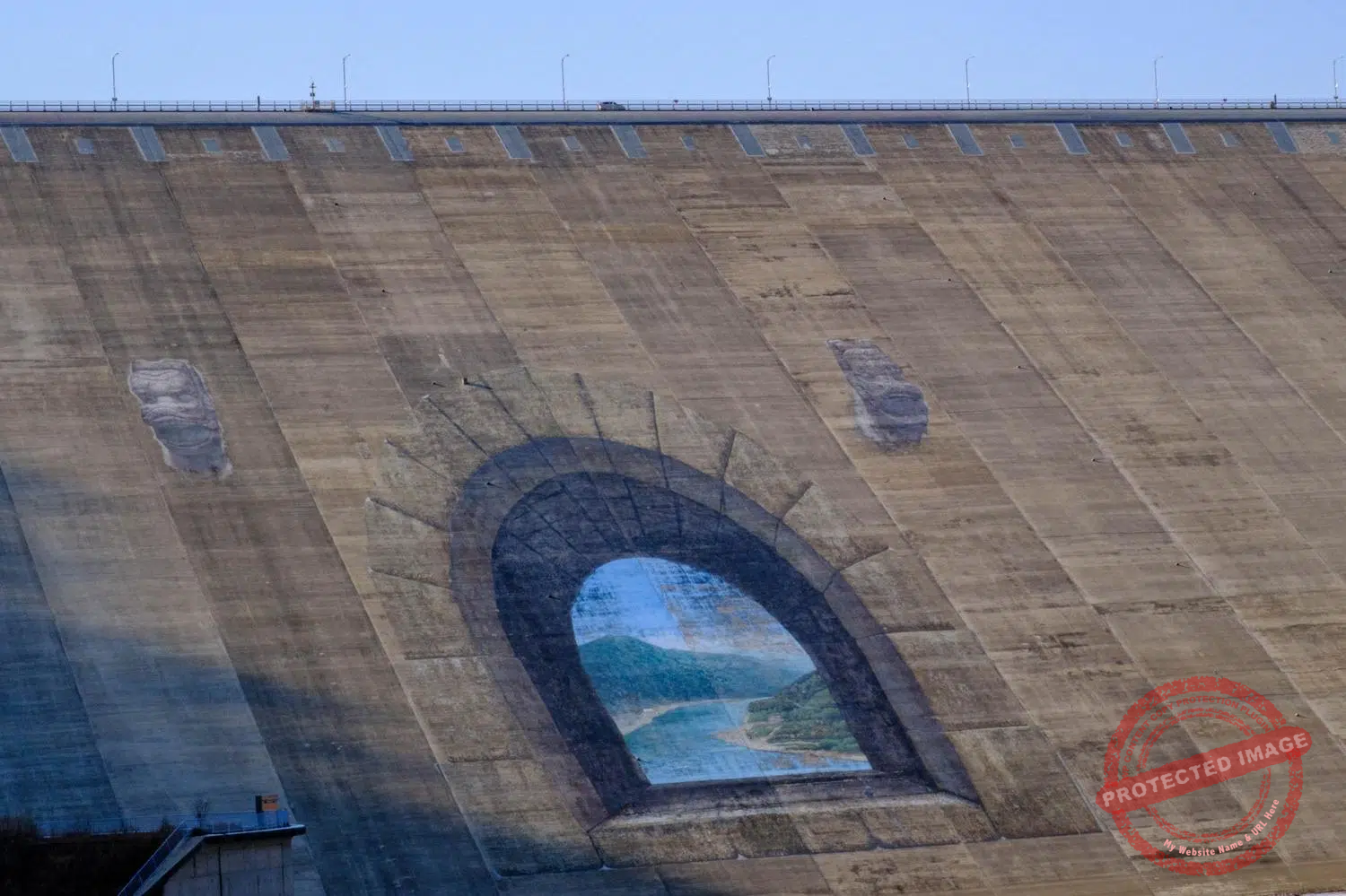
“Door to Unification”, the world’s largest anamorphic painting, on the southern slope of the dam (February 2025).
The Peace Dam is now 601 meters long and 125 meters high. It can hold the massive volume of 2.63 billion cubic meters of water, ten million more than the Imnam dam. More than 2.500 Empire State Buildings could fit in its virtual reservoir.
Since 2018, its southern slope has been adorned with a hugeanamorphic painting, the largest in the world according to the Guinness Book of Records (4,775.7 m², almost the size of four Olympic swimming pools). This 3D-looking painting, titled “Door to Unification”, creates the illusion of a hole framed by a stone arch going through the dam towards North Korea.
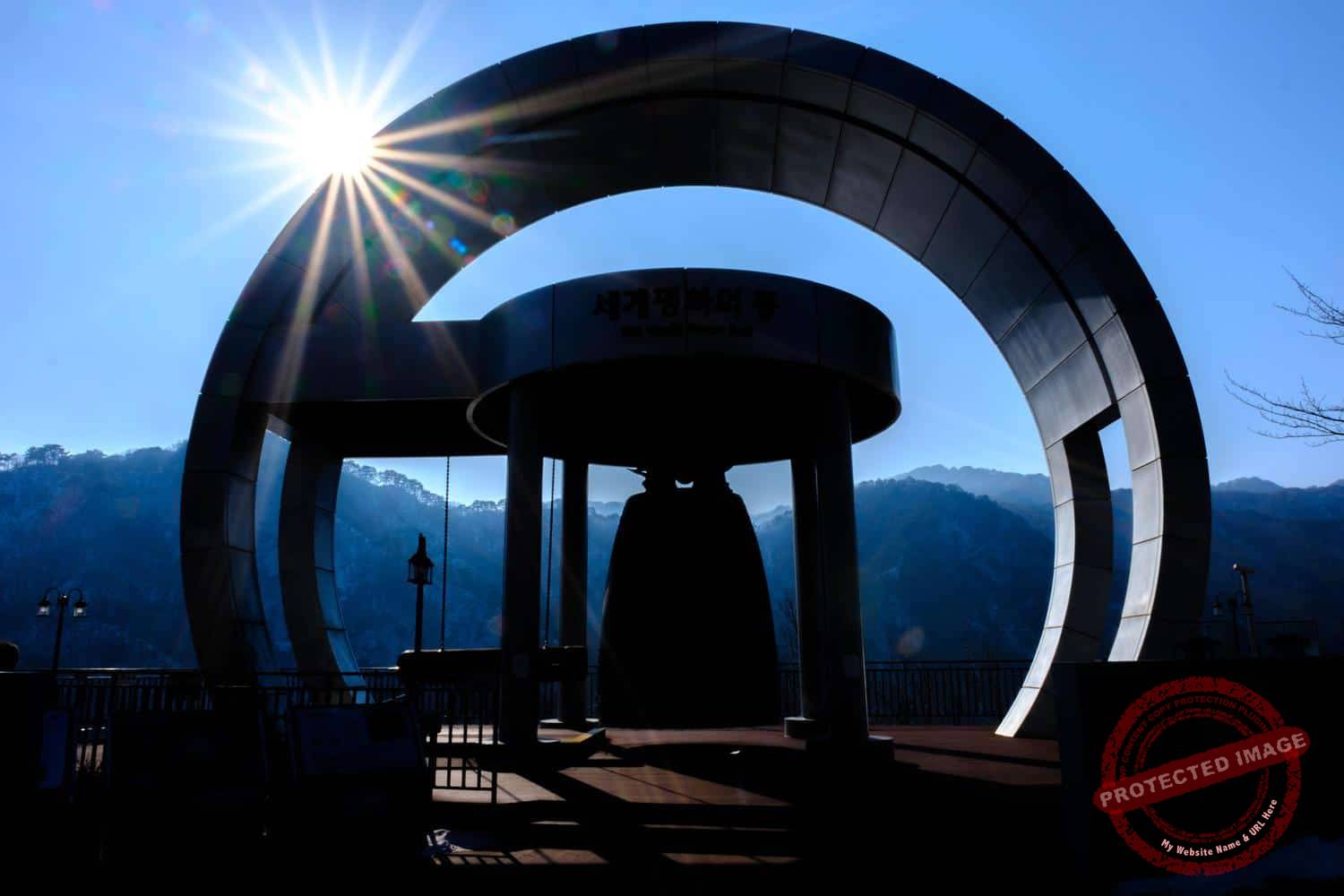
The World Peace Bell, on the top of the Peace Dam (February 2025).
At the top of the dam hangs the “World Peace Bell”, that was cast from metal from empty cartridges used during the Korean War and other conflict zones including the Middle-East, Ethiopia and Colombia.
Nearby, a touching outdoor gallery reproduces messages from 12 Nobel Peace Prize winners and a bronze cast of their outstretched hands. Any visitor of the Peace Dam can shake hands here with the Dalai Lama, Desmond Tutu, Aung Sang Suu Kyi, Kim Dae-jung, Rigoberta Menchu, Barack Obama or Mikhail Gorbachev.
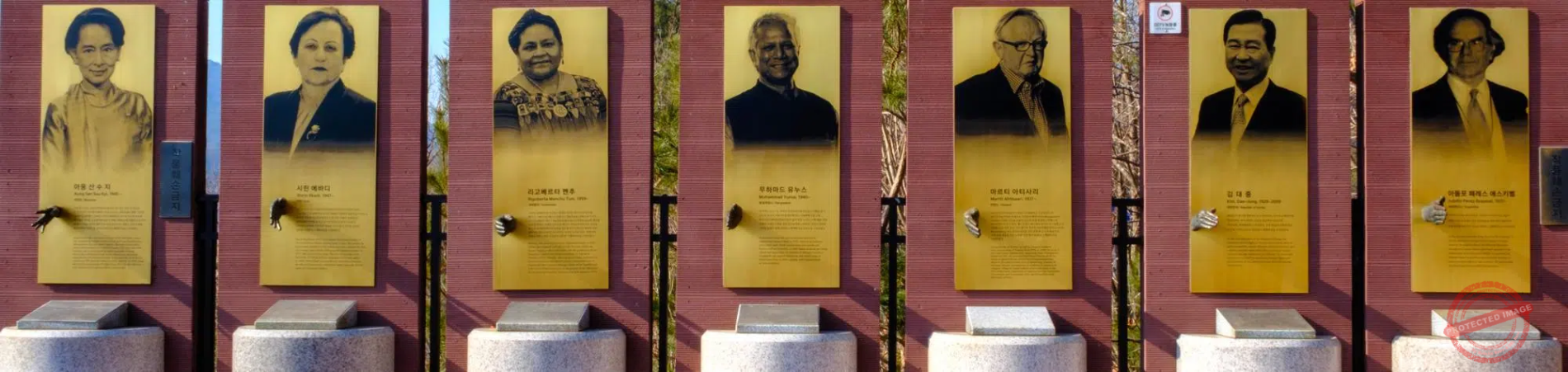
Molds of the hands of Nobel Peace Prize winners await being shaken at the Peace Dam (February 2025).
Further down hangs the Silence Bell, made of wood and that can’t be rung, symbolizing two parts of the same country that no longer talk to each other.
And at the bottom of the dam is the International Peace Art Park featuring decommissioned military equipment transformed into funky works of art: brightly painted tanks chained to the floor or adorned with windmills, turned into a children’s slide or whose barrel has been transformed into a trumpet…
Another creative attempt to erase the K-Scar under a veneer of art and culture, at the foot of one of the most blatant symbols of Korea’s division.
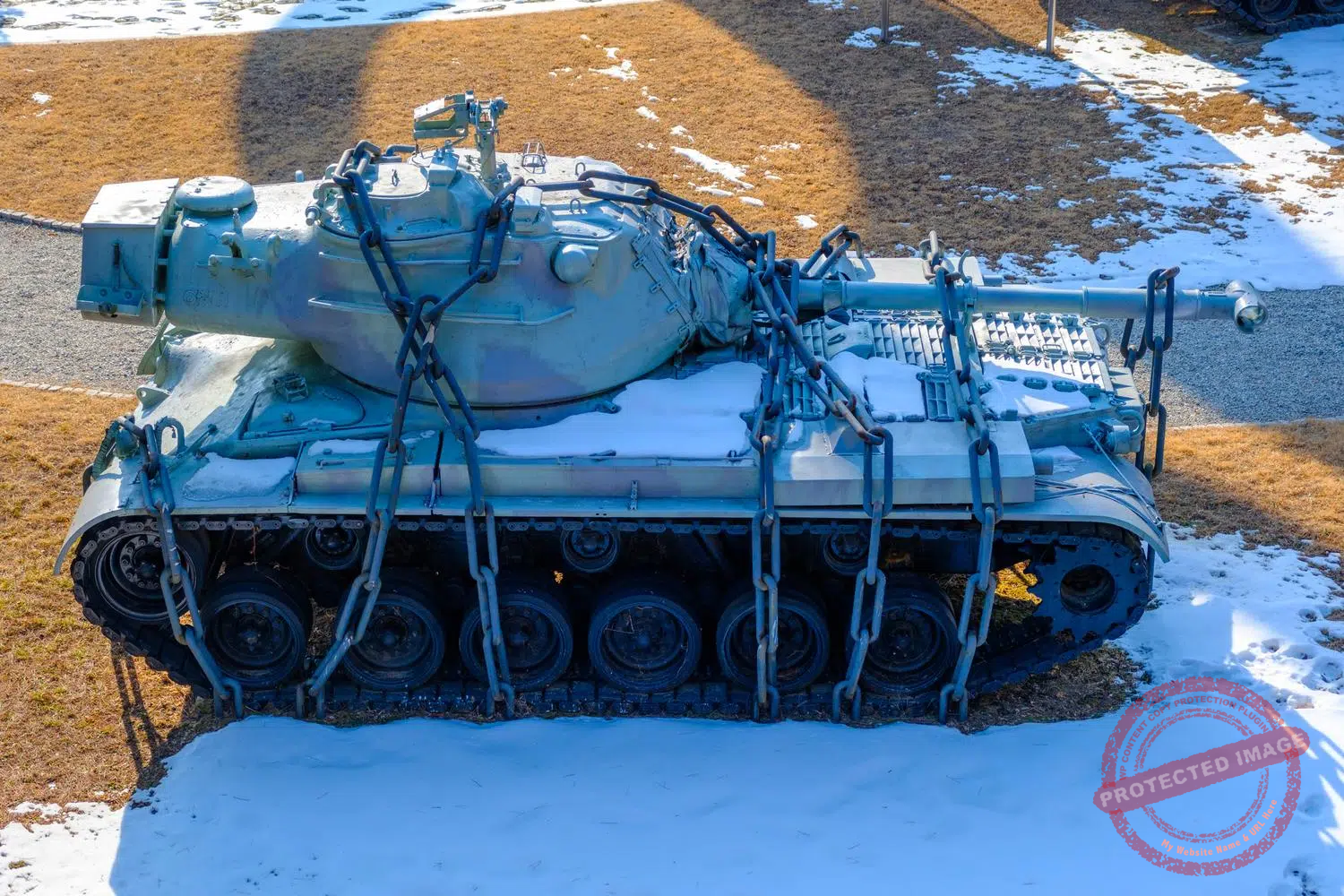
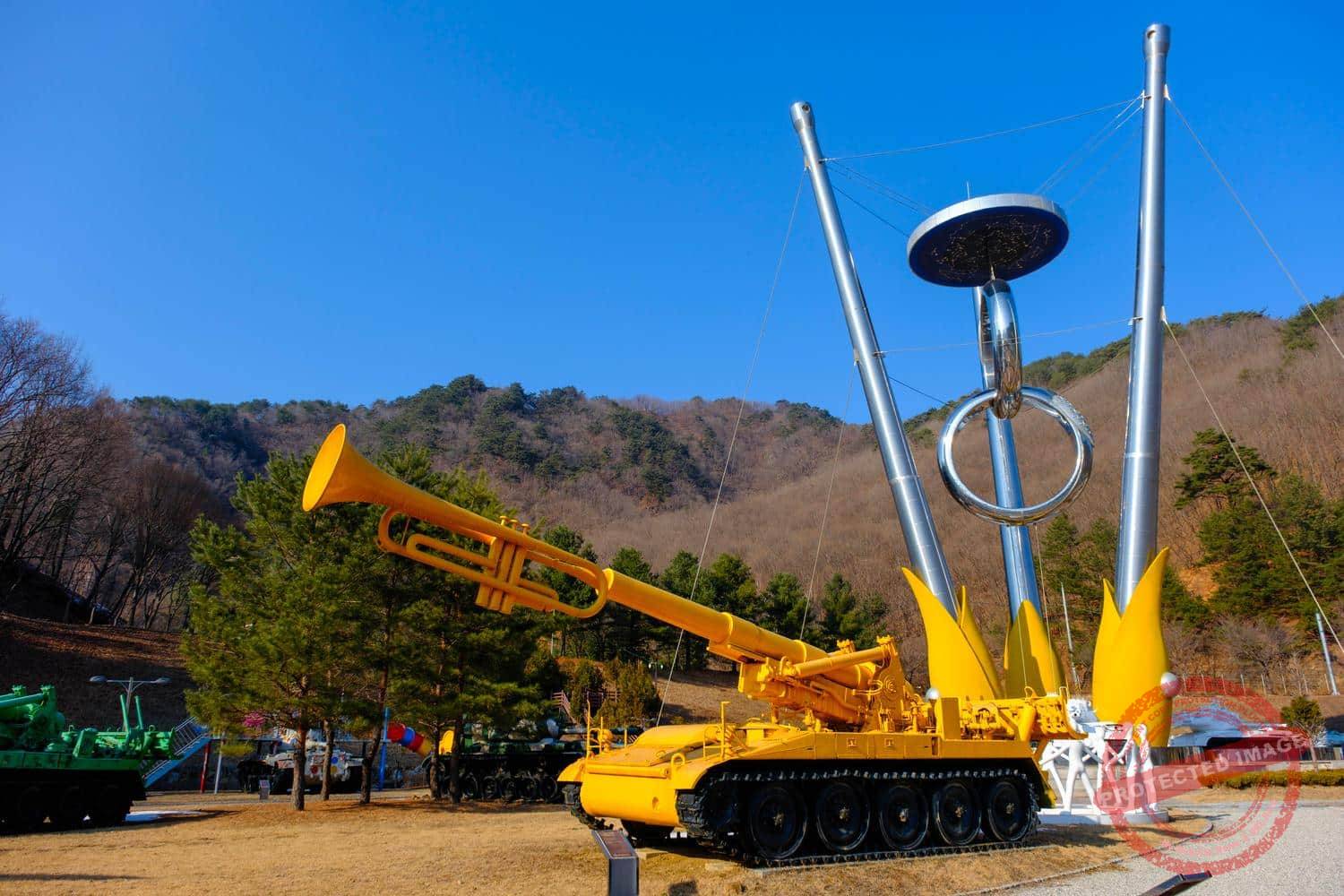
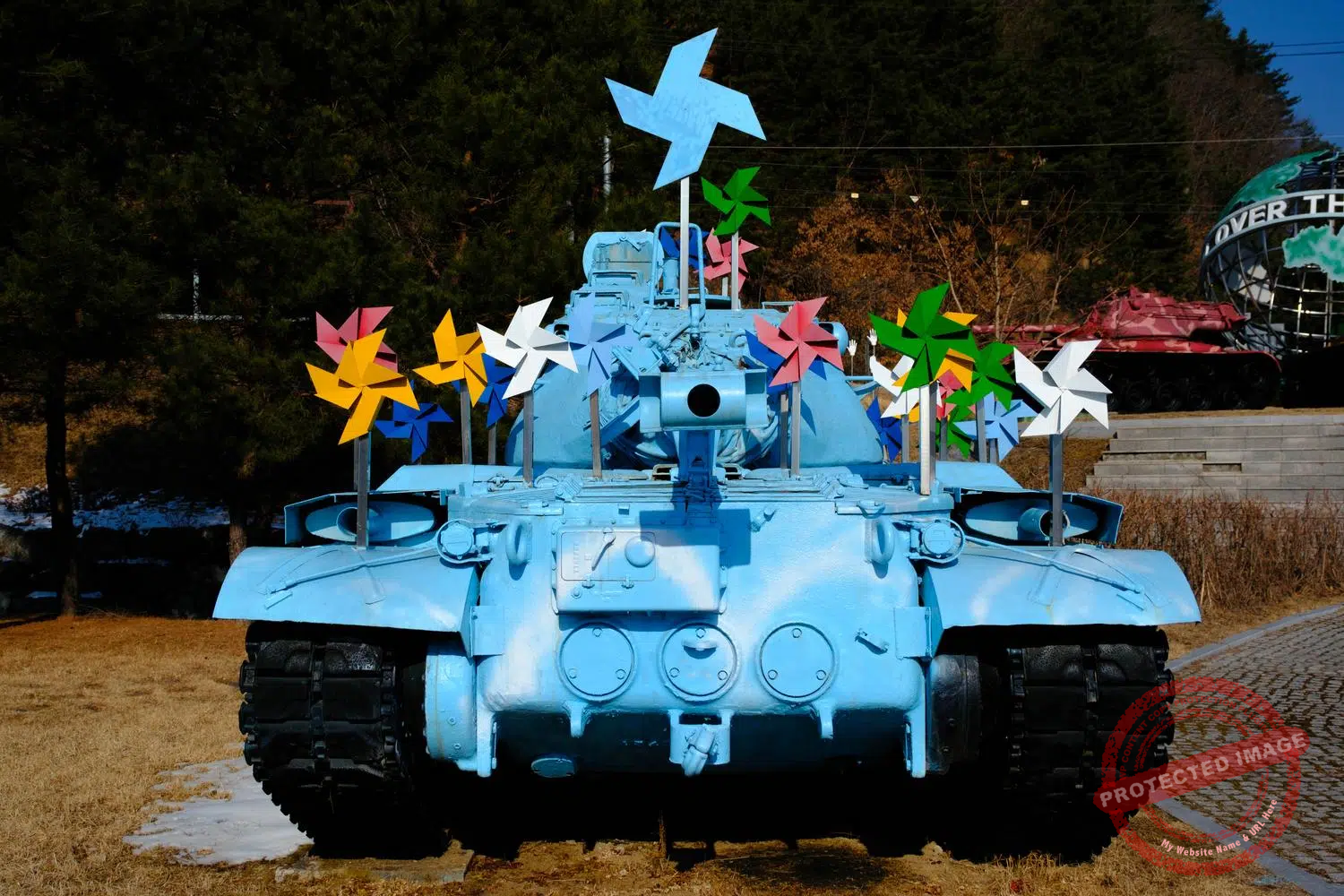
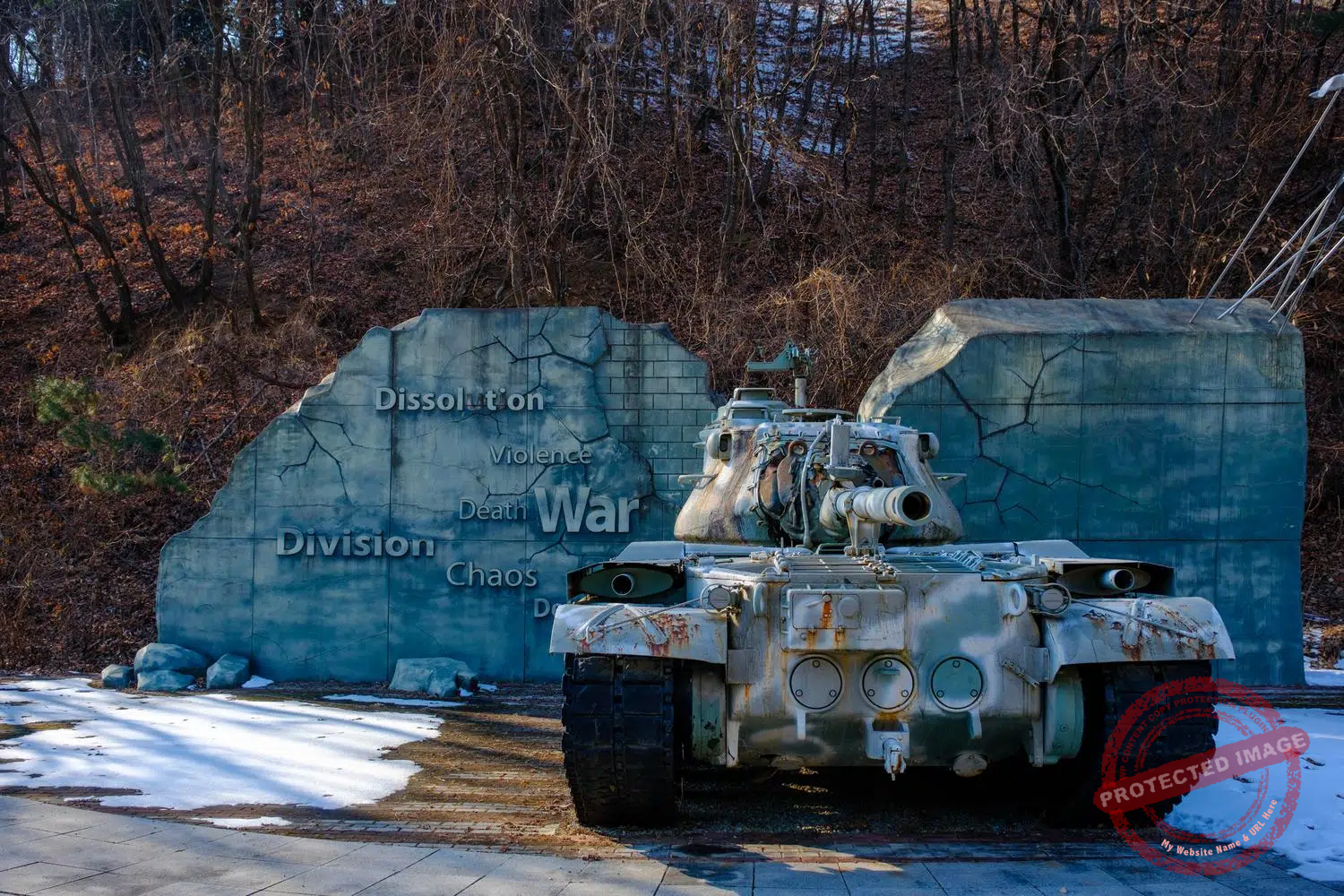
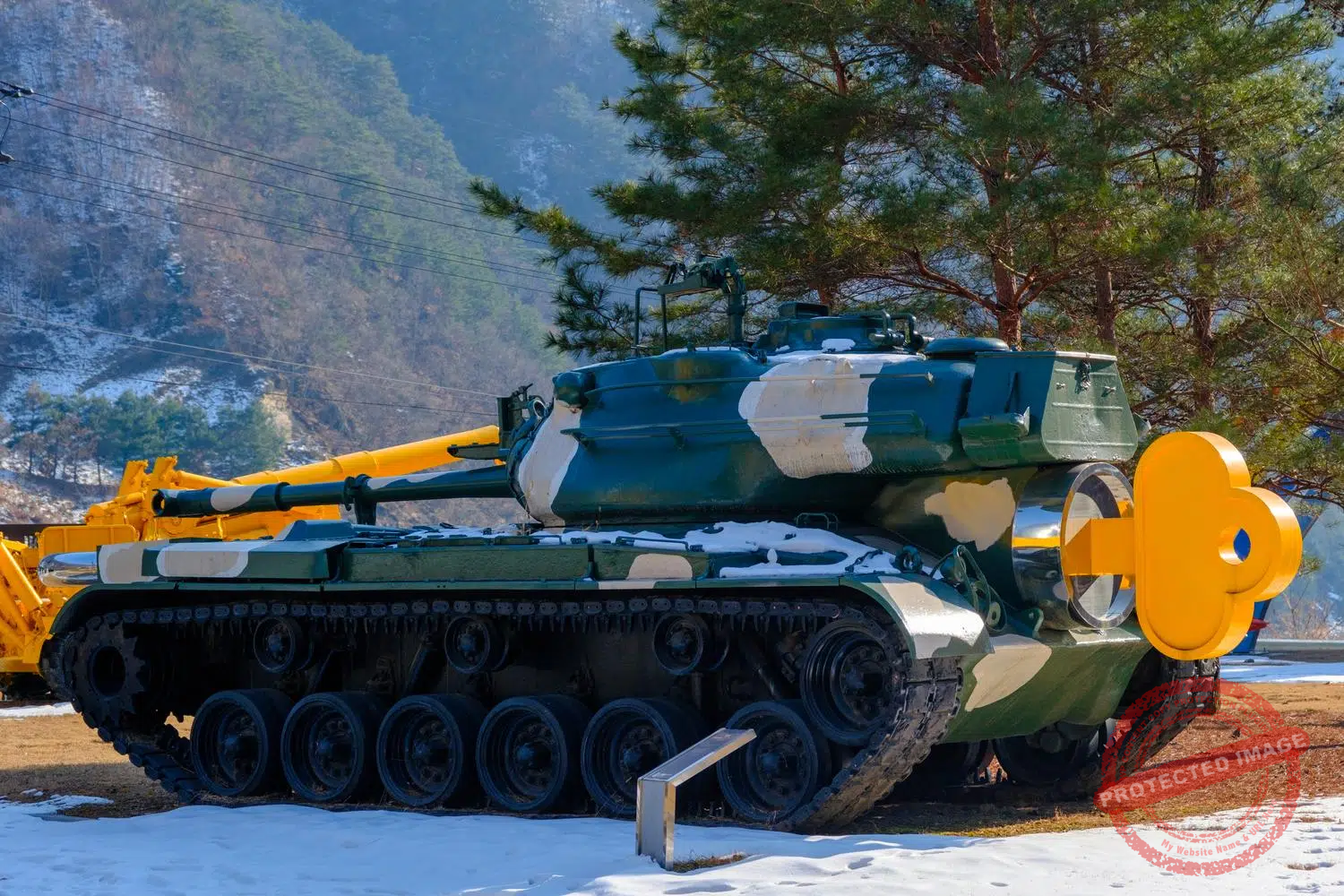
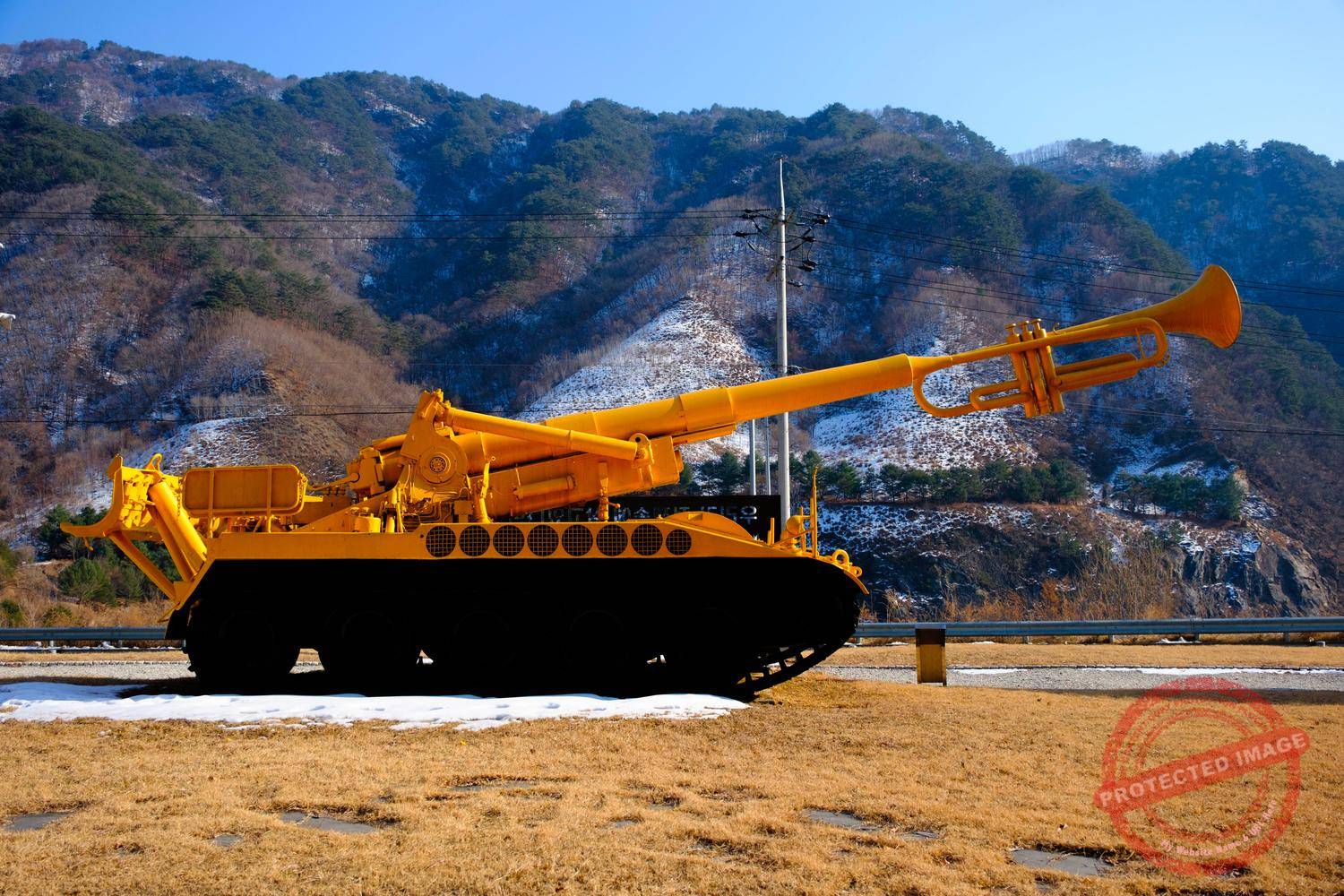
The International Art Peace Park, at the bottom of the Peace Dam (February 2025).
This post was last updated on : June 19, 2025
Previous : Central Frontline
Next : The Punchbowl
Understand
Themes