The Punchbowl
펀치볼
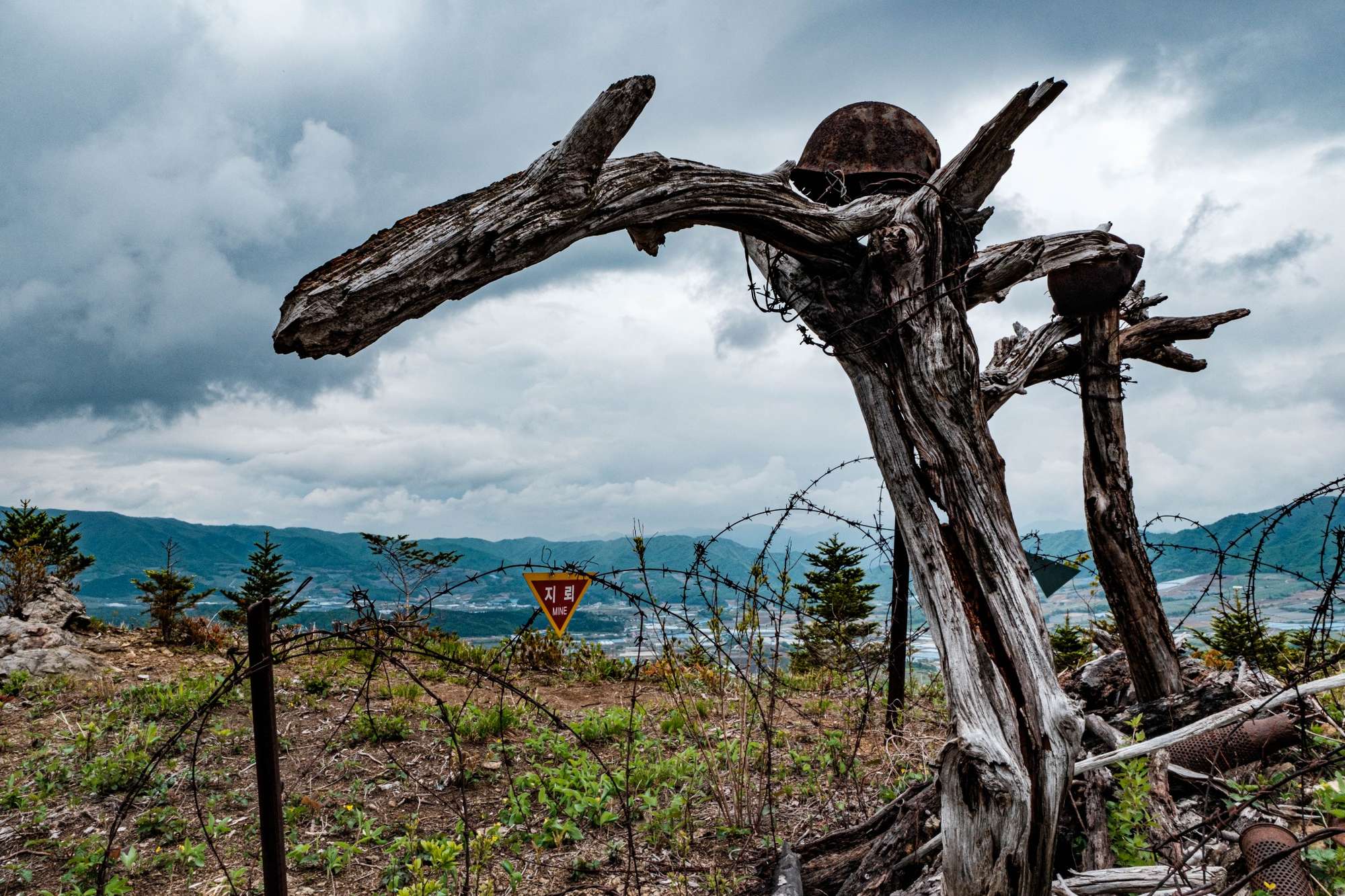
Reconstitution of “bimok” – makeshift graves dug on battlefields during the Korean War, made of pieces of wood and personal objects of the deceased – on a hiking trail in the Punchbowl (May 2025).
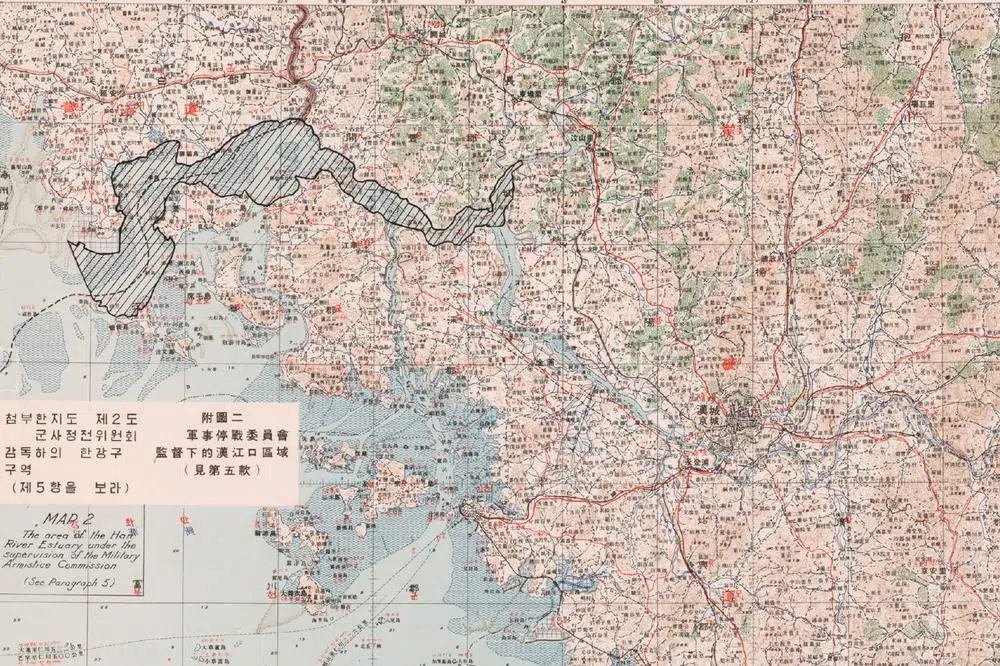
The expression “Punchbowl” was coined by U.S. military and war correspondents when they discovered this bowl-shaped coastal basin during the Korean War. The area’s nickname stuck with it after the end of the conflict, even among Koreans, supplanting its official name of Haean Basin in everyday language and on street signs.
The Punchbowl sits at 400–500 m above sea level, enclosed by ridges and steep slopes of 40° to 50°. It remained North Korean territory until the early autumn of 1951. It then became the site of fierce engagements whose names – Bloody Ridge, Heartbreak Ridge… – have survived to this day as a reminder of the harshness of the fighting, as U.N. forces advanced to control the basin and the high grounds surrounding it.
Nine key-battles were fought to control as many ridges, hilltops and valleys in the area between August and September 1951: Bloody Ridge, Heartbreak Ridge, Punchbowl, Hill 812, Hill 983, Hill 1026, Gwandae-ri, Kanmubong Ridge and Yoke Ridge. These were the last battles of movement of the Korean War, which soon after turned to a war of positions along an almost unchanged front line – which today marks the military demarcation line.
Credible historical estimates suggest between 4,000 and 5,000 U.N. forces soldiers and between 20,000 and 25,000 Chinese and North Koreans were killed there in less than two months. Among the nine battles, Gwandae-ri holds a special place in South Korea, especially among its Marine Corps, whose first major victory was won hand-to-hand with bayonets against fierce Chinese and North Korean resistance. The anniversary of this battle is still celebrated every year.
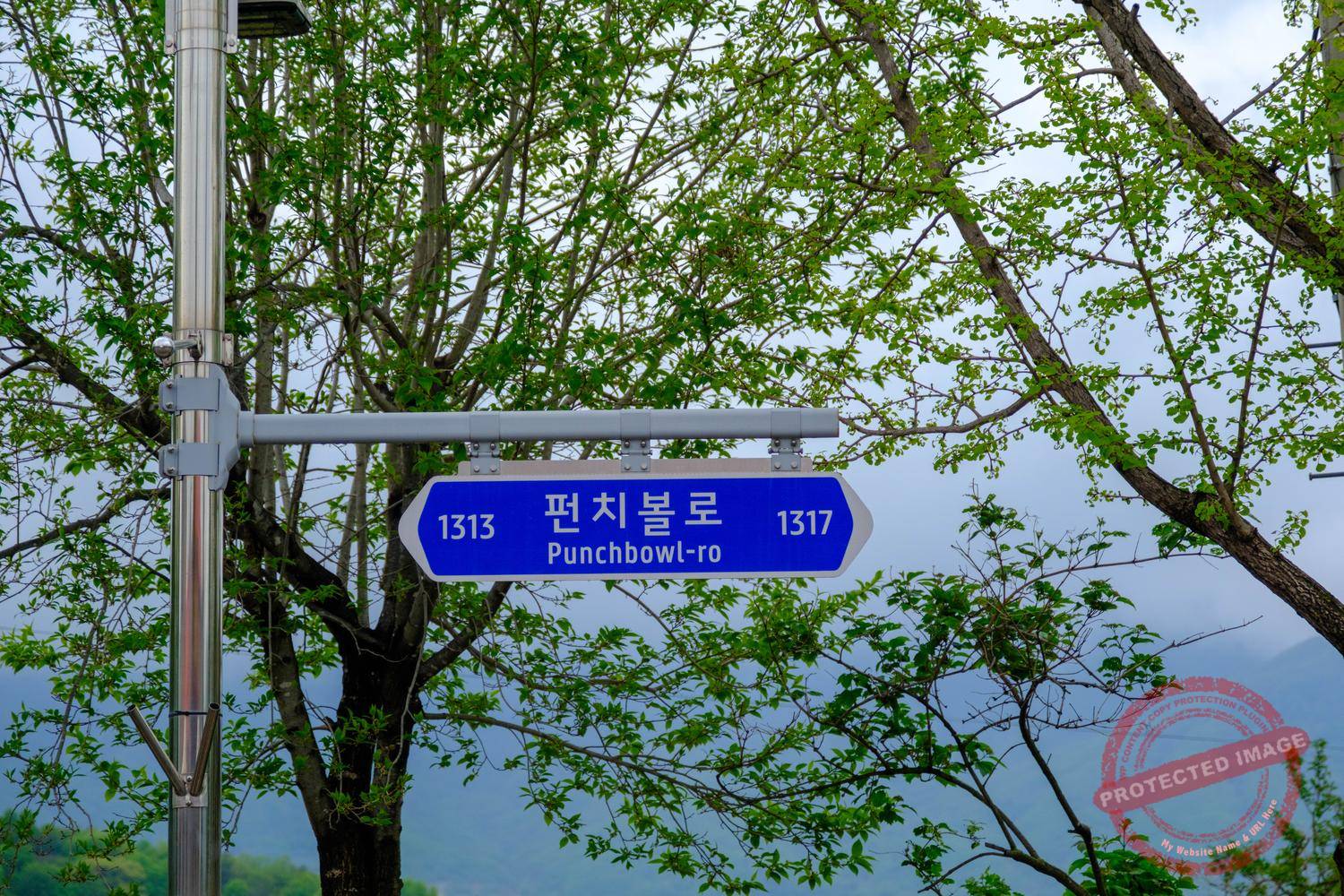
From peace pigs to punch: In everyday language and even on street signs, the nickname Punchbowl given by US soldiers and reporters during the Korean War has replaced the official name of Haean Basin, which means “Pigs of Peace”. Legend has it that the basin, a very humid area, was once infested with snakes. On the advice of a monk, the peasants began raising pigs, the natural enemy of snakes, and the reptiles disappeared (May 2025).
With the advance of United Nations troops and the withdrawal of Communist forces, the entire population of the Punchbowl was evacuated to North Korea. For a few years after the armistice, the basin remained a ghost region, off-limits to civilians, riddled with mines and the makeshift graves of unknown soldiers.
From 1956, the South Korean government decided to repopulate the basin, distributing land to veterans and other deserving citizens. All Punchbowl’s current inhabitants are immigrants or their descendants who arrived in several waves (the region today also boasts a large foreign community, mainly from Southeast Asia, who arrived recently as laborers for agricultural work).
The movement gathered pace in the 1960s, but life was not rosy for the Punchbowl early settlers. The government only provided blankets and military tents for the newcomers. Many were killed or severely wounded by mines while clearing land for cultivation. What’s more, as the village was located very close to enemy territory, draconian restrictions applied, including a total blackout and curfew every night, with even the prohibition of leaving one’s tent to go to the bathroom.
In 2013, the Punchbowl Basin was officially reclaimed from the Civilian Control Zone, allowing full civilian residency and activity. Today, the Punchbowl, which has a population of around 1,700, has developed tourism. A 72-kilometer network of forest hiking trails criss-crosses the basin, traversing ridges, bunkers, observatories and warning signs marking unidentified minefields. Due to safety, visitors must be escorted by certified forest trail instructors or guides and a quota of 200 hikers per day is enforced.
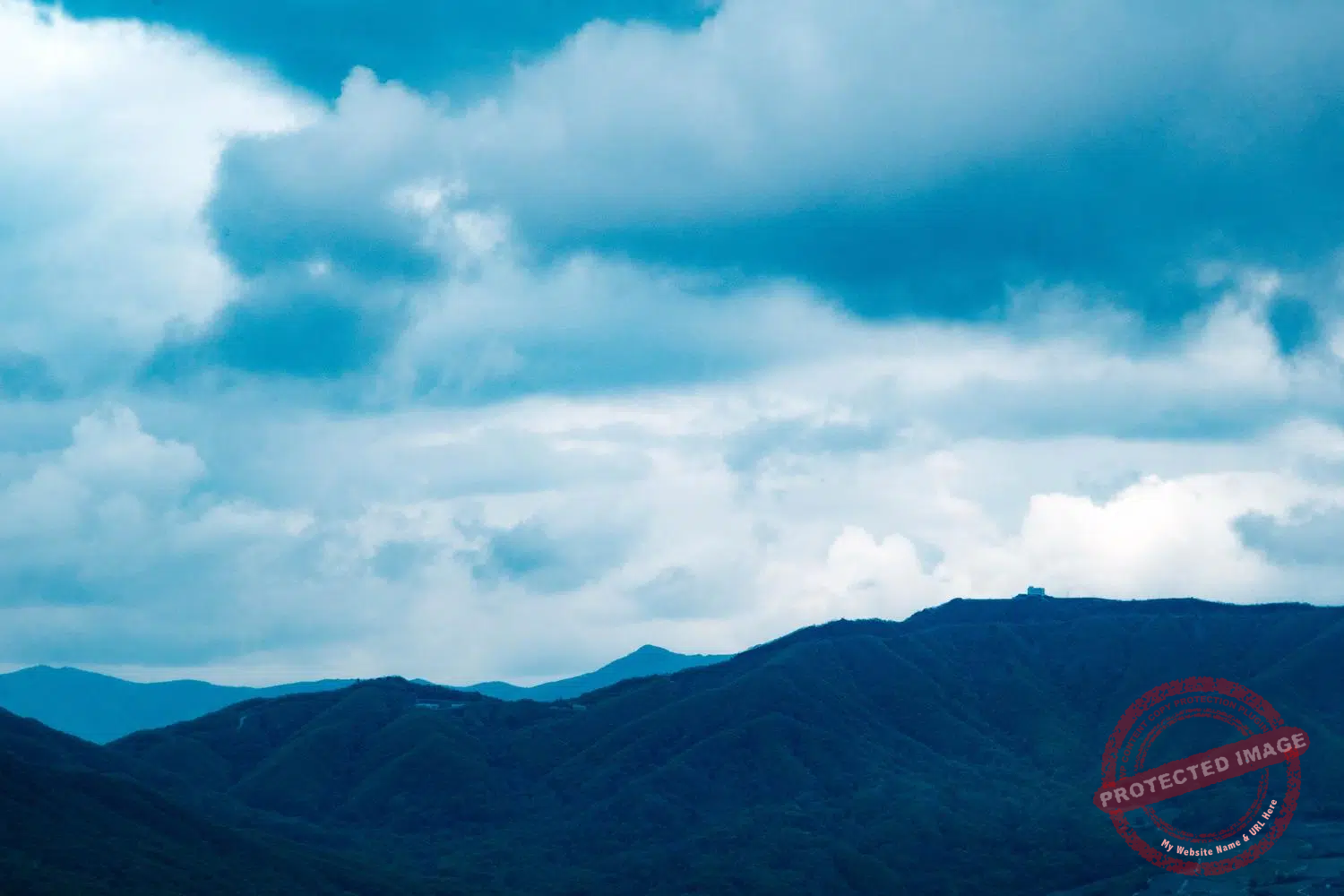
The Eulji Observatory on the ridge of Gachilbong Peak, over the Punchbowl basin. The mountains behind are in North Korea (May 2025).
At the top of Yoke Ridge stands the Eulji Observatory, deep inside the DMZ and some 350 meters from the border. The massive silhouette of this military building that looks directly across to the Kanmubong Ridge in North Korea can be seen from all over the basin. Visitors are admitted, subject to particularly stringent precautionary measures. Access is by convoy of cars, escorted at the front and rear by military vehicles. A black sticker is affixed to the lenses of all cell phones, and even the cars’ dashcams must be covered with black hoods. At the entrance to the DMZ, the underside of every car is scrupulously inspected with the aid of mirrors, and military guards keep an eye on visitors at all times to prevent them from taking photos or doing anything stupid.
Another moment of great frustration as the scenery from up here is fantastic. Particularly the demarcation line marked by a shrub that seems to be within reach, just a few metres from the first South Korean observation post and fortifications. Apart from the JSA, the Eulji Observatory is the closest point to the border that civilian visitors can access.
A waterfall on the North Korean side, clearly visible from the Eulji observatory, was the scene of another of the strangest episodes in the confrontation between the two Koreas since the end of the war, as researcher Lee Jae-eun recalls in a paper published in 2018 by the Johns Hopkins University School of Advanced International Studies:
During 1970s to 80s, North Korean military used to collect its female soldiers and made them bathe there in South Korean soldiers’ sight to allure them. Looking over the border, the naked women in the waterfall looked so seductive, South Korean soldiers called the place “Angel’s waterfall.” As a response, South Koreans built a swimming pool on the top of neighboring Gashilbong, a mountain 1,242 meters above sea level, and held a Miss Korea swimsuit competition in 1992. Three sides of the fitting room in this swimming pool were made of glass so that it would be visible from the North Korean side.
These days, there are no more North Korean angels in the waterfall (they’ve moved to the internet where they can bait anyone with a connection), and the pool used for the swimsuit contest, at a time when #MeeToo was still a long way off, is reportedly used as a sports ground for the South’s military.
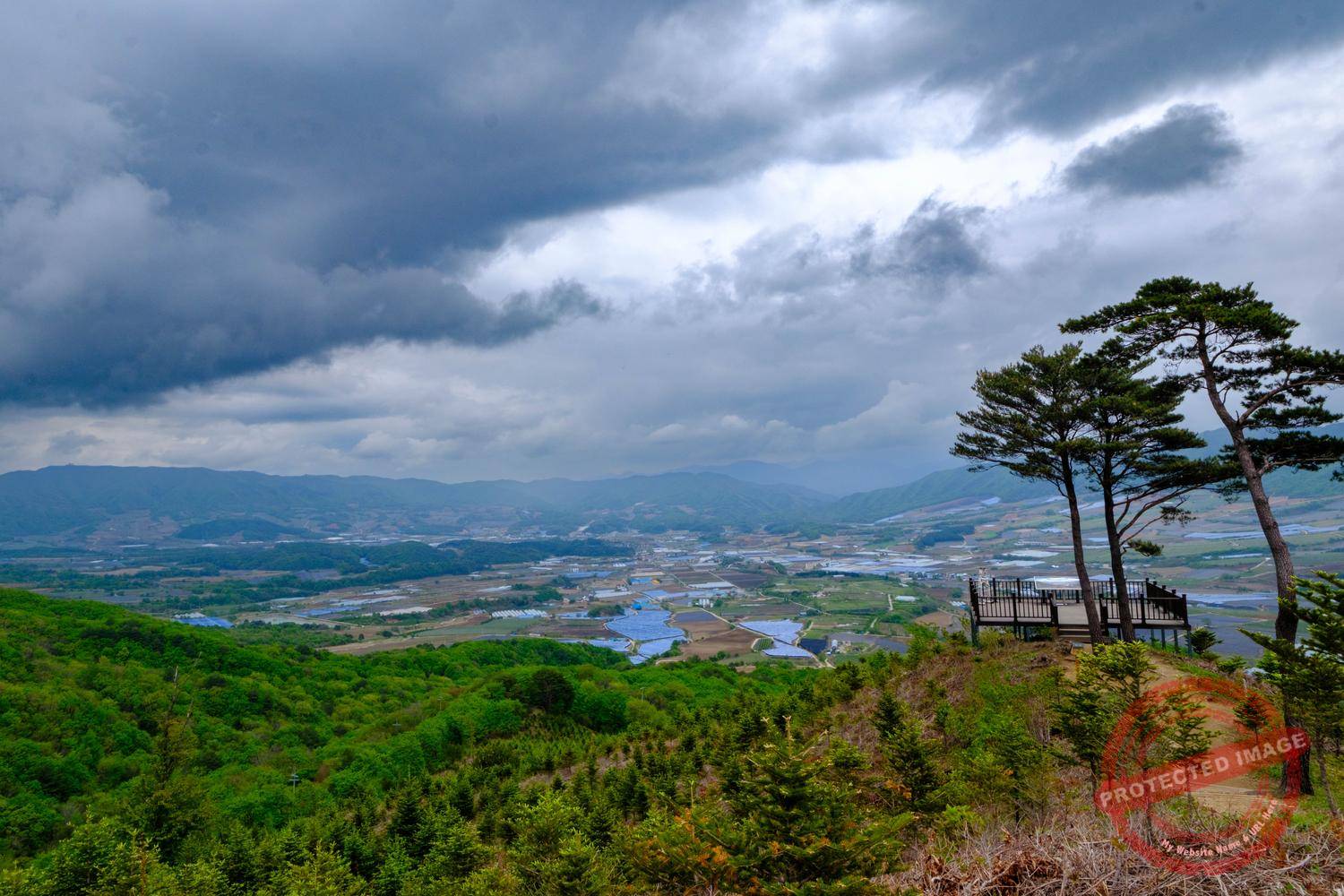
The Punchbowl Basin (May 2025).
The Punchbowl is also the site of the 4th infiltration tunnel, the last discovered to date, in March 1990, some 1,200 metres from the demarcation line. Like its counterparts in Cheorwon, Yeoncheon and Paju, this tunnel, some two meters high and dug 145 meters underground, was intended for a possible invasion of the region by the North Korean army.
The tunnel used to be open to visitors, but has remained closed following an accident in October 2022, during an item relocation at the nearby exhibition hall where Korean-War era military equipment was on display. Two soldiers were removing items packed in sacks from the exhibition area when suddenly, an M14 anti-personnel mine exploded, seriously injuring both. It was discovered that the mine had been exhibited for about 30 years wholly unbeknownst to military or local officials and, like many of the other weapons on display, had never been deactivated.
Following the accident, the military conducted a comprehensive sweep of all security exhibit halls and war museums across the country, and found that 1,470 live ordnances (mines, grenades, mortar shells and other machines of death) had been on display across 87 exhibits, many without proper deactivation.
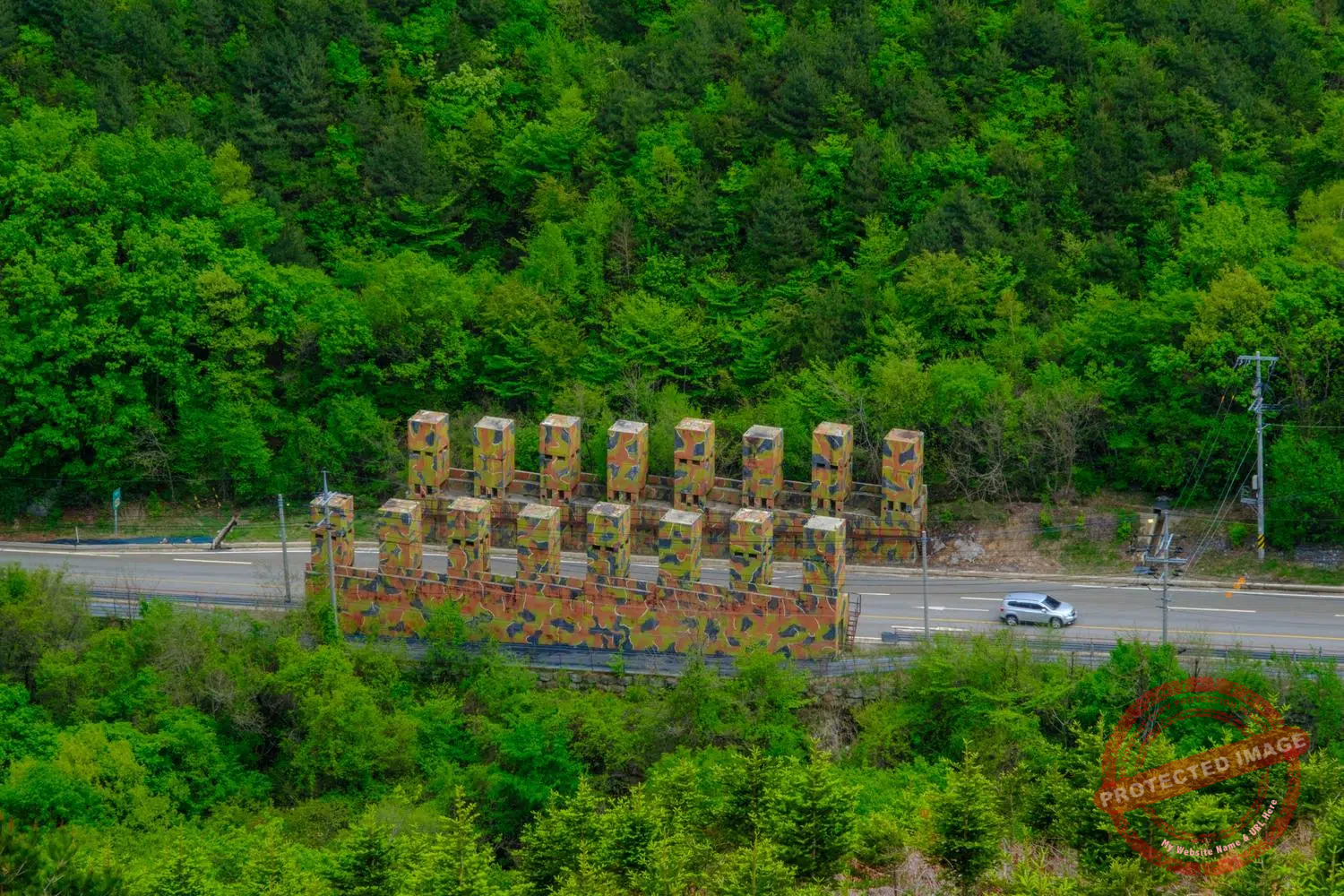
A car drives through an anti-tank obstacle in the Punchbowl basin (May 2025).
The Punchbowl is home to a war museum, which opened in 2000 and stands out for its originality and architectural quality.
Designed by Lee Seong-gwa, the Yanggu War Memorial Hall gives a very different impression from the martial gigantism of the Korean War Memorial in Seoul, the work for which this Korean architect is best known. It is a modest, rather mysterious single-storey building, that plays with tensely empty space to emotionally prepare visitors for the war’s gravity.
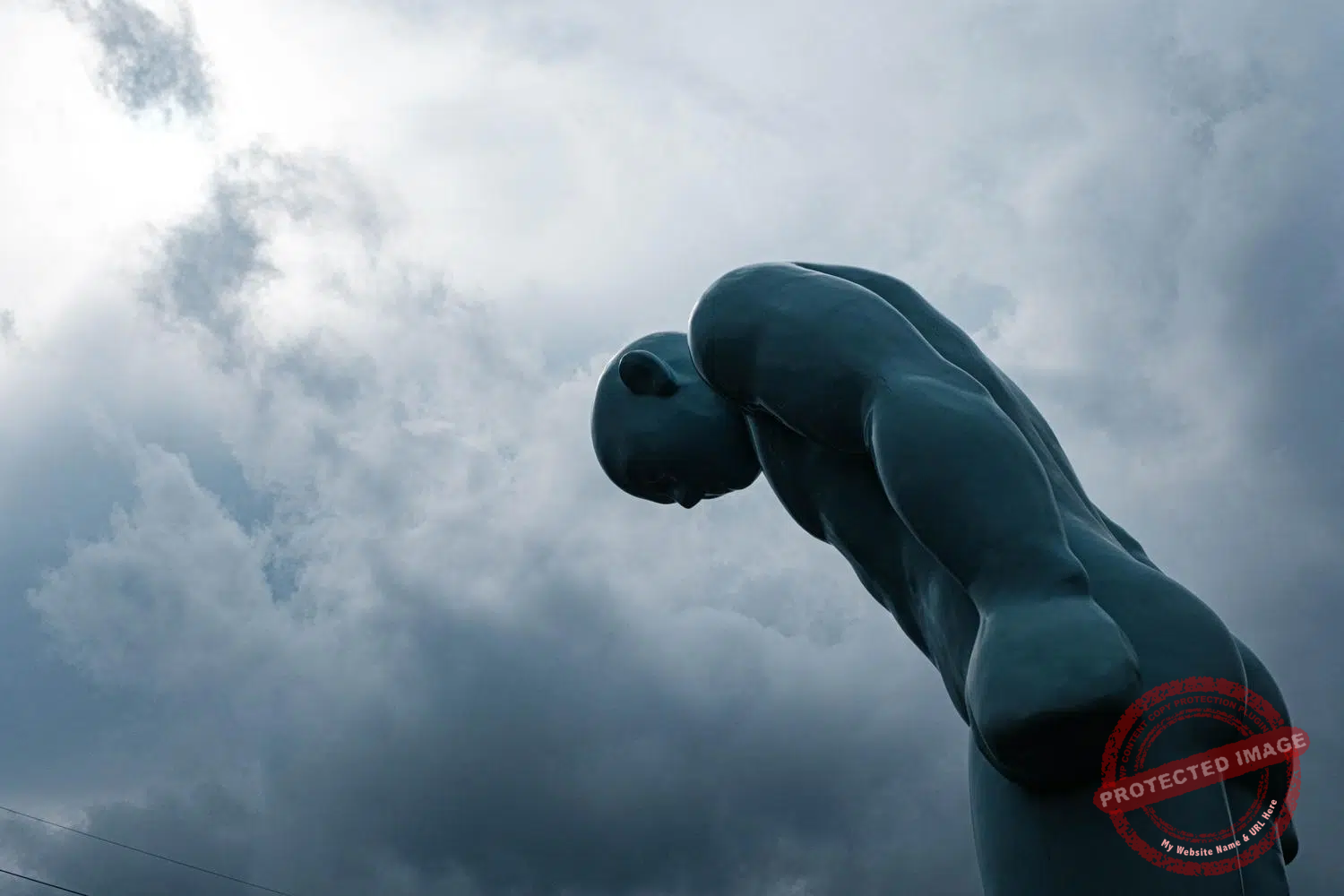
The Greetingman (인사하는 사람, Insahaneun Saram) positioned at the forefront of the Yanggu War Memorial Hall, was unveiled in 2013 to commemorate the 60th anniversary of the Korean Armistice. Part of a series, this sculpture by renowned artist Yoo Young-ho-ho serves as a symbol of respect toward those who fought and fell in the fierce battles around the Punchbowl. The statue stands approximately 6 meters tall, painted sky‑blue to symbolize neutrality and openness. Other Greetingmen are located in a Korean War memorial park in Montevideo, Uruguay, and in Panama City. Yoo Young-ho has described the statue as a “silent ambassador of goodwill” (May 2025).
At the entrance, nine columns recall the nine Korean War battles fought in the Punchbowl region. Unlike most other war museums in Korea, there are few monumental sculptures here exuding the heroic deeds of the combatants, and more reminders of the horrors and suffering of war.
A statue of a soldier sitting on the ground on the frontline, reading what is probably a letter from his parents or wife, is unique in the emotional power it exudes (even though most young visitors think that the soldier is looking at his smartphone… and I must shamefully confess that this was the first thing that came to my mind too).
In total contradiction with the spirit of the place, a kind of combat video game in which, for some coins, visitors could have fun shooting virtual North Korean soldiers was installed for a time in one of the exhibition halls. This bizarre arcade-like attraction sparked some controversy between those who found it inappropriate and those who thought it was just fine. The issue was solved in a very Korean way: one day in 2019, the game broke down and was never repaired. The museum has since regained its serenity and respectuous atmosphere.
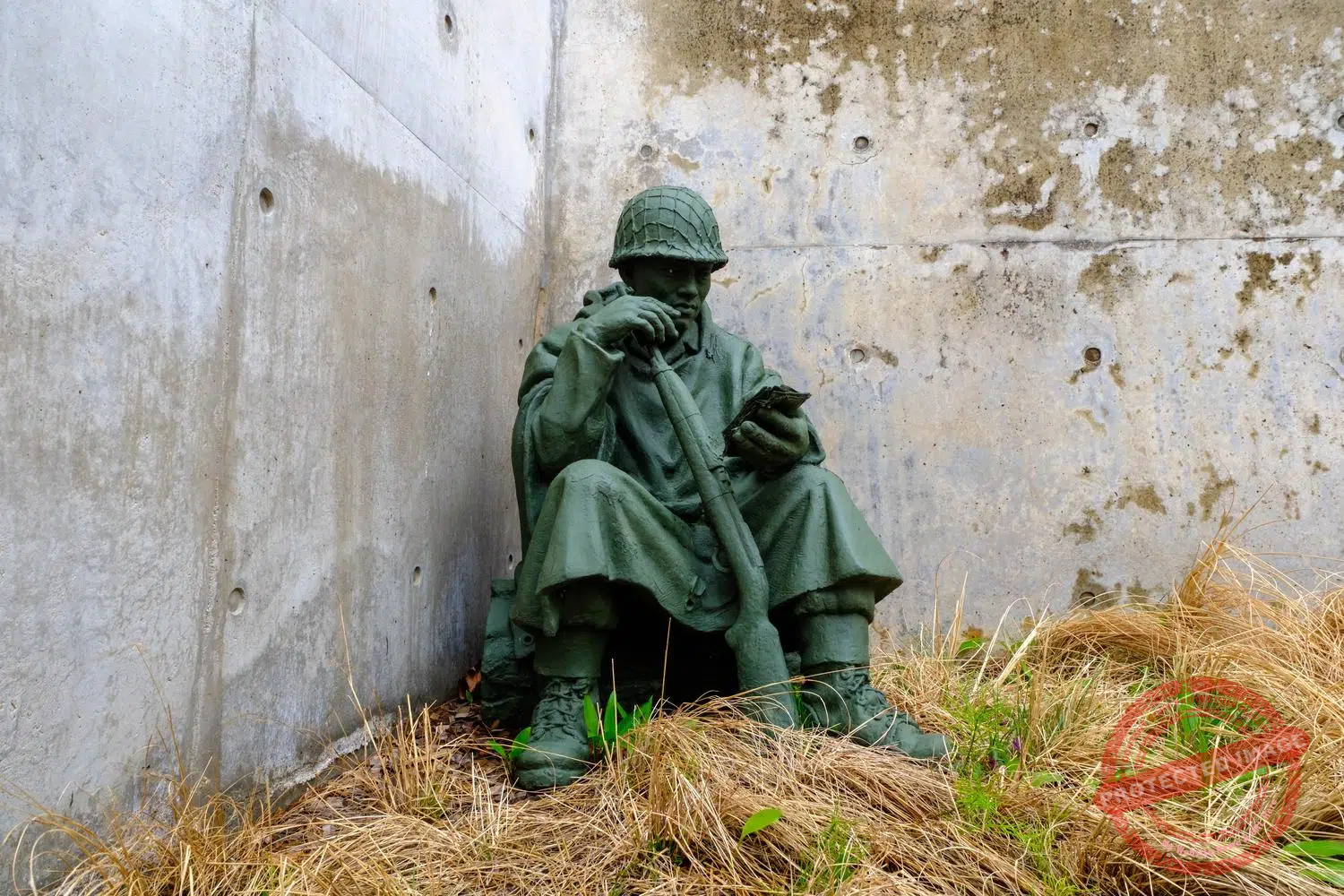
No, he is not looking at his smartphone ! (May 2025).
This post was last updated on : July 6, 2025
Previous: Peace Dam
Next: Eastern Frontline
Understand
Themes