Unification Village
통일촌
A unique village established in 1973 on the model of an Israeli kibbutz to repopulate the area along the DMZ with families of war veterans.


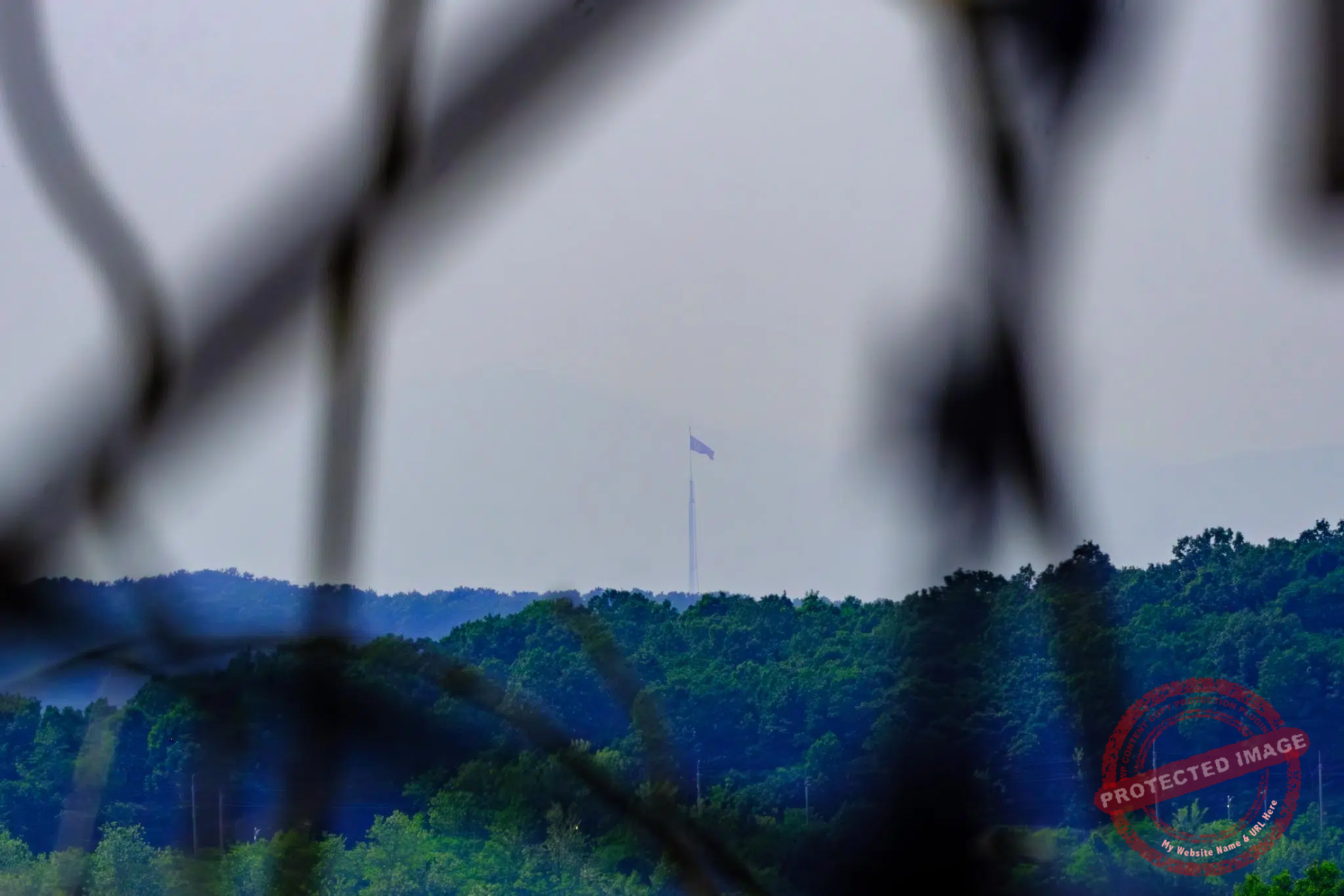
A giant North Korean flag floats atop a 160-meter high flagpole across the border, seen from Paju’s Unification Village (May 2025).
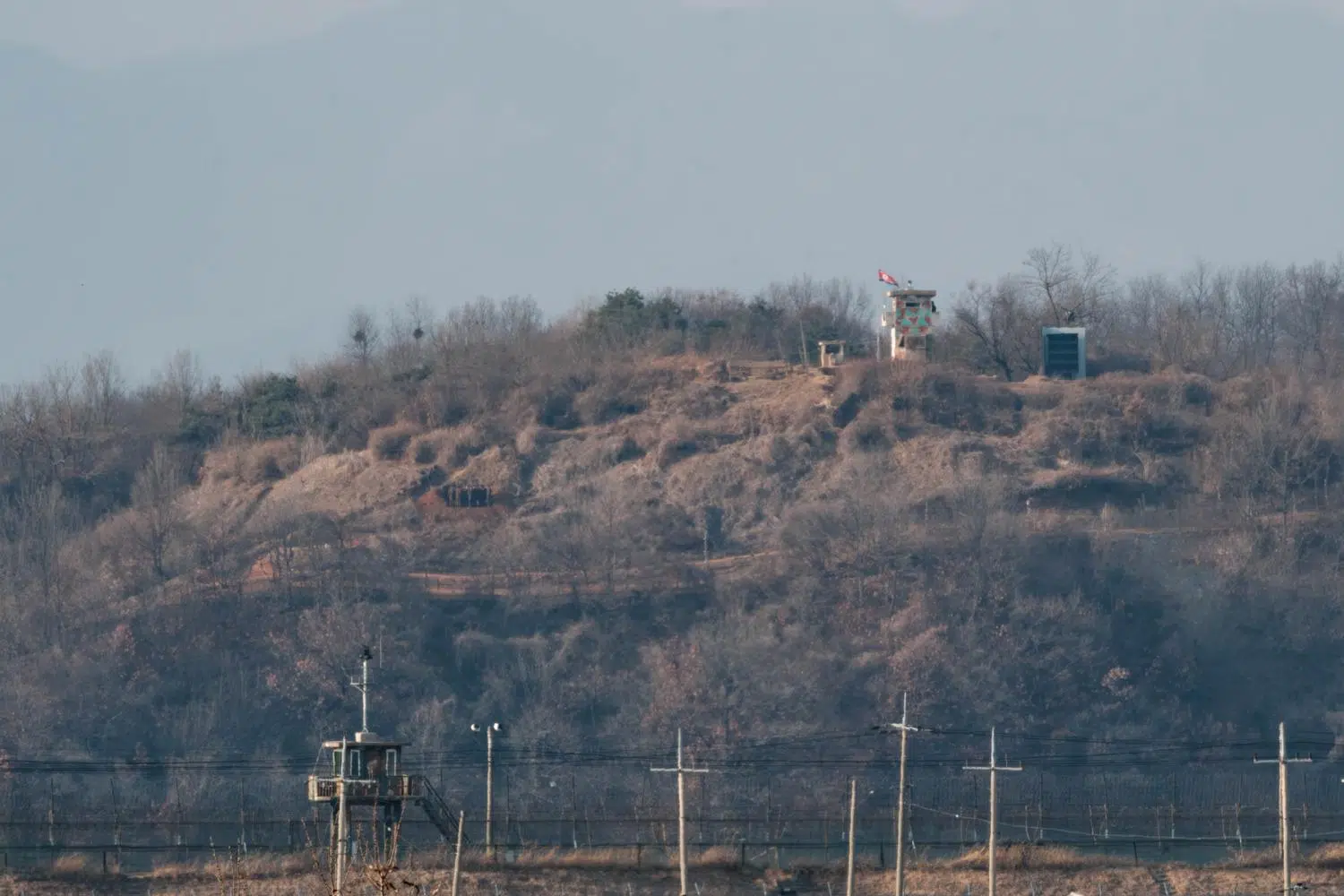
During the Armistice negotiations, both sides requested to retain one civilian village within the 4-km wide Demilitarized Zone for symbolic and political considerations. These two villages – Kijong-dong in North Korea and Daeseong-dong in the South – face each other on opposite sides of the military demarcation line which, like everywhere else in the DMZ, is only marked by a few rusty signs. Each country has erected in its village a huge flagpole at the top of which flies its flag, visible from dozens of kilometers away.
Kijong-dong (often called the “Propaganda Village” by the South Koreans) is widely believed to be uninhabited, even if the surrounding fields are well cultivated. In the South, Daeseong-dong, also called the “Freedom Village”, is a genuine farming community with a civilian population of around 140. As there are no obstacles separating them from North Korea, and their fields are sometimes adjacent to the border, they live under the constant protection of the United Nations Command Security Battalion, made up of South Korean and American soldiers. They enjoy certain privileges such as tax and military service exemptions. But their lives are regulated by curfews, daily headcounts, ID checks, military escorts and the fear of North Korean infiltrators who might sneak into their village at night to try to abduct them (it happened before).
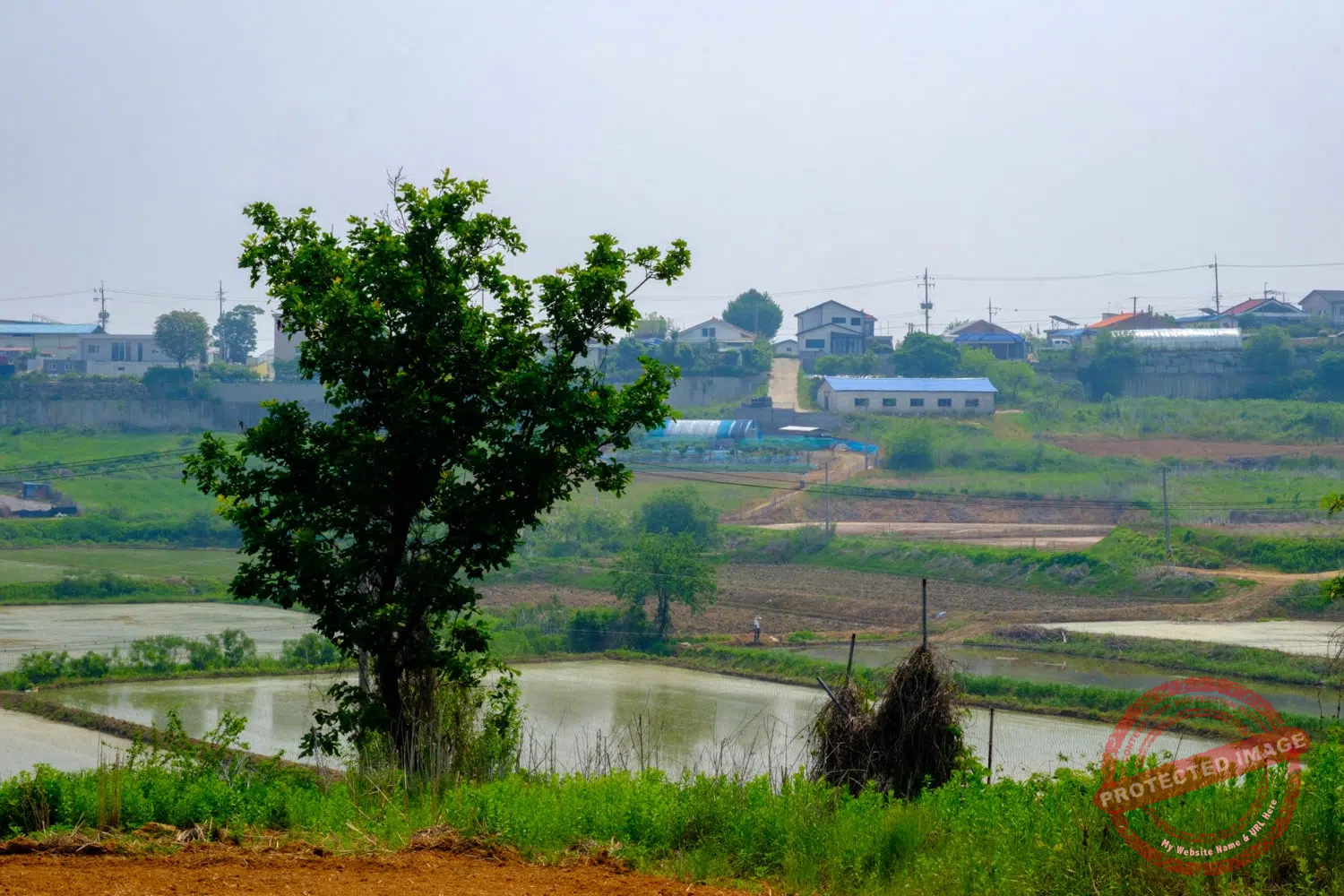
The Unification Village, or Tongilchon, and its surrounding fields, inside the Civilian Control Zone in Paju City (May 2025).
Daeseong-dong is the only South Korean village located within the DMZ itself. Another 113 settlements sprang up in the early 1970s inside the Civilian Control Zone (CCZ), another hyper-controlled area adjacent to the DMZ, at the initiative of the authoritarian president Park Chung-hee who wanted to repopulate and reinforce the defense of the border zone devastated by fighting and bombing during the war. The CCZ, also previously known as the “no farming zone”, has shrunk considerably over the years at the request of local residents who wanted to expand their farmland. Today only seven villages remain within the restricted area – eight, including the DMZ’s Daeseong-dong.
One of those settlements is Tongilchon, or “Unification Village”, in the city of Paju. It was built from scratch in 1973 by the South Korean government, which selected 40 families originally from the area but displaced during the war and 40 families of war veterans to live there.
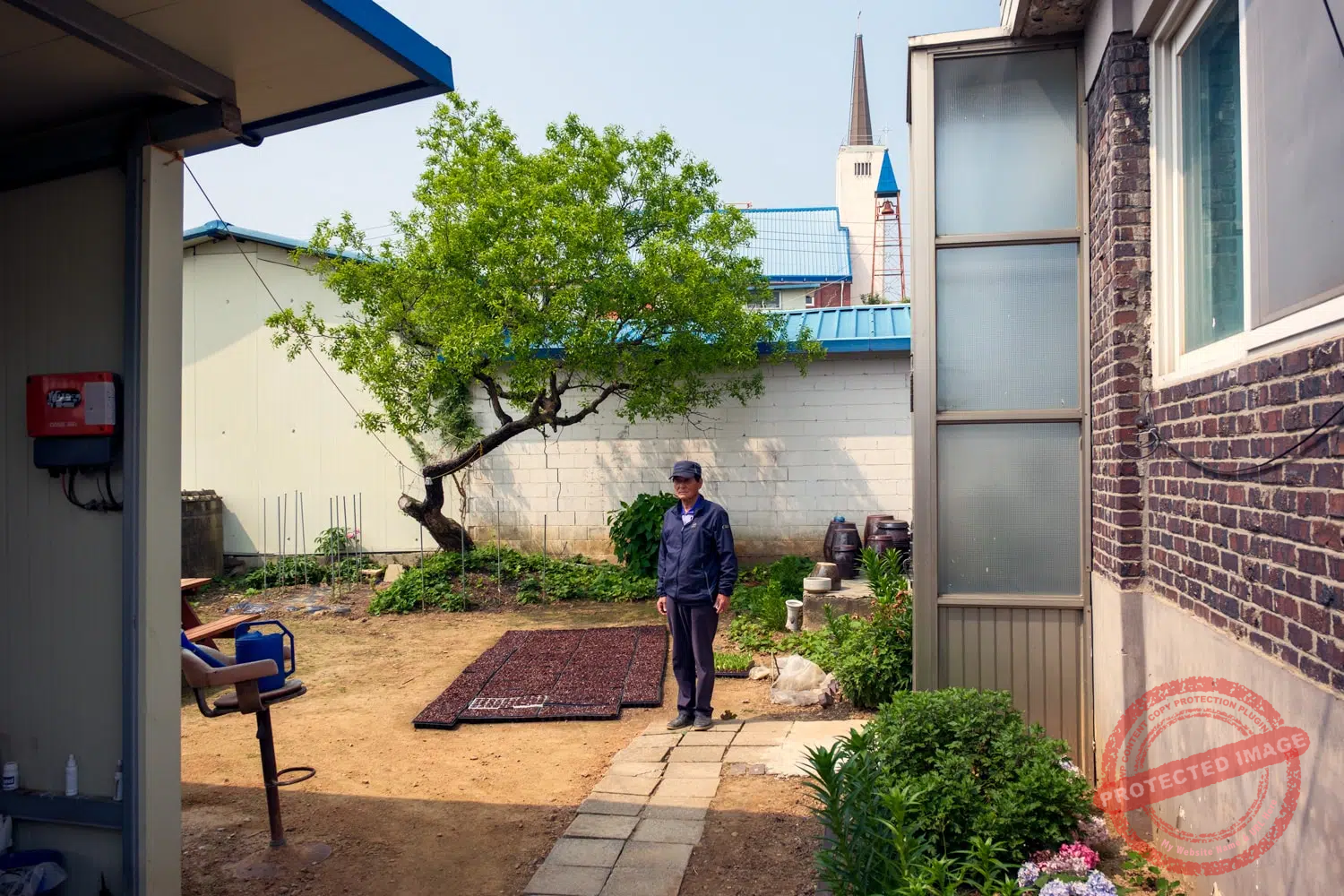
Veteran and farmer Kwon Yeong-han, one of the first inhabitants of Tongilchon (May 2025).
The village was built on the model of the Israeli kibbutzim with the motto: “fighting while working, working while fighting”, and with the aim of being self-sufficient both in terms of sustenance and defense against North Korea, barely two kilometers away. The settlers were offered free houses and subsidies, and farmlands were equitably allocated through a lottery. A school, churches and other facilities were also constructed.
The retired soldiers and native residents were divided into teams, each of them – men and women – alternating farm work with military training. Since its origins, the village has been equipped with an armory, air-raid shelters and bunkers.
Tongilchon now has a population of around 450, most of whom are very old. They have lived through the war, presidents from the hard-right military rulers of the 1970s-1980s and the dovish left-wing pro-engagement leaders of the 1990s-2000s. They are at the forefront of tensions, when North Korea starts sending balloons laden with filth towards the South, or broadcasts sinister noises all night long to keep everyone awake. Like many of their compatriots, most residents of Unification Village have lost all hope of unification and just want peace.
“We live very close to the North, so we just hope relations improve and there’s no war,” 87-year-old Kwon Yeong-han, one of Tongilchon’s first inhabitants, told my colleagues and me when we visited the village shortly before the 2025 presidential election in South Korea.
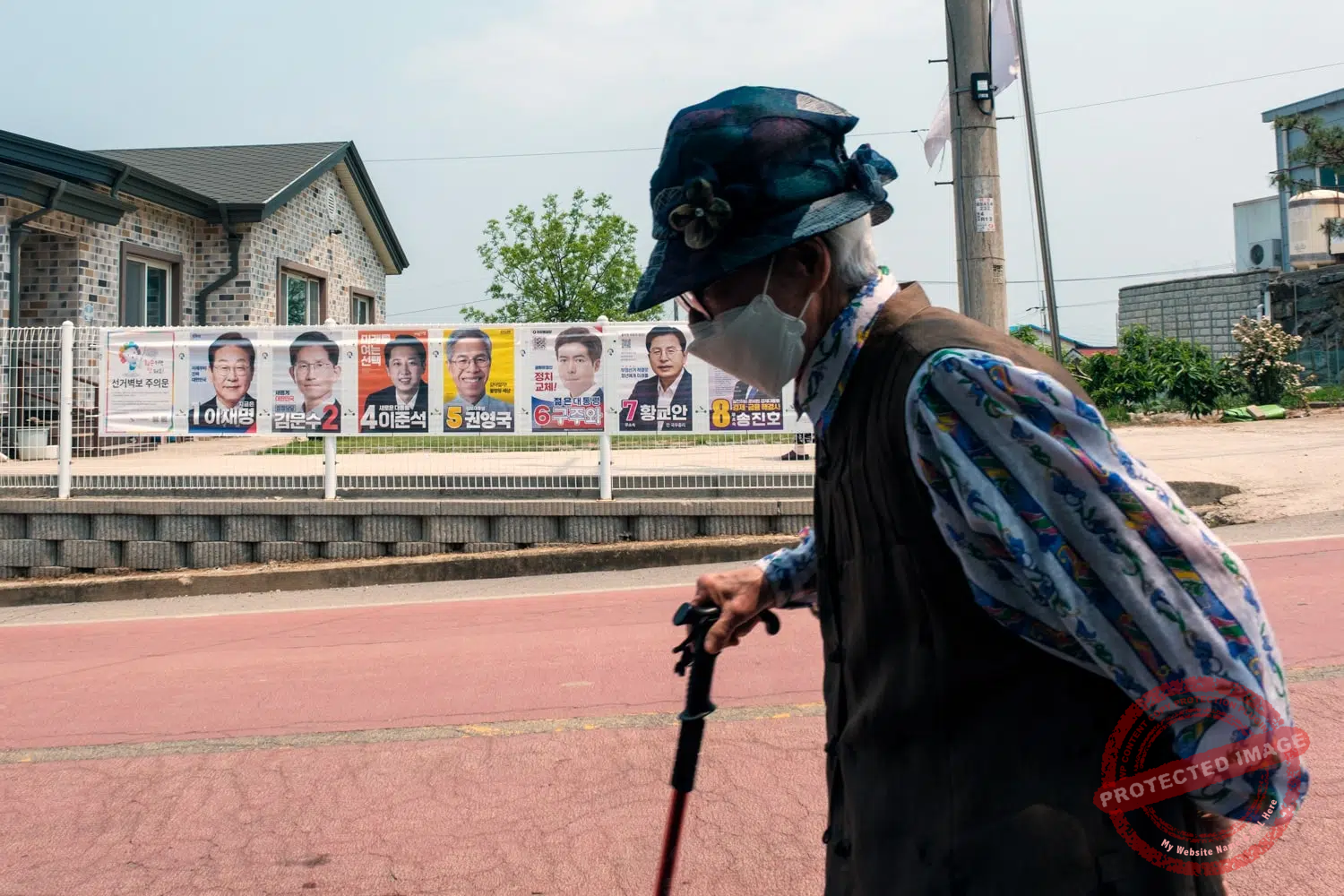
A resident of Tongilchon walks past election posters for the South Korean presidential election in June 2025 (May 2025).
Although the 8 P.M. curfew was abolished long ago in Tongilchon, movement in the area remains restricted. Inhabitants of the village and family members living outside must carry a special identity card to pass through the military checkpoint at Unification Bridge, at the entrance to the CCZ. Occasional visitors must either be part of a licensed tour or accompanied by a military escort.
The village has its own elementary school, but only 6 of the 36 pupils live in or near Tongilchon. The rest are bussed in daily from outside the CCZ. Families who agree to send their children to school in the CCZ are offered a number of advantages. “We make a lot of efforts to keep the school going, such as offering programmes that others don’t have and free extracurricular activities after school and during vacations,” said vice-principal Jong Jae-hwa.
When the CCZ is sealed off due to North Korean military activity and the school bus suspended, it falls to the teachers to drive children home.
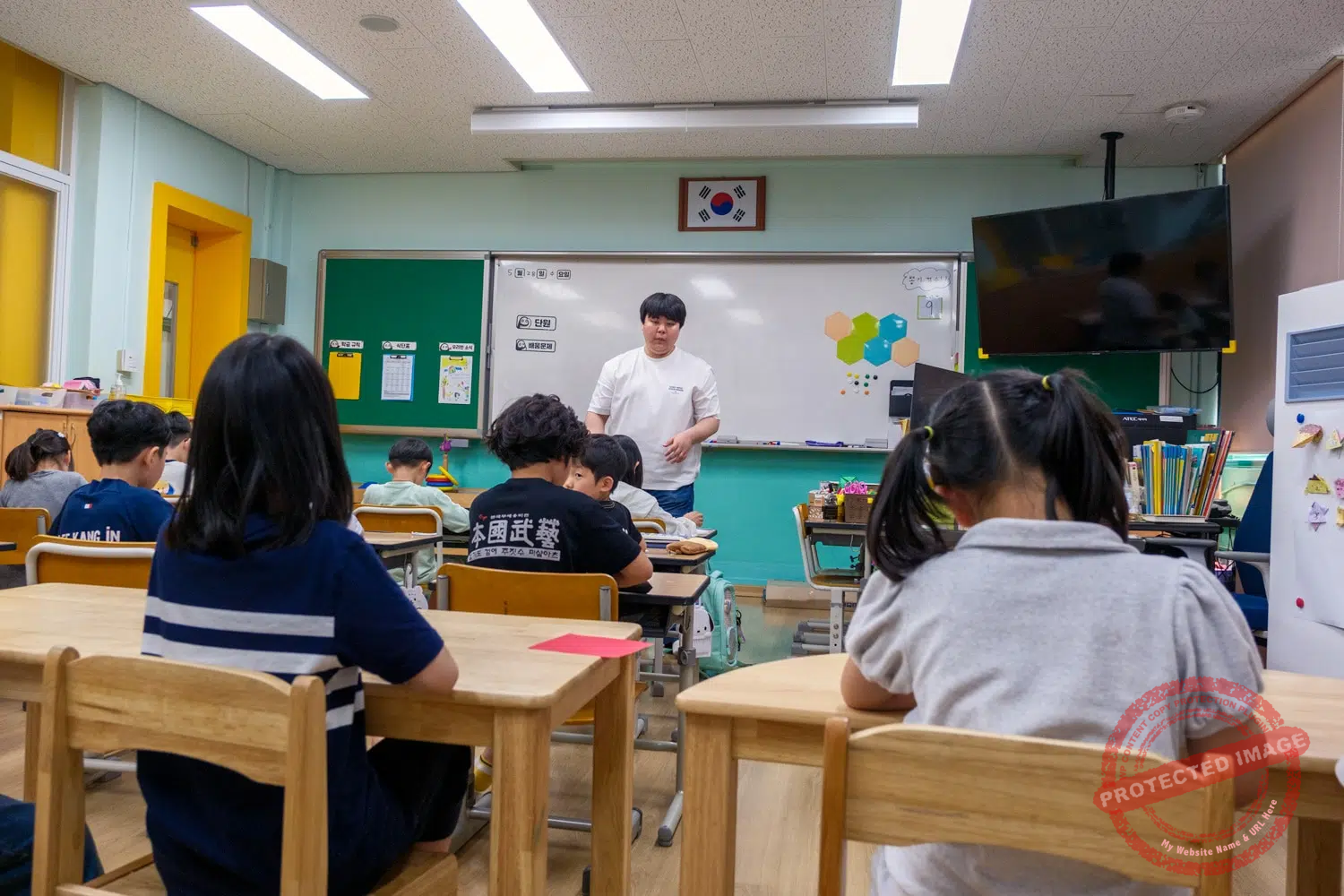
Children take an origami class at Tongilchon’s Kunnae Elementary School (May 2025).
The village makes its living from growing rice, ginseng and soybeans, most of which it sells in a souvenir store at the entrance to the CCZ, the last stop of every organized tour in the DMZ area before returning to Seoul. Buses packed with foreign visitors come and go at breakneck speed. More than 2,000 tourists stop off here every day, often for just a few minutes, to buy all manner of DMZ-branded products.
Episodic outbreaks of tension between the two Koreas are always disastrous for Tongilchon’s economy, as they result in the closure of the CCZ and the suspension of tours, depriving the village of its main source of income.

The Tongilchon souvenir store, a stop on every tourist circuit in the DMZ region and the village’s main source of income (May 2025).
This post was last updated on : June 27, 2025