Odusan
오두산
North Korean villages and farm workers to the north, shopping malls and the Seoul skyline to the south, 2,000 meters apart.


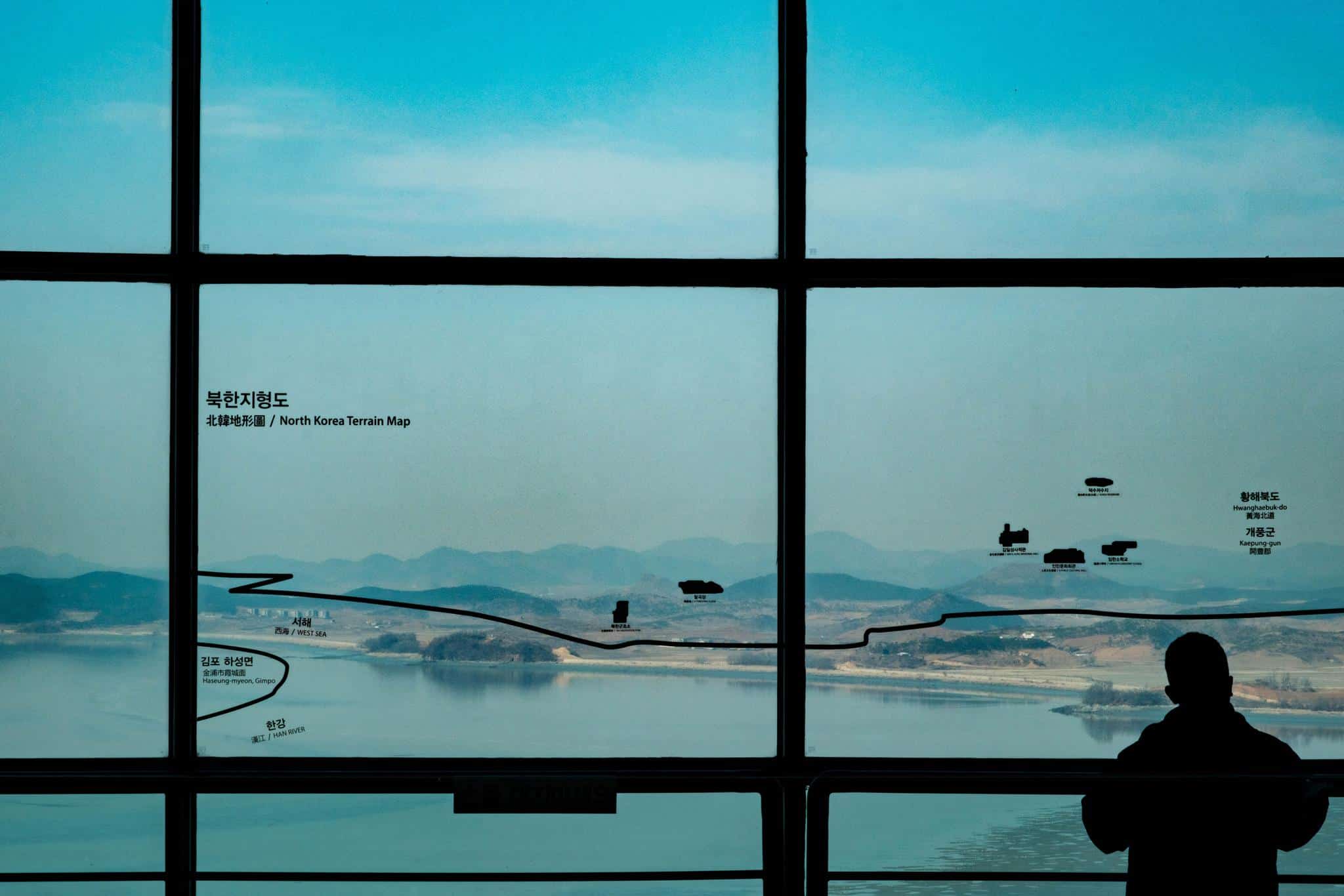
A visitor looks at North Korea from the Odusan Unification Observatory café (February 2025).
The Odusan Observatory, in Paju City, is the closest place to Seoul from which one can observe North Korea without booking a tour or going through any lengthy security screening. Less than an hour by taxi from downtown Seoul, anyone can come here to see North Korean rural life a mere 2,000 meters away.
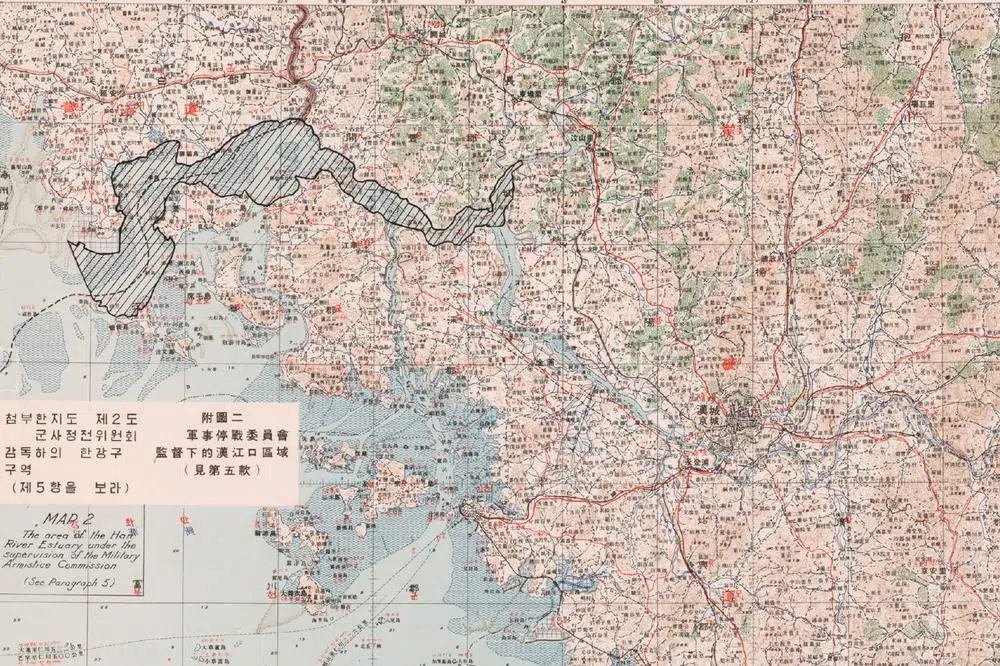
The site was not chosen at random. Perched atop the 118-meter Odusan hill at the confluence of the Han and Imjin rivers, it commands a natural panorama in all directions. On a clear day, one can see Songaksan Mountain above Kaesong in North Korea to the north and the 63 Building skyscraper in downtown Seoul to the south.
The military logic of the location is obvious. Korean historians identify this hill as the site of Gwanmiseong, a medieval fortress fought over for centuries. The ruins remain partially visible at the observatory’s perimeter.

Odusan faces North Korea, 2 kilometers across the confluence of Han and Imjin rivers (September 2024).
The observatory was established in 1992 by the South Korean Ministry of Unification on President Roh Tae-woo’s directive. As many others, it was created to console the feelings of dispersed families and to serve as an educational site for Koreans and foreign visitors alike. It was the second of its kind in the country, after the Goseong Unification Observatory on the East Sea coast, nine years earlier. Its futuristic silhouette is visible from afar. I have always wondered what North Koreans think when they see this UFO-like structure from their side of the border.
The massive building has one underground and five above-ground floors. Its indoor halls display North Korean household items, textbooks and daily necessities, in addition to temporary exhibitions on the theme of the Korean Division. There is also a movie theater, observation rooms and large outdoor terraces equipped with free telescopes, some fitted with assisted reality devices. The observatory’s top floor has a café from where you can watch the Workers’ Paradise while sipping a capitalist iced americano or taking a power nap.
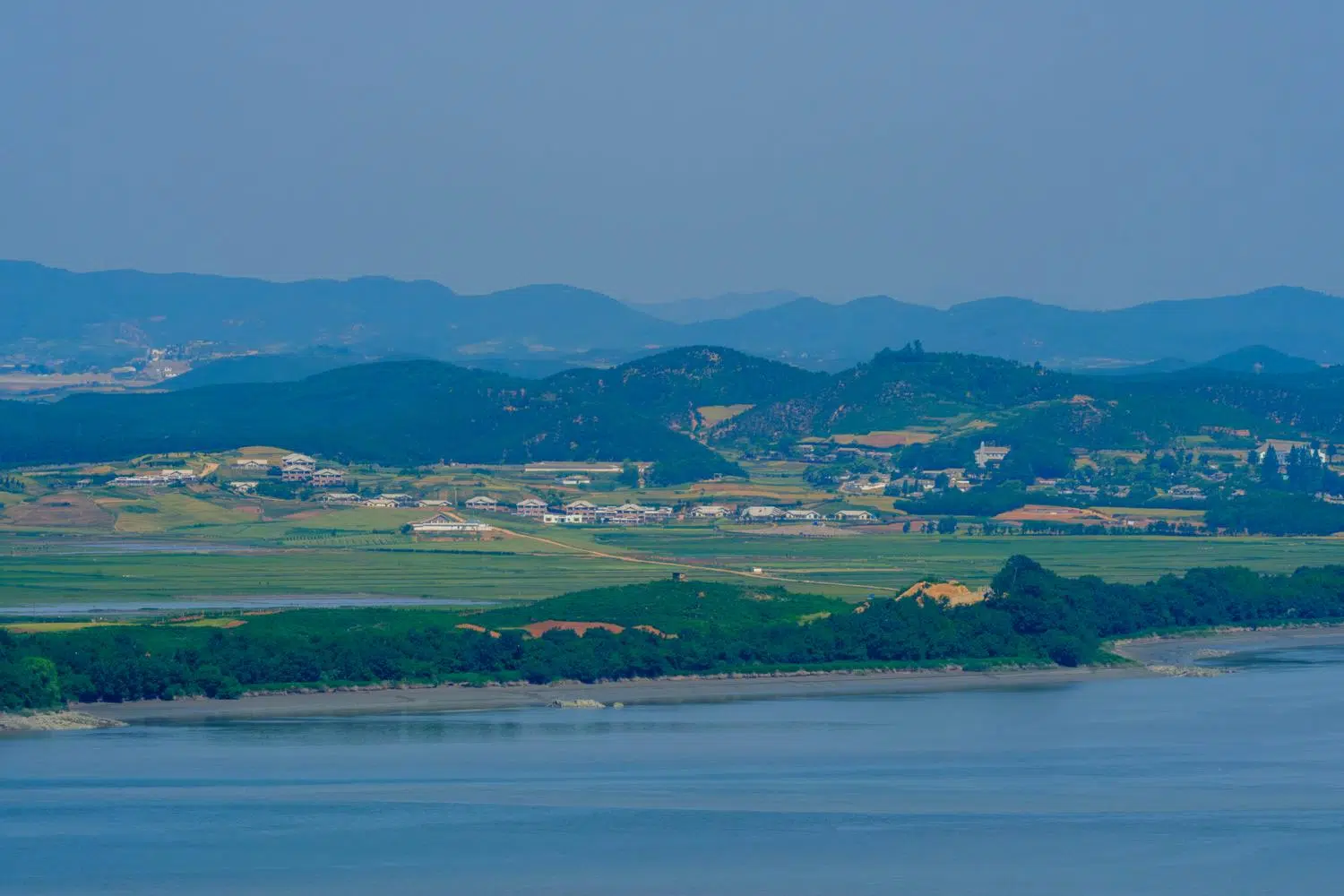
The North Korean village of Maegon seen from the Odusan Observatory (June 2025).
The disconcerting feeling of being not only on the border between two enemy states, but also on the border between two planets, is particularly strong here.
To the north: rather dilapidated North Korean villages, dozens of farm workers in identical uniforms, occasional lines of red flags, and no vehicles except the occasional bicycle. To the south: the sprawling apartment blocks and shopping malls of Paju. At low tide, it feels as though you could cross the border on foot by walking across the sandbanks in the Han River.
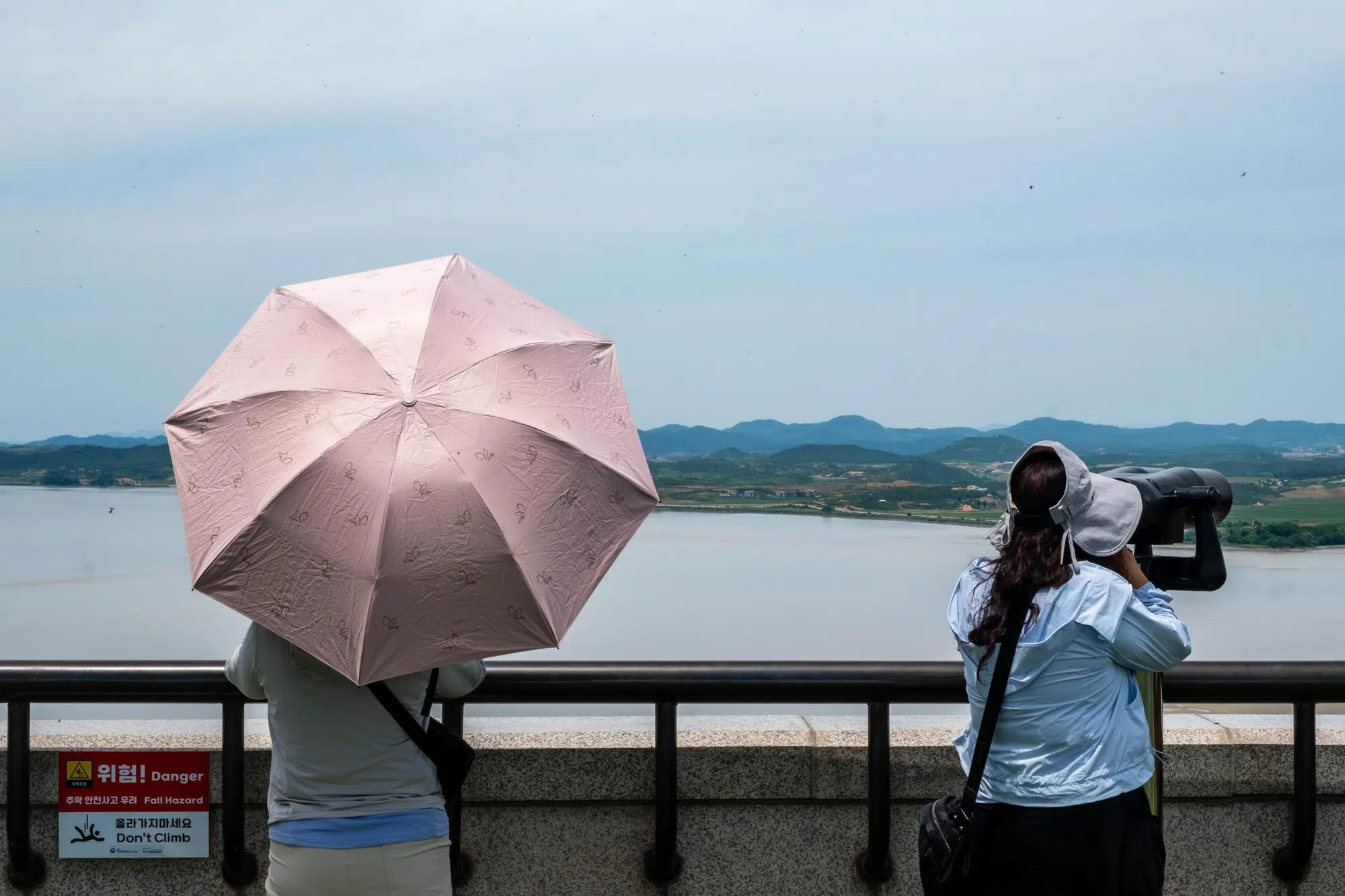
North Korea watchers (June 2026).
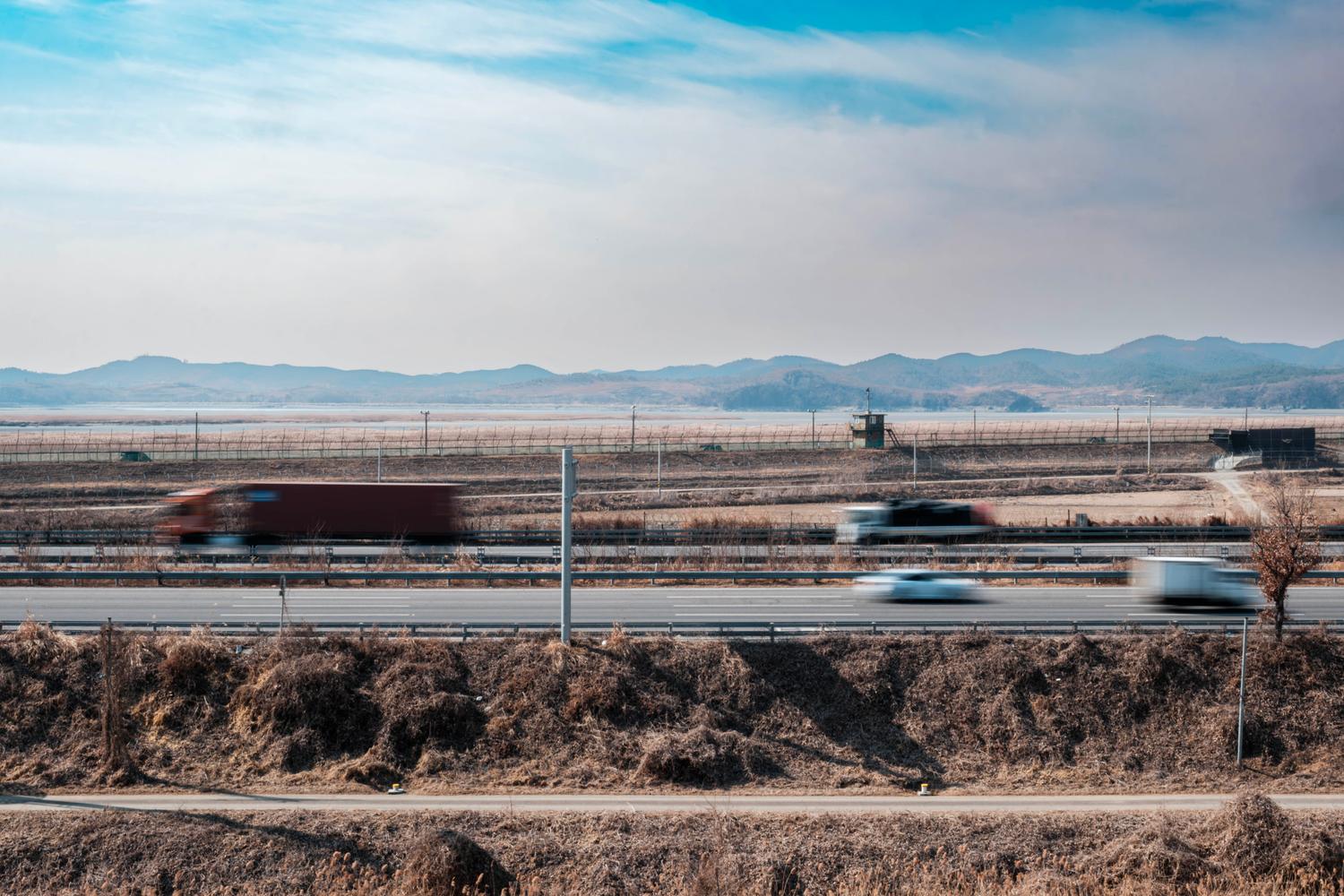
At the foot of the hill, the busy Jayu-ro, or Motorway 77, runs indifferently along the edge of the world’s most dangerous border.
South Korea describes Maegon, the North Korean village directly visible from the terraces, as a “propaganda village” that is not really inhabited. But the fact is that people who look like real human beings can always be seen strolling through its streets, riding bicycles or doing farm work.
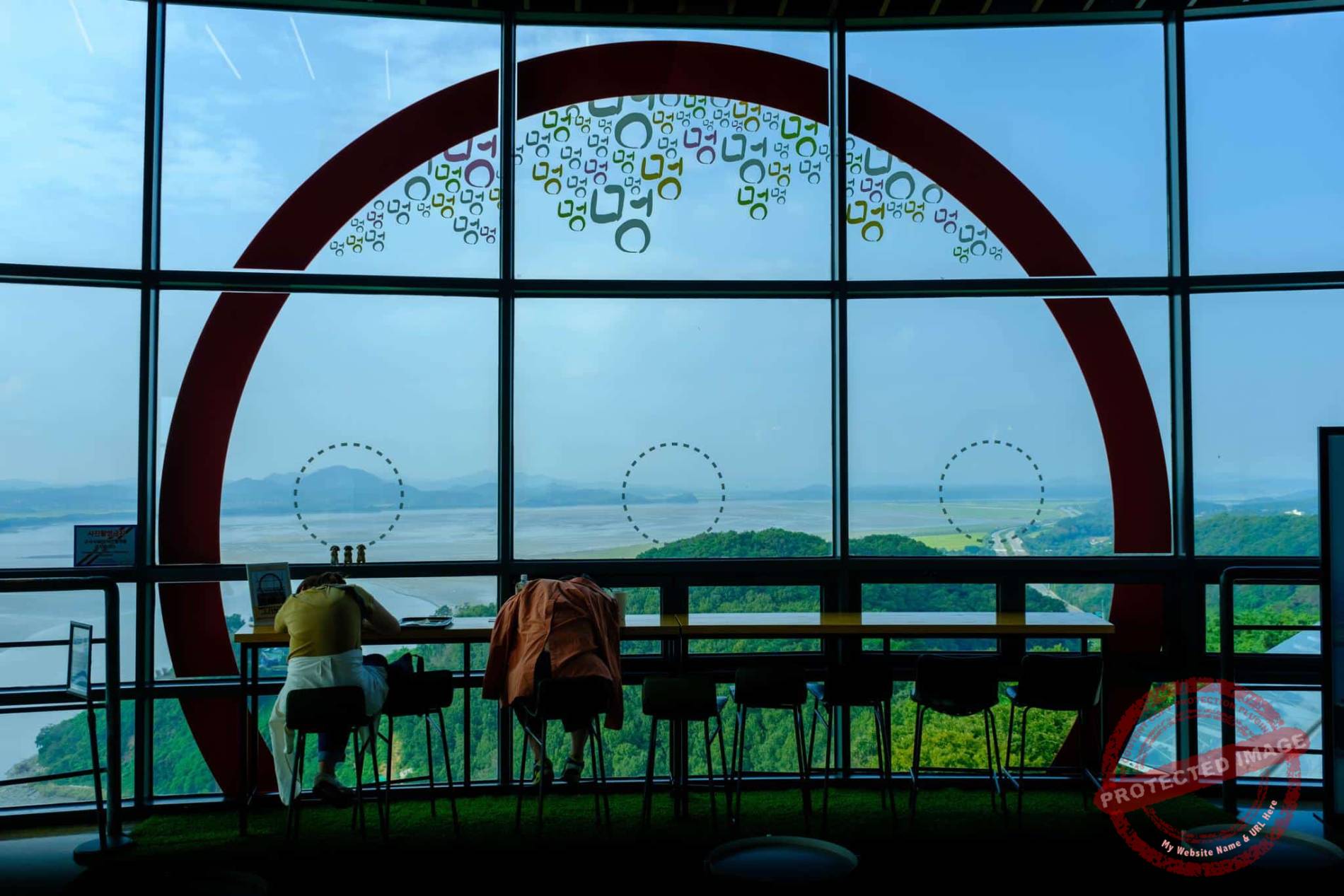
Visitors take a nap at the Odusan Observatory Café overlooking the Imjin River and North Korea (September 2024).
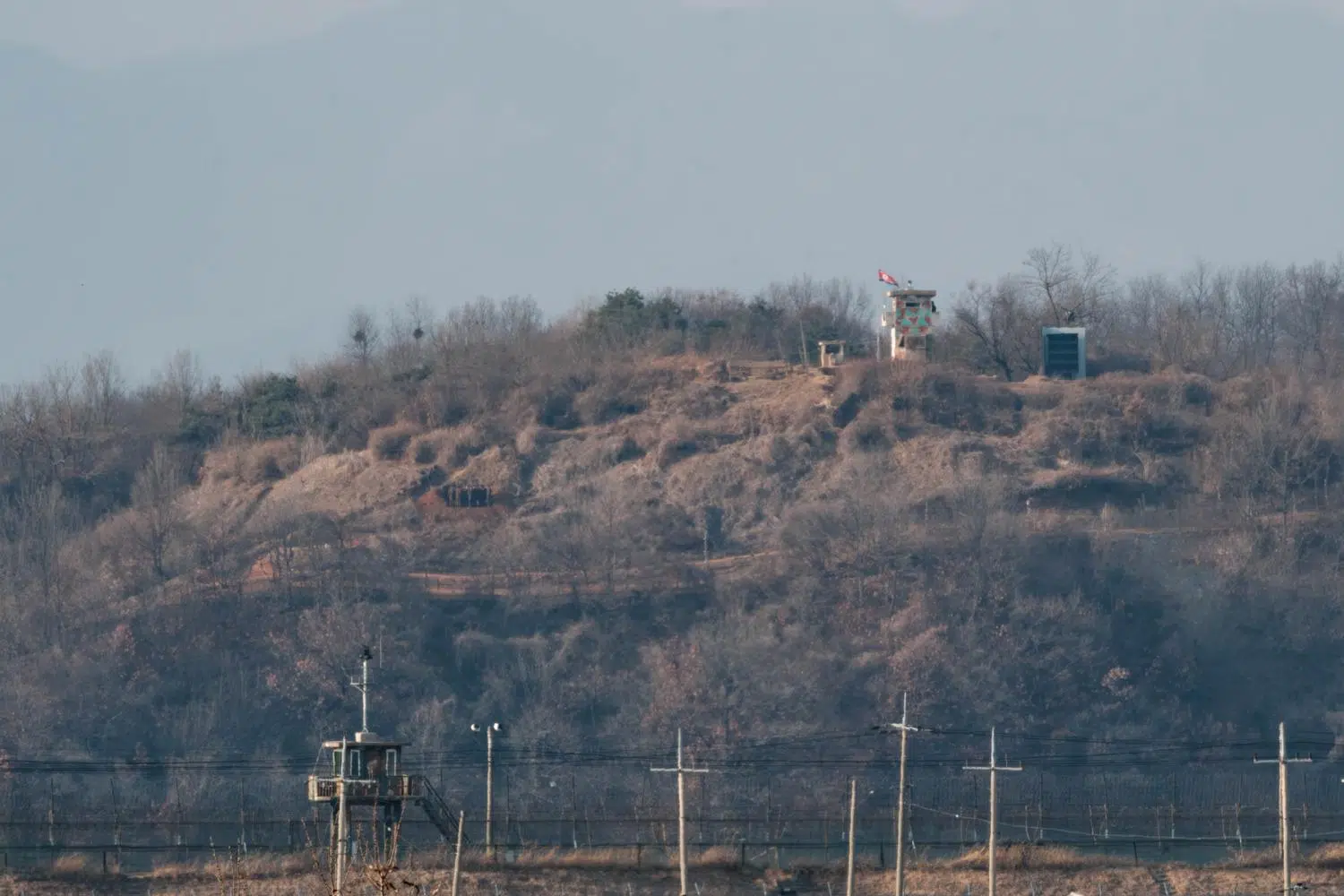
As all along the Estuary, the North Korean side is striking for the apparent lightness of its border fortifications compared to those in the South: only two electric fences, trenches and a few guard towers are visible from the South. The fields in which the farmers work are surprisingly close to the bank of the border river. I attempted an explanation for this in the post on the Han River Estuary.
Despite its proximity to the North, the site is located outside the Civilian Control Zone (see: Understand the Korean Division to learn what this term and many others mean). This makes Odusan one of the few cross-border observatories where anyone can go without joining an organized tour, showing their passport at military checkpoints or going through any formalities whatsoever. Admission is free. You can stay as long as you like, subject to closing and opening times.
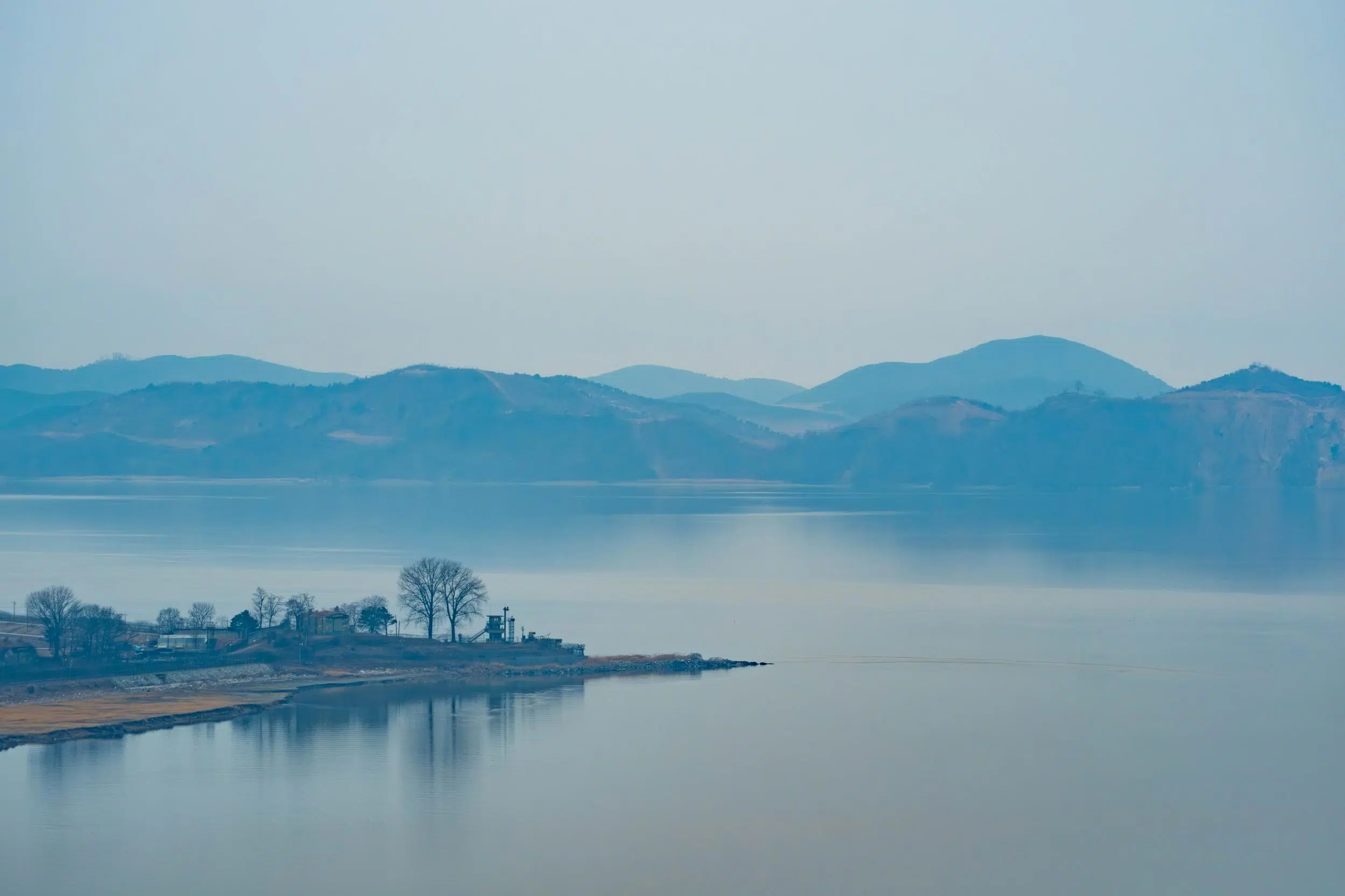
Seen from the Odusan Observatory, a South Korean watchtower at the northern tip of Gimpo City, at the confluence of the Han and Imjin Rivers, facing North Korea (March 2026).
Near the entrance, a bronze statue stands facing south. The plaque identifies him as Cho Man-sik (1883–1950). A devout Presbyterian, an advocate of nonviolent resistance and economic self-sufficiency, and the founder of the Korean Products Promotion Society, he was the most respected political figure in northern Korea after liberation from Japan in 1945 and earned the nickname “the Gandhi of Korea.” He refused to collaborate with the Japanese, refused to serve the Soviet occupation, and refused to flee south when others urged him to.
That last refusal sealed his fate. When the Soviet military government imposed a trusteeship plan on Korea in January 1946, Cho refused to endorse it. He was placed under house arrest at the Koryo Hotel in Pyongyang and never released. When UN forces advanced on Pyongyang in October 1950, the North Korean government chose not to evacuate him. According to testimony from former North Korean officials who later defected, he was shot in Pyongyang Prison on October 18, 1950, and buried in an unmarked grave near the Daedong River.
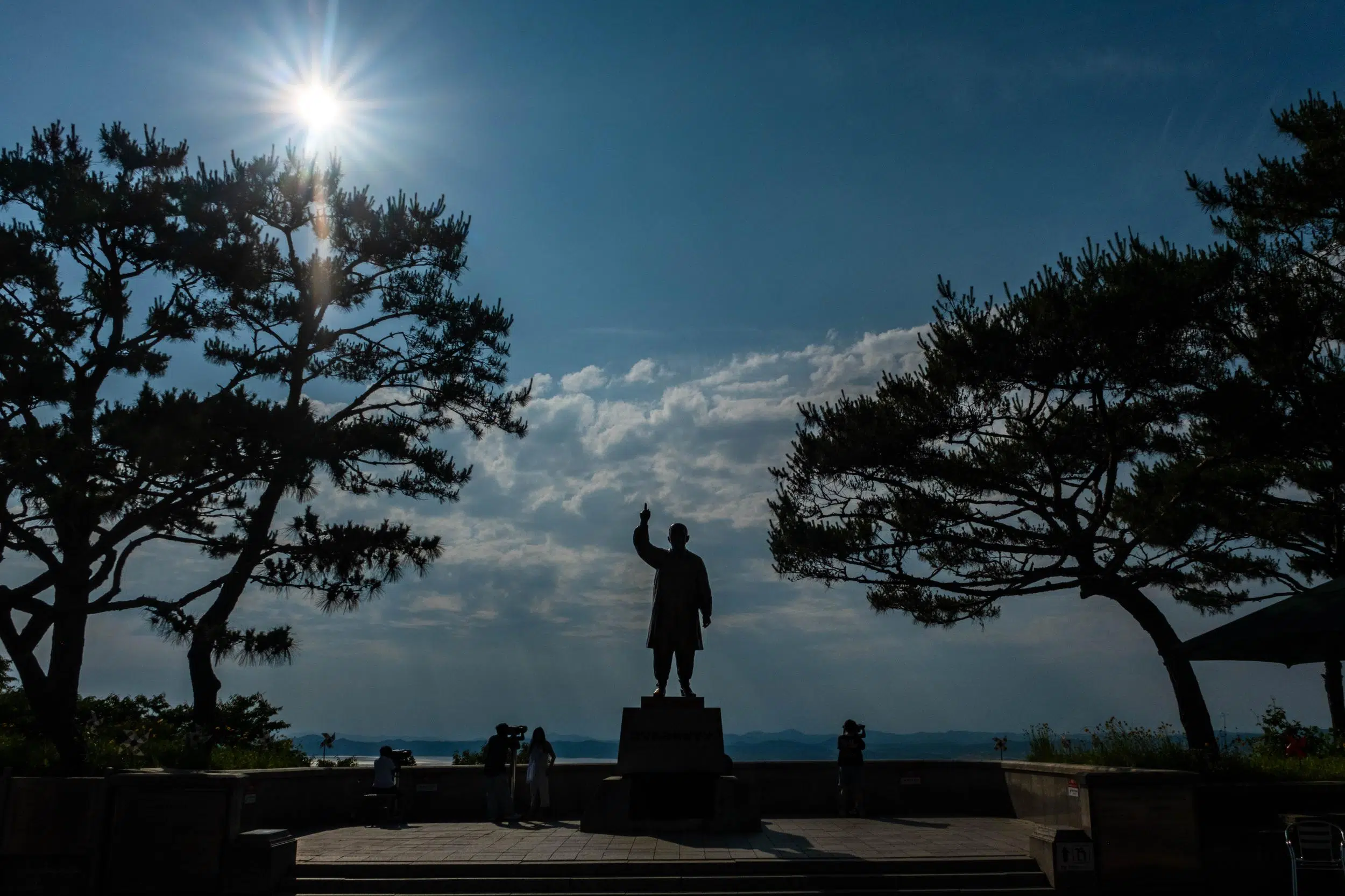
The statue of Korean independence hero Cho Man-sik has its back turned on North Korea, which imprisoned and executed him (June 2026).
One of the last major leaders accepted across ideological lines, Cho Man-sik is a powerful symbol for many Koreans who support peaceful reunification because he represents a vision of Korea that was both nationalist and democratic, yet neither communist nor dependent on foreign powers. His legitimacy came from the independence movement rather than from either the Soviet Union or the United States. For reunification advocates, he symbolizes a Korea that might have developed independently of Cold War rivalries. His fate contrasts sharply with that of Kim Il Sung, the founder of the Kim dynasty and the grandfather of the current leader Kim Jong Un, who rose to power with Soviet backing.
His statue here was erected on October 20, 1992, six weeks after the observatory opened. He faces south, his back to the country where he was killed. Whether this orientation is a statement about freedom or an irony about abandonment is left to the visitor.
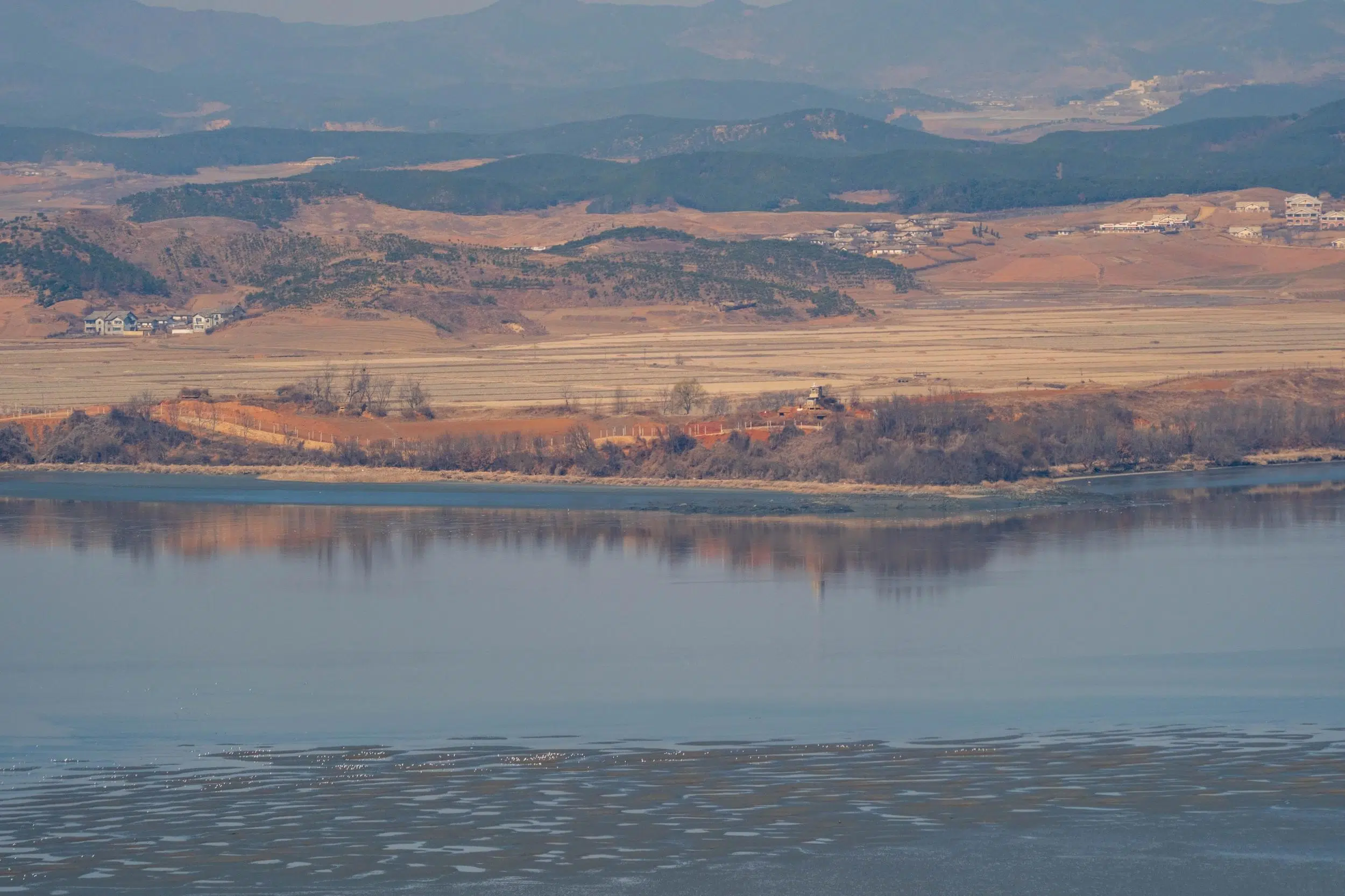
The North Korean bank of the Han River, as seen from the Odusan Observatory (February 2025).
Just beyond the statue, the mangbaedan, an outdoor altar oriented northward, marks one of the observatory’s quieter functions. During the Seollal (Lunar New Year) and Chuseok (autumn harvest festival) holidays, which traditionally mark occasions for large family gatherings in Korea, people with family on the other side of the border come here to perform ancestral rites facing north. Since those families cannot be reached, and the graves cannot be visited, the rites take place in the open air, pointed toward a country that does not answer.
The observatory is also home to the so-called Unification Piano. Built in 2015 by the Korean world music ensemble Gong Myoung, the instrument uses rusty barbed wire collected from the DMZ in place of standard strings. It is said to produce a very unique sound. The public is not allowed to try it.
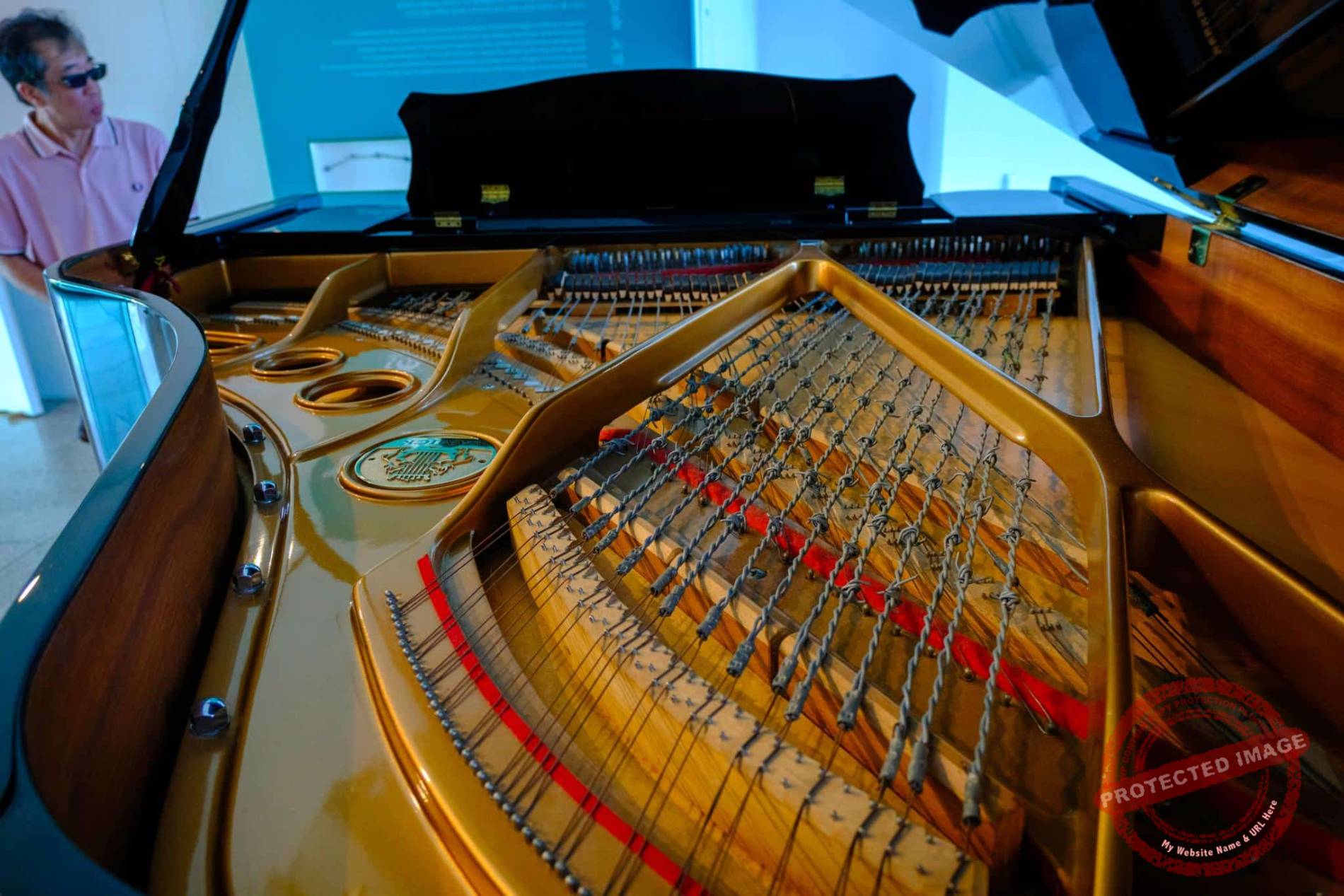
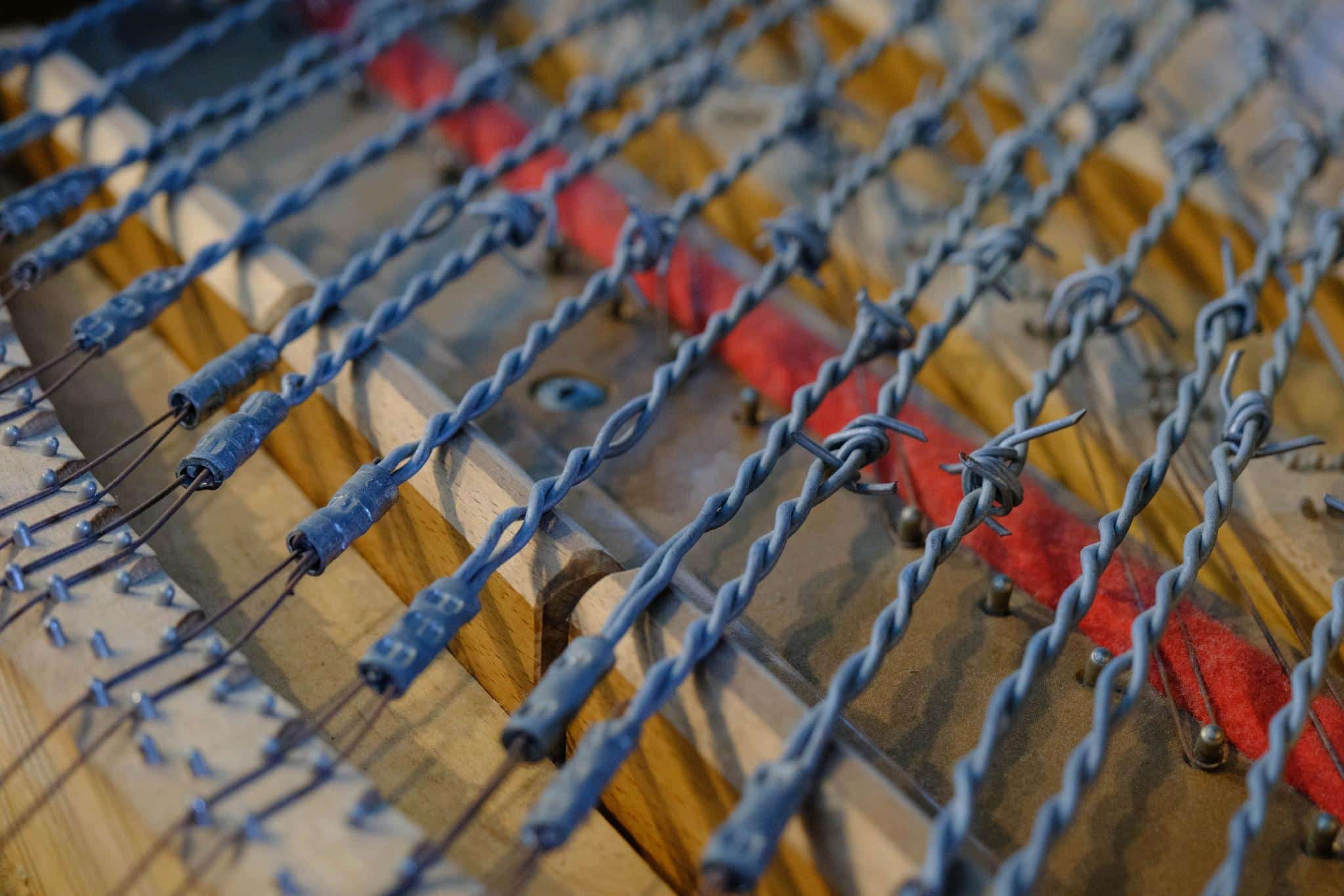
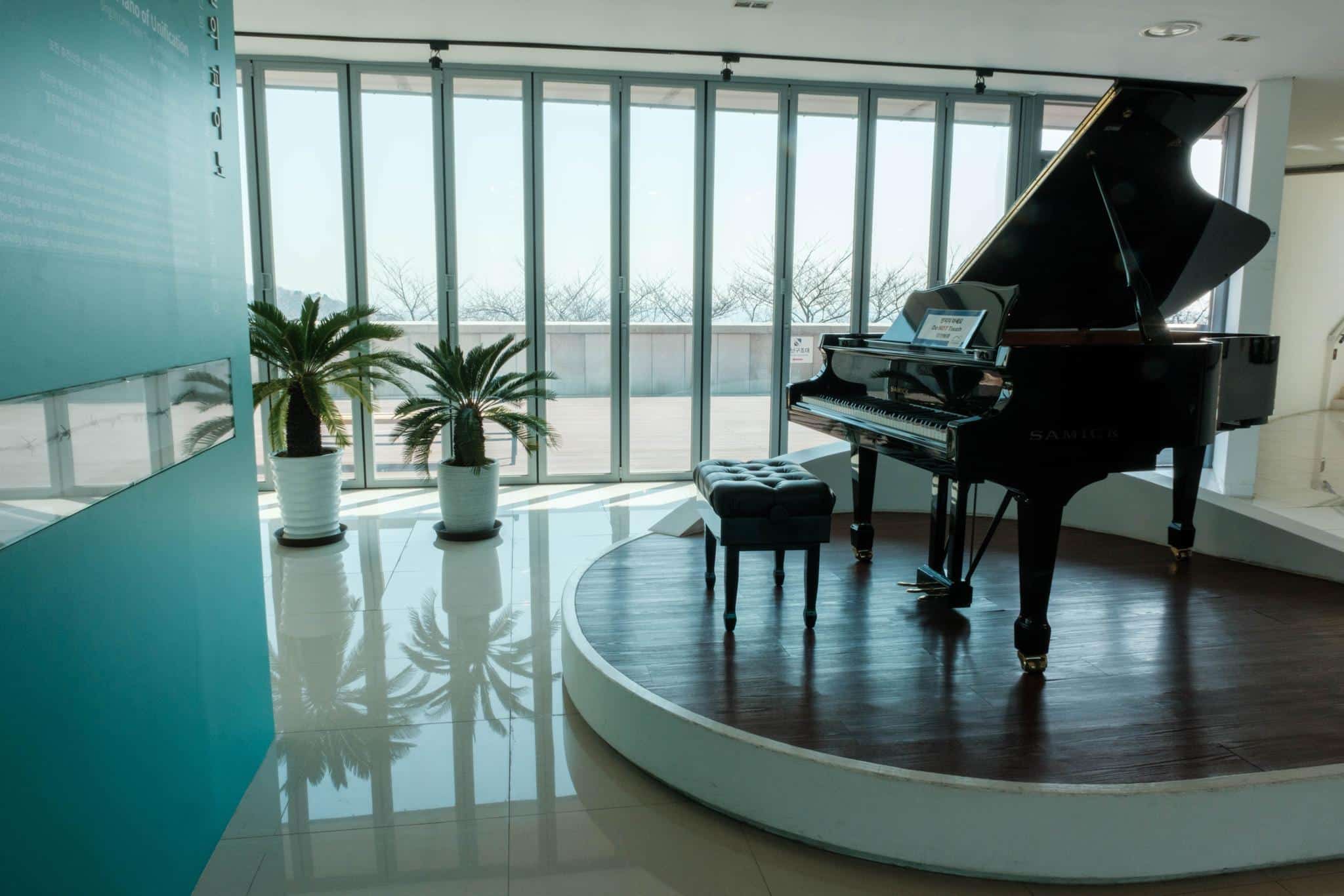
The Unification Piano, whose strings are made of barbed wire from the DMZ, on display at the Odusan Observatory (February 2025).
This text was last updated on: June 18, 2026.