Cheorwon
철원
One of the bloodiest battlefields of the Korean War. Now a wintering ground for thousands of endangered cranes in the DMZ.


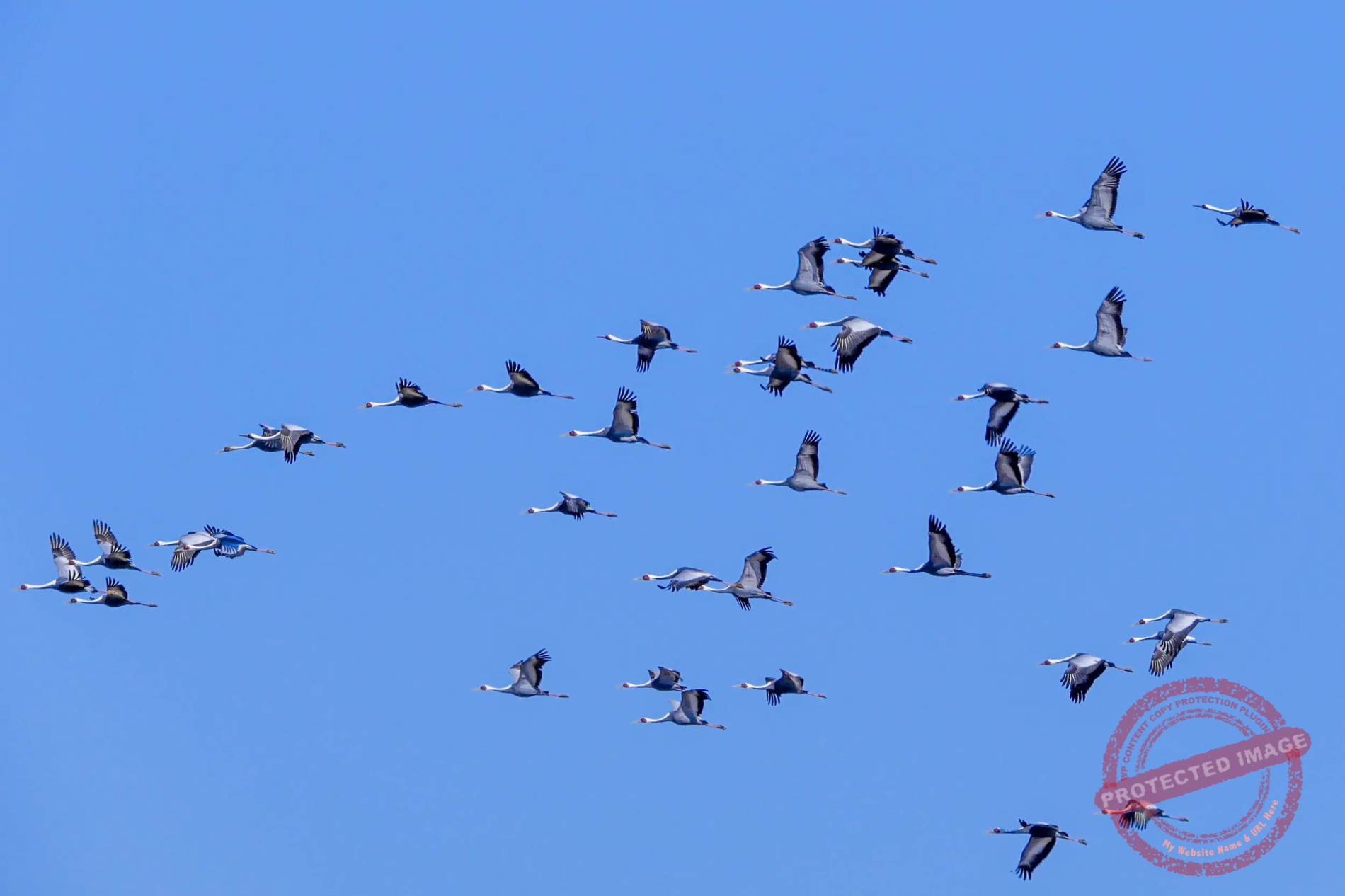
Korean cranes – also called Red-crowned cranes – fly over the Civilian Control Zone in Cheorwon (January 2024).
Cheorwon is at once an agricultural basin renowned for its high-quality rice, a heavily mined former battlefield, an active frontline, and a center for ecological and peace tourism. Few places along the Korean border pack so many contradictions into a single landscape, or make the long-term consequences of the K-Scar so visible.
Under Japanese colonial rule (1910–1945), railways and roads ran through Cheorwon, linking Seoul to the port of Wonsan on the East Sea. The reason was geography: the Cheorwon plain is the only lowland basin in the mountainous center of the Korean Peninsula. Fertile volcanic soils and abundant water made it a major rice-producing region.
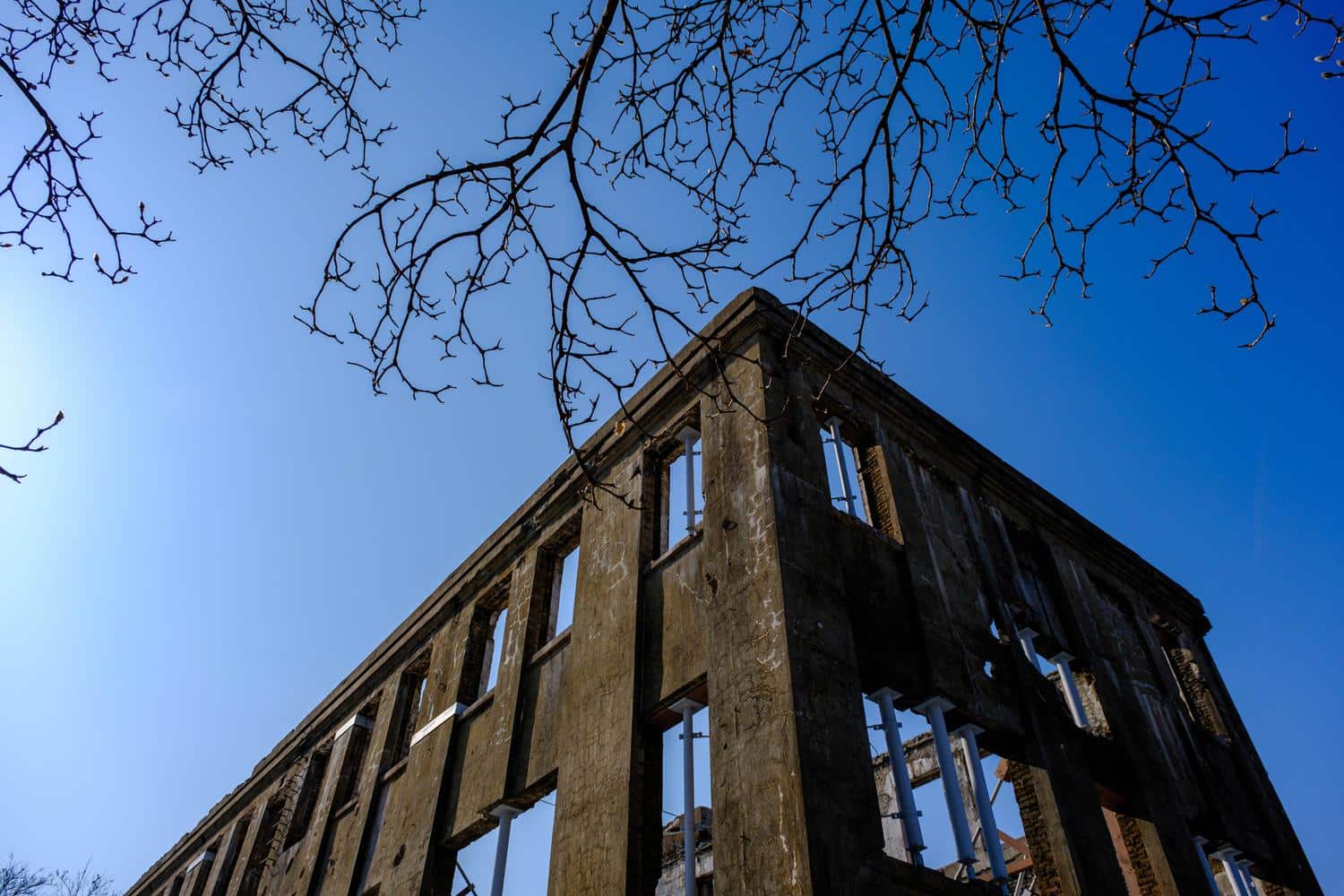
Cheorwon county sits just north of the 38th parallel, and thus fell to North Korea in 1945. A few traces of that period remain, most notably the ruined local headquarters of the North Korean Workers’ Party. Five years later, when the war broke out, Cheorwon would become one of the most strategically significant and fiercely contested areas of the entire conflict.
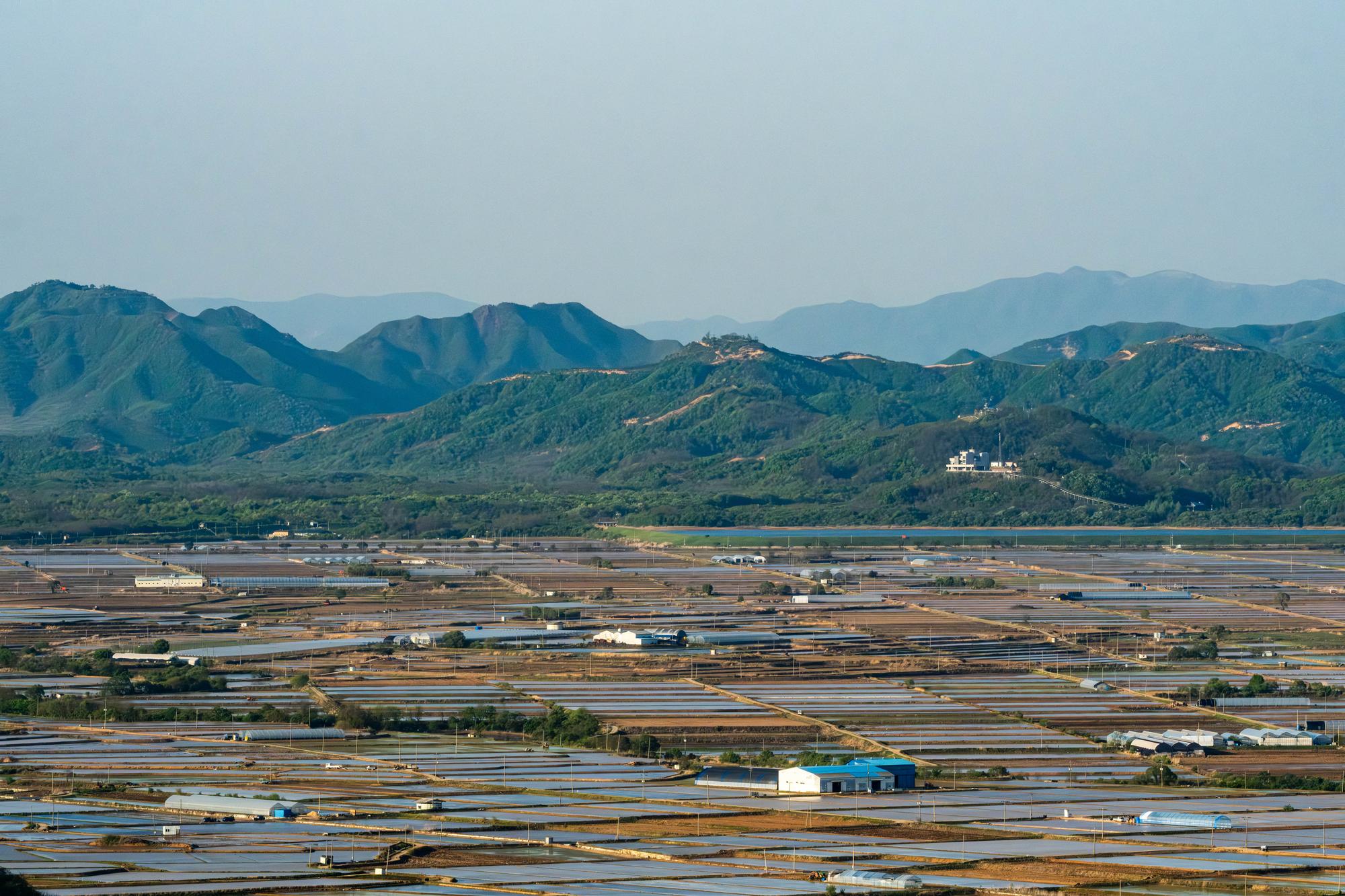
North Korean mountains, fortifications and guard posts overlook the DMZ, the South Korean Cheorwon Peace Observatory (the large white building at the top of a hill in the middleground), the Dongsong Rervoir and the Cheorwon plain rice fields and greenhouses. The water infrastructure built by South Korea beginning in the 1970s has helped reduce the vulnerability of the region, which is irrigated by rivers originating in North Korea (May 2026).
Cheorwon formed one corner of the “Iron Triangle”, alongside Pyeonggang and Gimhwa. The triangle was the centerpiece of Korea: a flat basin surrounded by high peaks, through which a vital road and rail network connected the north and south of the Peninsula. Controlling the heights overlooking the plain — and a commanding view of any approaching enemy — became a top priority for both sides. Whoever controlled the Iron Triangle would become master of the whole country.
No one was going to let that happen.
By late 1951, as the war devolved into a bloody stalemate, Cheorwon and its surrounding hills became emblematic of the attritional phase of the conflict. The battles fought here were not really about capturing ground but about wearing down the enemy and securing favorable positions for eventual armistice negotiations. In the end, there were thousands of deaths and no decisive conquests on either side.
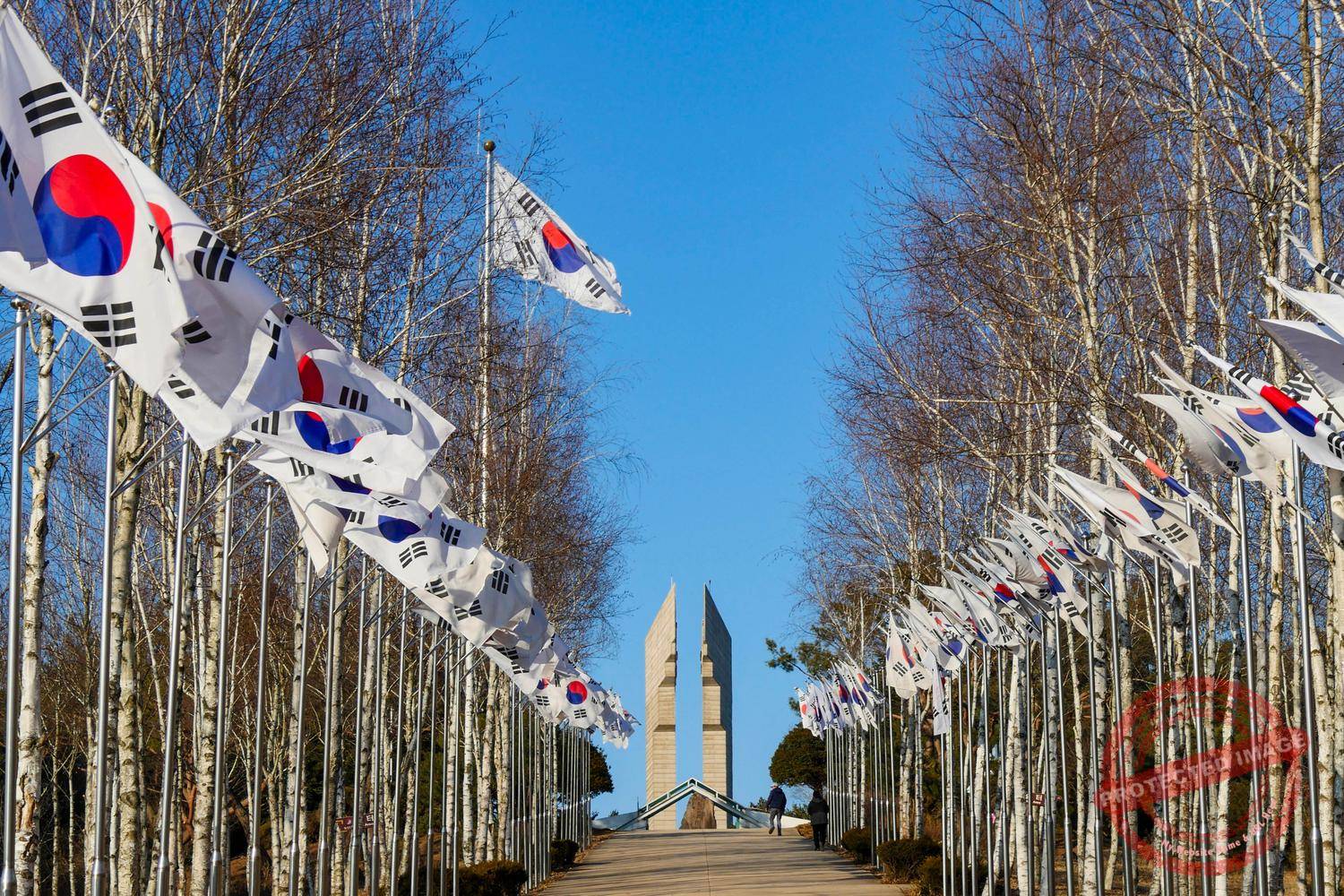
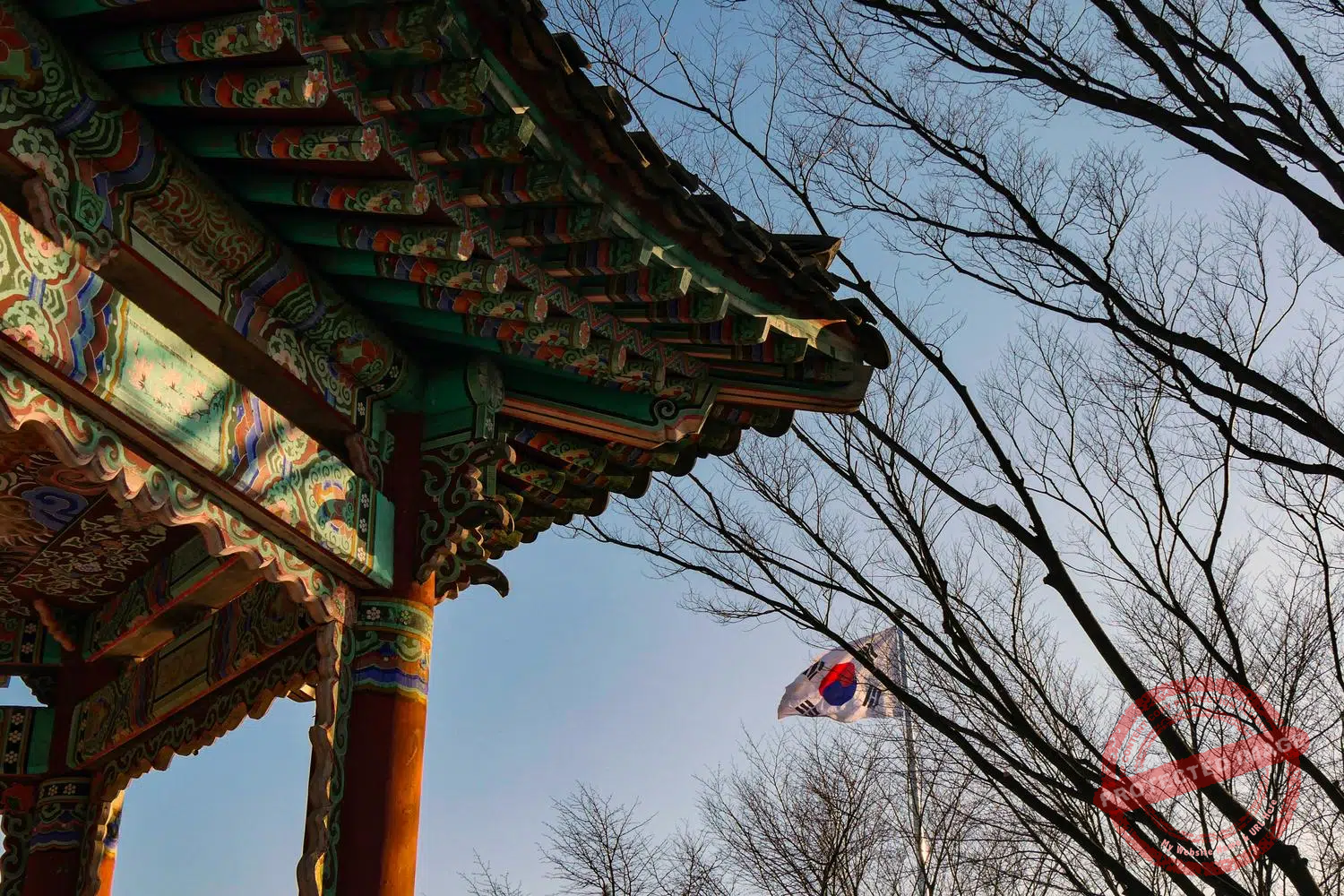
The White Horse Hill Battle Memorial in Cheorwon (January 2024).
The most famous of these engagements was the Battle of White Horse Hill, in October 1952.
Over 9 days, South Korean troops repelled repeated Chinese assaults in a brutal, close-quarters fight. The hill changed hands 24 times. The Chinese fired an estimated 55,000 shells, the South Koreans 185,000. The US Air Force dropped more than 3,000 bombs of all kinds on the hill, including napalm.
After this deluge of fire, the hill — previously known as Hill 395 — took on a shape reminiscent of a skeletal white horse. Hence the name.
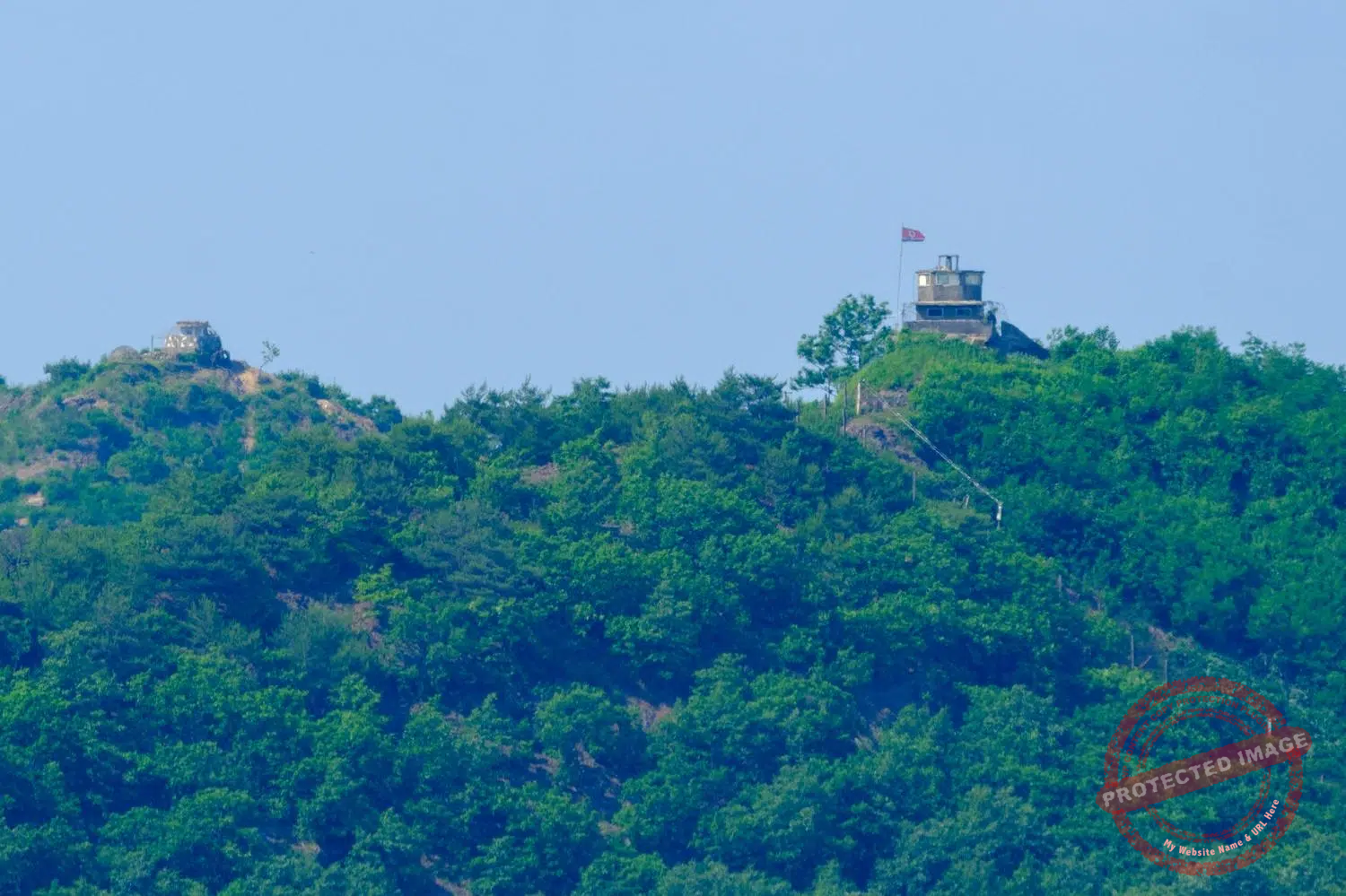
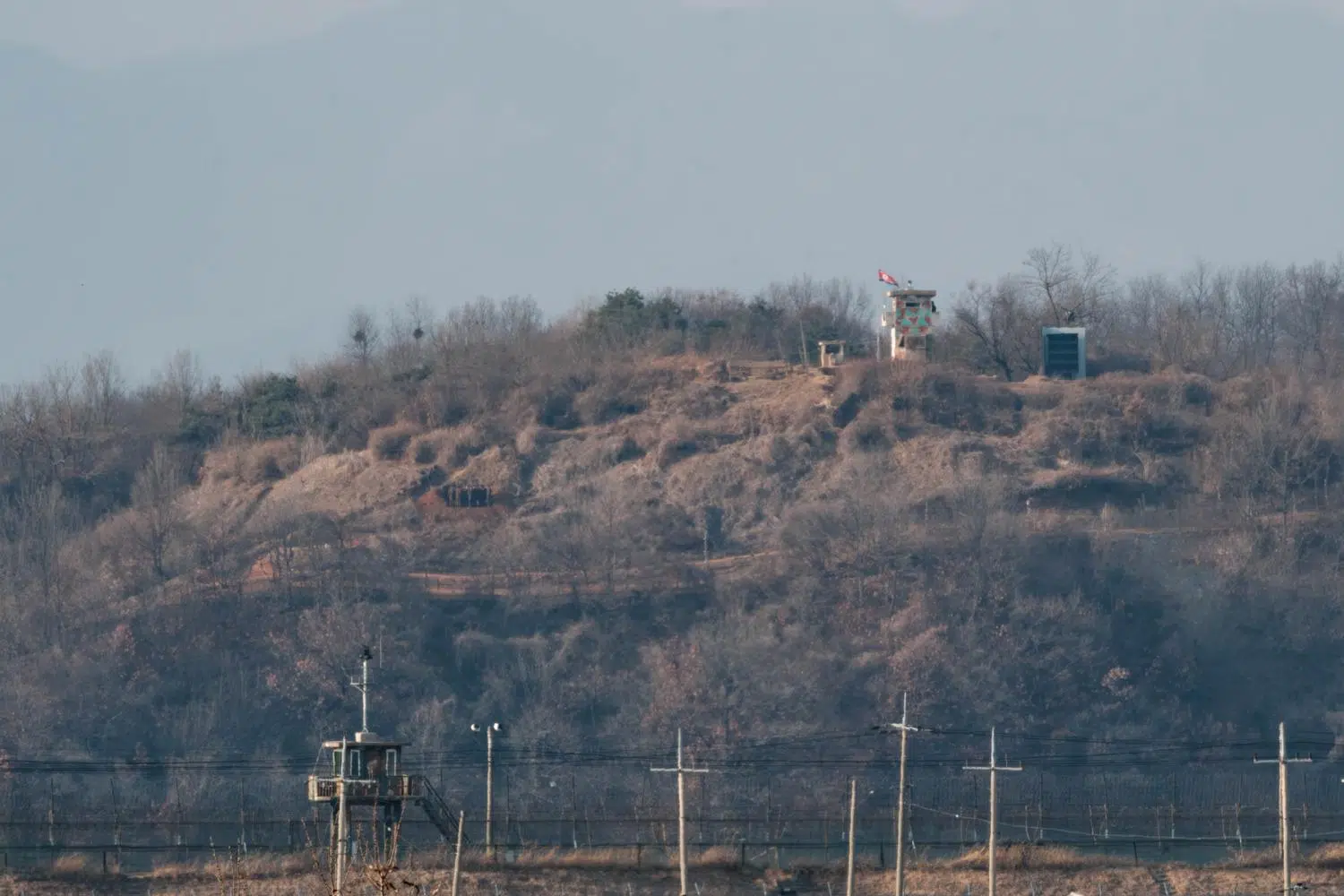
The North Korean frontline seen from the Cheorwon Peace Observatory (June 2025).
About 15,000 soldiers from both sides died here. The South ultimately took control of the hill. The front was stabilized a few kilometers north, and those positions remain the military demarcation line between the two Koreas to this day.
More than 75 years after the war, countless minefields still line the rice paddies and hiking trails around Cheorwon. During the rainy season, signs warn of mines that may wash up on riverbanks after being carried away by floodwaters. The Arrowhead Hill area is reportedly the sector with the highest mine density in the world: a mind-boggling 2.3 mines per square meter.
After the 1953 armistice, the new Military Demarcation Line cut directly across the Cheorwon plain. Part of the old county remained in the North; the southern section became one of the most militarized territories in South Korea. Today, the Cheorwon basin is still considered a potential invasion corridor from the north — hence the imposing fortifications south of the DMZ, and the numerous anti-tank obstacles lining the roads throughout the region.
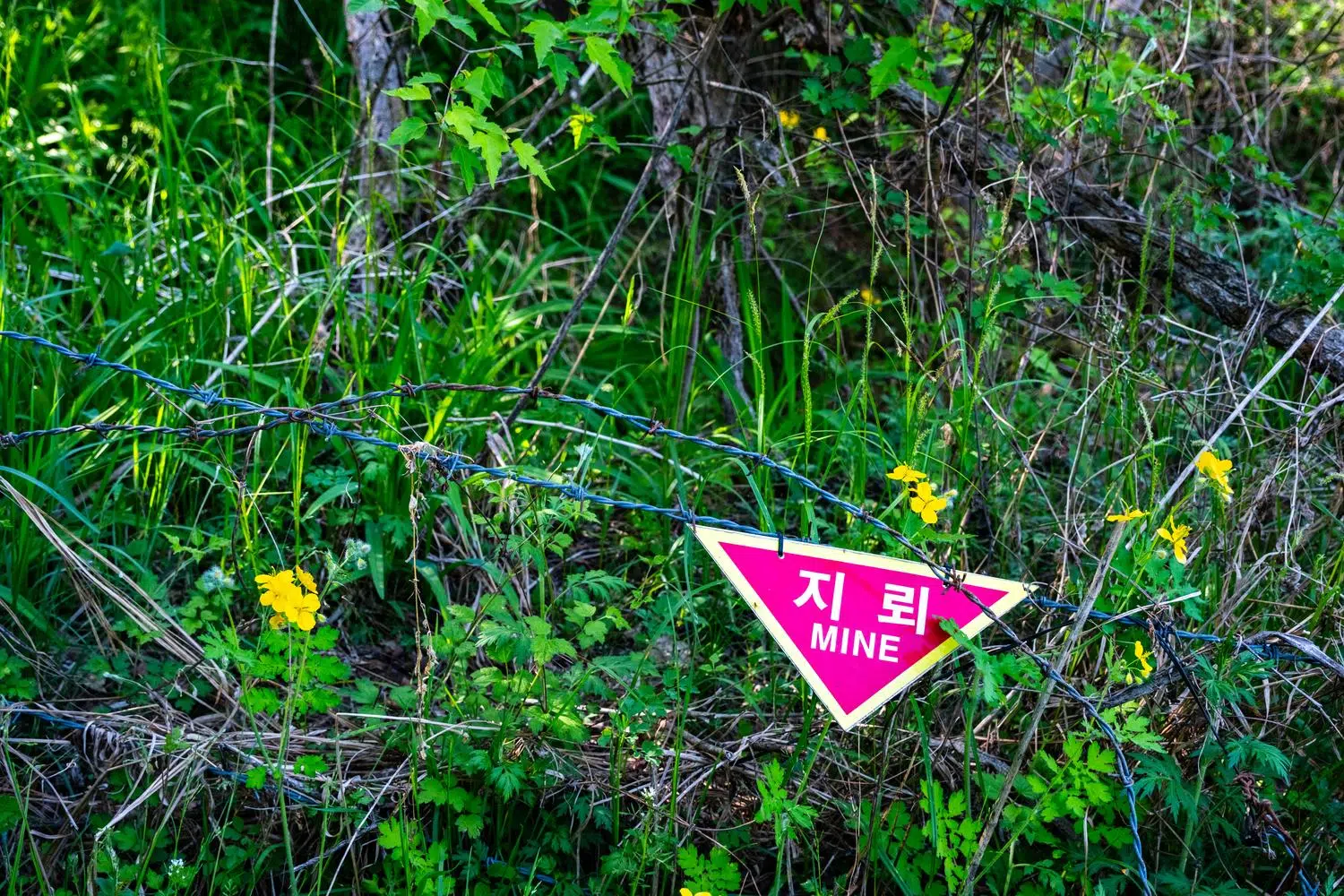
A sign warns of an uncleared minefield along the aptly named Soisan Mountain Mine Flower hiking trail in Cheorwon (May 2026).
My intention in coming to Cheorwon for the first time, on a freezing cold day in January 2024, was to get another glimpse of North Korea over the DMZ. That part of the trip was satisfying, and I got my fill of Korean People’s Army watchtowers and North Korean villages in the distance.
But the surprise came in the form of cranes.
Thousands of them, all the way from Russia’s Far East, Mongolia or Manchuria to spend the winter in the Civilian Control Zone (CCZ), located just before the DMZ — a strip of heavily mined land where all human activity is severely restricted.
A veritable kingdom of cranes. A surreal natural spectacle amidst barbed wire, minefields and military vehicles.
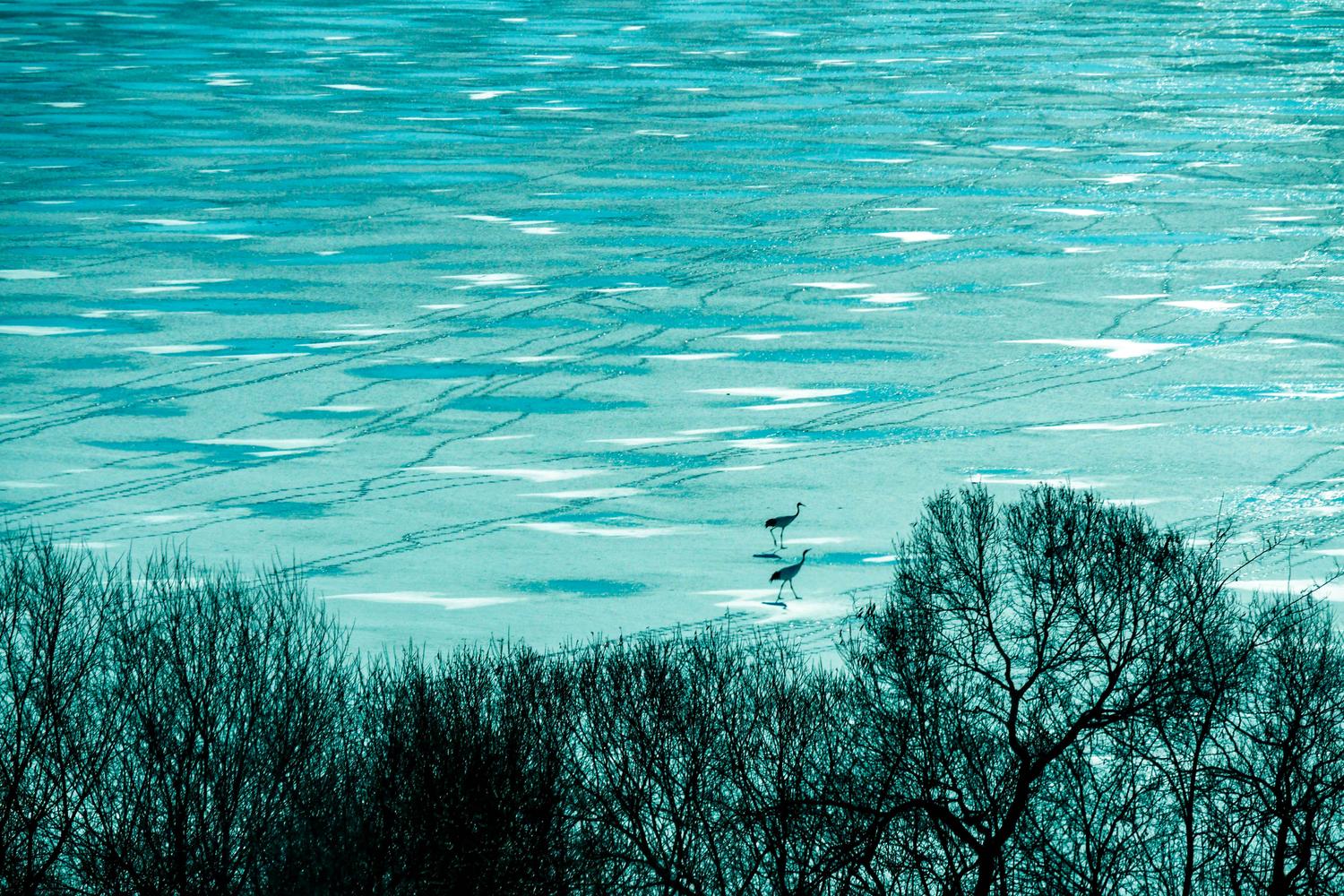
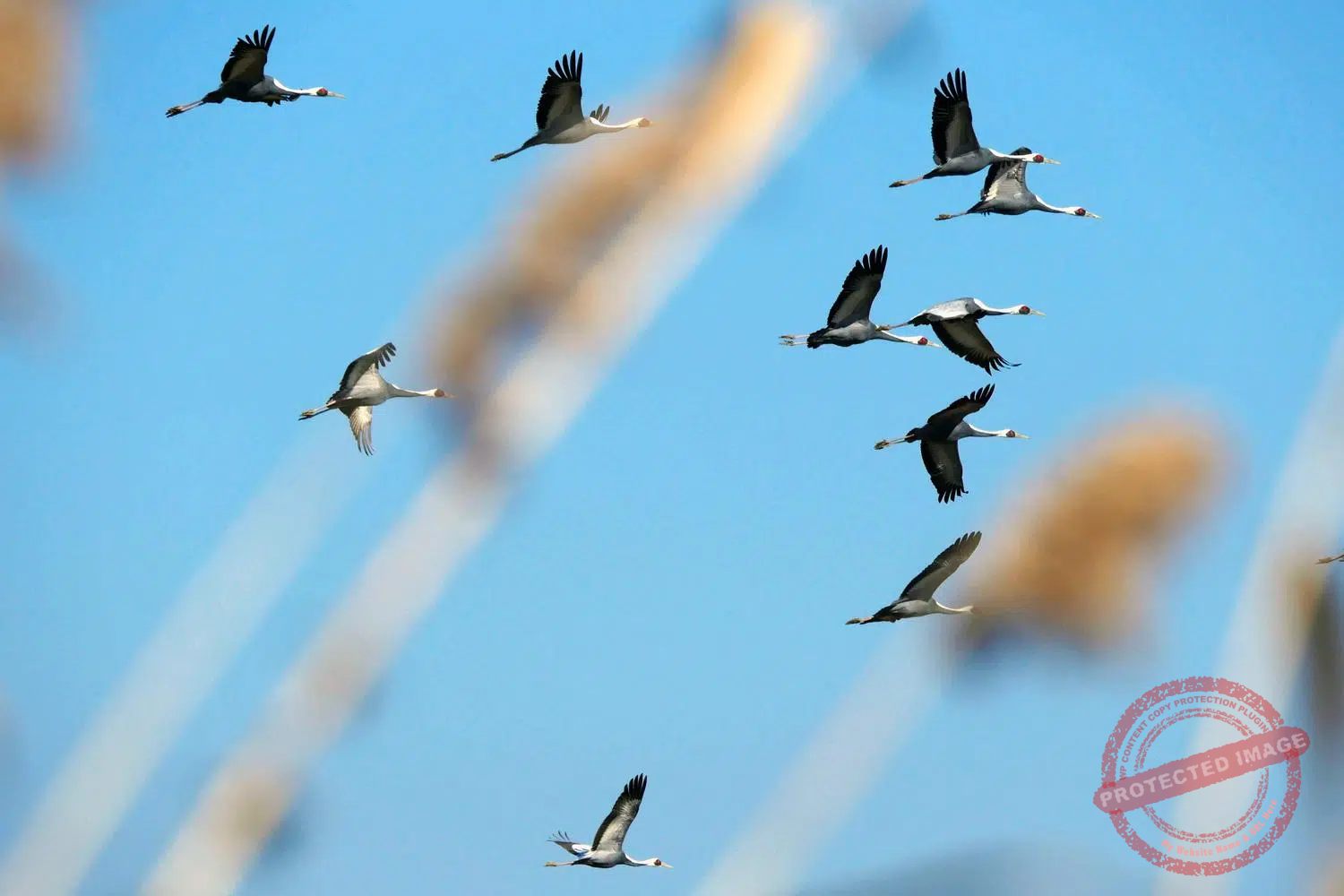
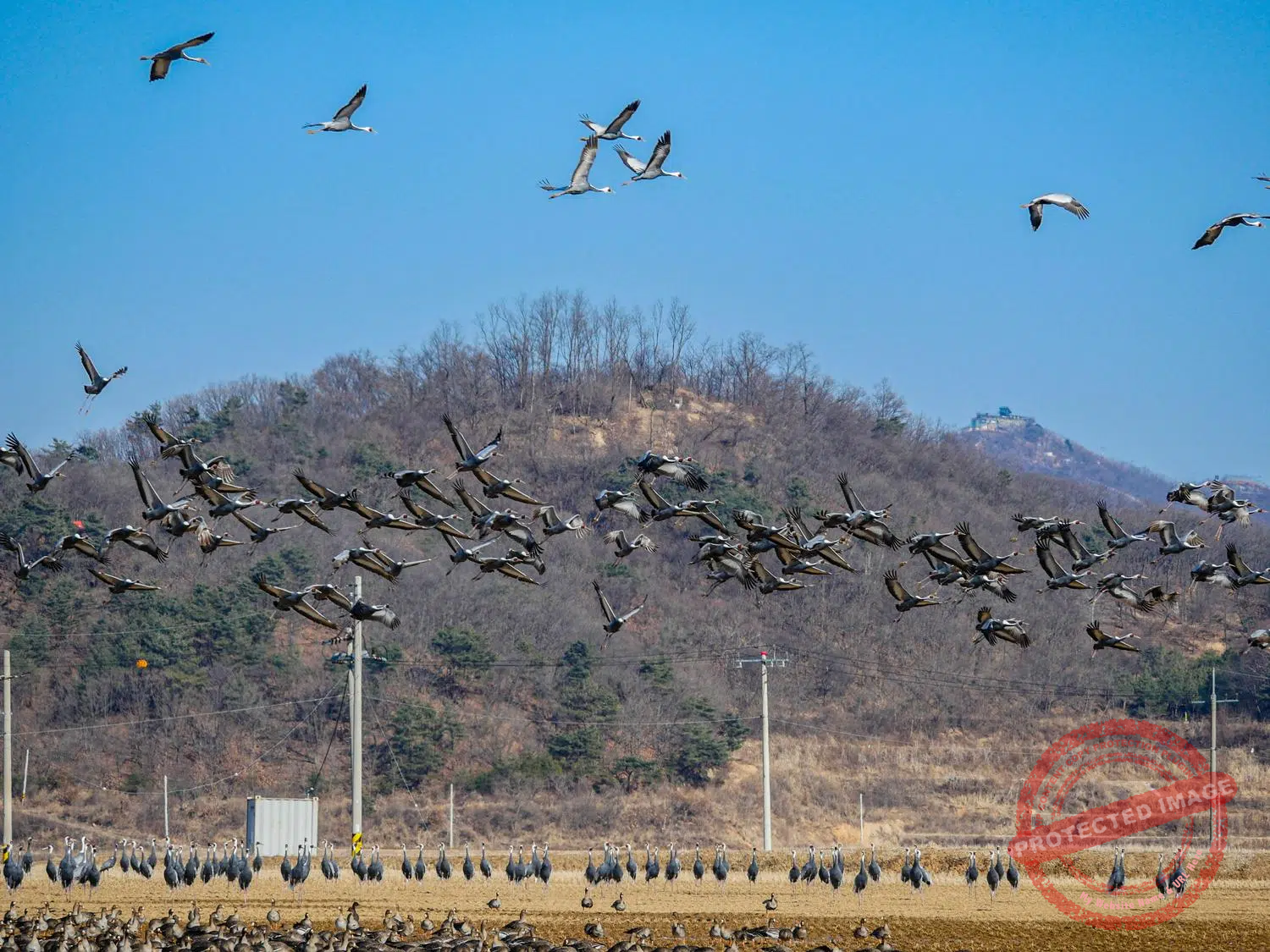
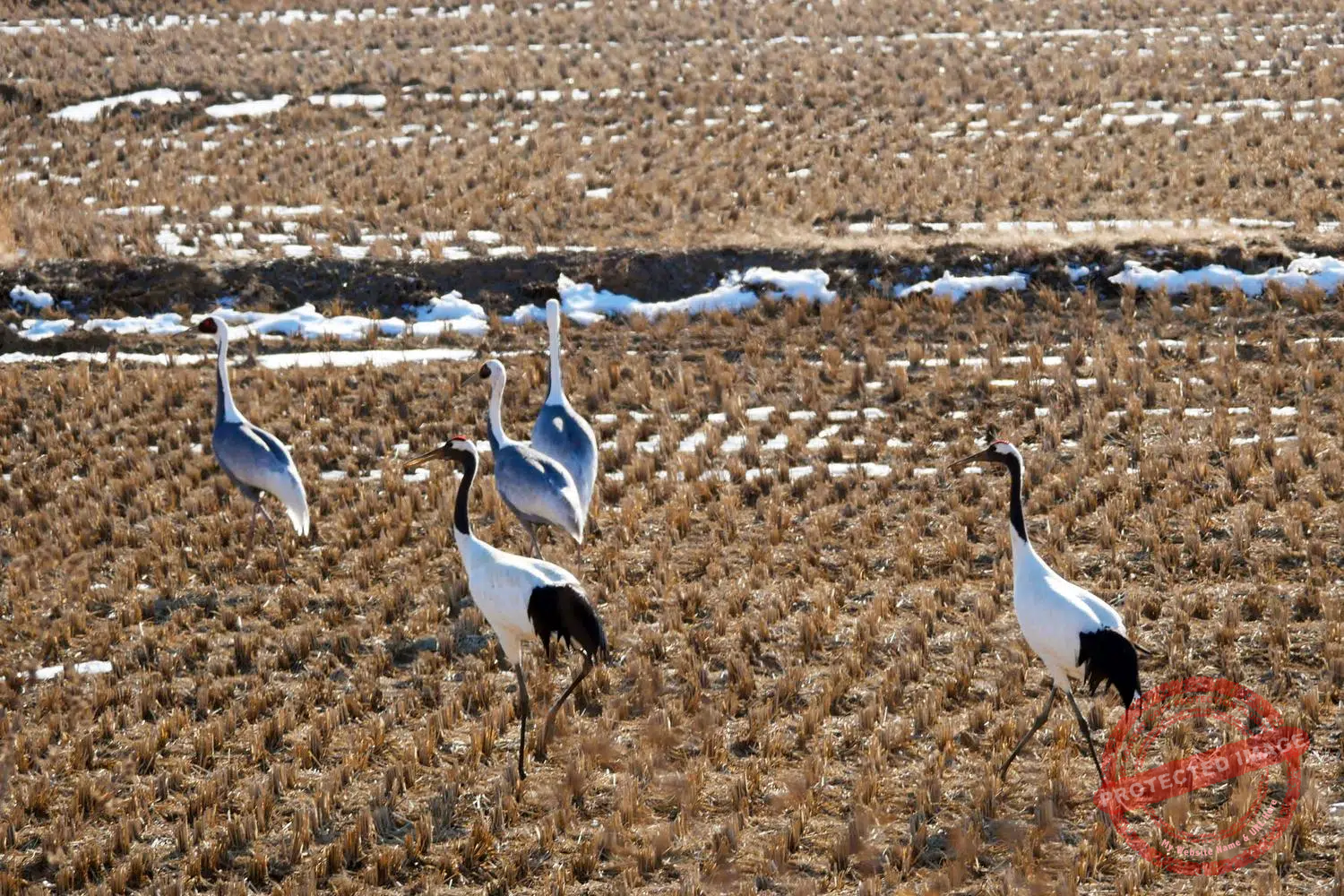
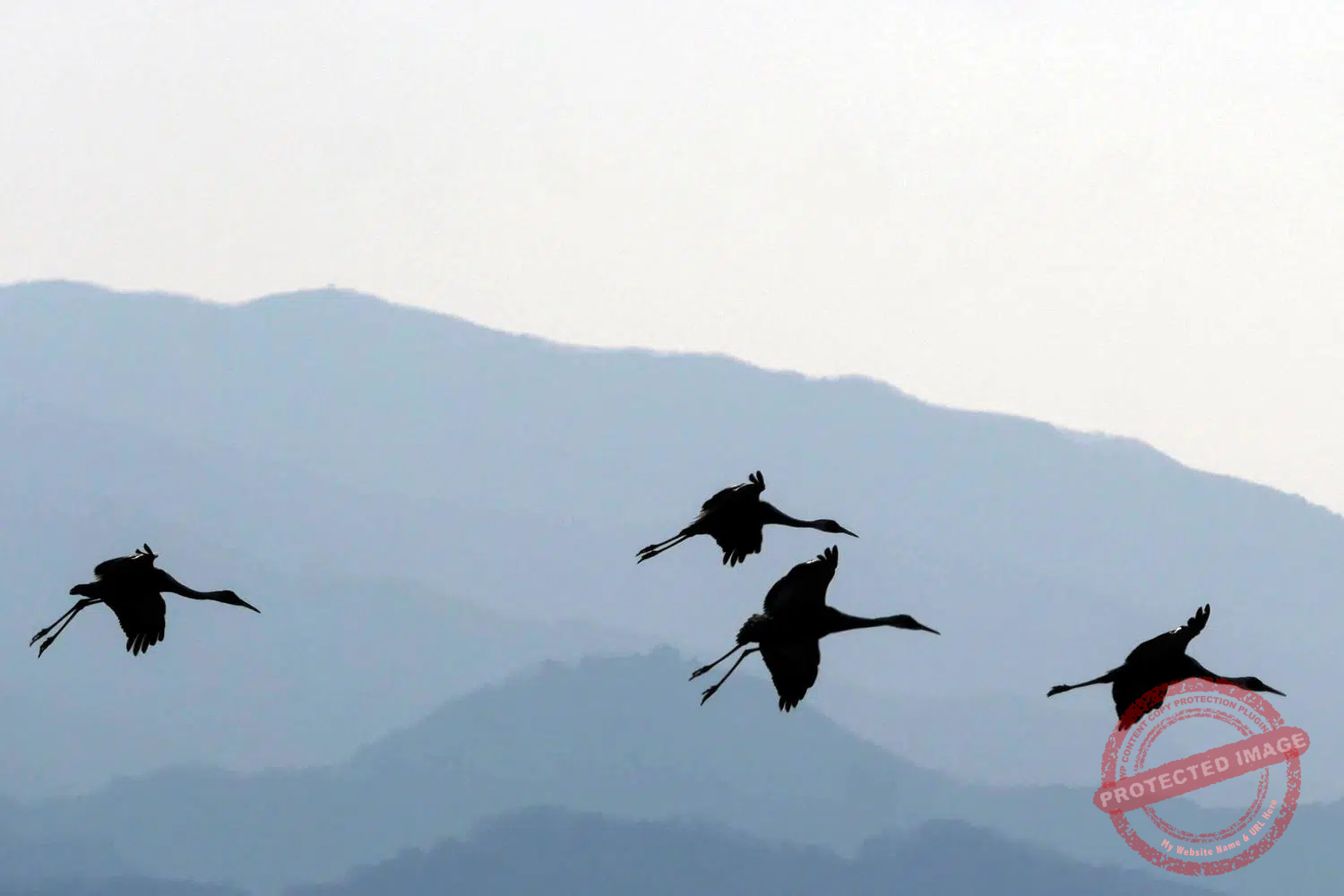
Red-crowned Cranes and White-naped Cranes inside the Civilian Control Zone in Cheorwon (January 2024).
The huge red-crowned cranes — also called Korean cranes or Manchurian cranes — and the white-naped cranes that winter in the wetlands and rice paddies of Cheorwon are both endangered species. They are highly symbolic in East Asian cultures, associated with longevity, peace and fidelity.
Decades of restricted access have unintentionally preserved in the Cheorwon area ecosystems that have disappeared elsewhere in Korea. The DMZ, off-limits to everyone but soldiers from both sides, and the adjacent Civilian Control Zone have been migratory-bird sanctuaries since 1953. Cranes, vultures, eagle-owls, ducks and other species have taken advantage of the geopolitical situation to take up residence in and around the DMZ, where no one would disturb them. Cheorwon is probably one of the best places in the country to observe the phenomenon.
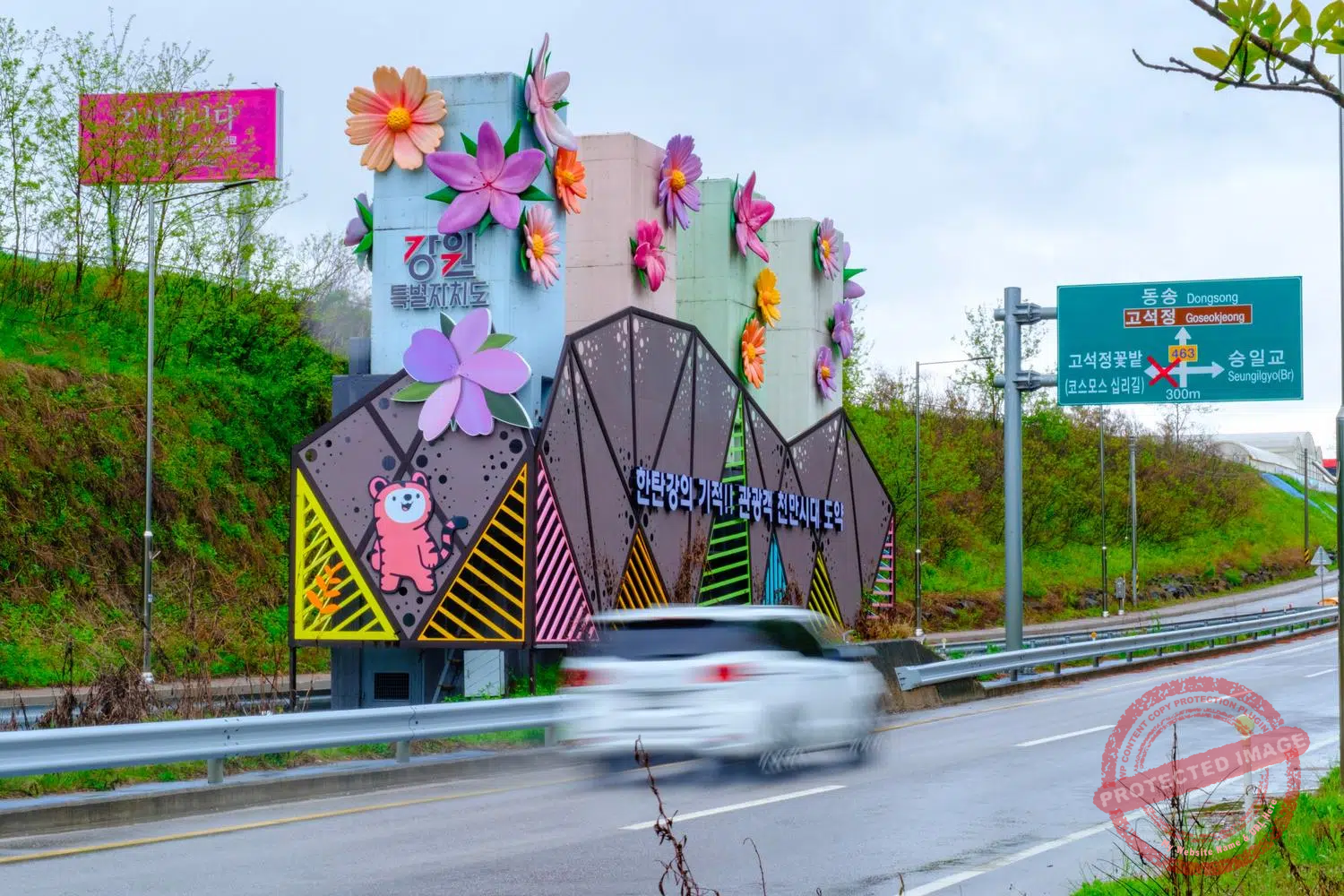
An anti-tank obstacle – camouflaged with flowers and touristic slogans – on a road near Cheorwon (May 2025).
North Korea’s appetite for Cheorwon, however, did not end with the armistice. It was confirmed underground.
On November 20, 1973, around 7:20 AM — during the least vigilant early morning watchkeeping — two South Korean soldiers on the frontline heard unexplained explosions underground and immediately reported the incident to their division commander. The latter ordered listening and recording equipment installed in the suspect area.
Over the next two weeks, a total of 571 explosions of unknown origin were recorded. It was clear the North Koreans were digging something right under the South’s soldiers’ feet. Catching them red-handed would take time.
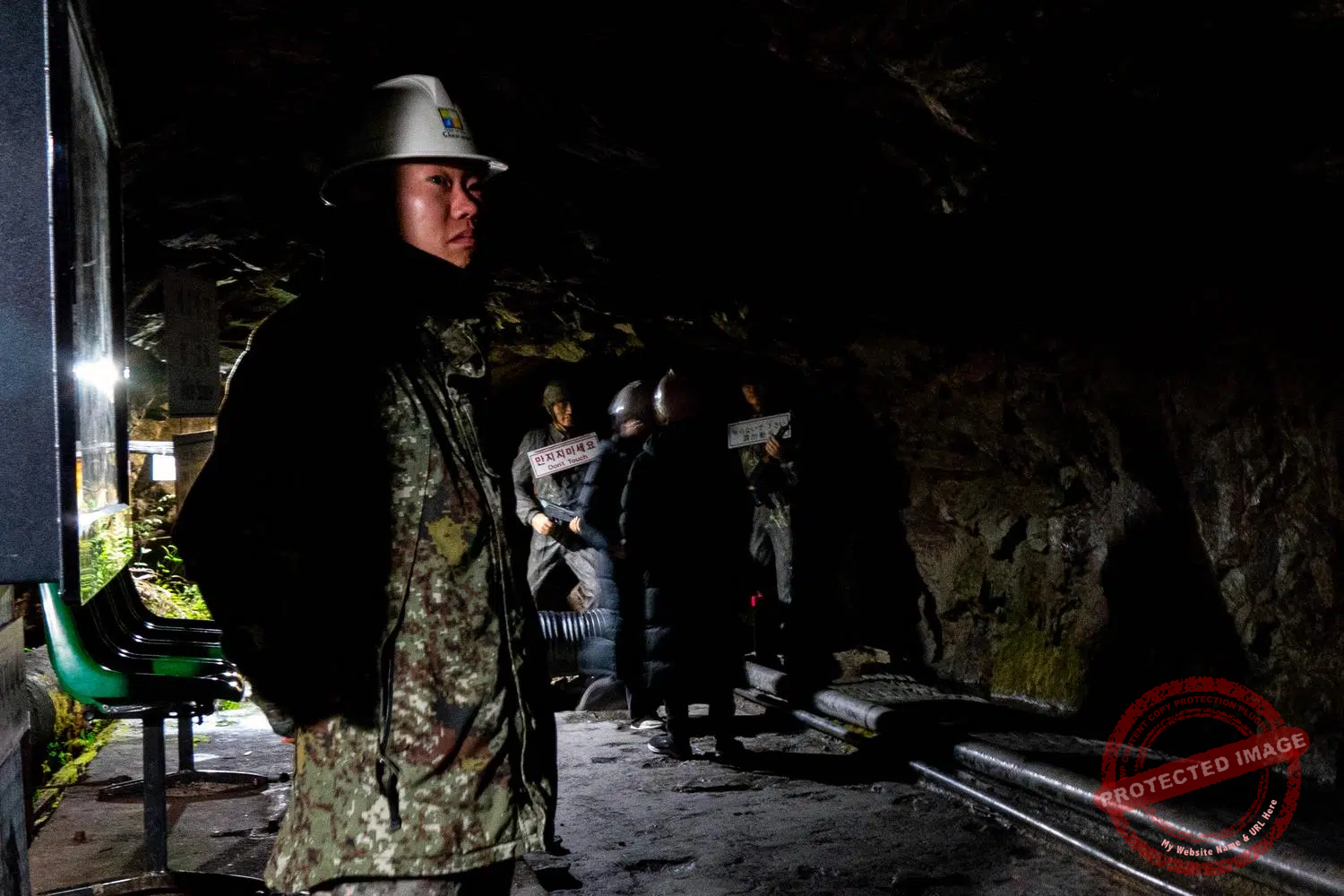
Inside the “Second Tunnel of Aggression” in Cheorwon (January 2024).
The operation was dubbed “Operation Eagle” and mobilized hundreds of soldiers, military and civil engineers, and experts of all kinds. Stumbling upon a narrow gallery dozens of meters deep, covering an area of several square kilometers, made finding a needle in a haystack seem like child’s play.
In the early hours of March 24, 1975 — 16 months after the first alert, and after 24 days digging a 108-meter-deep hole — the construction machinery of Hyundai Engineering & Construction finally broke through the North Korean tunnel.
It turned out to be 3.5 kilometers long, nearly two by two meters in size, penetrating South Korean territory for 1.1 kilometers at a depth of between 50 and 60 meters. In a surprise attack, it would have allowed 30,000 soldiers to pass through per hour into the South.
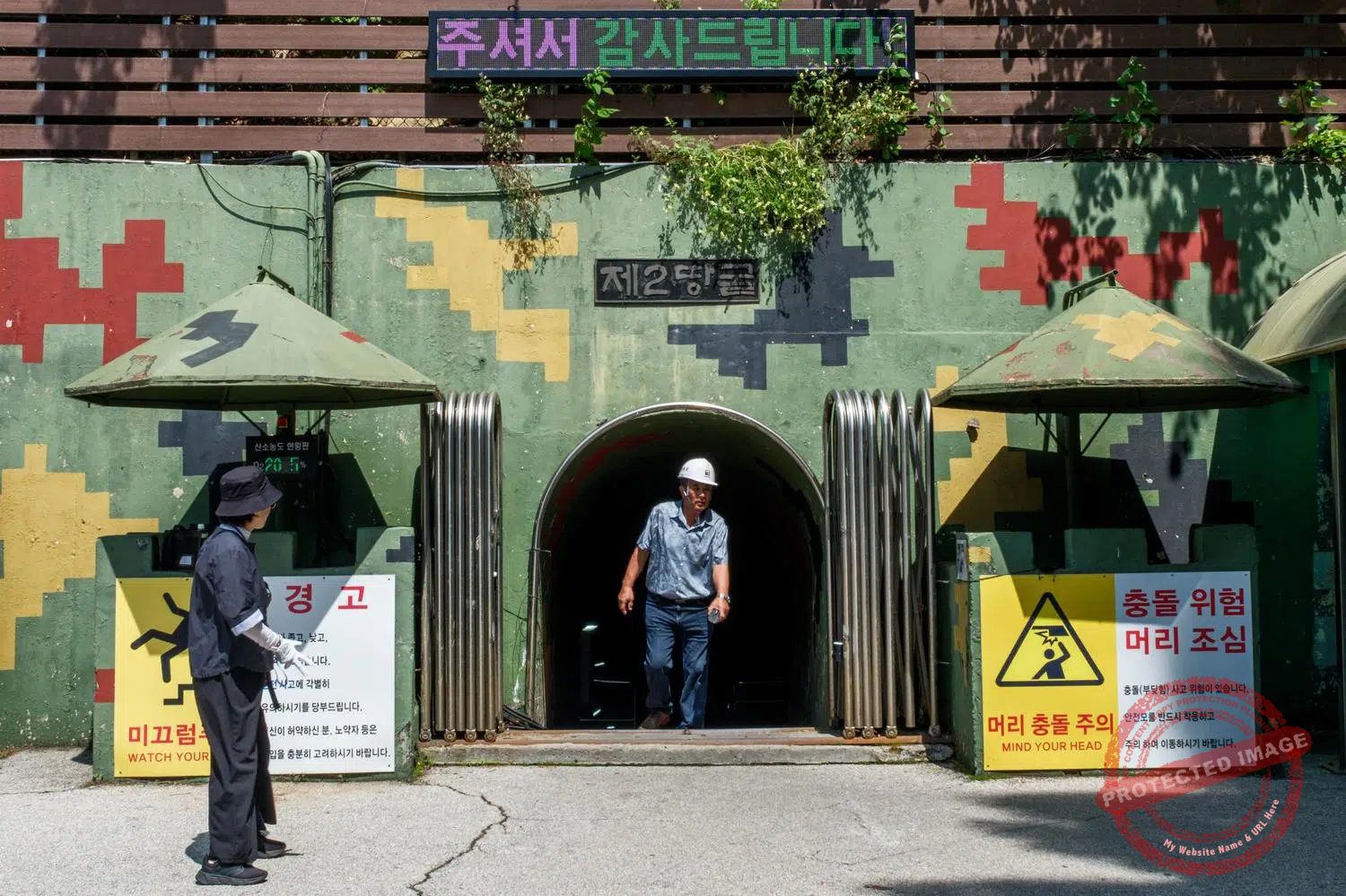
An exhausted tourist emerges from the “Second Infiltration Tunnel”, having run for hundreds of meters, bent in half in a narrow, suffocating hole, banged his head against the low ceiling at least 200 times and climbed hundreds of steps to return to the world of the living. His tour guide, who had remained on the surface during his ordeal, shouts at him not to forget to hand in his helmet before leaving (June 2025).
It is the “Second Tunnel of Aggression” — the second of four North Korean infiltration tunnels discovered under the border, and one of the two open to civilian visitors (the other one is in Paju, even closer to Seoul).
But before being decommissioned, the route first had to be explored.
On April 8, eight South Korean soldiers were killed by a booby trap laid by the North Koreans inside the tunnel they were inspecting. A monument at the entrance commemorates their sacrifice.
Only a 500-meter section is open to the public today. If you fancy the experience, you’ll have to descend an interminable staircase, head all the way down, and regularly bang your head against the granite ceiling (helmets are provided). Not recommended for claustrophobics or anyone in poor physical condition.
Kim Il Sung is said to have ordered the completion of the tunnels in 1971. “One tunnel can be more powerful and effective than ten atomic bombs put together,” he reportedly claimed, “and the tunnels are the most ideal means of penetrating the South’s fortified front line.”
Based on intelligence and defectors’ accounts, around twenty more North Korean infiltration tunnels are estimated to exist — never discovered, and virtually impossible to detect. The role they would actually play in an invasion of the South remains a mystery.
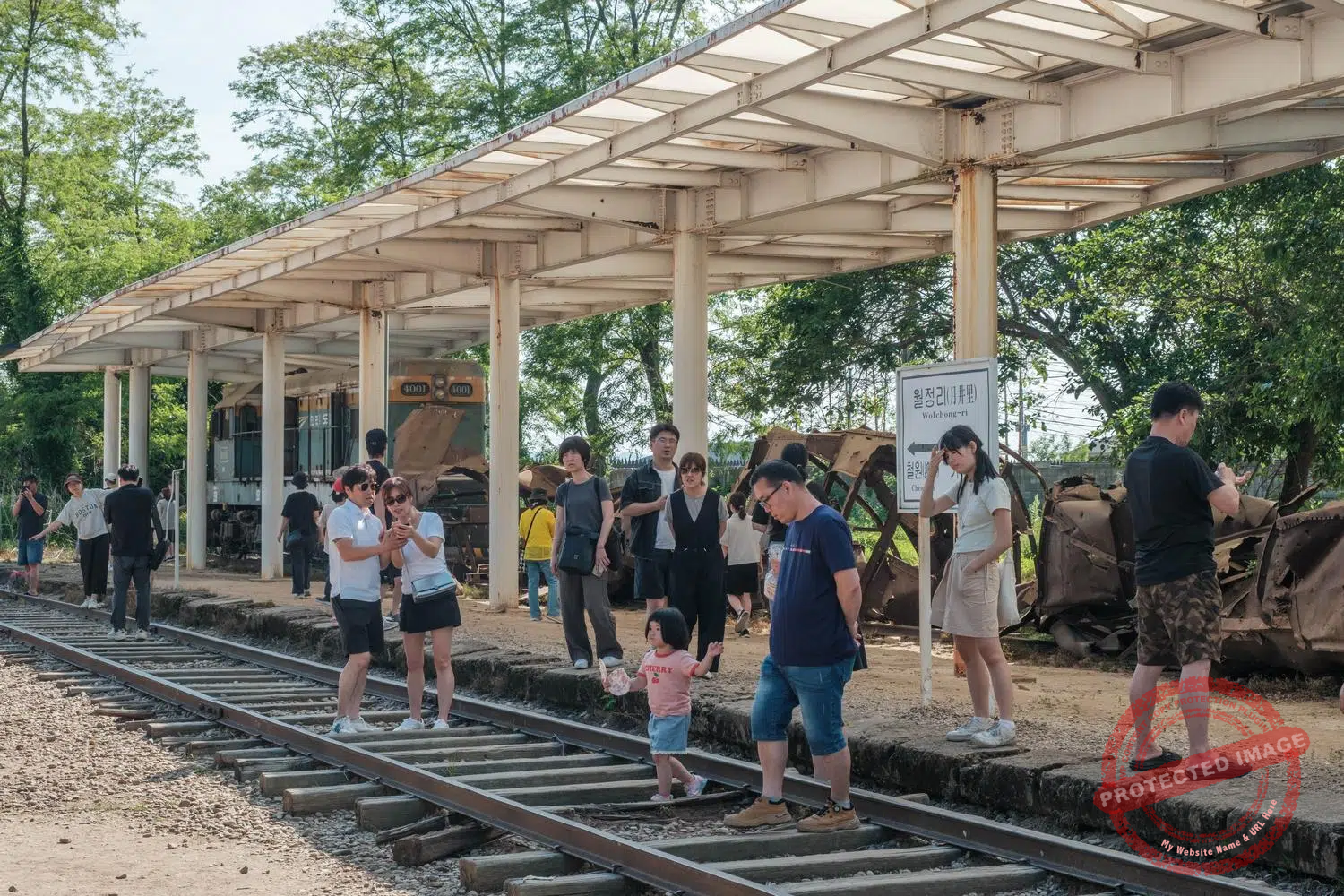
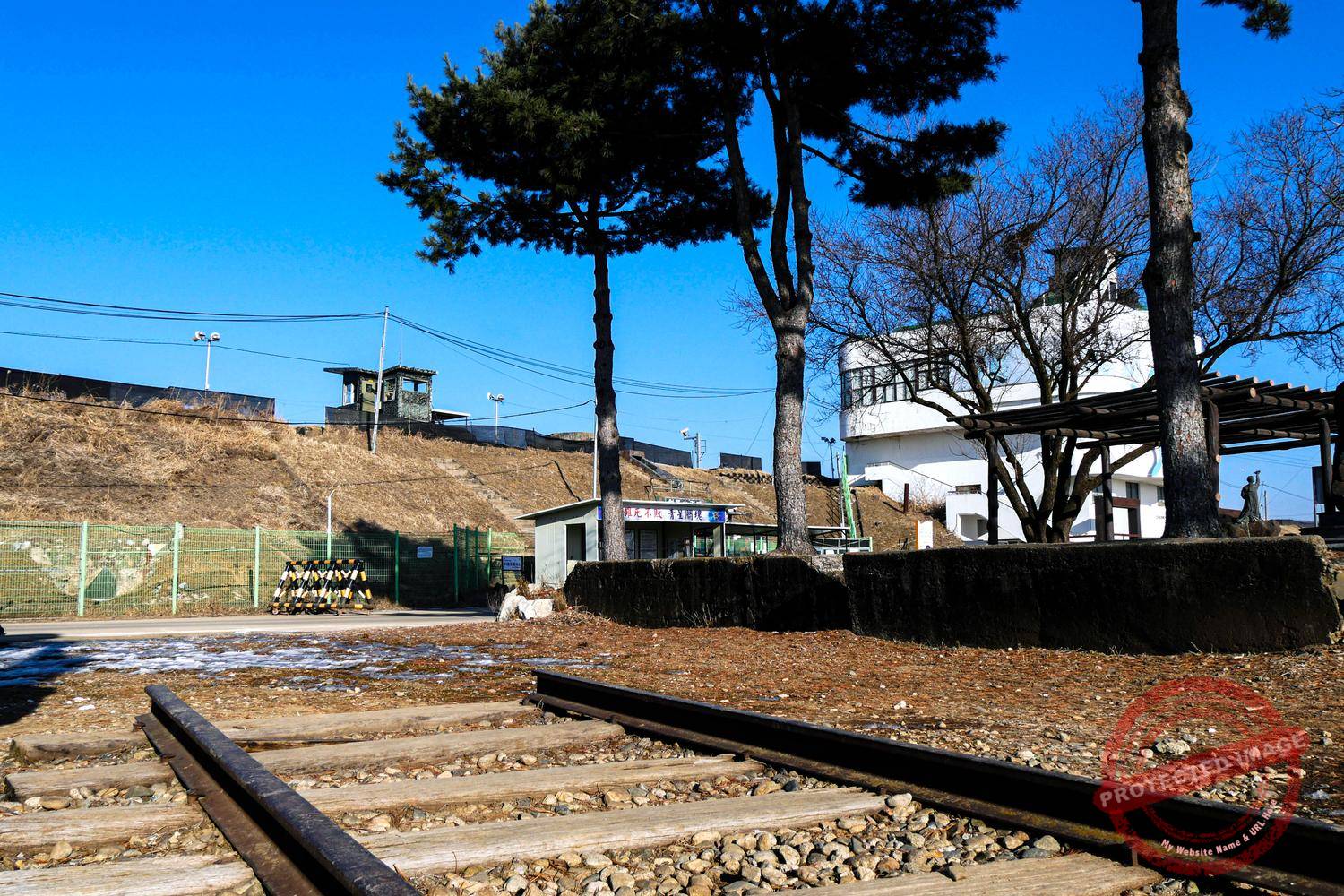
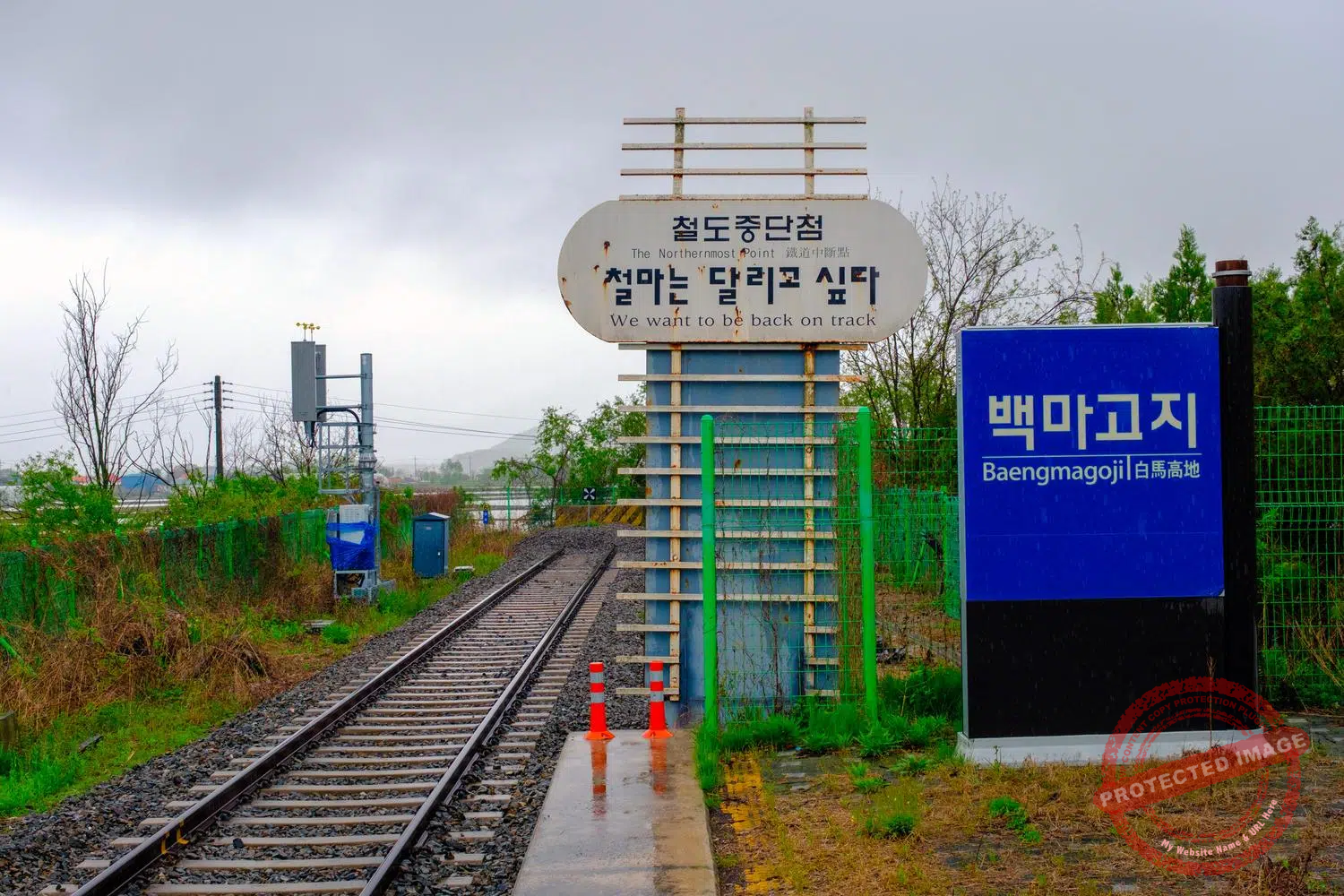
End of the line. The former Gyeongwon railroad between Seoul and Wonsan, a major port city now in North Korea, has been cut off for over 75 years. The last station of the line in South Korean territory, Woljeong-ri, was rebuilt in recent years as a tourist spot at the very edge of the DMZ, but receives no trains. Visitors taking part in the official Cheorwon DMZ Tour escorted by the army can take selfies on the tracks and in front of the wreck of a locomotive bombed during the Korean War. The “real”, active terminus of the Gyeongwong railway line is Baengmagoji Station, also in Cheorwon but outside the Civilian Control Zone. “We want to be back on track”, says a sign at the end of the platform.
In Cheorwon, the Korean War left the remnants of a now-vanished kingdom’s capital standing right in the middle of the DMZ.
This short-lived country was founded in 901 by Gung Ye, a former one-eyed Buddhist monk turned rebel leader against the kingdom of Silla. The kingdom only lasted 17 years. Gung Ye carried out political purges and killed his wife and two sons in 915. Three years later, he was overthrown and killed when his generals enthroned Wang Kon, his chief minister and future founder of the Goryeo dynasty, as their new king.
Today, the ruins of Gung Ye’s castle and tomb remain off-limits to the public, watched over only by military patrols. The division of the peninsula prevents any archaeological excavation. The site remains visible in the distance from the Cheorwon Peace Observatory. Each October, the Taebongje Festival commemorates this history through rituals and reenactments.
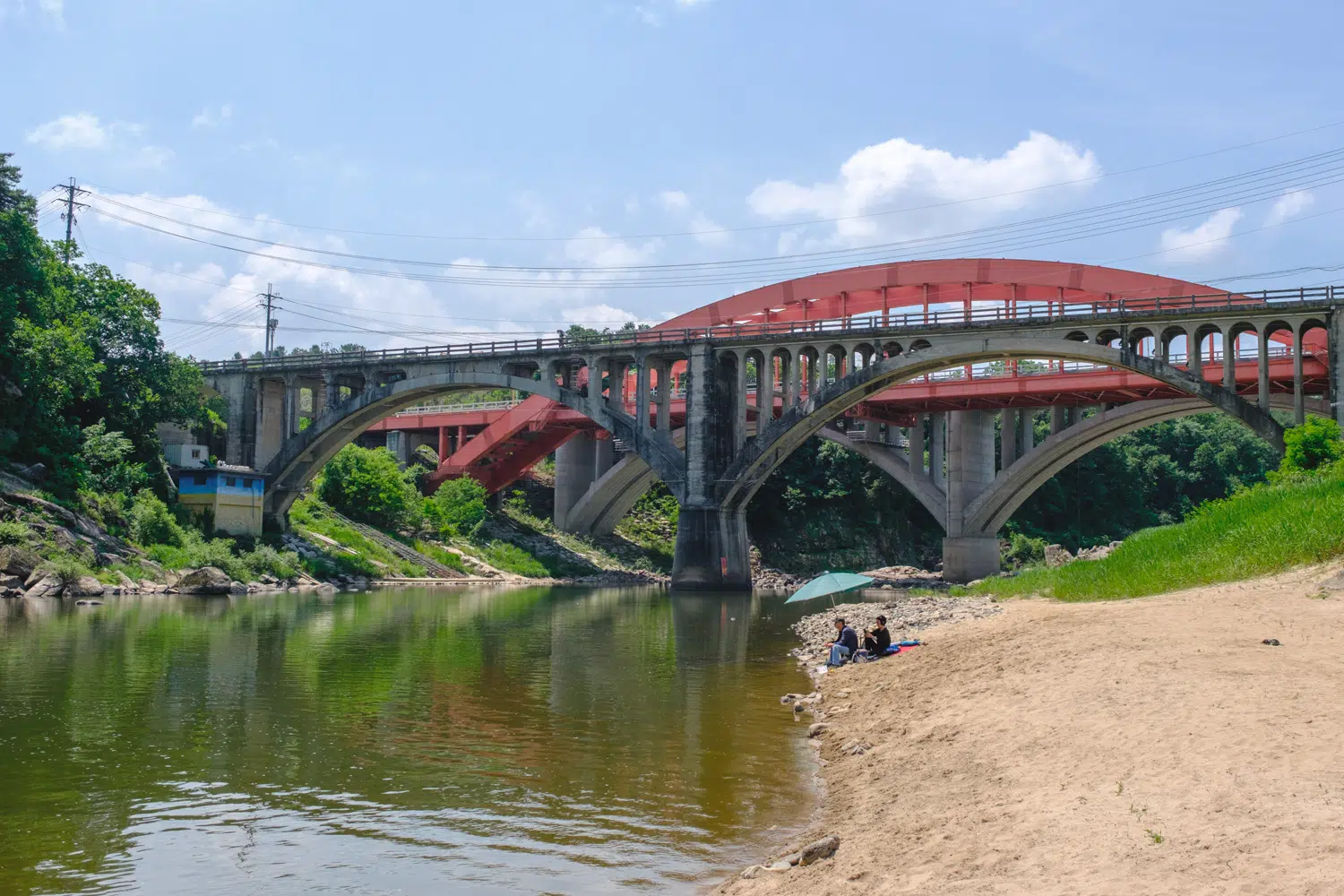
Another powerful symbol of Korea’s separation is the Seungilgyo bridge in Cheorwon. Construction began in 1948 under the North Korean Communist regime, which controlled the region at the time, was interrupted during the Korean War and completed in 1958 by South Korea. The northern portion of the bridge (right of the picture), built by the communists, and the southern portion (left), built by the South Korean authorities, are differently constructed, to the point that the discrepancy is externally visible. The Hantan River, which runs beneath and has its source in North Korea, is popular with rafters and anglers – and also gave its name to the hantavirus, which caused an outbreak among soldiers stationed along its banks during the Korean War before being discovered there in stripe field mice in 1976. Since the construction of a much more modern road bridge (in the background) in 1999, the Seungilgyo bridge can only be crossed by bicycles and pedestrians but remains a listed historic monument (June 2025).
This page was last updated on: July 16, 2026.