A Mass Grave of Unknowns
비목
Tens of thousands of soldiers from both sides of the Korean War are still missing. Many are in the DMZ. Recovery is slow and dangerous.


The Korean War claimed an estimated 2.5 to 4 million civilian and military lives. The number of servicemen killed in action and never found or identified is also impressive: some 124,000 South Koreans, between 100,000 and 120,000 North Koreans, between 25,000 and 30,000 Chinese, over 7,400 Americans, 1,000 British and hundreds of soldiers from other countries remain missing in action today.
Thousands of missing soldiers are believed to be buried inside the DMZ, the site of the former front line. This line changed very little during the last two years of the war despite fierce battles for inches of ground.
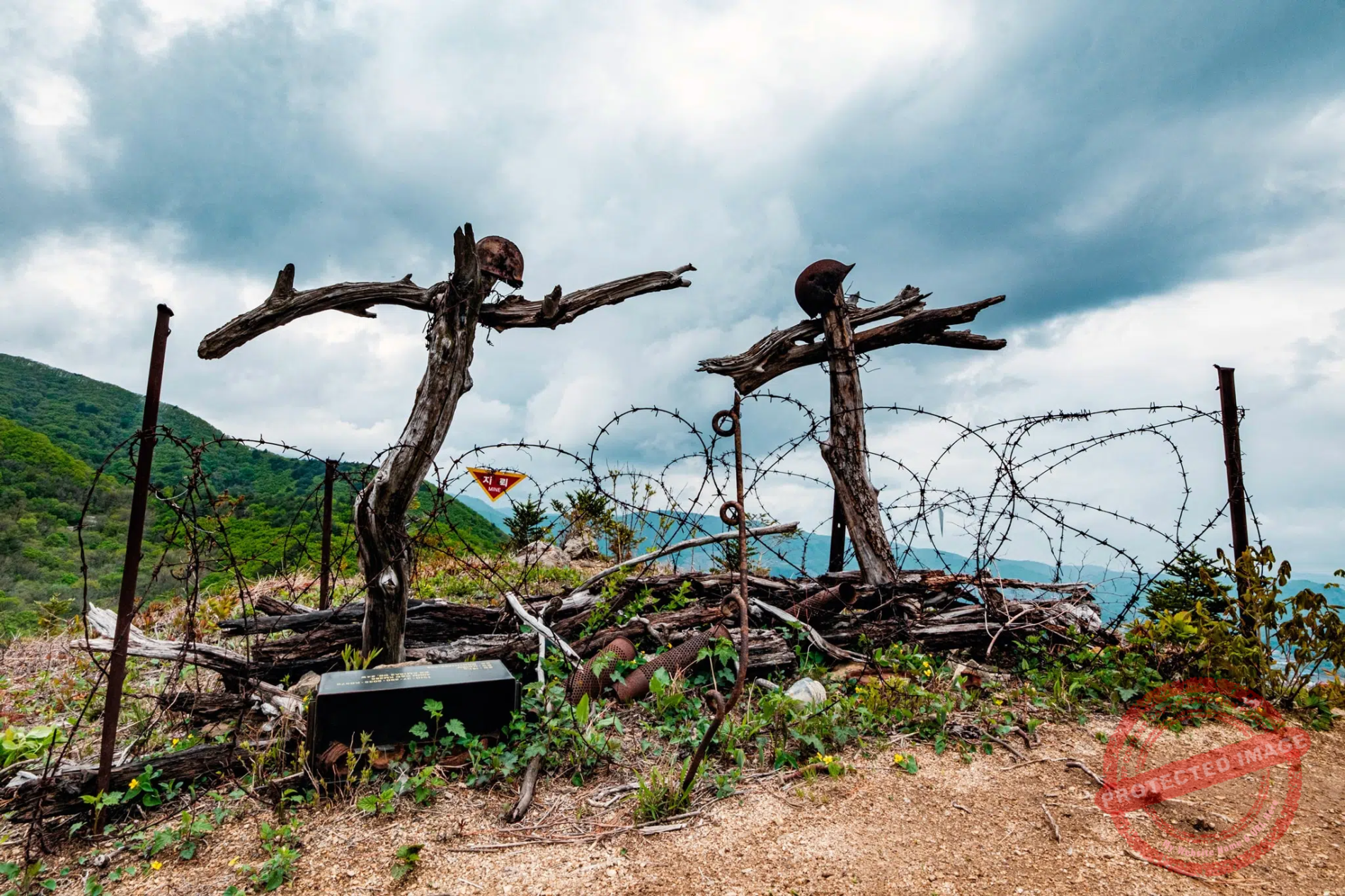
Bimok (비목), which means “wooden tomb”, is a word used to describe the graves dug in haste for soldiers killed during the Korean War, often marked with branches and equipment that belonged to the deceased, such as a helmet.
The expression was immortalized in 1969 in a song by Jang Il-nam that every Korean has heard. It was originally a poem, written by Han Myeong-hui a few years before when, during his military service in the DMZ, he stumbled across one of these makeshift tombs and imagined that its owner was a young man like him during the war:
On a sunny slope in a deep valley
where the gunpowder smoke has long since cleared,
a lone wooden grave marker
endures the wind and rain of countless years.
No name carved, no rank remembered,
only a rusted helmet left behind.
Who were you? Where did you come from?
Who now weeps for your forgotten soul?
As the mountain mist rises at dawn,
your spirit lingers still among the pines.
O, nameless soldier of the hills,
sleep in peace — sleep in peace.
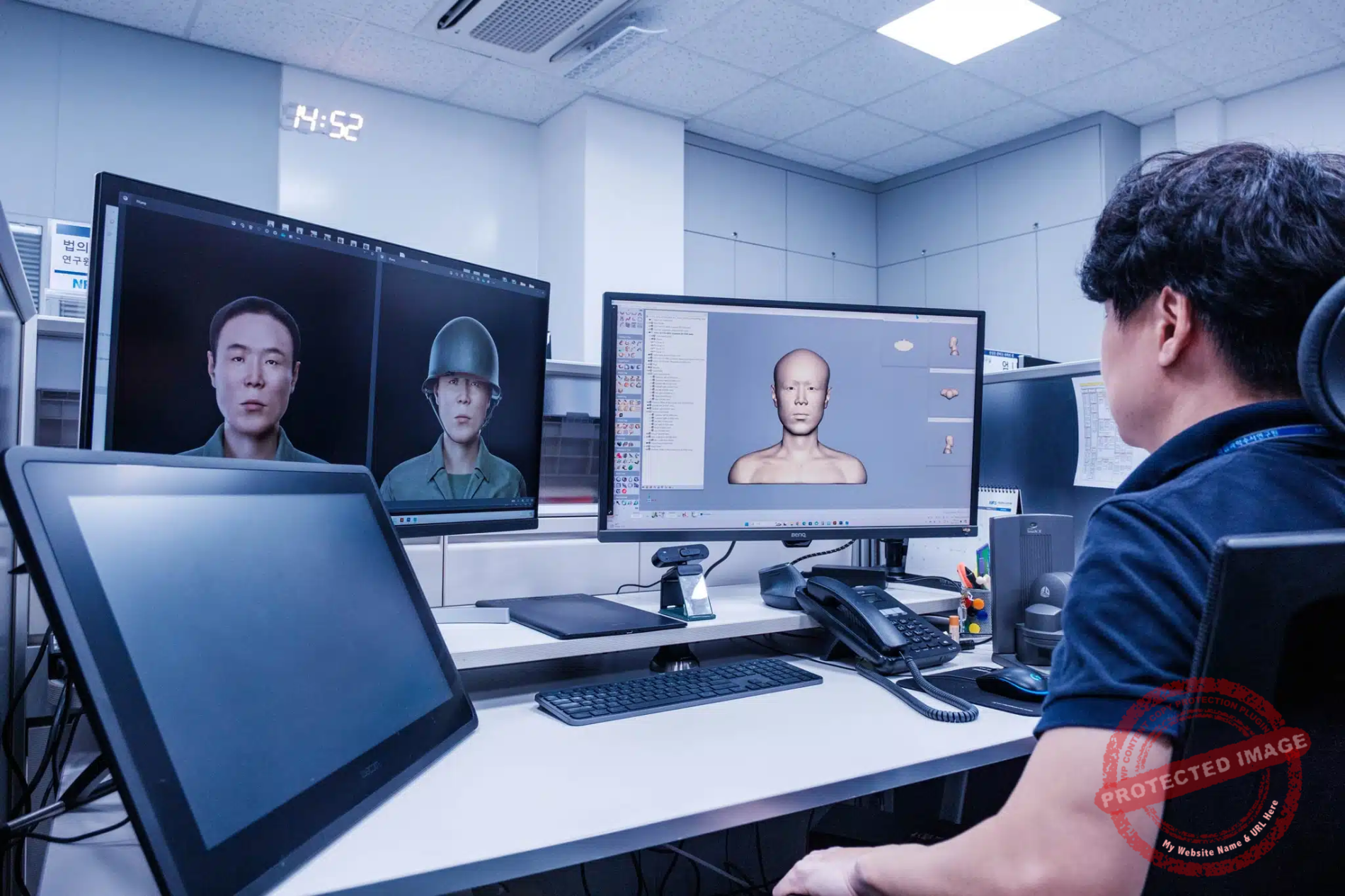
A scientist from the National Forensic Service in Wonju uses a computer program to reconstruct the face of a Korean War soldier whose skull has been found on a former battlefield (June 2025).
Bimok is widely taught in music education in South Korea and featured on national commemorative occasions. The song remains deeply moving, evoking respect for the nameless soldiers of the Korean War (even though it never names it) and symbolizing collective sorrow and unity.
The bimok in the photograph above is a reproduction, a work of art displayed along a hiking trail in the Punchbowl, a mountainous basin near the North Korean border around which some of the bloodiest battles of the conflict took place.
South Korea has led extensive body recovery missions outside the DMZ for decades, under the auspices of the Ministry of National Defense Agency for Killed in Action Recovery and Identification (MAKRI), established in 2000. Since its creation, the MAKRI has recovered over 12,000 sets of remains, although fewer than 200 have been identified.
But it wasn’t until 2018, following the Panmunjom Declaration signed by the leaders of North and South Korea, that meaningful recovery efforts within the DMZ itself became possible. The two Koreas agreed to remove some guard posts and conduct joint operations in the former frontline area of Arrowhead Ridge, a heavily contested site in Cheorwon. There, South Korean teams uncovered more than 300 sets of remains.
Joint U.S.–North Korea recovery missions also took place sporadically from the 1990s until 2005, and again briefly in 2018, when North Korea repatriated 55 boxes of remains following a summit between its leader Kim Jong Un and U.S. president Donald Trump. Some of these remains have since been identified, bringing closure to American families after nearly seven decades. Other countries, such as Australia, Canada or France, regularly conduct their own recovery missions in cooperation with South Korea.
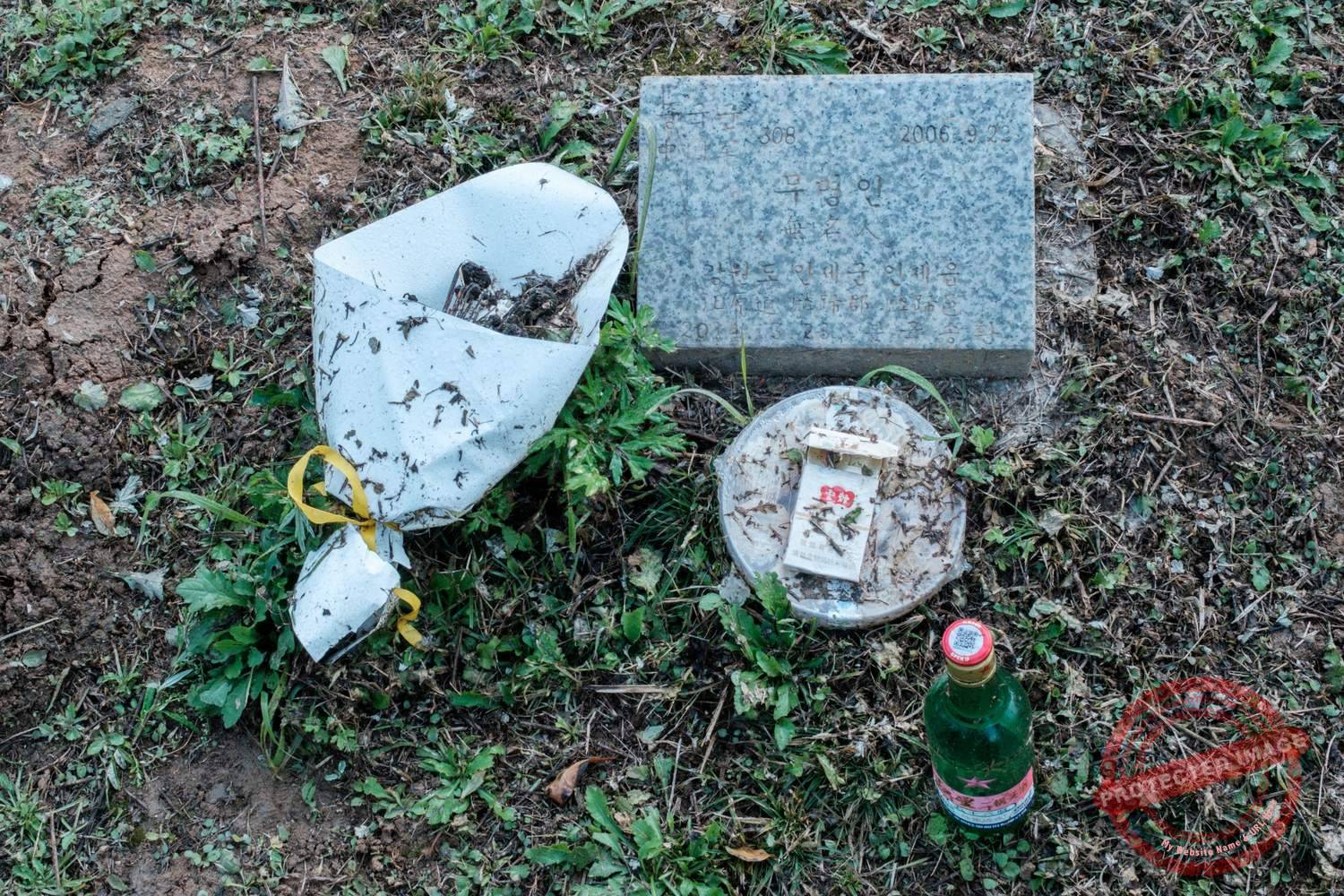
The grave of an unknown North Korean or Chinese soldier in the Military Cemetery for North Korean Soldiers in Paju, also known as the “Enemy Cemetery” (October 2024).
While initial joint operations in 2018–2019 were promising, inter-Korean relations deteriorated soon after. North Korea has since withdrawn from further cooperation, leaving South Korean teams to continue the search unilaterally, primarily along the southern boundary of the DMZ.
Recovery is slow and dangerous. The zone is infested with landmines and unexploded ordnance, and teams rely on demining squads and ground-penetrating radar to safely search. Additionally, without access to North Korean archives or DNA data, identifying remains believed to be of North Korean or Chinese soldiers remains nearly impossible.
When a body is found, the side to which it belonged can be determined by the objects that may have been found with it like his uniform – buttons are an important clue – and his weapons.
The South Korean soldiers are laid to rest in the National Cemeteries in Seoul and Daejeon or other dedicated places. Americans and those from other nations who fought under the U.N. flag are buried in the United Nations Memorial Cemetery in Busan or repatriated to their home countries. Also, since 2015, dozens of veterans of various nationalities who died long after the war have requested and been granted permission to be buried in Busan, alongside their comrades-in-arms.
The North Koreans have their own military cemetery in the South. The Chinese used to be buried there too, but were later repatriated and laid to rest in the “Cemetery of Revolutionary Martyrs of the War to Resist U.S. Aggression and Aid Korea” in Shenyang.
In some cases, the bones are so damaged that identification by dentition or even DNA sampling proves impossible. For these extreme cases, the Wonju-based National Forensic Service (NFS) has set up a computer-aided facial reconstruction system.
The first Korean War soldier to be identified using this cutting-edge technique was Sergeant Song Young-hwan in May 2025, 12 years after his body was discovered and 74 years after his death. His daughter was 3 years old when he died in 1951 and did not remember him. She was offered a portrait of her father based on the facial reconstruction process, seeing his face for the first time.

The United Nations Memorial Cemetery in Korea in Busan, where the bodies of foreign soldiers who died fighting alongside South Korea during the Korean War are buried (May 2026).
Dog Tags
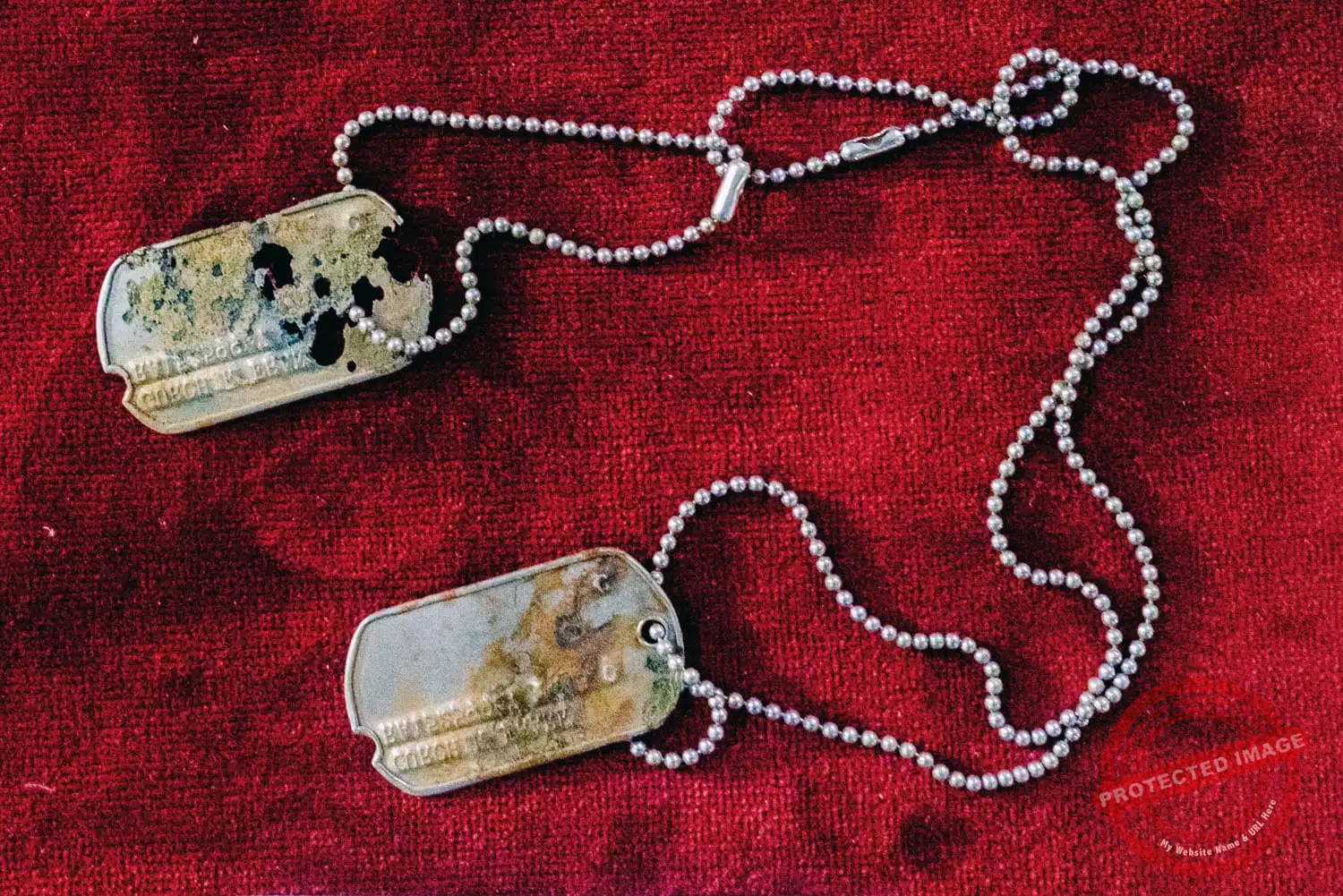
These military identification tags – commonly known as “dog tags” – in Cyrillic characters are on display at the Korean War Exhibition Hall in Goseong.
In most armed forces around the world, dog tags are always worn in pairs. If a soldier is killed in action, one is left on the body, while the other is collected. This ensures that the body can still be identified later and there is immediate proof of identity to report back to command.
The two tags are worn on the same chain with one on a short loop and the other on a longer chain. This allows one to be removed easily while the other stays with the body.
During the Korean War, American soldiers, along with most troops from United Nations member countries, were issued metal dog tags as standard military equipment. By that time, dog tags had already become a norm in the U.S. military since World War I, and their format had evolved through World War II into the rectangular shape still used today.
A typical U.S. Army dog tag in the Korean War included full name, service number, blood type and religion. The Republic of Korea Army also adopted similar identification methods.
On the other side, North Korean and Chinese troops often did not carry standardized metal dog tags, which often made identification of the dead extremely difficult.
The nickname “dog tag” comes from the resemblance between these identification tags and those made mandatory in the United States for dogs by pet registration laws in the 1930s.
This post was last updated on: May 29, 2026.