Joint Security Area
공동경비구역
The most surreal and famous spot in the DMZ, where soldiers from the North and South stare at each other from just a few meters away.


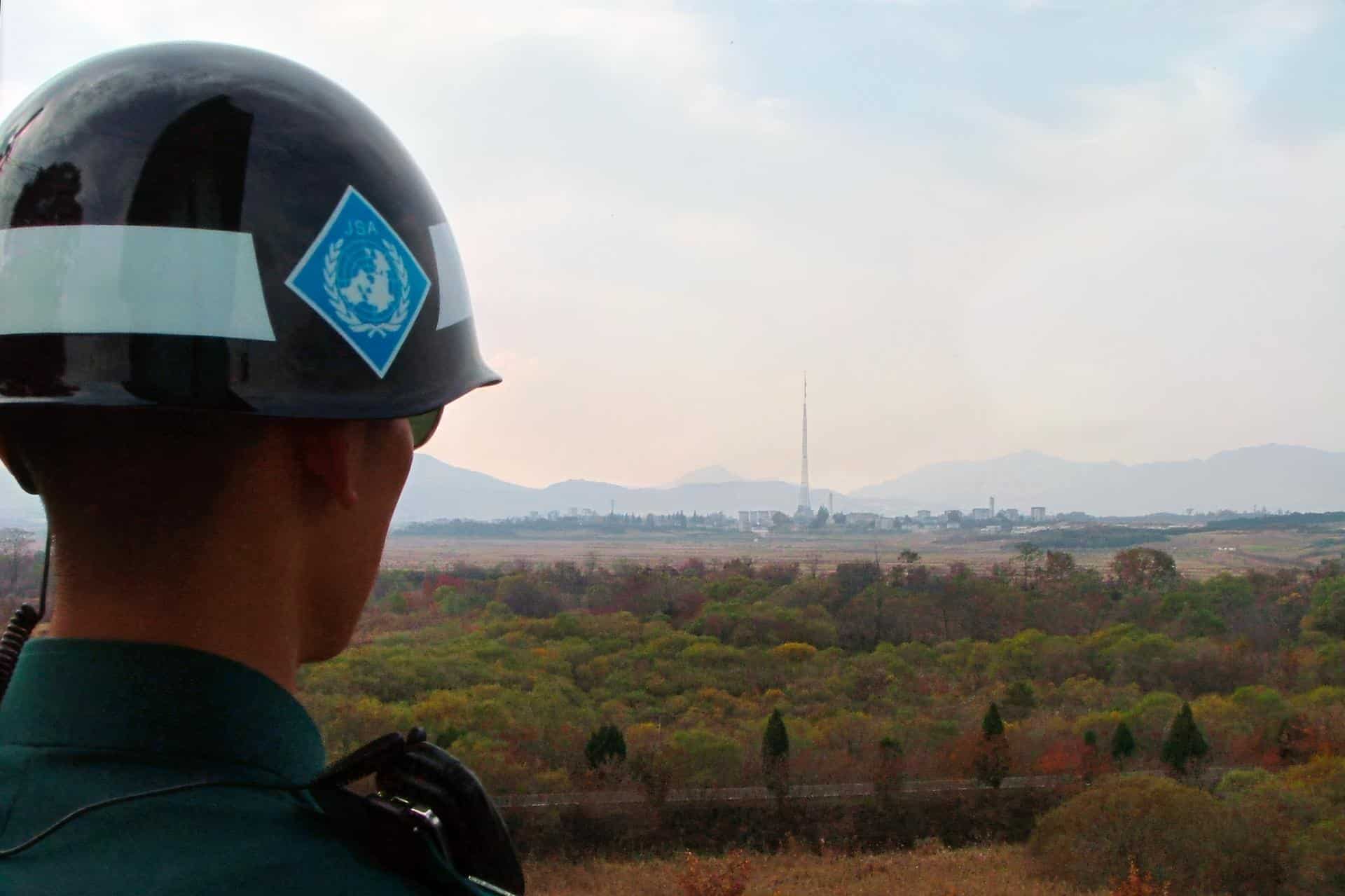
A South Korean Soldier from the United Nations Command Security Battalion observes the North Korean landscape from the Joint Security Area (November 2005).
Located in the so-called “truce village” of Panmunjeom, roughly 60 km north of Seoul, the Joint Security Area (JSA) is probably the best-known place in the Korean Demilitarized Zone.
Here, North and South Korean forces stand face-to-face without any border fence separating them. The Military Demarcation Line is marked only by small white stakes planted in the ground and by a change in the color of the grass. The conscripts from the South (rumor has it they’re selected for their physical beauty to impress their northern counterparts) used to adopt strange taekwondo-like postures, while those in the north are usually older and have a more relaxed attitude.
The JSA is also known as MACHA (Military Armistice Commission Headquarters Area). Its seven huts built straddling the border used to be a physical and operational center for providing a point of direct contact between the two enemies to settle current affairs, examine cases of armistice violations and exchange prisoners.
Its location in Panmunjeom stems from the fact that the two main bodies responsible for enforcing the armistice, the Military Armistice Commission (MAC) and the Neutral Nations Supervisory Commission (NNSC), were required, under the agreement, to establish their headquarters in this former village where the text was negotiated and signed. Please refer to the glossary for more details on MAC, NNSC, and other terms.
The JSA has often been the scene of bloody events and remains a completely surreal place.
For decades, this strange “village” with its carefully trimmed bushes and neatly mowed lawns on either side of a front line between two countries still technically at war has been open to tourism.
The dress code for civilian visitors was strict: no shorts, no miniskirts, no sleeveless shirts, no tank tops, no ripped jeans, no baggy clothes, no sandals, no flip-flops, no sportswear or anything resembling military uniforms or bearing inscriptions deemed provocative. All of this was, in principle, to avoid fueling the North’s propaganda about Western decadence. Making gestures or speaking in the direction of Northern soldiers was also strictly forbidden.
Before entering the JSA, each visitor had to sign a waiver stating: “The visit to the Joint Security Area at Panmunjeom will entail entry into a hostile area and possibility of injury or death as a direct result of enemy action”. There are no known cases of tourists being injured or killed by “enemy action”, but signing this document was part of the thrill.
No one really remembers how this war zone had transformed over the years into a major tourist attraction. Tourism seems to have appeared incrementally, tied to political or military arrangements. The JSA received up to 100,000 visitors a year, before being closed to civilian tours in 2023 following the defection to the North of an American soldier during one of these visits.
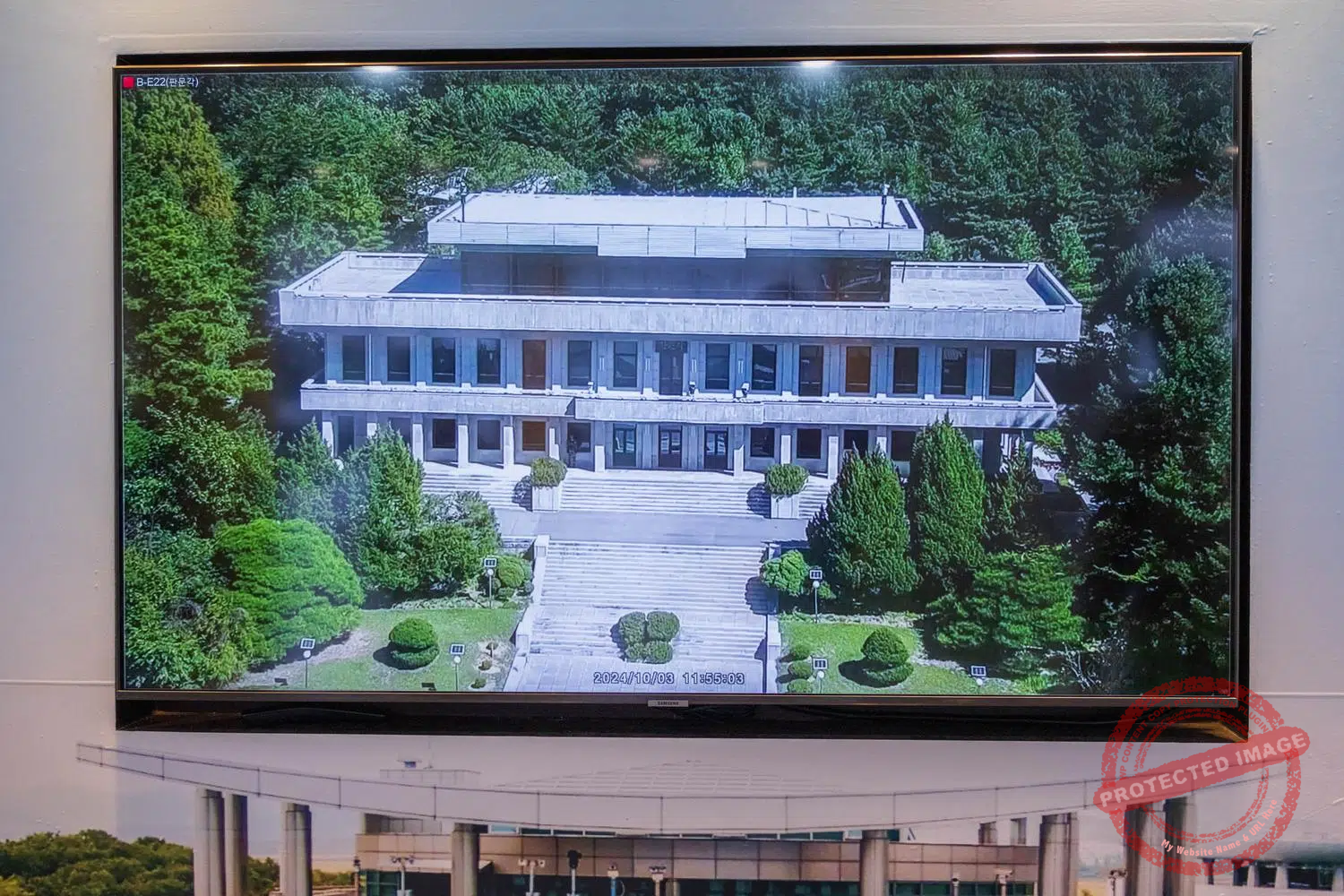
A TV screen installed in the Visitors’ centre at Camp Bonifas broadcasts live images of the Panmungak, the main North Korean building of the JSA, and of the lone sentinel – nicknamed ‘Bob’ by the soldiers on the South side – who stands guard at all times, binoculars in hand (October 2024).
The main buildings, the Panmungak in the north and the Freedom House in the south, around 100 metres apart, are linked by one of the ten existing inter-Korean hotlines used for north-south communications. This telephone line used to be tested twice a day except during weekends and public holidays (the South called the North on odd dates, while on even dates it was the other way around).
However, North Korea has not picked up the phone since August 2021, in protest against joint South Korea-U.S. military exercises. Another hotline, between the United Nations Command and the Korean People’s Army, remains in operation 24/7/365 for military communications such as notification of activities and movements in the DMZ or non-standard events.
The JSA has been the scene of all kinds of weird things, from fistfights to dramatic defections on both sides, and from gunfire battles to historic summits.
The most famous event to have taken place at this surreal location is still known as the “Axe Murder Incident.”
On August 18, 1976, a United Nations Command work party entered the JSA to prune a poplar tree that obstructed the sightline between two observation posts. The detail was led by U.S. Army Captain Arthur Bonifas and First Lieutenant Mark Barrett, both unarmed under JSA rules. After North Korean officer Pak Cheol repeatedly demanded the work stop and was ignored, he signaled his men, who seized the axes left by the tree-pruning crew and attacked the U.S. soldiers. Bonifas was killed on the spot, while Barrett died en route to a hospital in Seoul via an aid station at Camp Greaves. Three days later, U.S. and South Korean forces carried out Operation Paul Bunyan, a large show-of-force operation in which the tree was cut down under the protection of attack helicopters, bombers, and fighter escorts.
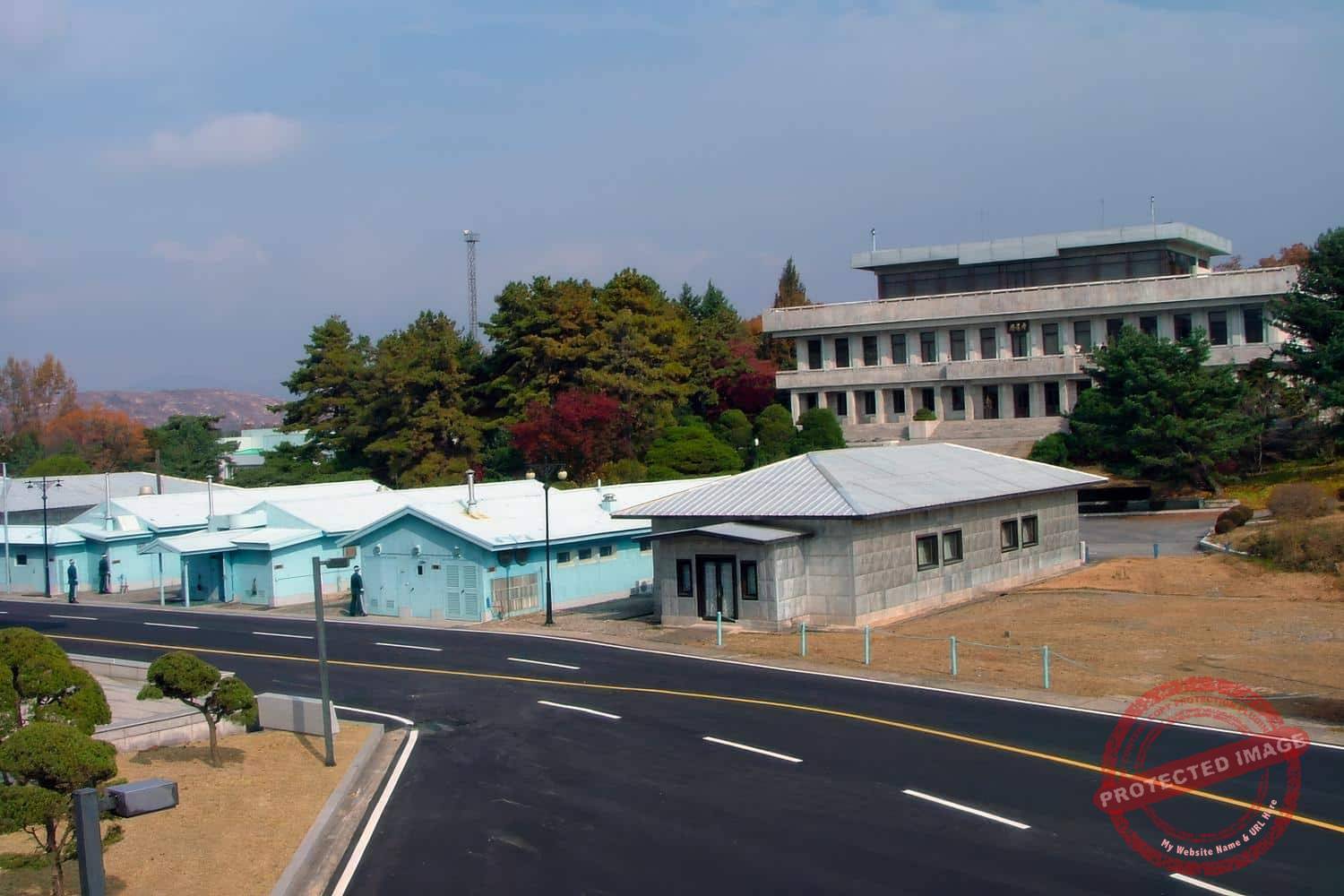
The huts formerly used for cross-border negotiations, which straddle the military demarcation line (indicated by a change in grass color). At the rear, the Panmungak, the official North Korean building (November 2005).
On a more peaceful note, an unlikely meeting between North Korean leader Kim Jong Un and U.S. president Donald Trump happened here in 2019. Trump was invited by Kim to briefly cross the MDL, becoming the first U.S. president in history to set foot on North Korean territory.
One year earlier, in April 2018, a historic inter-Korean summit took place in the JSA. North Korean leader Kim Jong-un shook hands with South Korean President Moon Jae-in and crossed over the MDL, marking the first time a North Korean leader had set foot in Southern territory since the Korean War. Both men held hands and crossed back over to the North briefly before returning to the South. The following month, Kim and Moon met again in the JSA, this time on the North Korean side.
Two years earlier, the JSA had been the scene of the dramatic defection of a North Korean man, Oh Chong Son.
The defector drove a car at full speed, forced his way through the JSA and found himself mired a few meters from the border. He then jumped out of the vehicle under fire from North Korean soldiers, managed to sprint across the demarcation line and, critically wounded, took refuge behind a low wall where he was rescued by the South Korean army. He survived, and the surgeons who operated on his wounds extracted worms up to 27 centimetres long from his intestines – a consequence of North Korea’s use of human excrement as fertilizer.
Years later, he was arrested for drunk driving in South Korea, where he had failed to integrate.
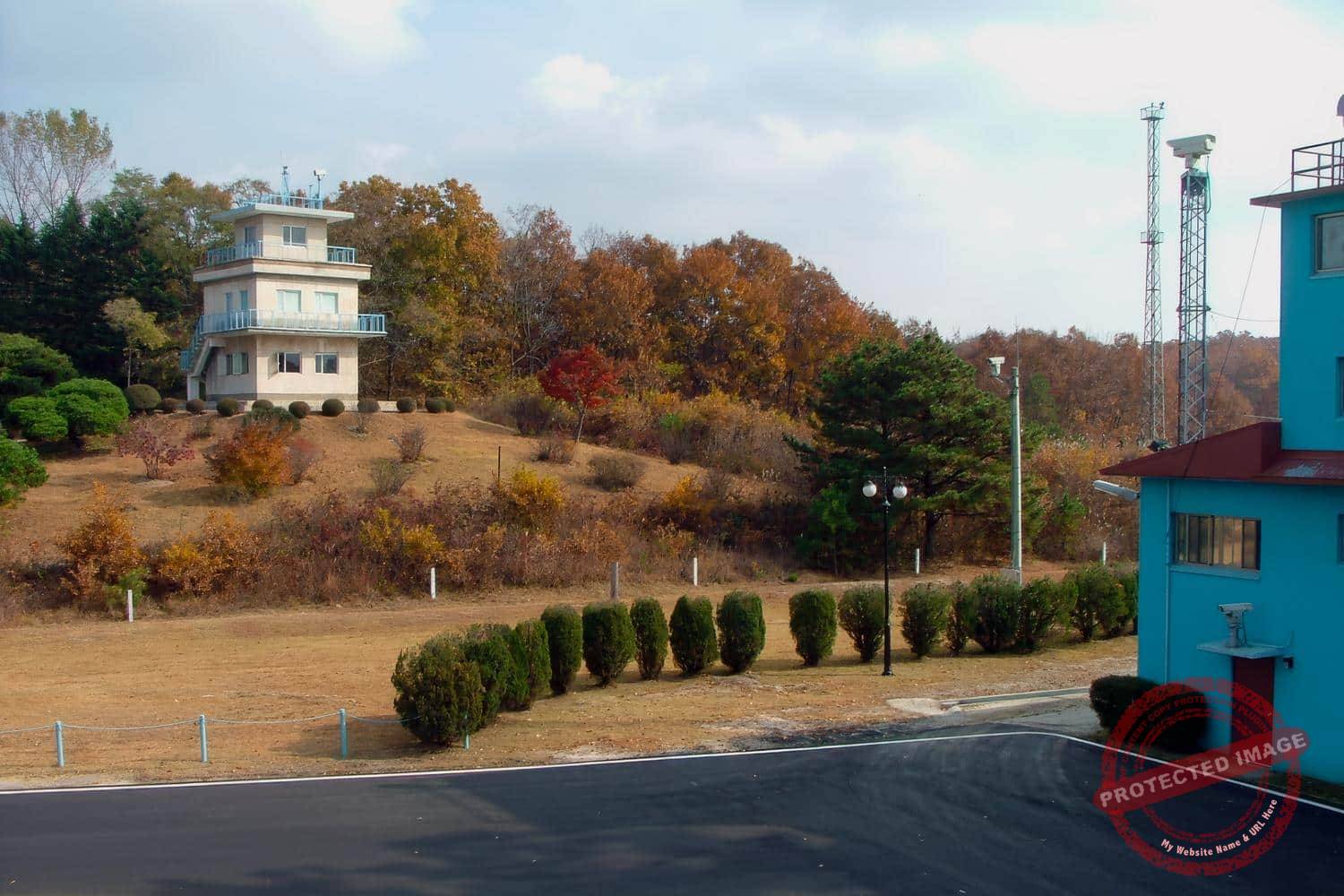
The ‘KPA-2’ North Korean military facility, just north of the Military Demarcation Line – materialized by the white stakes and the bushes. On the foreground, painted in blue, is a UN Command facility (November 2005).
In 1984, a translator from the Soviet embassy in Pyongyang, Vasily Matuzok, ran suddenly across the border while on a DMZ tour from the North, triggering a 40 minute gunfight that left one South Korean and three North Korean soldiers dead.
Twenty minutes after the end of the battle, several gun shots were heard in the north. It is believed that the North Korean JSA commander and one of his deputies were summarily executed by their political commissars for failing to prevent the defection.
Similarly, shortly after Oh’s defection in 2017, the military in the south heard the sound of a gunshot. In all likelihood, the North Korean JSA commander had preferred to commit suicide rather than face the terrible punishment for having failed to prevent the escape.
Other cases of defections through the JSA include a Chinese army officer and his wife in 1989. In the opposite direction, seven American soldiers have defected to the North through the DMZ since the end of the Korean War. The last one so far was private Travis King, a 23-year-old American serviceman with serious disciplinary problems, in July 2023.
King, who was supposed to take a flight back to the U.S. after serving jail time in South Korea for assault, managed to escape from Incheon Airport, to join a JSA tour and to defect by running across the border, howling with laughter, in front of his stunned group mates. He was detained in North Korea for over two months, then deported to China following secret negotiations and repatriated to the U.S. In 2024, he pleaded guilty to desertion and several other charges, was sentenced to 12 months in confinement, and was dishonorably discharged from the army.
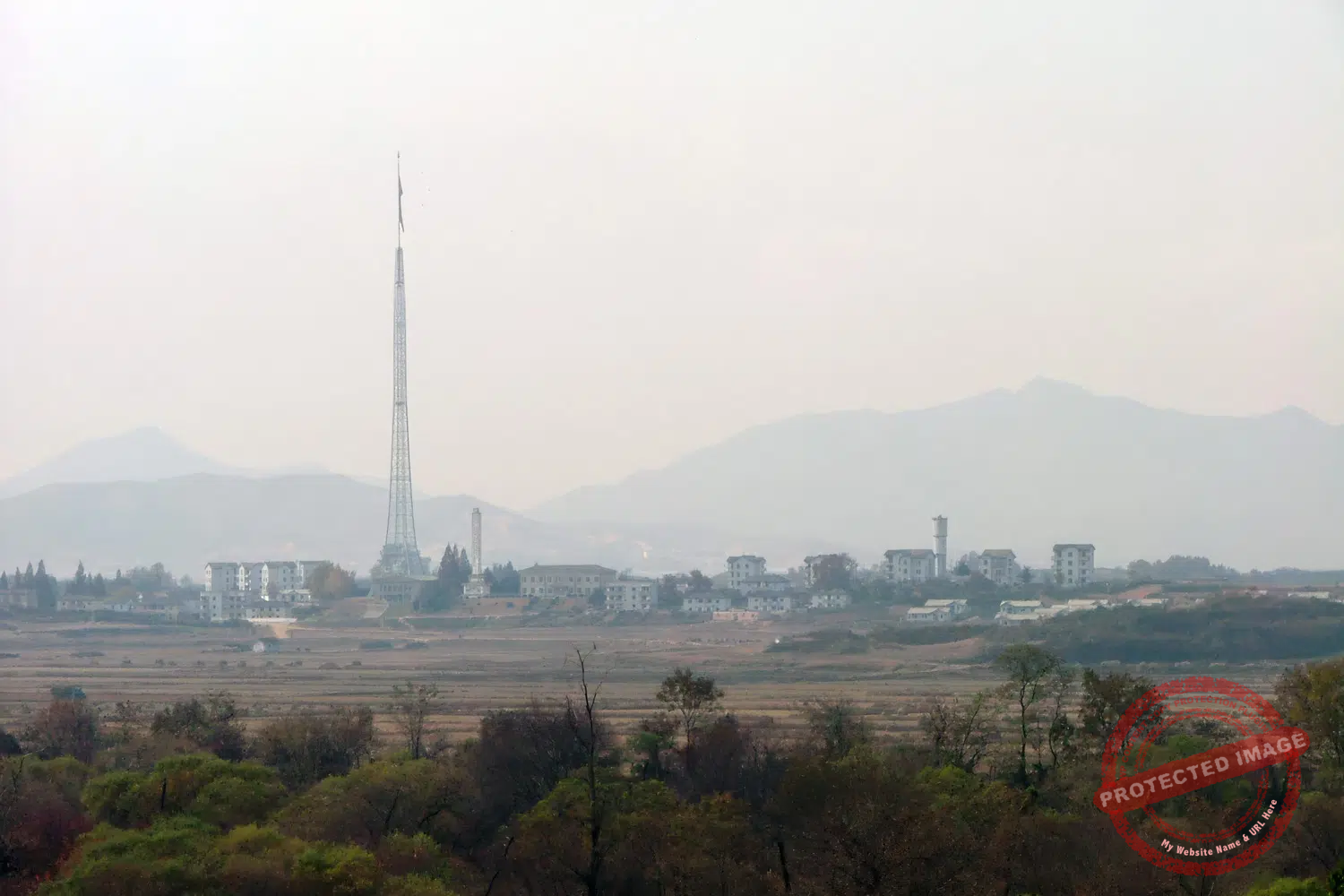
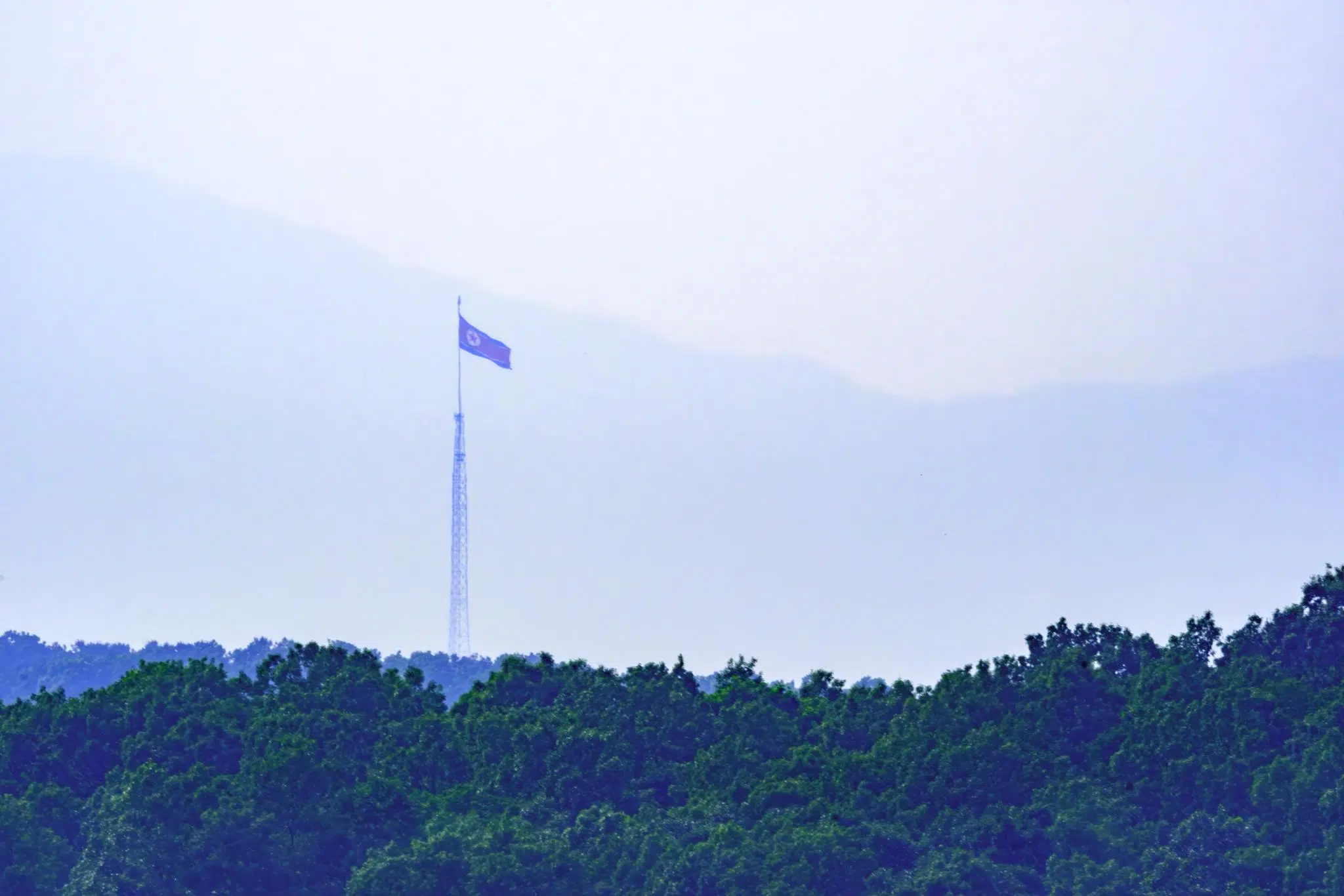
The North Korean village of Kijong-dong and its 160-meter high flagpole seen from the Joint Security Area (November 2005).
Crossing the JSA is the most discreet way for envoys from both sides to travel from Seoul to Pyongyang and vice versa for secret talks, as was the case on several occasions during the negotiations over North Korea’s nuclear program in the 1990s and 2000s. The JSA is also the place where people who have crossed the border, deliberately or by accident, are repatriated. On a regular basis, military personnel and North Korean fishermen who have involuntarily found themselves in South Korean waters and have expressed their desire to return home have been able to do so via Panmunjeom.
But sometimes these returns are less peaceful.
In 2019, the South Korean government was harshly criticized for forcibly repatriating through the JSA two North Korean fishermen who had defected to the South after allegedly murdering their 16 shipmates with hammers. Footage published at the time shows the two men restrained and blindfolded, with one of them trying to resist as they were dragged to the demarcation line where the North Korean military awaited them. Their fate remains unknown to this day, but it is likely that they were swiftly executed.
Other highlights in the history of the JSA include the return of Lim Su-kyung, a South Korean student who travelled to Pyongyang in 1989 without her government’s permission to take part in a youth festival and meet the leader Kim Il Sung. Lim was given the nickname Flower of Unification by the North Korean regime. On her return, she became the first civilian since the end of the Korean War to cross the Military Demarcation Line. She was arrested as soon as she set foot in the south, sentenced to 12 years in prison, later commuted to five years of which she served three. Lim Su-kyung was elected to the South Korean Parliament in 2012. That same year, her story was told in the documentary La Chica del Sur by the Argentine director José Luis García.
Among the high-profile repatriations via the Joint Security Area were also those of two activists, reverend Han Sang-ryol in 2010 and Roh Su-hui in 2012, who had made unauthorized visits to North Korea to promote reunification. Just like Lim Su-kyung, both were arrested on the spot by the South Koreans after they crossed the Military Demarcation Line and served lengthy prison sentences. In the case of Roh Su-hui (also spelled No Su-hui), he was sent off at the JSA by a large group of North Korean civilians in hanbok traditional dresses waving the flag of reunified Korea and carrying bouquets of flowers, who hurled insults and fiercely protested his dramatic arrest right after he walked across the border.
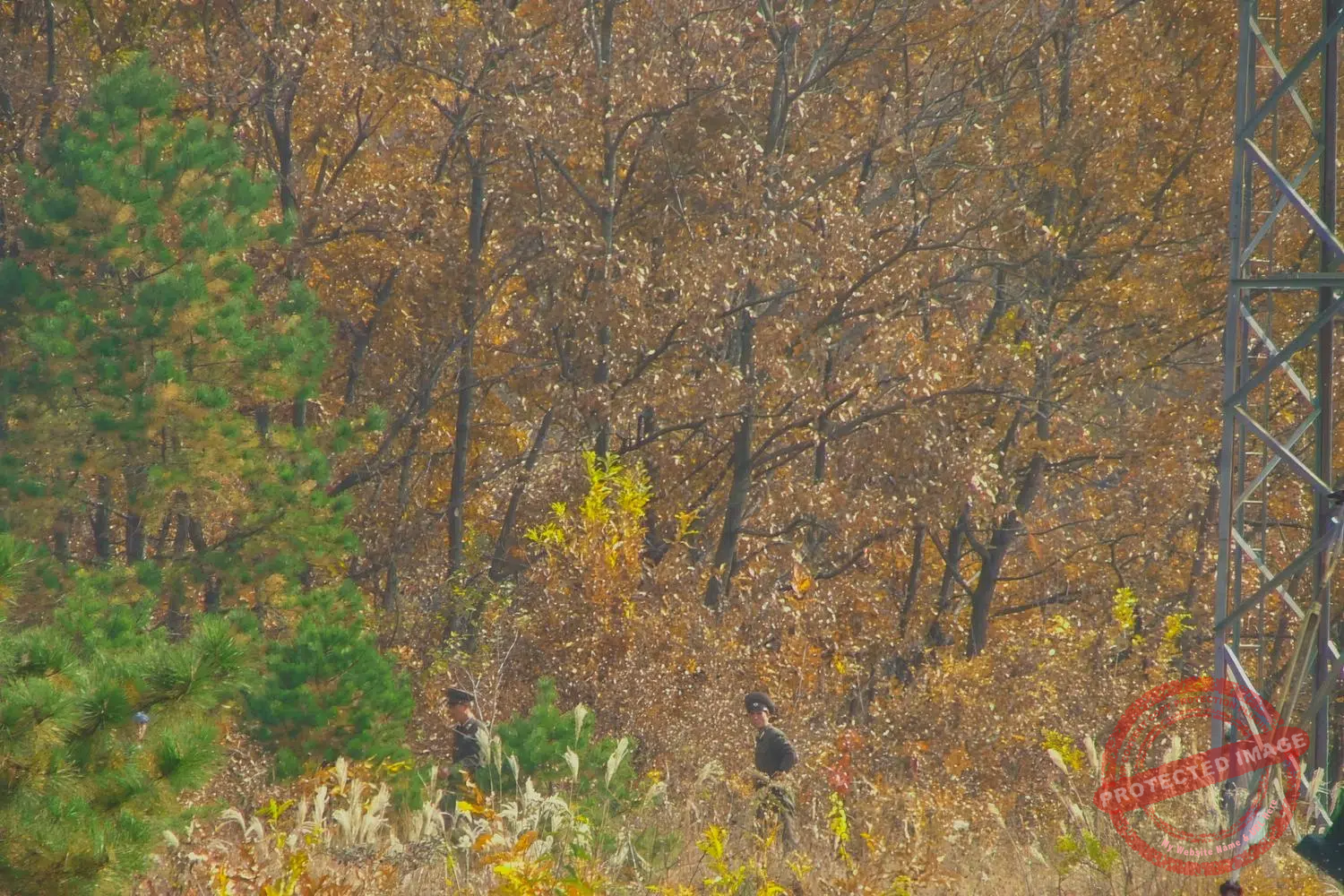
North Korean soldiers wander on their side of the Military Demarcation Line in the Joint Security Area (November 2005).
Seven huts housing meeting rooms are built straddling the border in the JSA. The gray huts are managed by North Korea’s Korean People’s Army (KPA), and the blue huts by the United Nations Command (UNC). They were built shortly after the 1953 armistice to replace the tents that had initially served as meeting rooms.
Inside, the conference tables straddle the border: when talks were still taking place, delegates from North Korea would enter the room through the door on the northern side and sit on the northern side of the table, while those from the South would do the same on their side.
Two of the huts are used as meeting rooms for the Military Armistice Commission (MAC), a 10-member bilateral body set up to manage the implementation of the 1953 Armistice Agreement and investigate violations. However, North Korea has boycotted the meetings since 1991, when South Korean officers were appointed by the UNC as senior members of the MAC in replacement of U.S. officers (North Korea claims that only signatories to the Armistice Agreement, of which South Korea is not a part, can be representatives).
Another hut is used by the Swiss and Swedish soldiers of the Neutral Nations Supervisory Commission (NNSC), whose existence North Korea ceased to recognize in 1995. The Swiss and Swedish members of the NNSC continue to meet there once a week. They are the last regular users of the place.
In other words, these conference rooms are not used much anymore. This has not always been the case: in the years following the Korean War, meetings between the two sides were held almost every day. As the verbatim transcripts and photos from the meetings of that time show, the discussions were generally heated in the crowded rooms where everyone smoked, while journalists and other observers from both sides watched from outside through the windows. Fistfights between North Koreans and Americans outside the huts were not uncommon, sometimes resulting in serious injuries.
Visiting one of these huts meant technically stepping into North Korea, as the border crosses the negotiations table. In some cases, North Korean soldiers used to stare at the visitors with curiosity and take pictures of them through the windows. A South Korean soldier guarded the north door at all times during the visit in case a tourist was tempted to do something stupid.
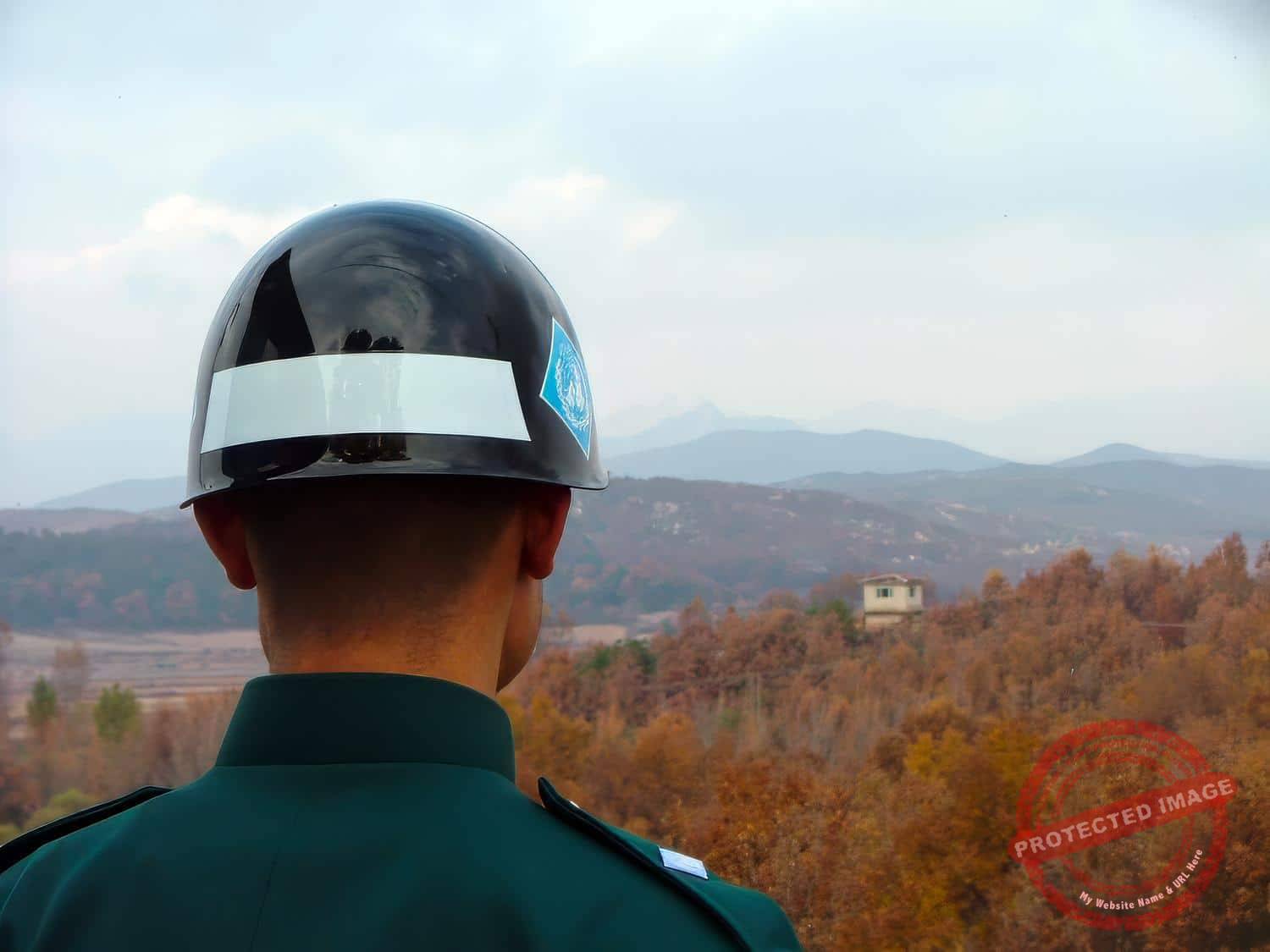
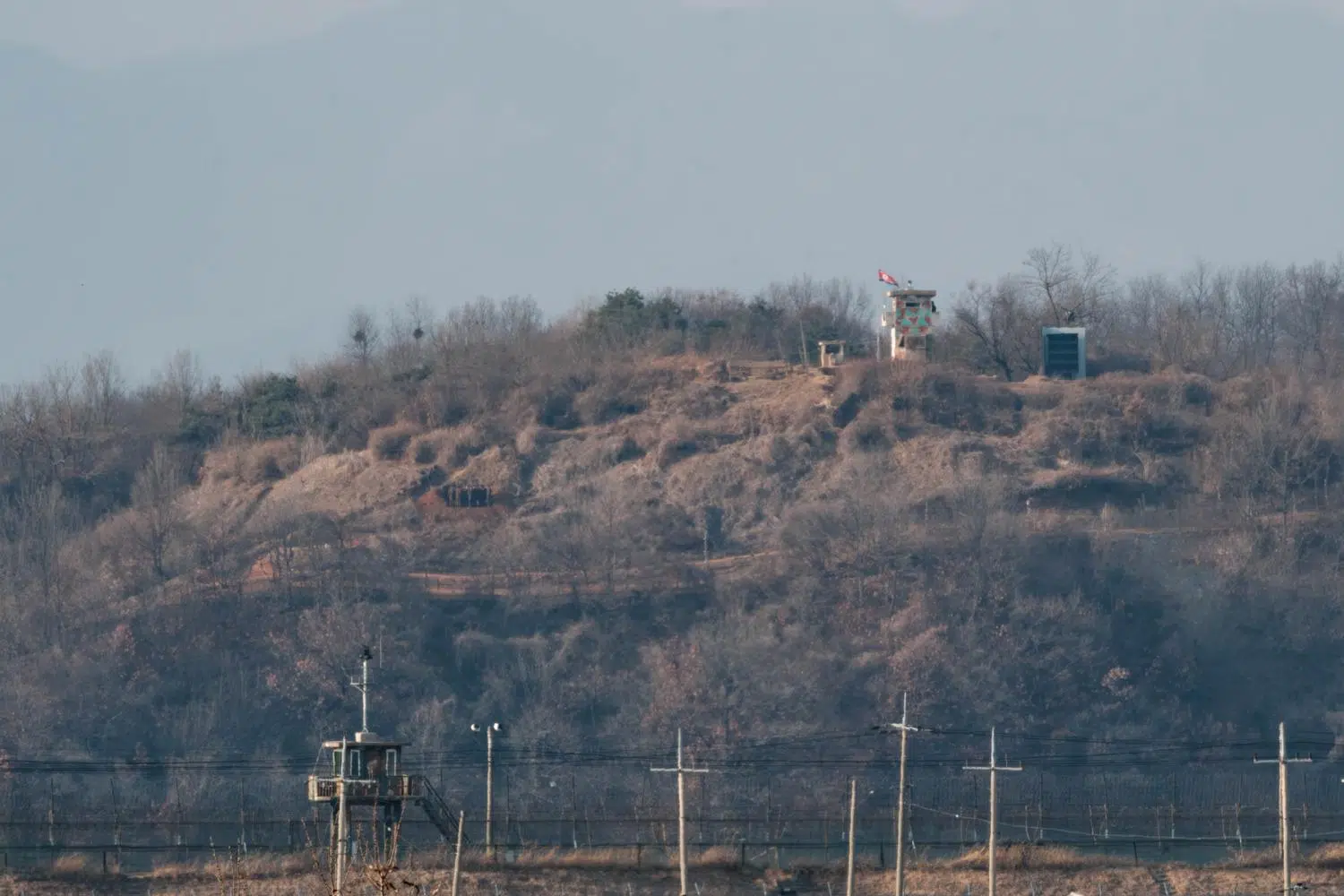
A South Korean soldier watches a North Korean Guard Post across the Military Demarcation Line in the DMZ (November 2005).
The JSA was originally a neutral territory where soldiers from both sides could move freely and where firearms were theoretically banned. Since the August 1976 “Axe Murder Incident”, everyone has remained on their own side of the demarcation line, and a concrete curb (it is unclear which side poured it) has marked the MDL between the huts.
This meant that the North Korean part of the JSA suddenly found itself cut from the rest of the country, its only access until then being via the Bridge of No Return in the southern part of the JSA. The North rushed to build a replacement structure on its side that was named the 72-hour Bridge because that was the time in which it was hastily constructed. People from the North now enter the JSA via this bridge.
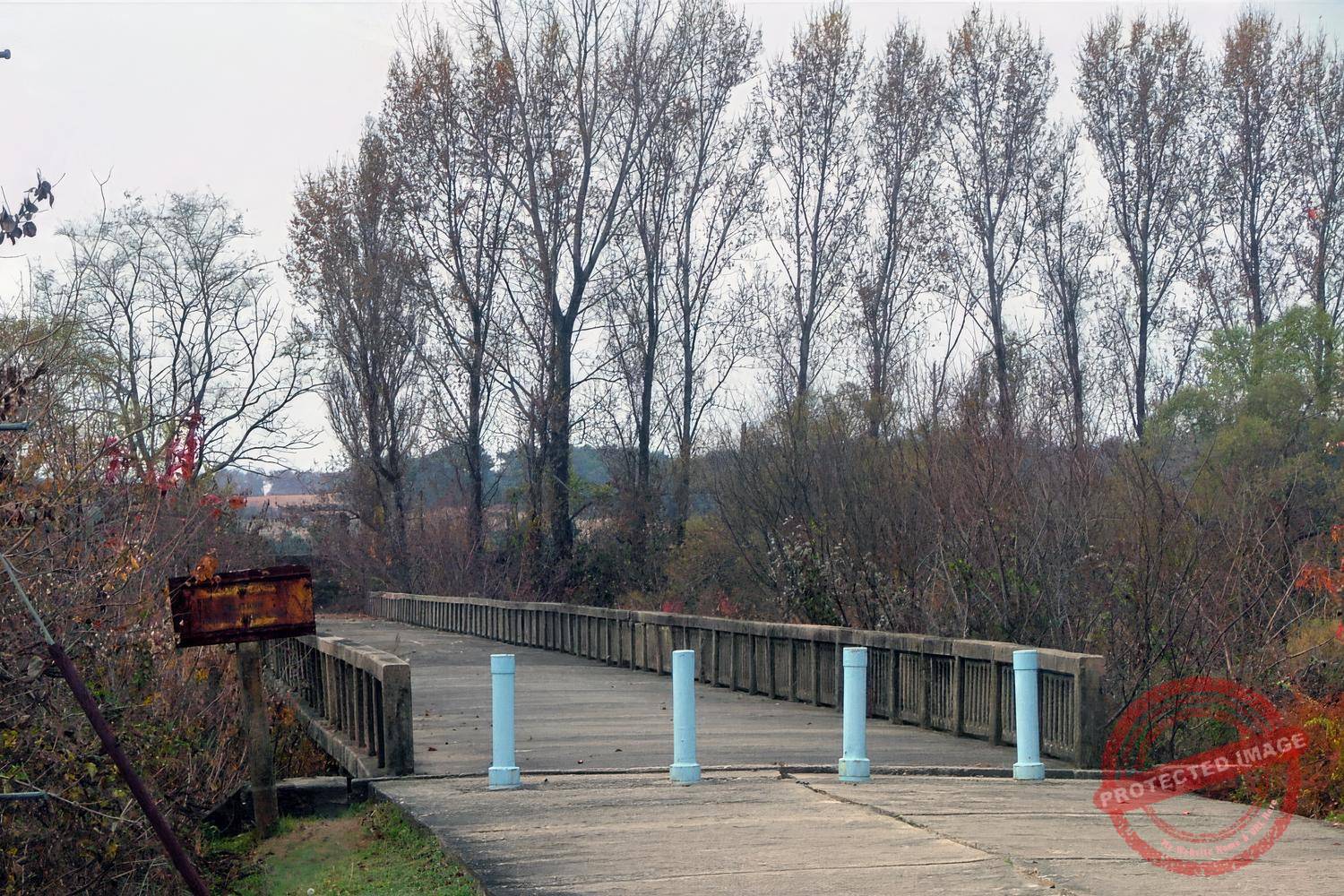
The “Bridge of No Return” across the Military Demarcation Line, where prisoners were exchanged after the Korean War (November 2005).
The JSA was also where the massive prisoner exchanges took place at the end of the Korean War, across the Bridge of No Return that spans a stream marking the border. The name originates from the final ultimatum that was given to the prisoners about to be repatriated: they could either remain in the country of their captivity, or cross the bridge to return to their homeland. However, once they chose to cross the bridge, they would never be allowed to return.
At either side of the bridge are guard posts of the respective countries. The North Korean one is called KPA#4 while the United Nations Command checkpoint was called CP#3. It was abandoned in the mid-1980s after numerous attempts from the North Koreans to grab UNC personnel from it and drag them across the bridge into their territory. Because of this permanent abduction threat and its proximity to the North, the CP#3 was referred to as “The Loneliest Outpost in the World”.
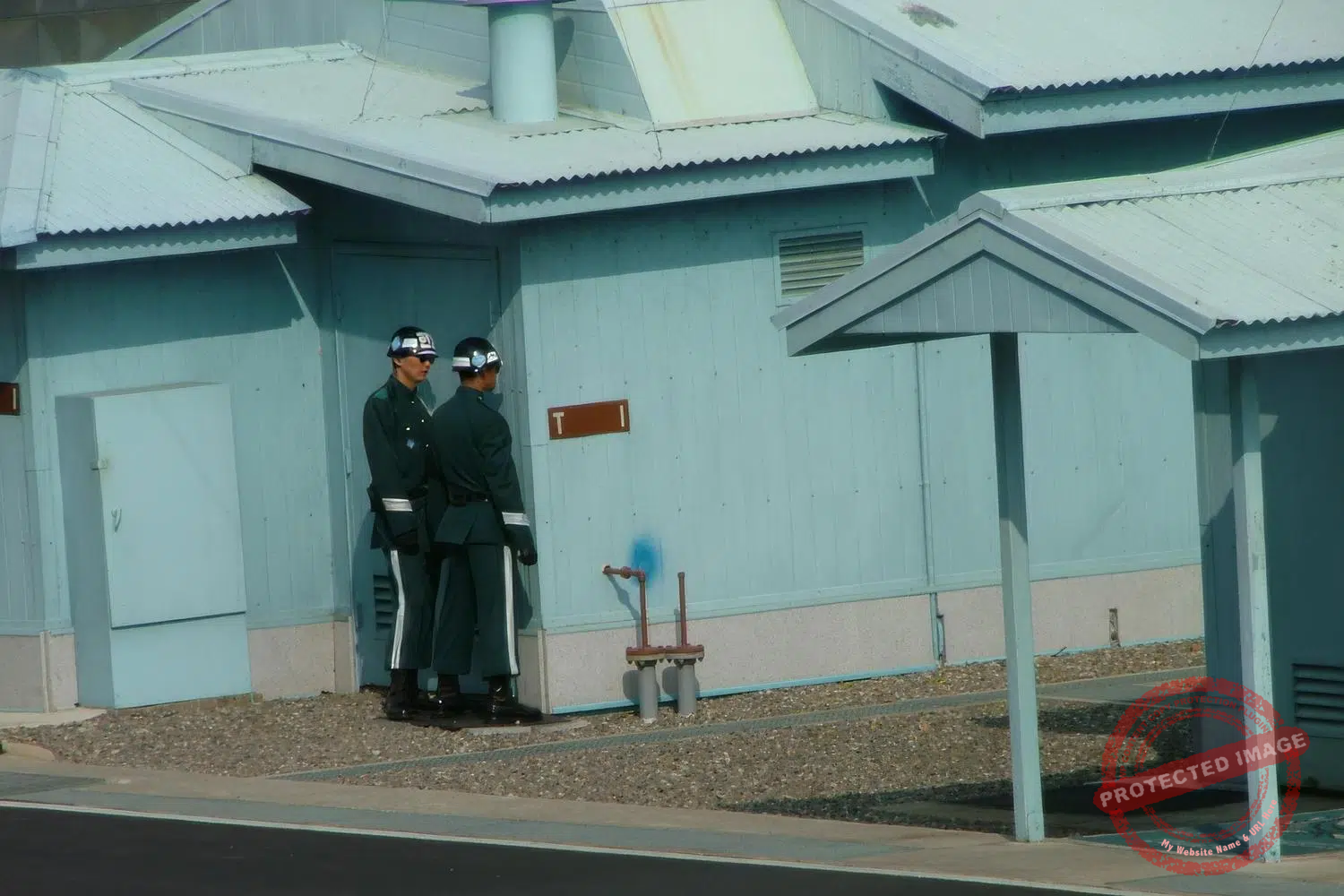
Soldiers of the UN Command Security Battalion stand guard behind one of the blue conference rooms, a few meters from the border (November 2005).
On the southern side, surveillance of the JSA and the nearby village of Daeseong-dong is the responsibility of a special unit of 900 South Korean and U.S. soldiers, the United Nations Command Security Battalion-Joint Security Area (UNCSB-JSA). This battalion is based at Camp Bonifas, 400 meters south of the DMZ, where, to unwind during their off-duty hours, its soldiers can hit a few balls on a small golf course known as “the most dangerous in the world,” surrounded by minefields.
I first visited the JSA in November 2005, with a group of Japanese tourists. From their main building, the Panmungak, the North Koreans watched us closely with binoculars. A group of Chinese were touring the north side that day too. There was also a bunch of North Korean soldiers and a guy in communist-style civilian clothes lurking in the bushes a few meters north of the border. The atmosphere was really strange.
During the 2018 détente, the two Koreas signed a series of agreements providing for the demining and disarmament of the JSA, and to make the area a “peace tourism” zone where civilian visitors would be allowed to wander on both sides of the demarcation line from 9 a.m. to 5 p.m. to recall the historic gestures of Kim Jong Un and Moon Jae-in at their April 27 summit.
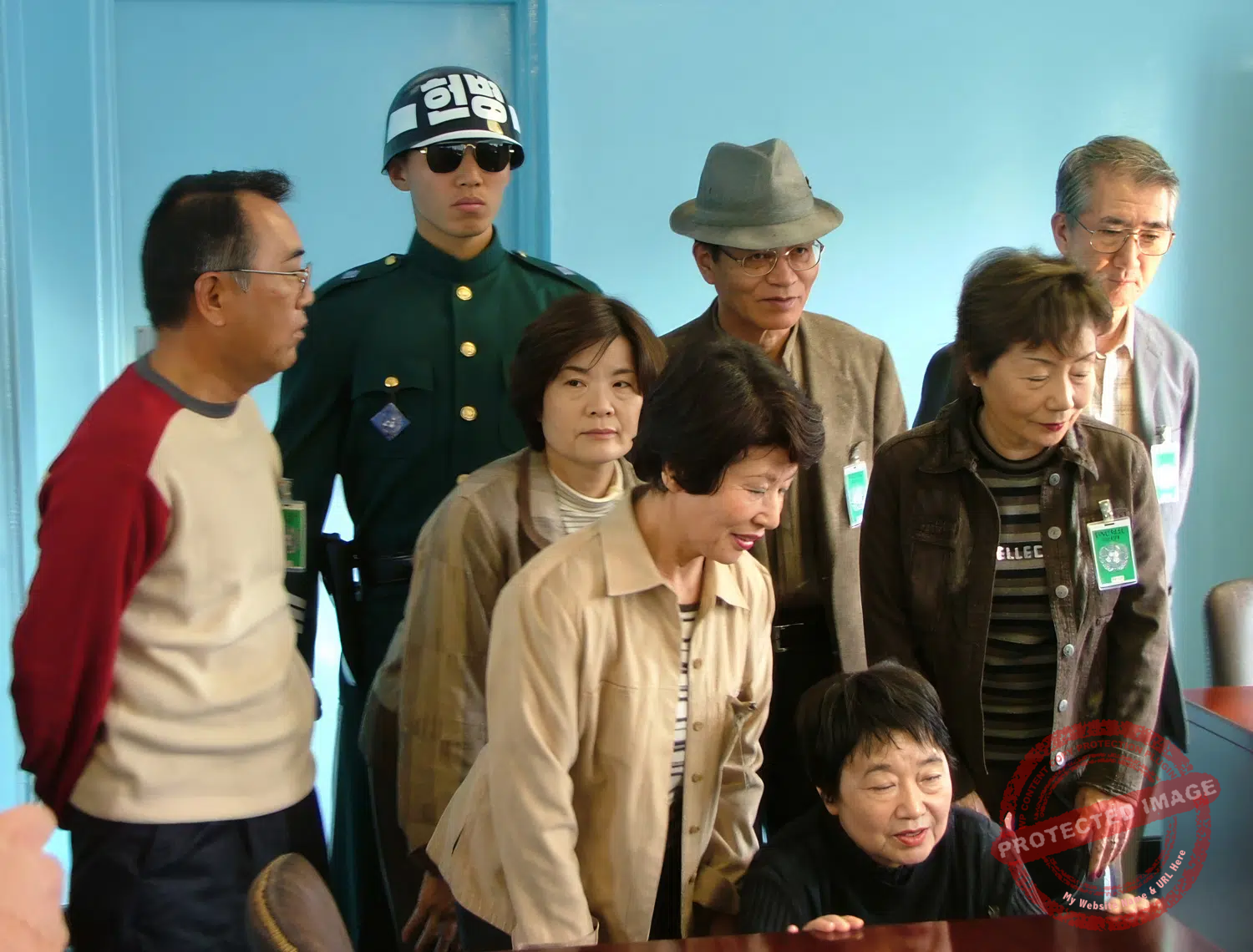
Japanese tourists visit one of the JSA’s conference rooms straddling the demarcation line. Guarded by a South Korean soldier, the back door opens directly onto North Korea (November 2005).
The agreement also lifted the restrictions about what the tourists can wear. Unfortunately, the Covid-19 pandemic followed by renewed tensions between the two Koreas prevented this project from materializing. And on the South side, tours for foreigners in the JSA remain suspended at this date after the bizarre defection of U.S. private Travis King in 2023. Visits for “distinguished visitors” like government officials, diplomats or Korean War veterans cautiously resumed in the spring of 2025. At a time when wannabe influencers are willing to do anything to gain views on social media, it is understandable that the military is reluctant to reopen this ultra-sensitive border site to everyone.
One of my military friends in Seoul has described the JSA as a “circus”. It certainly is, but it’s also one of the most bizarre places in the world, and a visit to it leaves a lasting impression on anyone lucky enough to experience it.
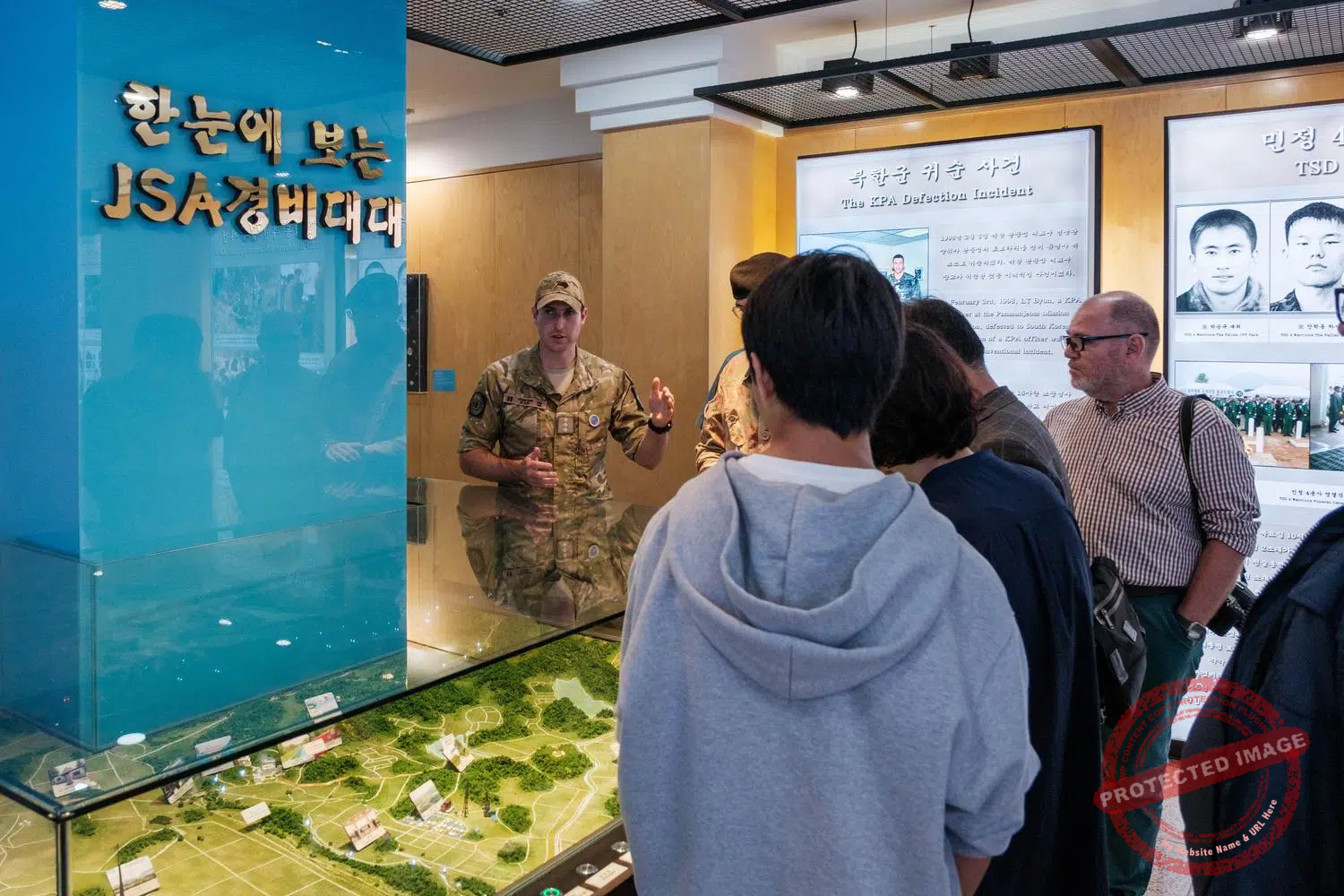
A New Zealand officer briefs a group of tourists at the JSA Visitor Center in Camp Bonifas, a United Nations Command (UNC) military base at the edge of the DMZ (October 2024).
This page was last updated on : August 30, 2026.