Swiss and Swedish Camp
스위스·스웨덴 진영
A European military enclave in the heart of the DMZ, with North Korea right next door.


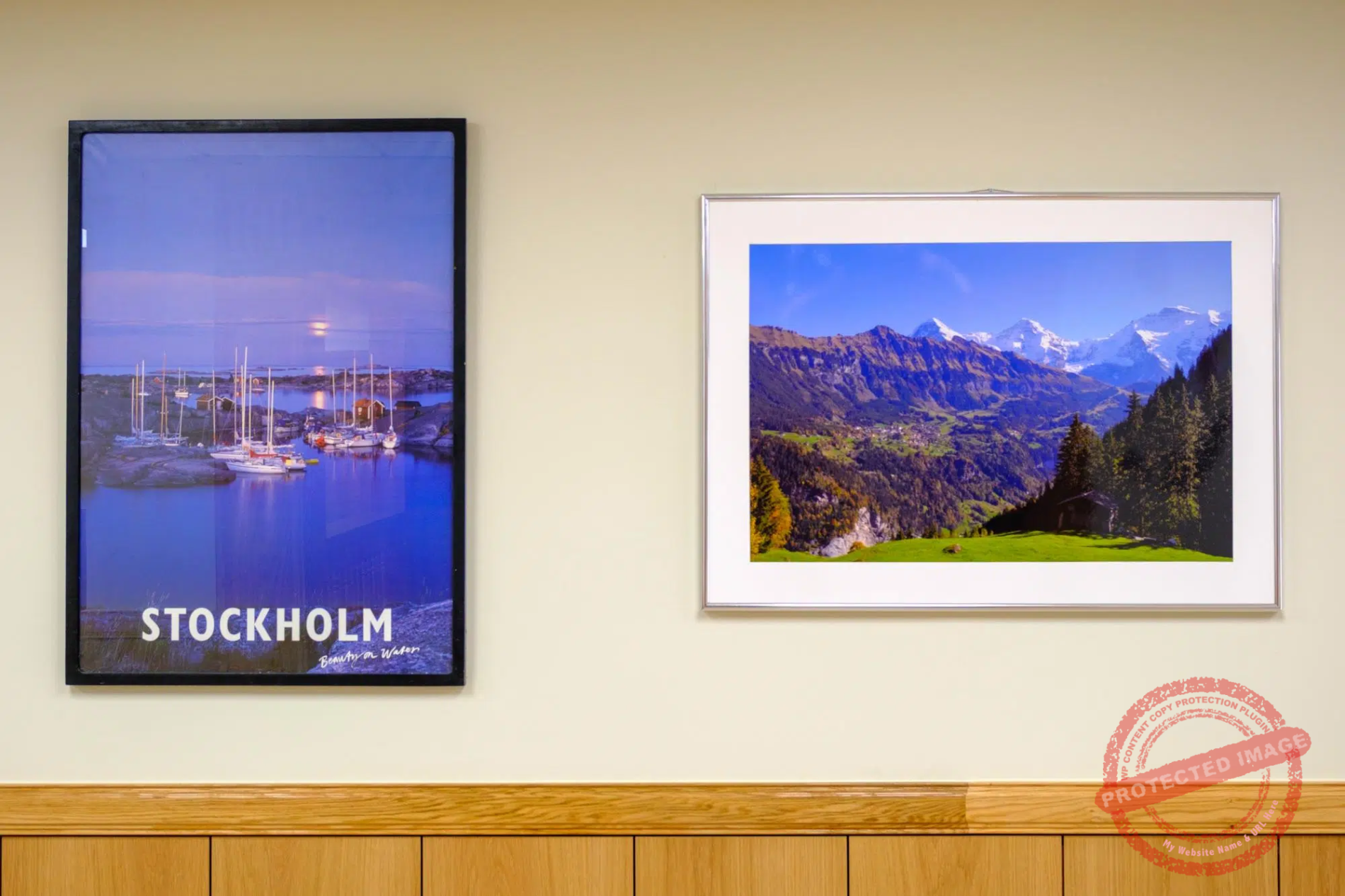
Posters remind Swedish and Swiss soldiers of home in the Neutral Nations Supervisory Commission Camp mess (October, 2024).
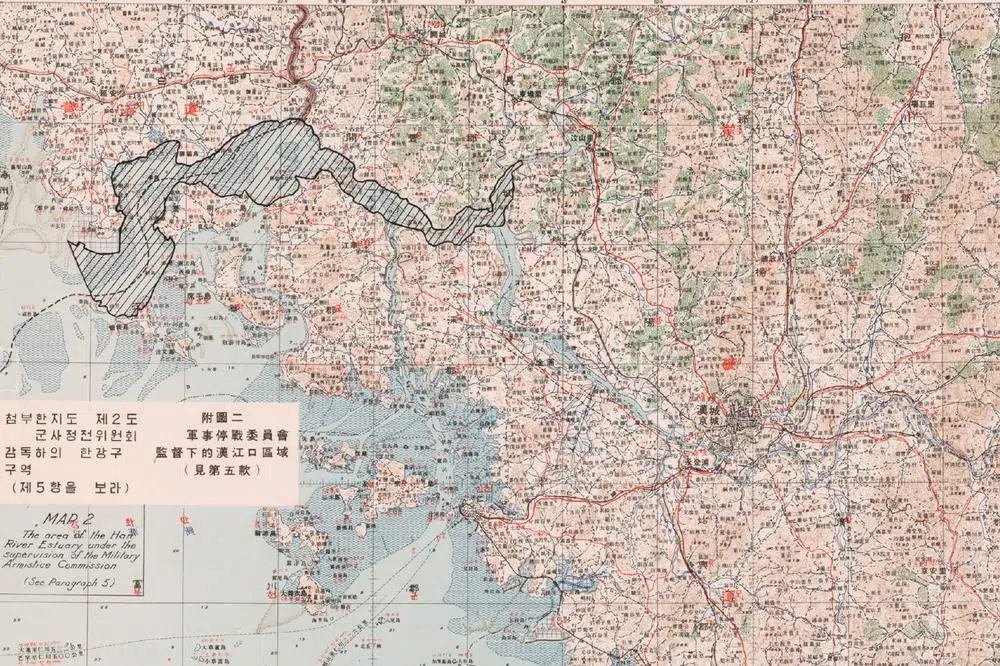
One of the most curious places along the border is the Swiss and Swedish Neutral Nations Supervisory Commission (NNSC) camp at Panmunjeom, right in the heart of the DMZ and adjoining North Korea.
If you’ve seen Park Chan-wook’s cult film Joint Security Area, in which a Swiss NNSC officer investigates a disturbing tragedy along the Military Demarcation Line, you already know all about it.
Established by the 1953 Armistice Agreement, the NNSC originally had four member states: two nominated jointly by North Korea and China, and two by the United Nations Command (UNC), from among the countries that did not take part in the Korean War.
North Korea chose Czechoslovakia and Poland, at the time members of the Eastern bloc. The UNC chose Sweden and Switzerland.
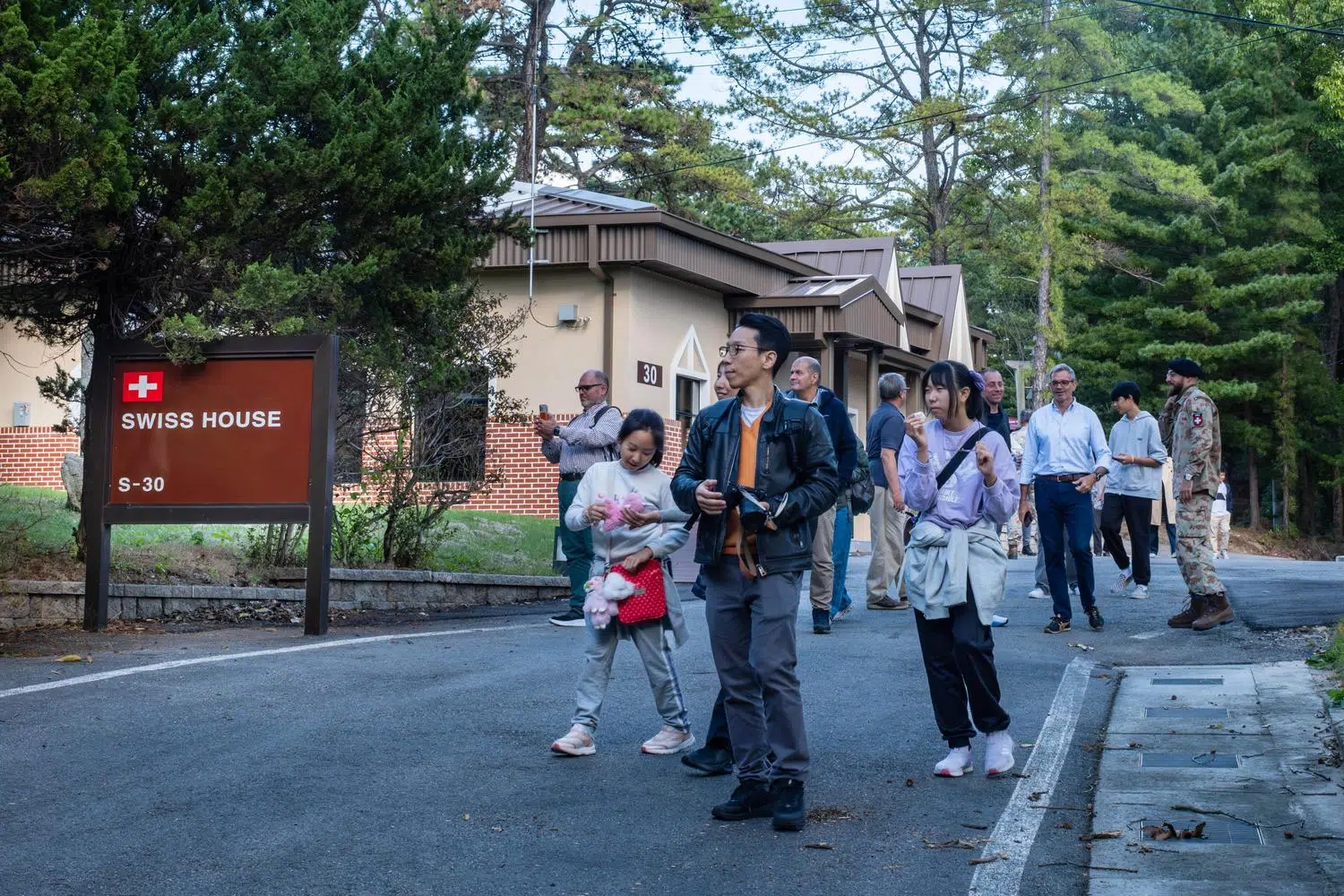
A group of Korean and Swiss businesspeople and their families visit the Swiss Camp in Panmunjeom (October 2024).
The NNSC’s mission is to ensure that the armistice agreement is respected by both parties. This includes the inspection of guard posts, the observation of military exercises, and investigations into ceasefire violations.
Initially, one of its crucial missions was to ensure that no military reinforcements arrived on the Korean peninsula. To do this, it had fixed inspection posts at Korean ports and ten mobile teams.
But from the outset, doubts were raised by the UNC, the Swiss and the Swedes about the balanced application of controls between North and South. In 1956, the UNC required that the NNSC inspectors be removed from South Korea, as the U.S. believed North Korea was being rearmed while avoiding NNSC inspection. North Korea removed the inspectors on its side in the following days.
The following year, the United States declared that it no longer considered itself bound by the provisions of the armistice agreement prohibiting the introduction of new weapons into the Korean peninsula. The NNSC had lost its main remit.

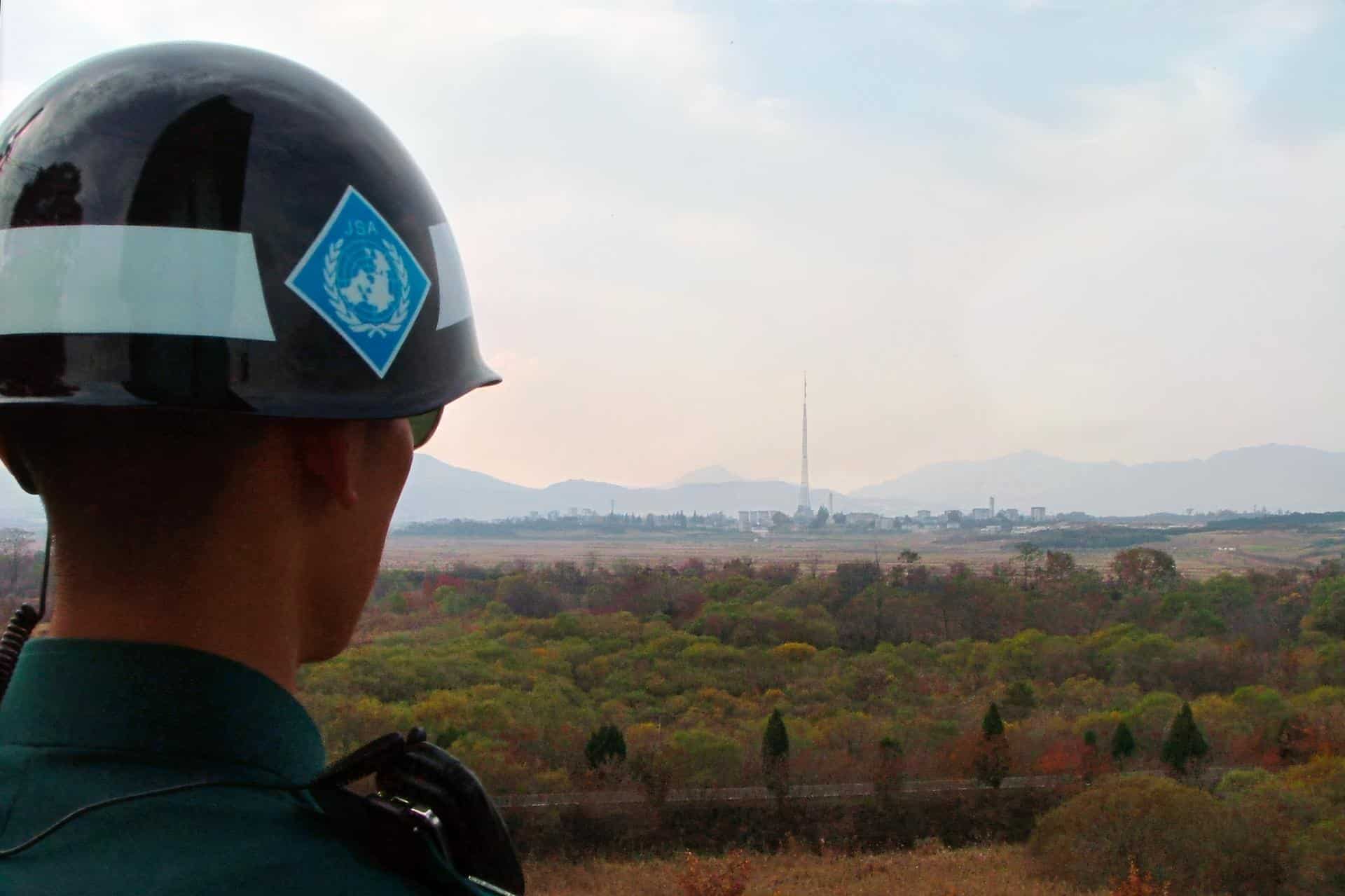
The fence of the Neutral Nations Supervisory Commission’s Swiss and Swedish Camp in Panmunjeom. Behind is the blue footbridge linking it to the Joint Security Area (JSA). The antenna in the background is in the North Korean part of the JSA (October 2024).
The members designated by North Korea were stationed in a camp located north of the military demarcation line. Those designated by the United Nations Command set up camp just to the south, where they remain today.
Under the terms of the armistice agreement, the commission was supposed to hold a meeting every day in one of the huts spanning the demarcation line in Panmunjeom’s Joint Security Area.

Please don’t shoot the billiard ball through the window: the Swiss House lounge has a direct view of North Korean woods – the border is less than two meters behind the camp’s fence (October 2024).
After the fall of the Iron Curtain in 1989 and the dissolution of Czechoslovakia in 1993, North Korea believed the NNSC had lost its neutrality. It expelled the Czech component in 1993 and, the following year, considered the commission dissolved. Poland expressed its intention to stay in Panmunjeom but eventually left in 1995, after the North Koreans cut off the water and electricity to its camp.
Switzerland and Sweden each maintain five officers in the NNSC. Poland remains a formal member of the commission. Its delegates, three high-ranking officers based in Warsaw, do not carry out any operational tasks but regularly attend meetings with their Swiss and Swedish counterparts.

The Swedish and Swiss delegations, whose members are unarmed, continue to monitor South Korean and US troop movements and to hold meetings in their hut at the JSA. The Commission writes reports and slips them into a letterbox near the door leading to North Korea, which hasn’t picked up the mail since 1995.
Until 2014, the Swiss and Swedish military would leave the northern door of the hut open when a report was ready, inviting the North Koreans to come and collect it, but stopped doing so after North Korea deemed it an “offensive gesture”.
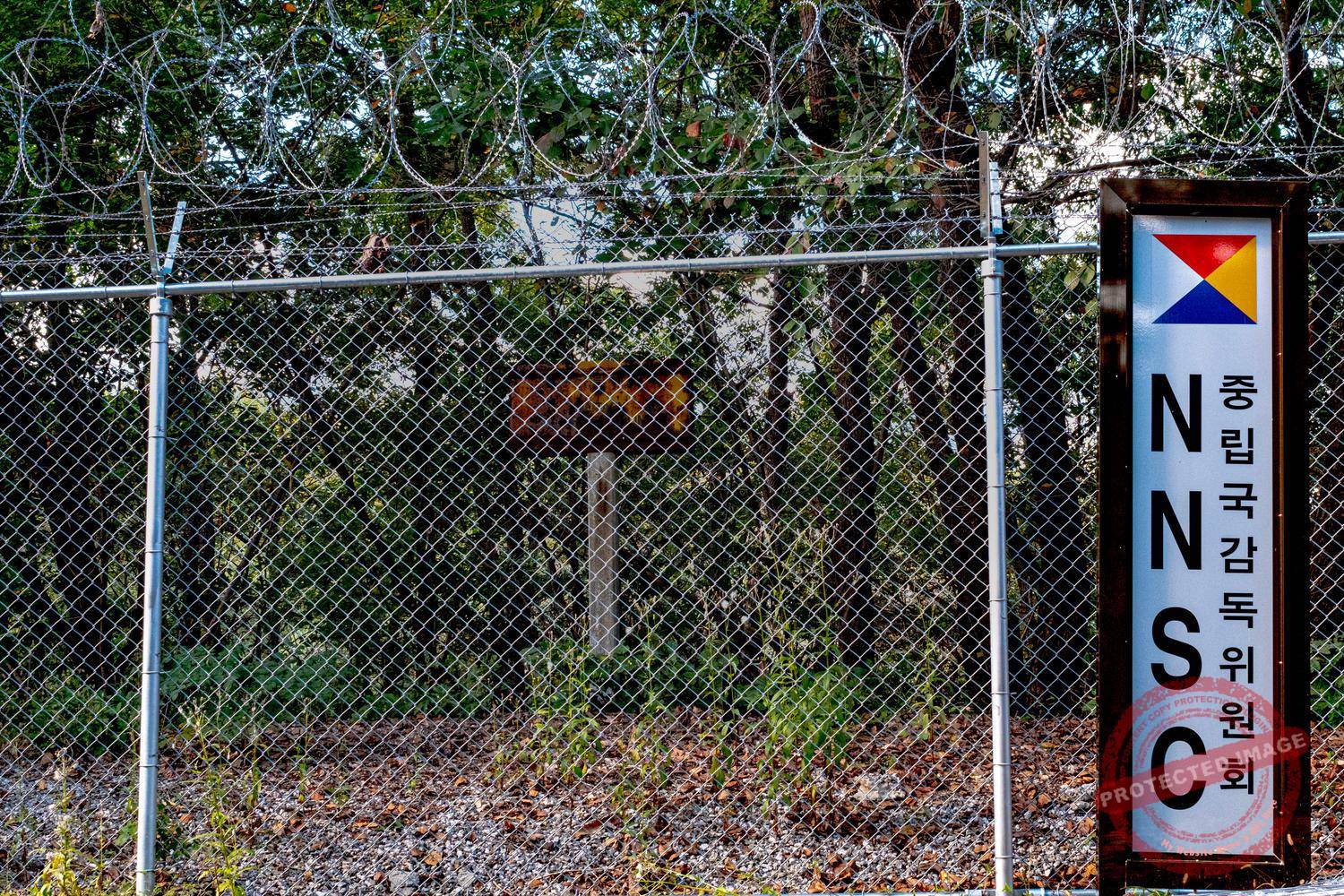
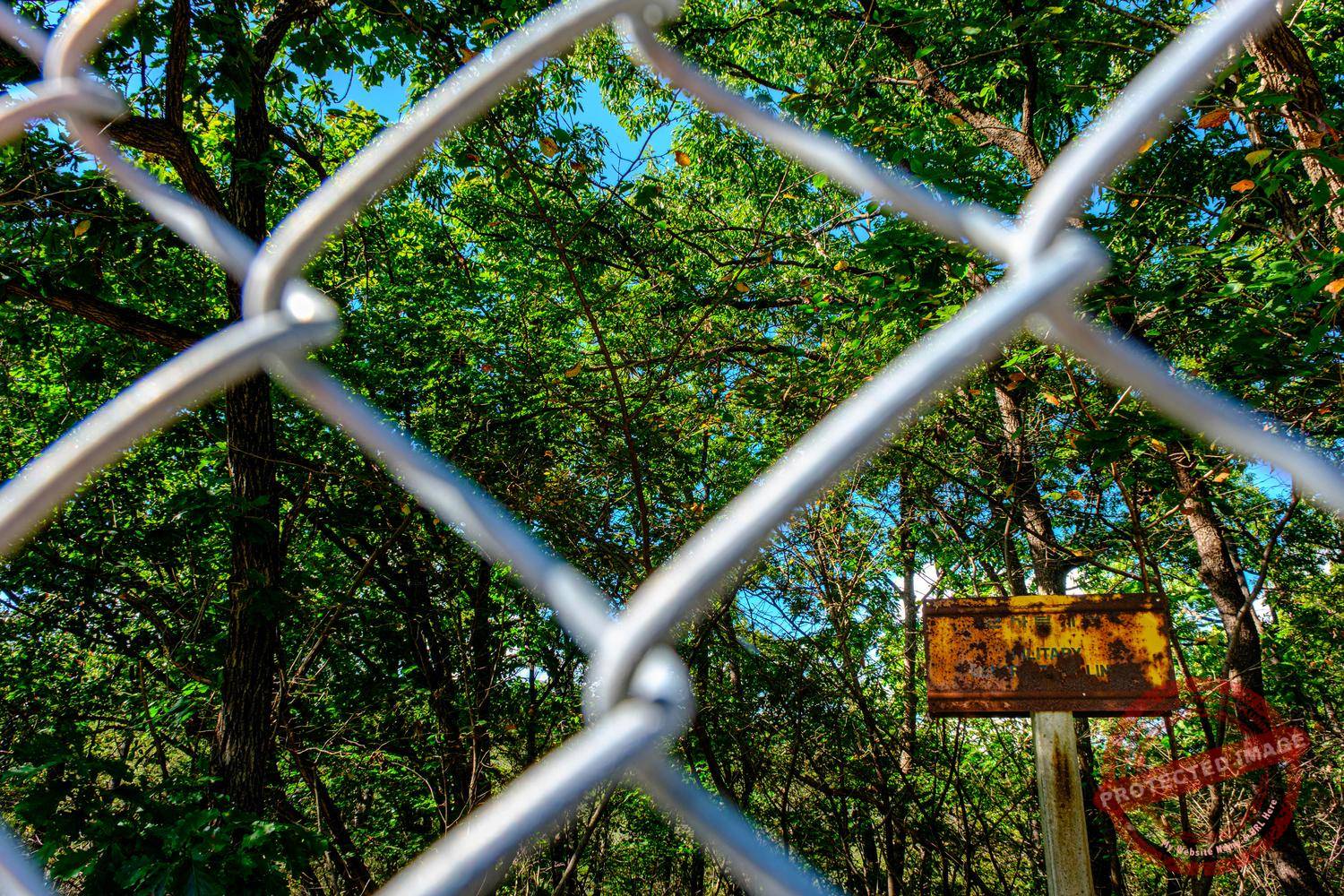
A Military Demarcation Line (MDL) marker behind the NNSC Camp’s fence (October, 2024).
The special feature of the Swiss and Swedish camp is that it is located right on the border. One of the rusty signs marking the military demarcation line can be seen behind the fence erected by NNSC soldiers to protect their home from potential intruders – including the wild boars and other beasts that swarm in the DMZ.
To get to meetings in the JSA, NNSC members take the famous blue footbridge, where North Korean leader Kim Jong Un and South Korean President Moon Jae-in walked together during the historic inter-Korean summit on 27 April 2018. This bridge bearing the colour of the United Nations runs alongside the demarcation line and a North Korean guard post.

A Swiss officer shows the blue footbridge linking the NNSC Camp and the JSA (October, 2024).
The Panmunjeom Swiss and Swedish camp is not open to tourists and is only accessible to official delegations. But the NNSC maintains a very nice and moving museum in Camp Greaves, that can be visited by anyone from Imjingak via the “Peace Gondola”. The exhibition traces the history of this little-known international institution, whose role is now symbolic but nonetheless important. Nowadays, Swedish and Swiss military personnel assigned to the NNSC take just a few hours to reach their destination aboard comfortable aircraft. In the 1950s, it was a very different story.
The soon-to-be-75-year-old NNSC may seem like an instrument from another era, shunned by the North, limited to the role of observer of a single party, overtaken by events and therefore objectively useless. But a visit to its camp and a chat with its soldiers reveals its profound symbolic importance. The 1953 armistice agreement was, and remains, completely flouted by both North and South. But as long as a neutral institution created to enforce it remains standing, hope remains.

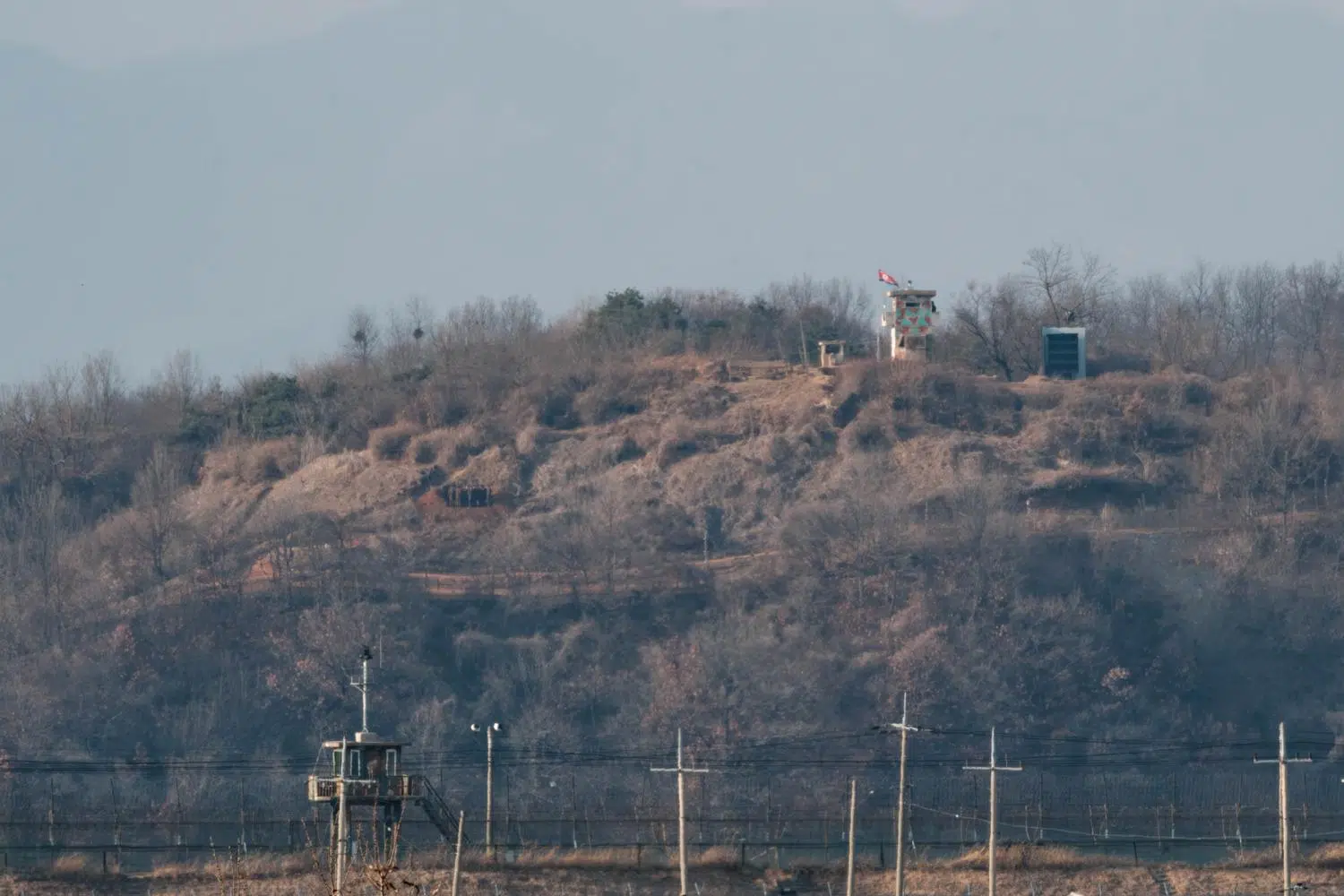
North Korean military installations in the Joint Security Area seen from the NNSC Camp in Panmunjeom (October 2024).
This post was last updated on : June 14, 2026