Eastern Front
동부 전선
Where the DMZ meets the sea, along a coastline known for its numerous North Korean infiltrations.


A couple watches North Korea and the East Sea from Goseong Observatory’s terrace (November 2024).
On the Eastern Front, the land border and the DMZ end in a dramatic landscape of ocean and mountains on the shore of the Sea of Japan, called the East Sea by the Koreans, some fifty kilometres north of the town of Sokcho in South Korea.
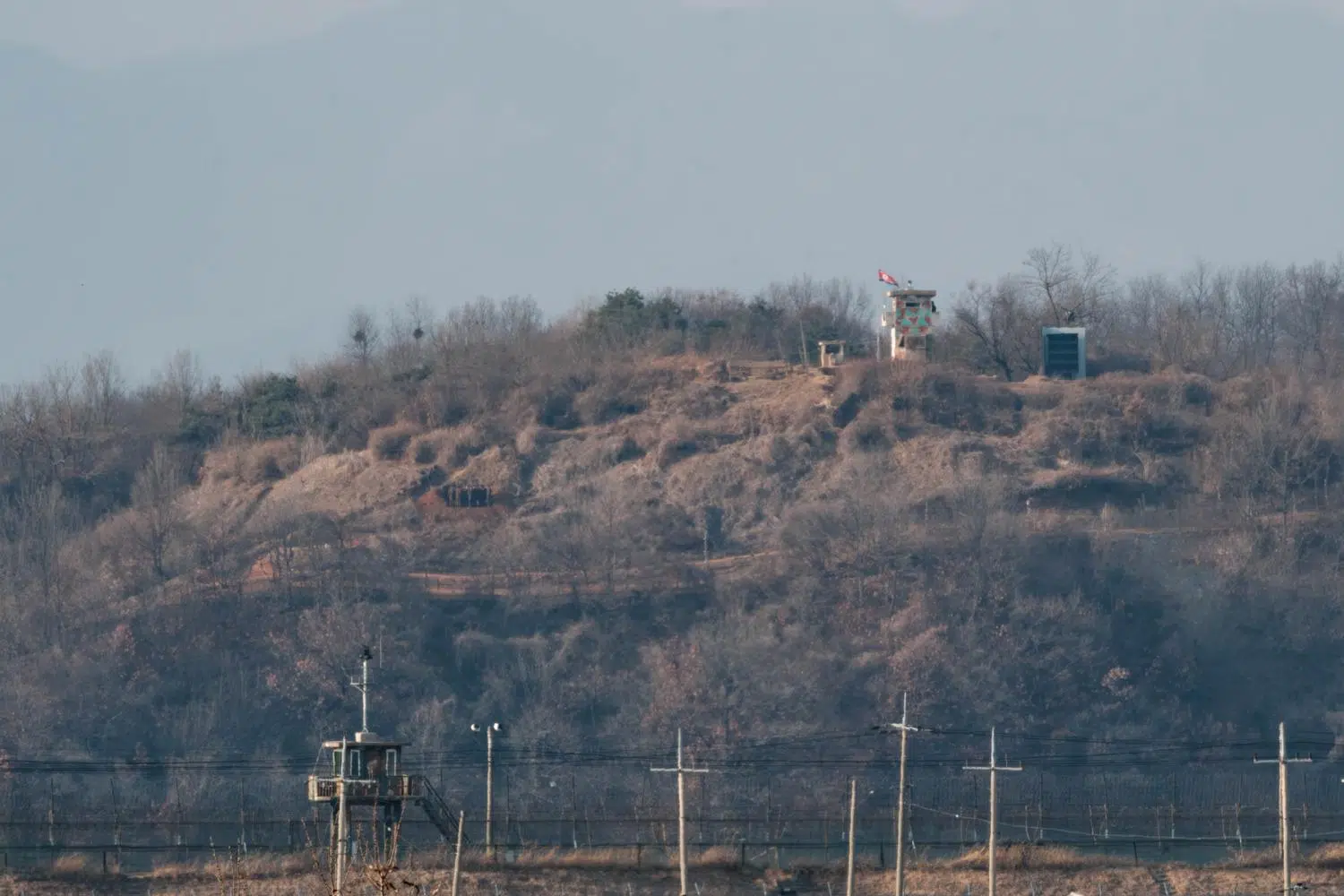
From the Goseong Unification Observatory, a large D-shaped building (for DMZ), one can see the lines of barbed wire running along the ridges, imposing military forts reminiscent of medieval fortresses, a few North Korean flags fluttering in the wind in the distance, and occasionally a few North Korean fishing boats closely watched by a coastguard vessel.
Built in 1983 on a strategic high point, Goseong holds the distinction of being the first border observatory open to the public in South Korea. Until then, the border area was considered too risky for civilians and difficult to access. But under authoritarian President Chun Doo-hwan (1980-1988), South Korea began cautiously promoting anti-communist education paired with controlled nationalistic mourning in places like Goseong. And starting in the 1990s, the government increasingly promoted patriotic tourism, especially for students and families of displaced Northerners.
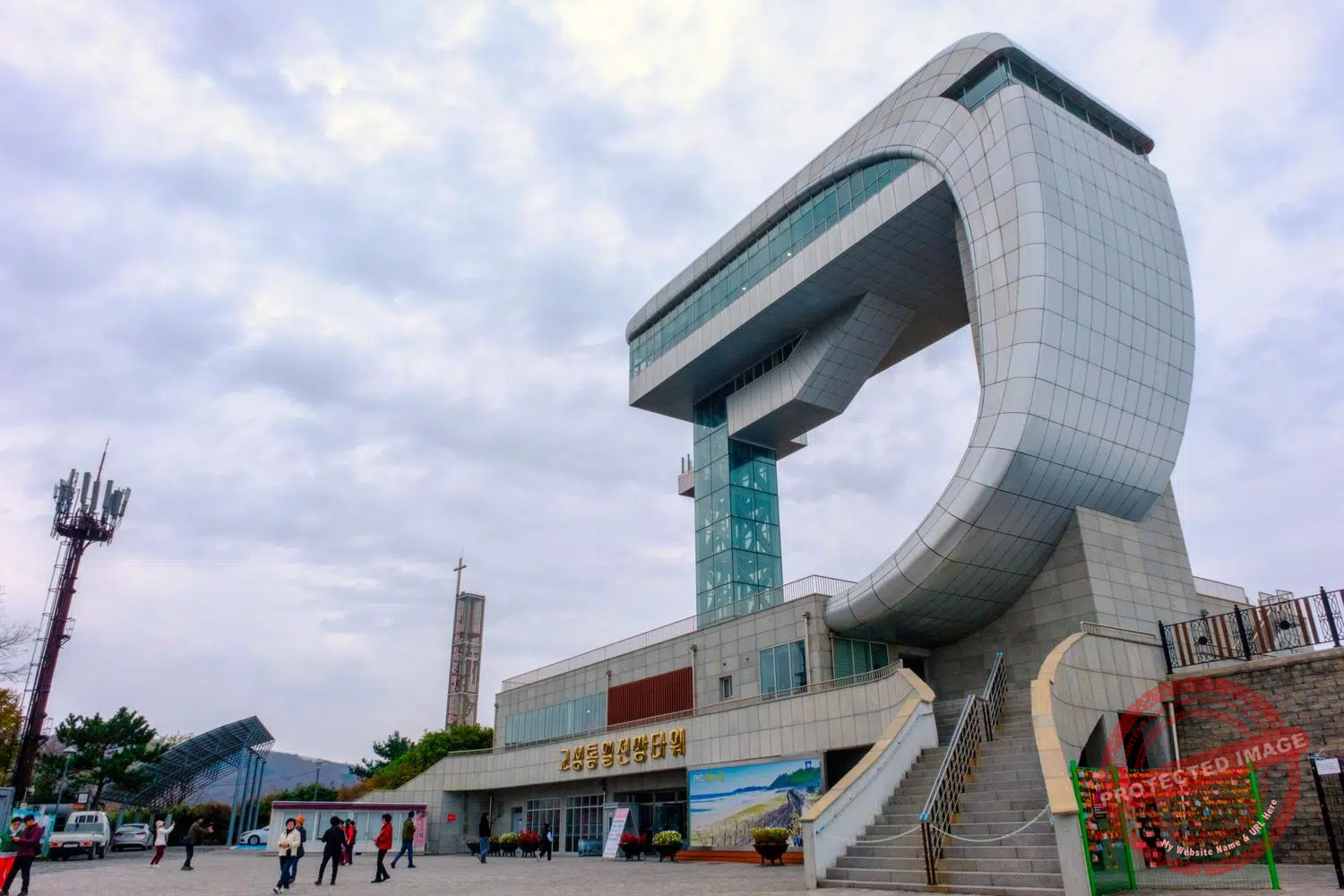
The D-shaped (for DMZ) Goseong Unification Observatory was the first facility of its kind to open to civilians in 1983 (November 2024).
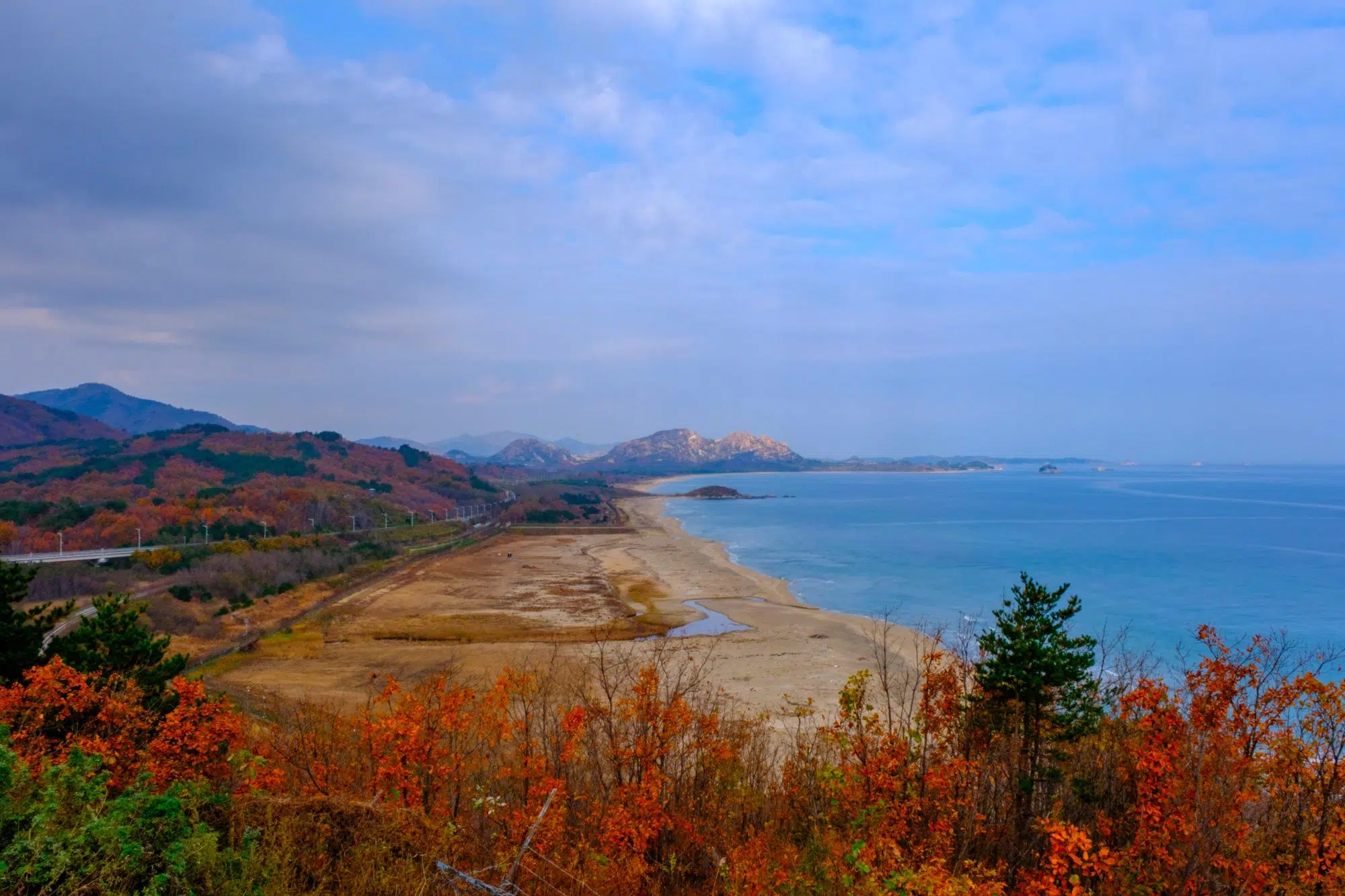
The Korean east coast seen from the Goseong Observatory (November 2024). The slider below shows the point where the Military Demarcation Line ends and the maritime border begins (May 2025).
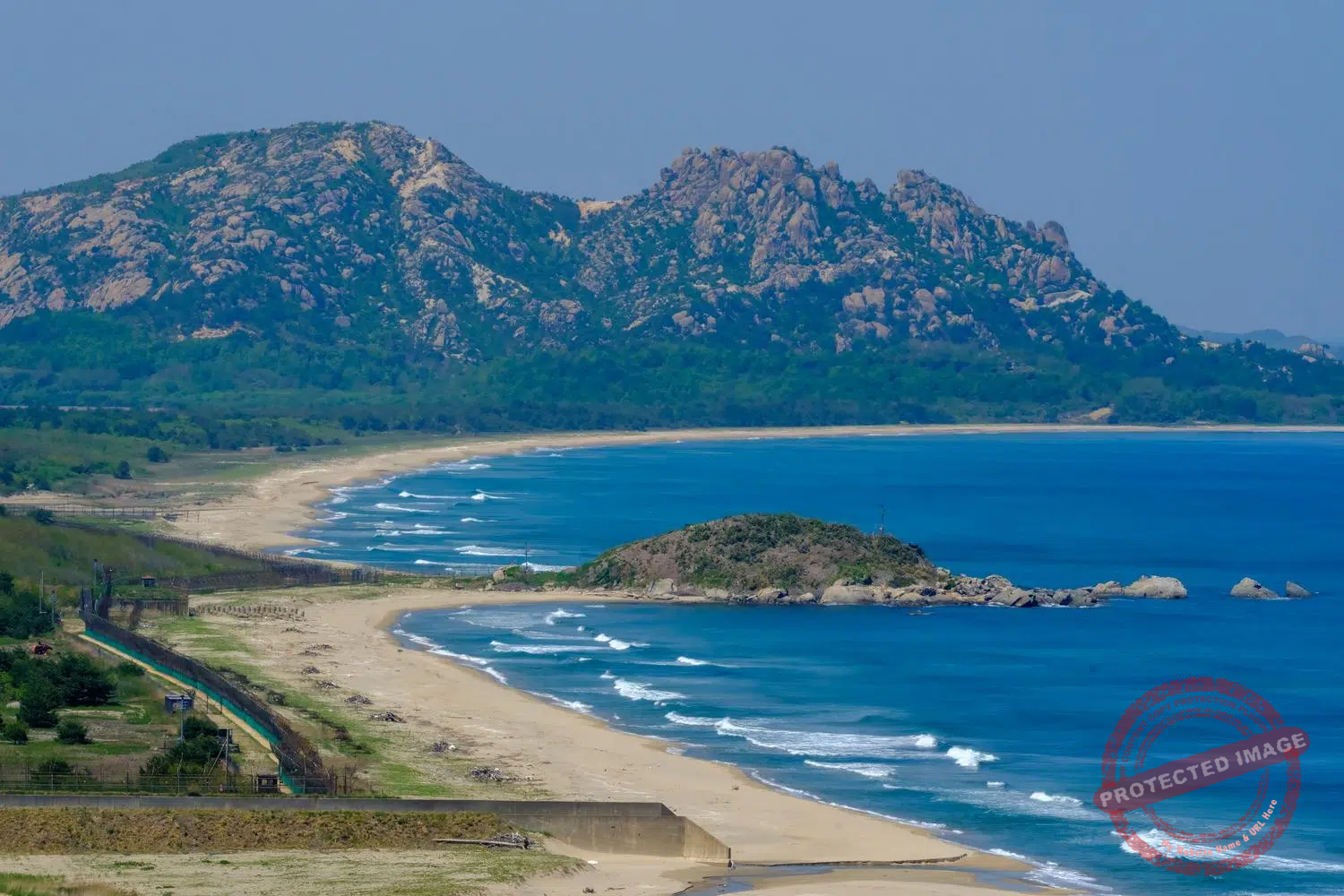

Observatories like Goseong have both emotional and educational purposes: they serve as a place of remembrance and mourning, and raise public awareness of the division of the country and the North Korean threat.
Like many of its counterparts along the DMZ, the Goseong Unification Observatory serves both as a tourist attraction and a military observation post.
From its terraces, it is possible in fine weather to see Mount Kumgang, Korea’s most beloved mountain, located on the northern side of the border and whose highest peak called Birobong rises 1,638 meters above sea level.
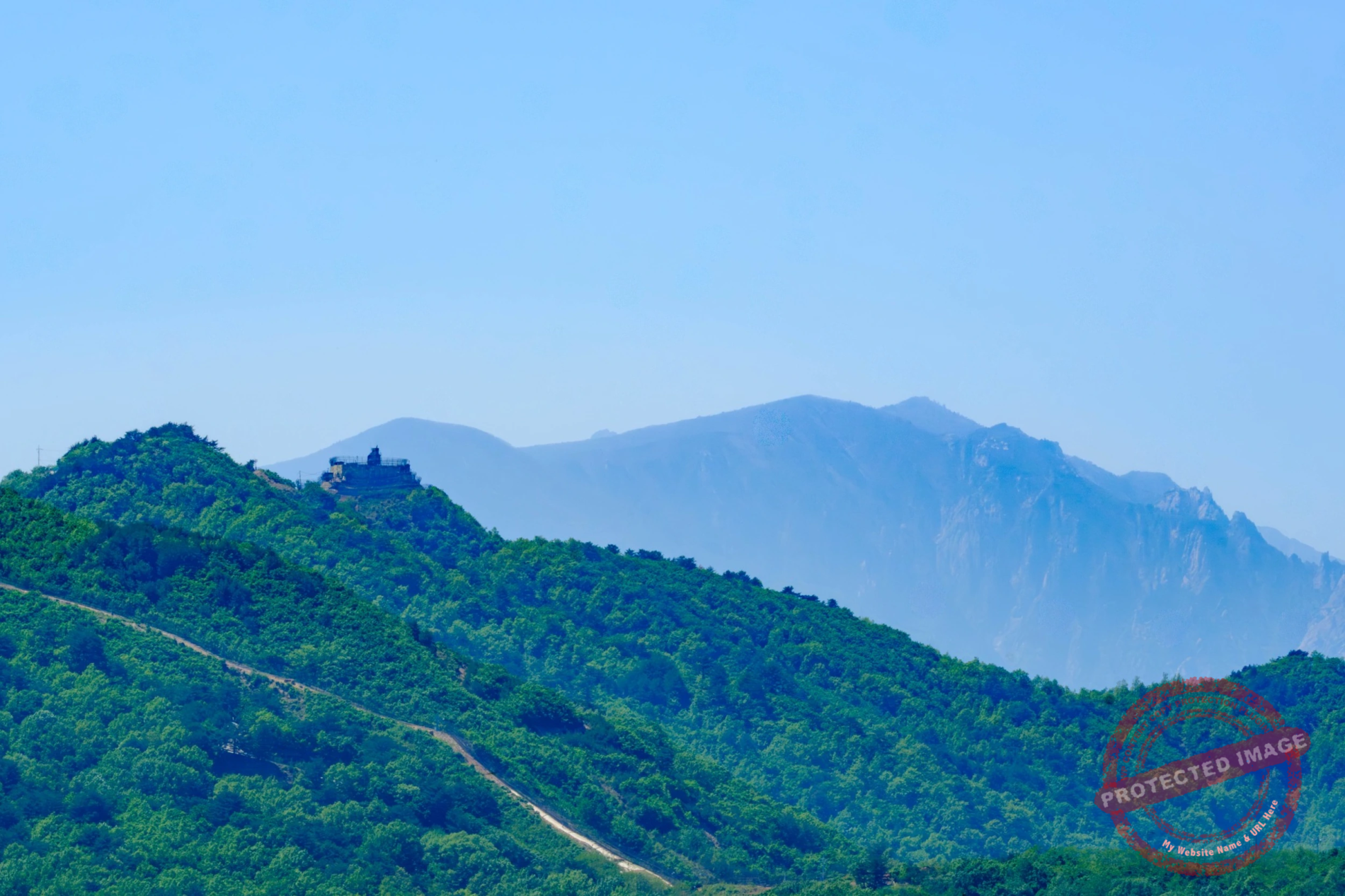
Mt. Kumgang, Korea’s most beloved mountain, north of the border, and the historic South Korean guard post “829GP” on a ridge inside the DMZ (May 2025).
Although not particularly high, Mount Kumgang (금강산, Geumgangsan) holds deep cultural, spiritual, and political significance for both North and South Koreans. The name “Kumgang” means “Diamond Mountain”, referring to its beauty that changes with the seasons.
The mountain is renowned for its granite peaks, waterfalls, and temples nestled among pine forests. It symbolizes Korean identity and has been celebrated in poetry, painting, and literature for over a thousand years.
Mt. Kumgang is one of the three sacred mountains of Korea, alongside Mt. Paektu, located on the North Korea-China border, and Mt. Jiri in the southern region of the peninsula. It has been a site for Buddhist temples and pilgrimages for centuries. In 2025, it was admitted to UNESCO’s select club of World Heritage sites. The United Nations’ Cultural Organization celebrated “the mountain’s dramatic impact (…) enhanced through constantly changing weather patterns of mists, rain, sunshine and clouds”.

South Korean soldiers walk along the former inter-Korean railroad leading to Mt. Kumgang resort near the DMZ in Goseong (May 2025).
For ten years, from 1998 to 2008, South Koreans were allowed to travel to Mount Kumgang, first by cruise ship, then by coach along a newly opened cross-border coastal road. A resort built by the South Korean conglomerate Hyundai, including a golf course and hotel, welcomed around two million visitors during this period, enabling North Korea to earn hard currency.
This resort built by the South Koreans at the foot of Mount Kumgang has also been the setting, during détente periods, for reunions between families separated by the Korean War. These were particularly intense moments: parents briefly saw their children whom they had not seen for six decades, siblings who were nearly 100 years old fell into each other’s arms, weeping. Most participants were elderly and with health challenges, and the very short duration of the meetings —just a few days and under strict supervision—added the pressure of knowing that time was quickly running out.
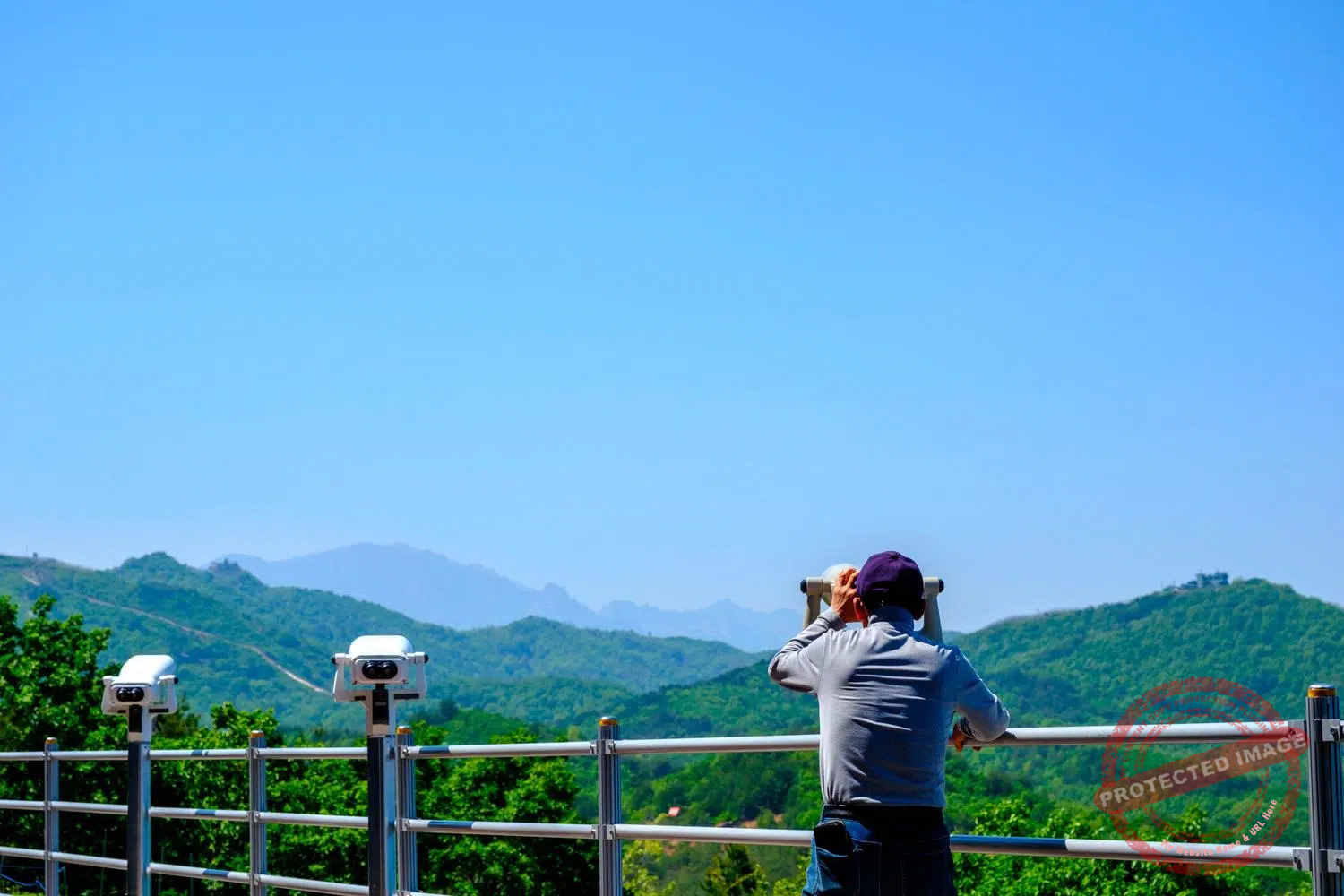
A visitor watches Mt. Kumgang through a telescope at Goseong Observatory (May 2025).
On 11 July 2008, a South Korean tourist was shot dead by North Korean soldiers after inadvertently entering a prohibited military zone while walking on the resort’s beach. Since this incident, South Korea has suspended the Mount Kumgang tours.
A final family gathering took place there in 2018. None have been held since. In February 2025, South Korea claimed that North Korea was demolishing the building used for these events.
The road and railway that cross the border at the seaside are now only used by military patrols on the south side. On the north side, the army blew them up in October 2024. Two months earlier, a North Korean soldier had defected by crossing the border on foot via the regular road along the sea.
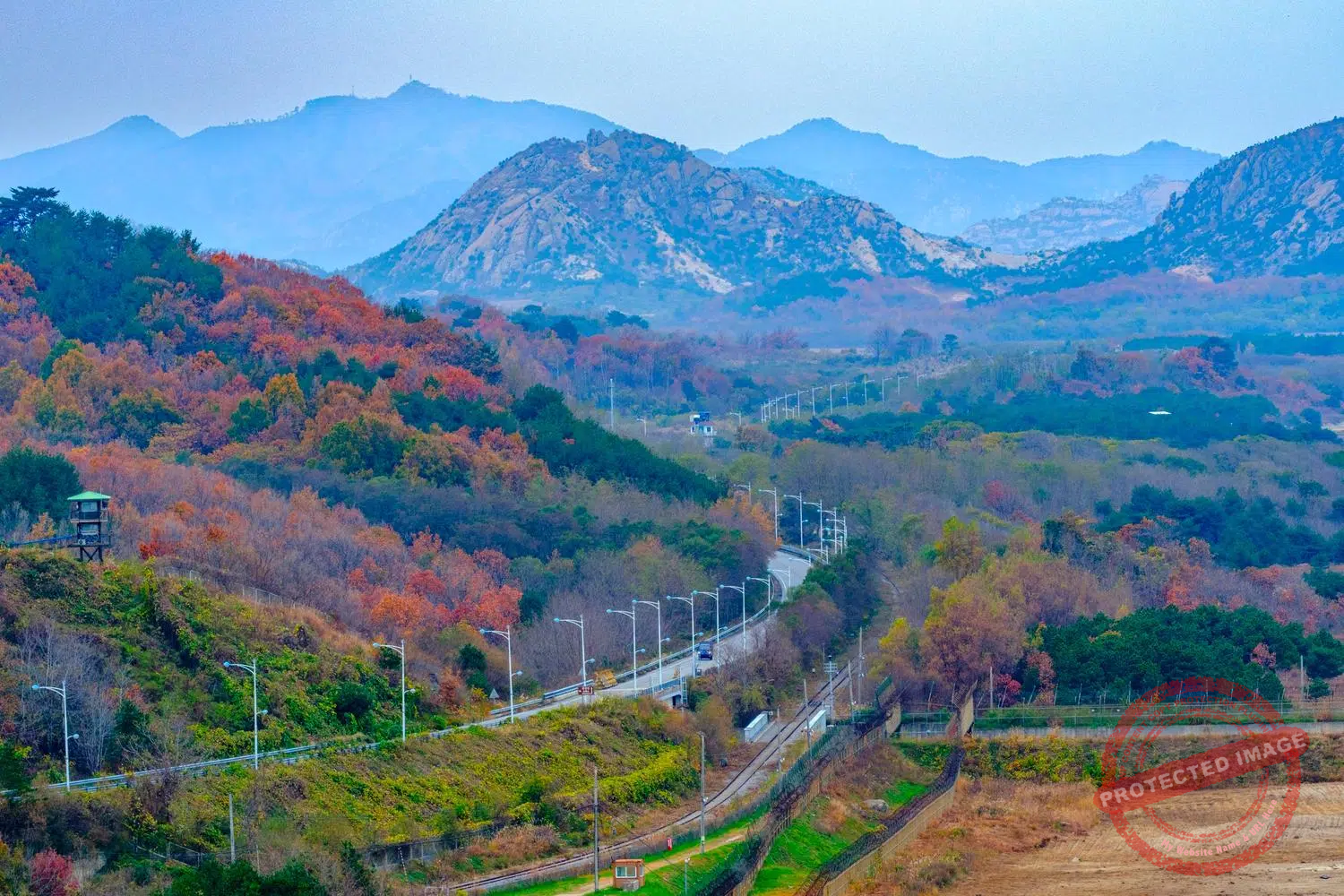
A South Korean military truck drives along the former cross-border road in the DMZ in Goseong. The hills and the tiny guard tower in the background are in North Korea. This road and the railroad line running alongside it were blown up by the North in 2024 just north of the demarcation line (November 2024).
Arriving at the Goseong observatory, visitors come across an enclosure housing two beautiful and friendly dogs. Their story illustrates the “dog diplomacy” that took place during rare moments of détente between the two foes.
In September 2018, North Korean leader Kim Jong Un presented South Korean President Moon Jae-in with a pair of Pungsan hunting dogs, Gomi and Songgang, a breed indigenous to North Korea’s mountainous Ryanggang Province and known for its strength, loyalty and intelligence. This act evoked memories of a similar gesture made 18 years earlier by his father Kim Jong Il to South Korean President Kim Dae-jung.
The year 2018 marked a surprising thaw in inter-Korean relations. After a long freeze characterized by missile tests and military standoffs, the two Koreas held three summits that year, and the U.S. president Donald Trump met with Kim Jong Un three times in 2018 and 2019.
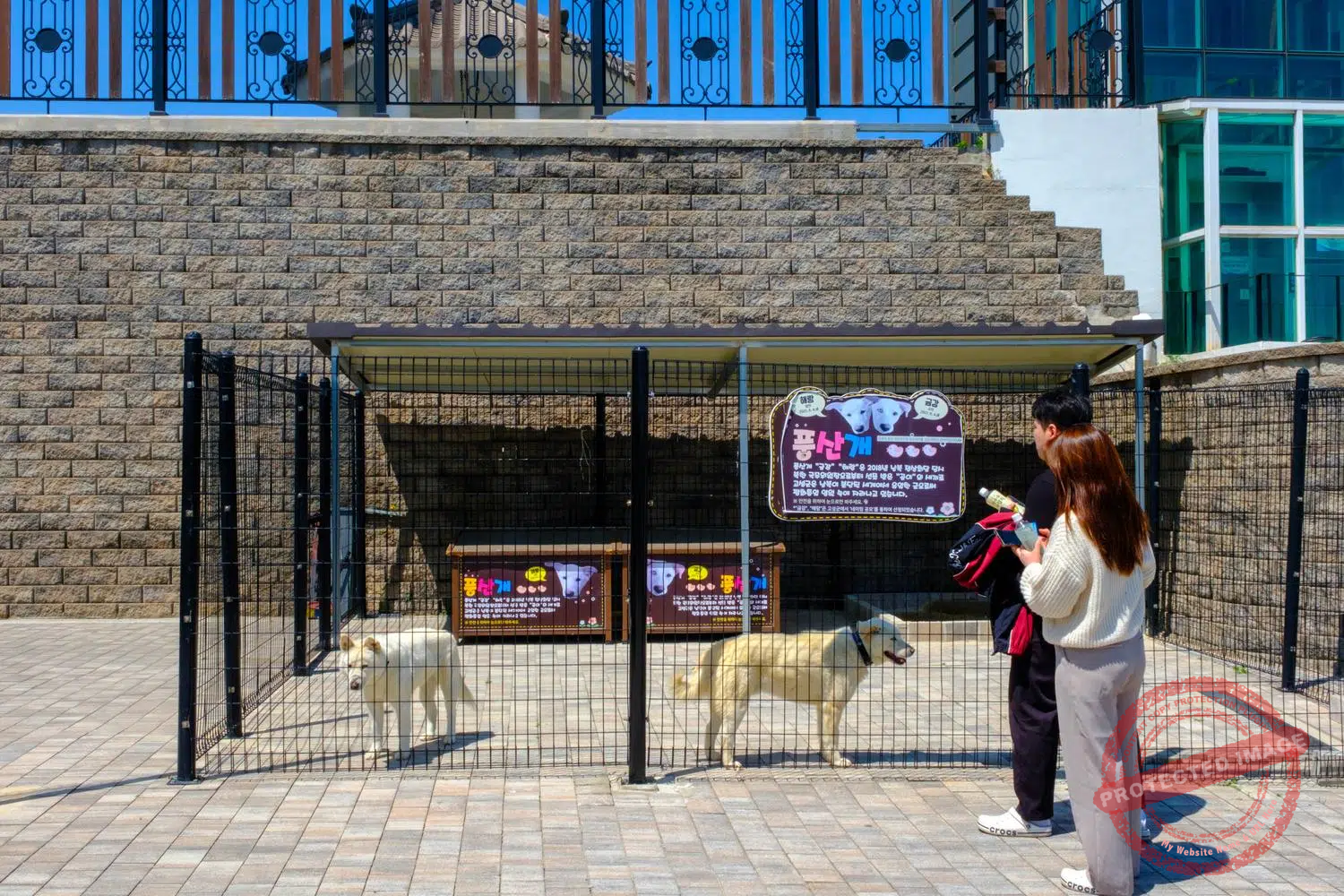
Kumgang and Haerang (May 2025).
Gomi and Songgang were transported from Pyongyang to Seoul by plane, accompanied by three tons of dog food, and were housed upon arrival in the South Korean presidential Blue House.
Just two months after arriving, Gomi gave birth to six puppies. The news was greeted with enthusiasm by many South Koreans, who viewed the event as an auspicious symbol. In the years that followed, the Moon administration distributed some of the puppies to regional institutions, and in 2021, two of these descendants were gifted to Goseong County. Following a public naming contest, they were given names reflecting inter-Korean longing: Kumgang (after Mount Kumgang) and Haerang (meaning something like “with the sea”).
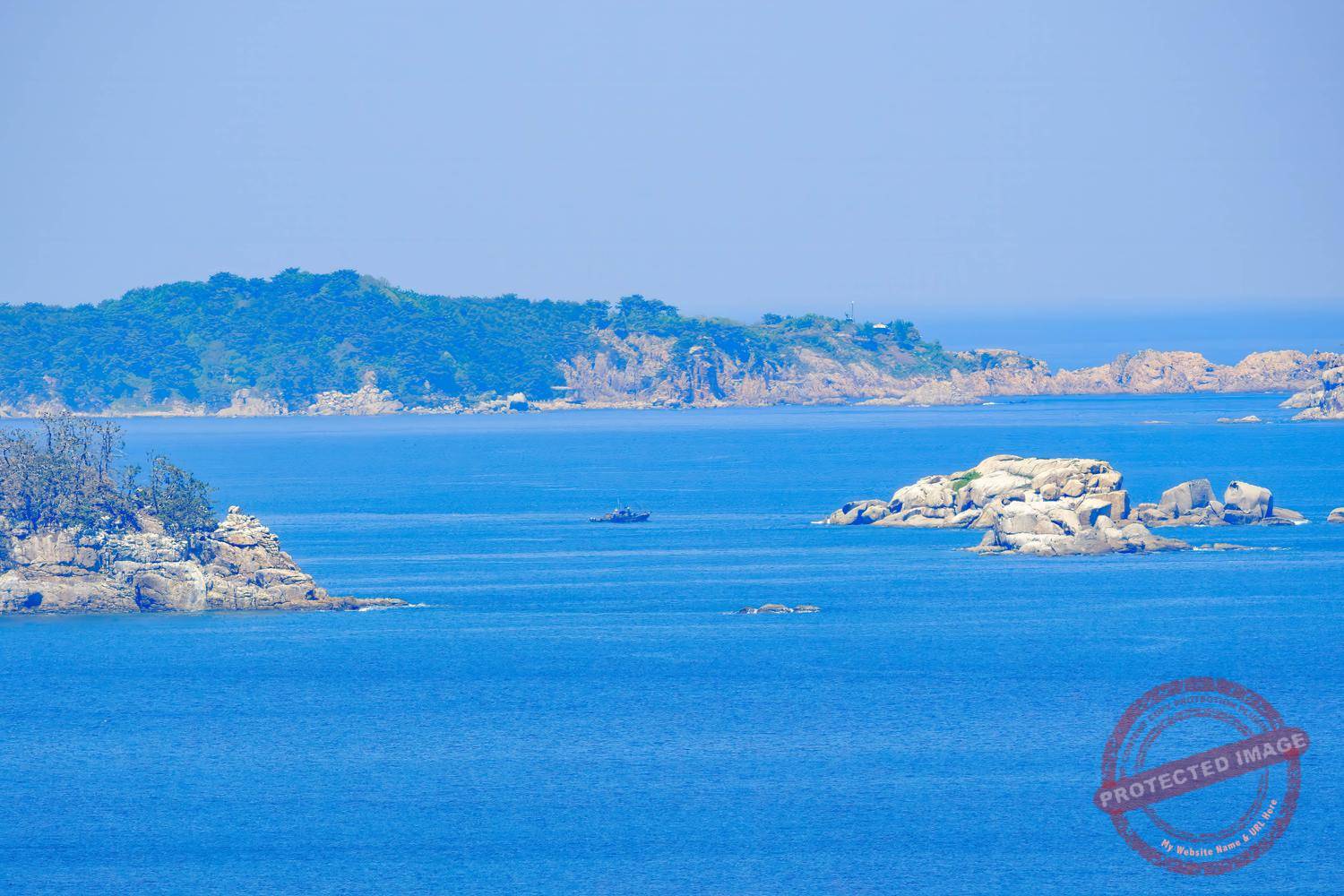
A North Korean vessel near the maritime border (May 2025).
South of Goseong, the coastline is protected by barbed wire fences, surveillance cameras and other fortifications. As a result, kilometres of unspoilt beaches have been left to marine wildlife and birds.
It wasn’t until July 2018 that the beaches of the city of Sokcho and other places on the east coast were opened to the public after sunset. For decades, fearing infiltration by North Korean agents via the sea, the South Korean military had imposed strict nighttime access bans. Security measures included searchlights and patrols at night.
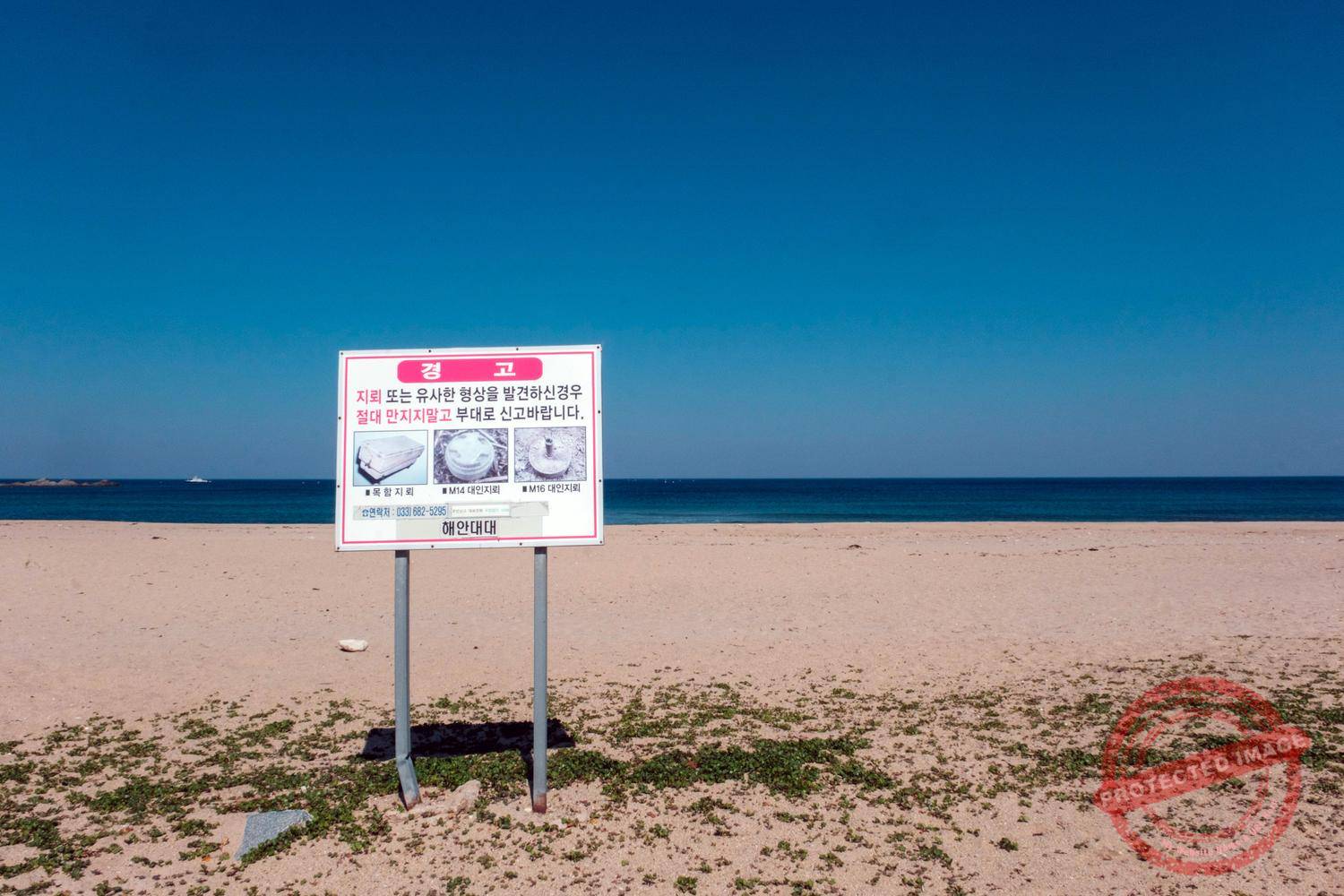
A warning sign against mines on the shore of the Sea of Japan, or East Sea, just south of the DMZ (May 2025).
Even though restrictions were lifted, traces of militarization of the coastline remain in Sokcho.
In July 2017, the massive and luxurious Lotte Resort Sokcho opened on a coastal bluff with panoramic views of the East Sea and Seoraksan Mountains.
In earlier decades, private development in that area had been heavily restricted due to security concerns. The rules had been relaxed by then, but construction and operation of the resort were still subject to military review. Lotte had to ensure its hotel did not interfere with coastal radar, military patrol routes or surveillance lines of sight.
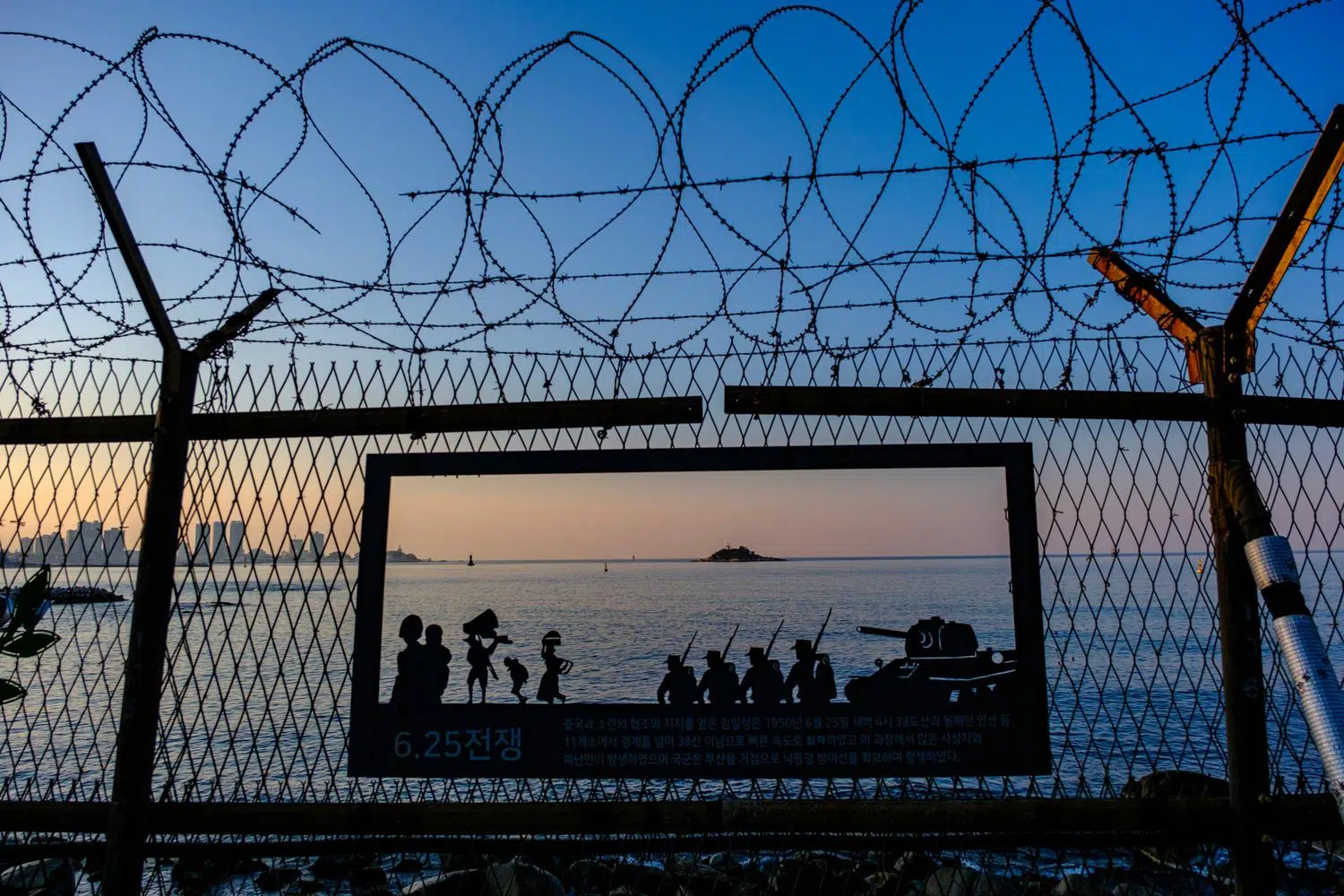
Even today, the magnificent coastal promenade below the resort is closed at night, and lined with barbed wire fences, motion detectors and night vision cameras. Signs hanging from the fences ask walkers to call the police if they spot a periscope, or find diving equipment abandoned in a thicket.
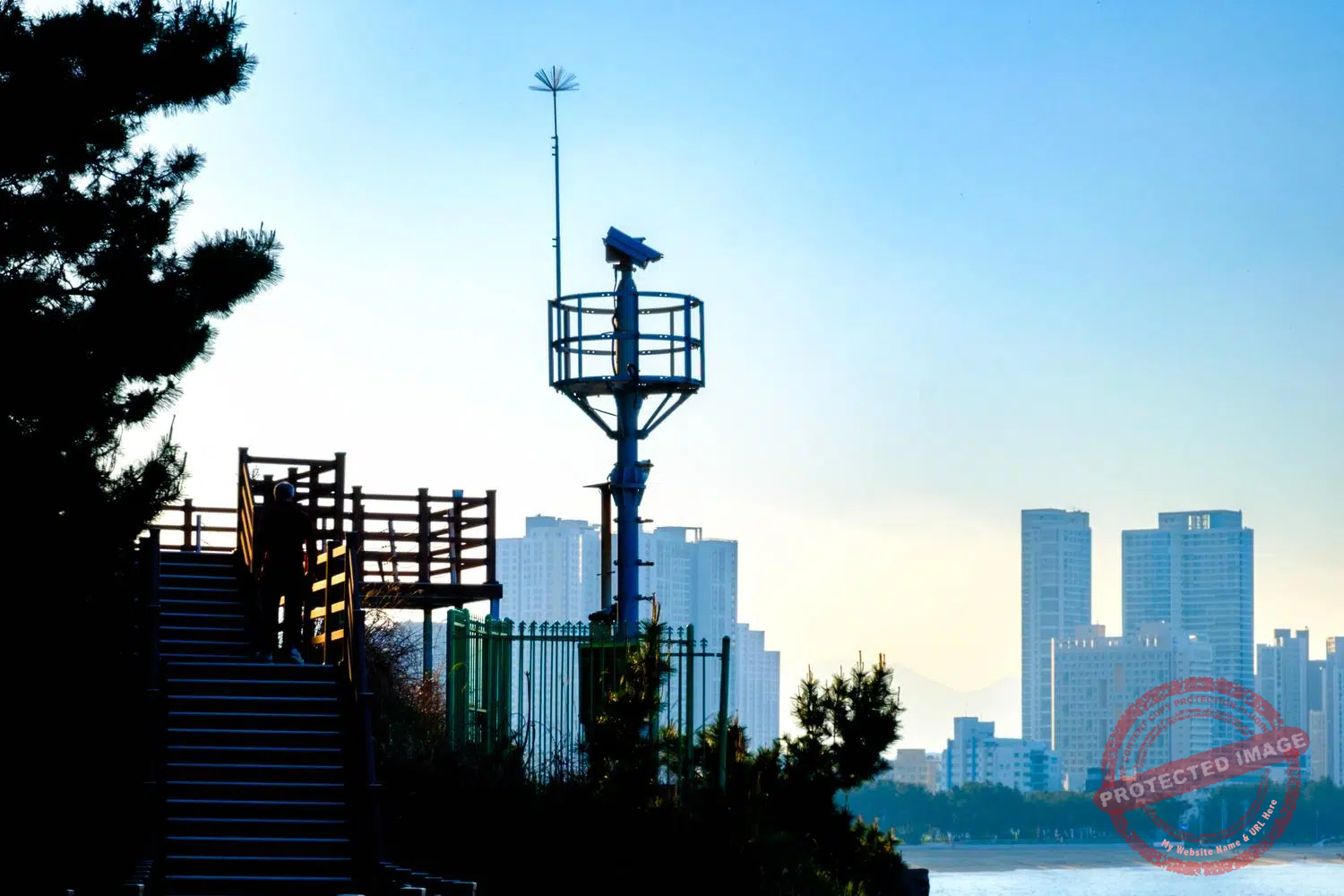
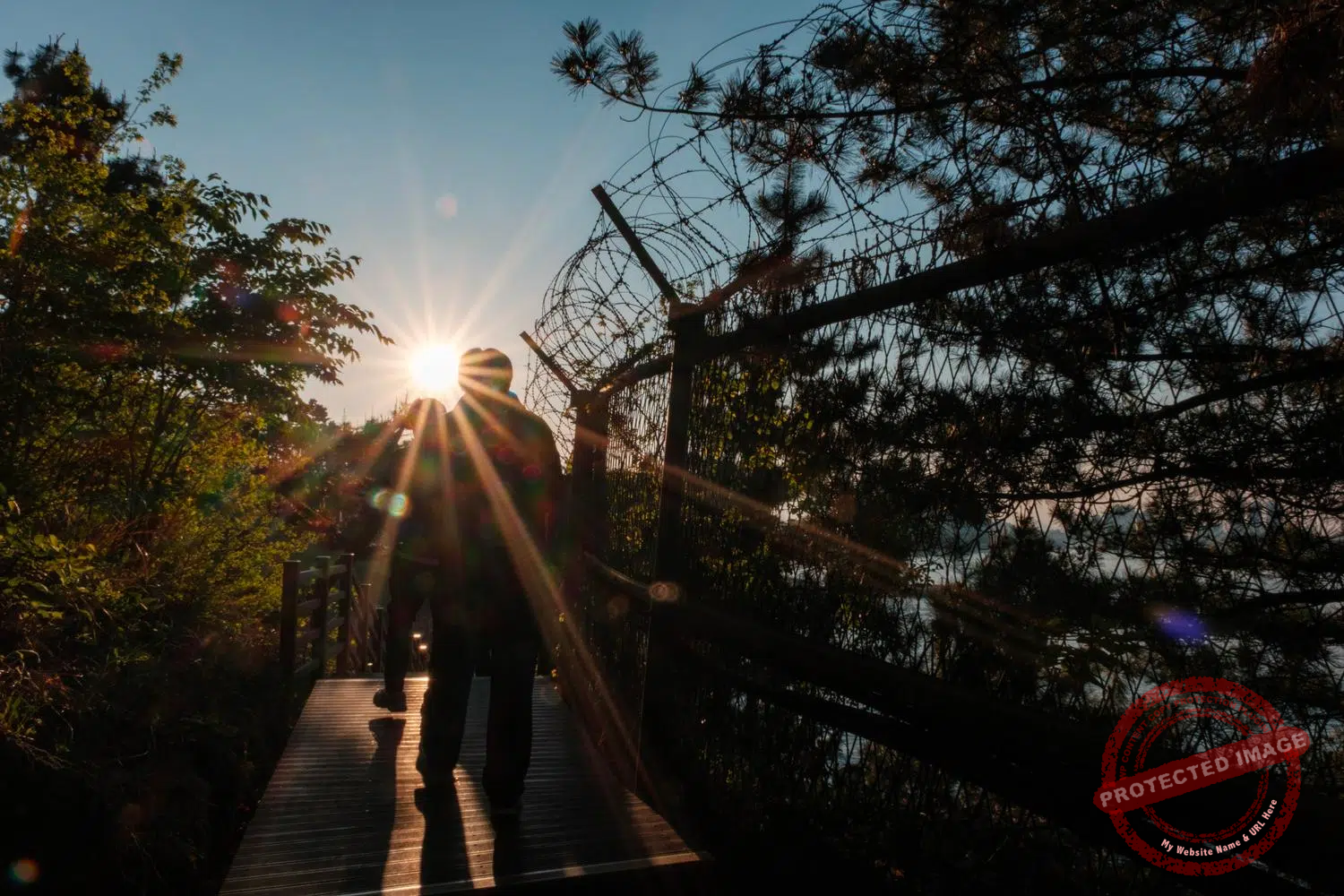


Anti-infiltrator protections along a seaside trail in Sokcho (May 2025).
These are not empty precautions. There have been several maritime infiltration attempts in this sector since the end of the war. This route is preferred to the Yellow Sea one due to easier deep-sea access and mountainous terrain for hiding.
In October 1968, around 120 North Korean commandos landed on the eastern coast near Ulchin and Samcheok via submarines and small boats. At the time, North Korea was emboldened by the Vietnam War and believed it could reunify the South by sending commandos there to start a guerrilla war and incite an uprising—much like the communist Viet Cong had done.
This attack was marked by a bloody episode that remains notorious: the massacre of a South Korean family in a small rural village in Gangwon province, stabbed and stoned to death because the eldest son, 9-year-old Lee Seung-bok, had said: ‘I hate communism’ to North Korean infiltrators who had stormed his home. As part of South Korea’s anti-communist education, the boy’s story was included in textbooks until late in the 1990s, statues were erected in schools and a memorial centre was built.
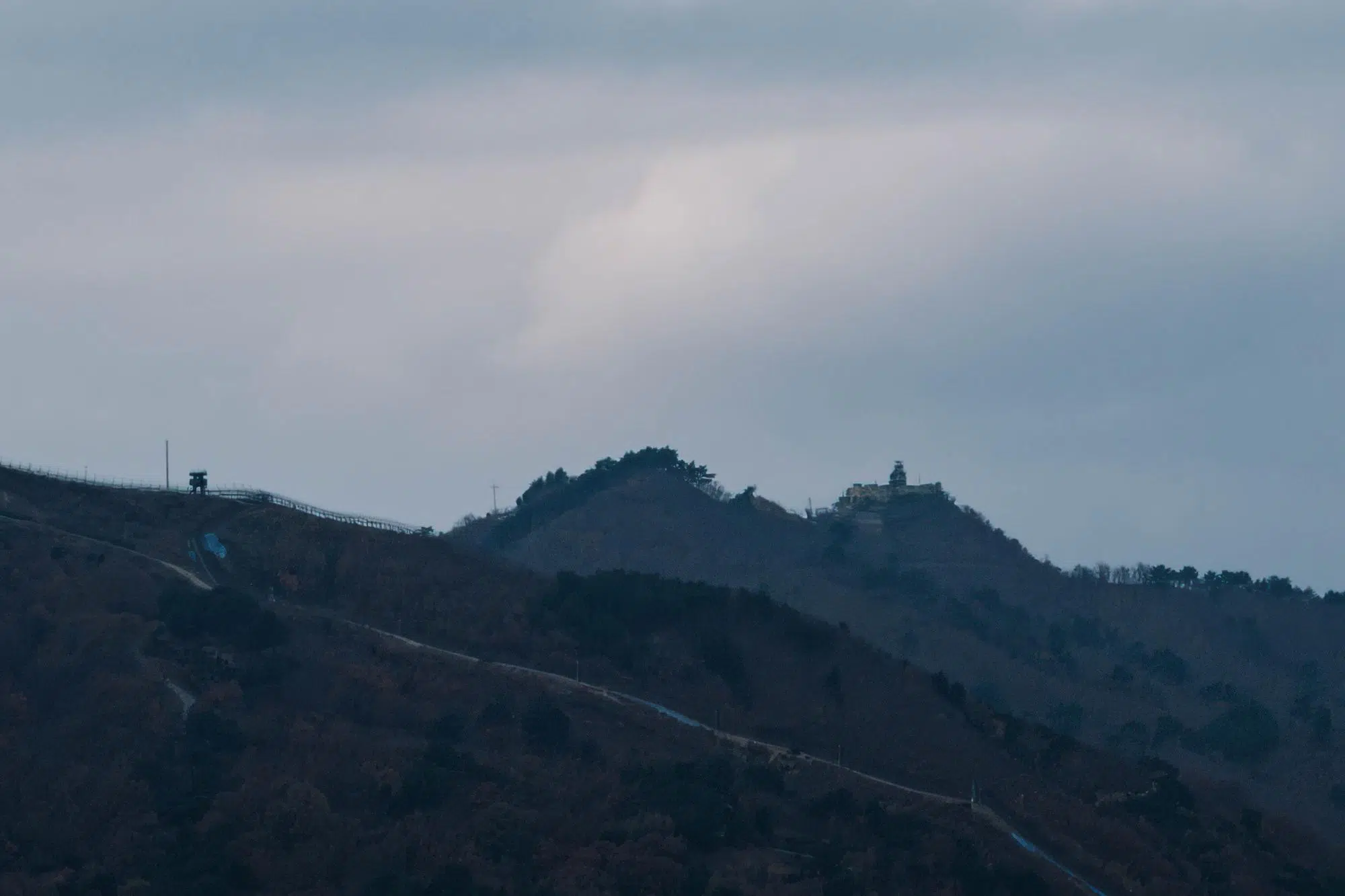
The DMZ north of Goseong Observatory (November 2024).
The raid resulted in several other massacres of villagers in the region over the next couple of months, before all members of the North Korean commando unit were finally killed or arrested.
Another serious incident was the grounding in September 1996 of a North Korean Sang-O class submarine carrying a team of 26 killers whose mission was to assassinate president Kim Young-sam at a public event in the nearby city of Chuncheon.
The North Koreans abandoned their submarine, split up in several groups and hid within the area, resulting in a 49-day manhunt that left 37 people dead: 16 South Koreans (13 soldiers and 3 civilians – mushroom pickers who were stabbed after stumbling across the commando), as well as 24 North Koreans (11 of them executed by the others for running the submarine aground). One North Korean soldier surrendered and later became a naval instructor for the South Korean Army. Another one was never found and is believed to have returned to the North.
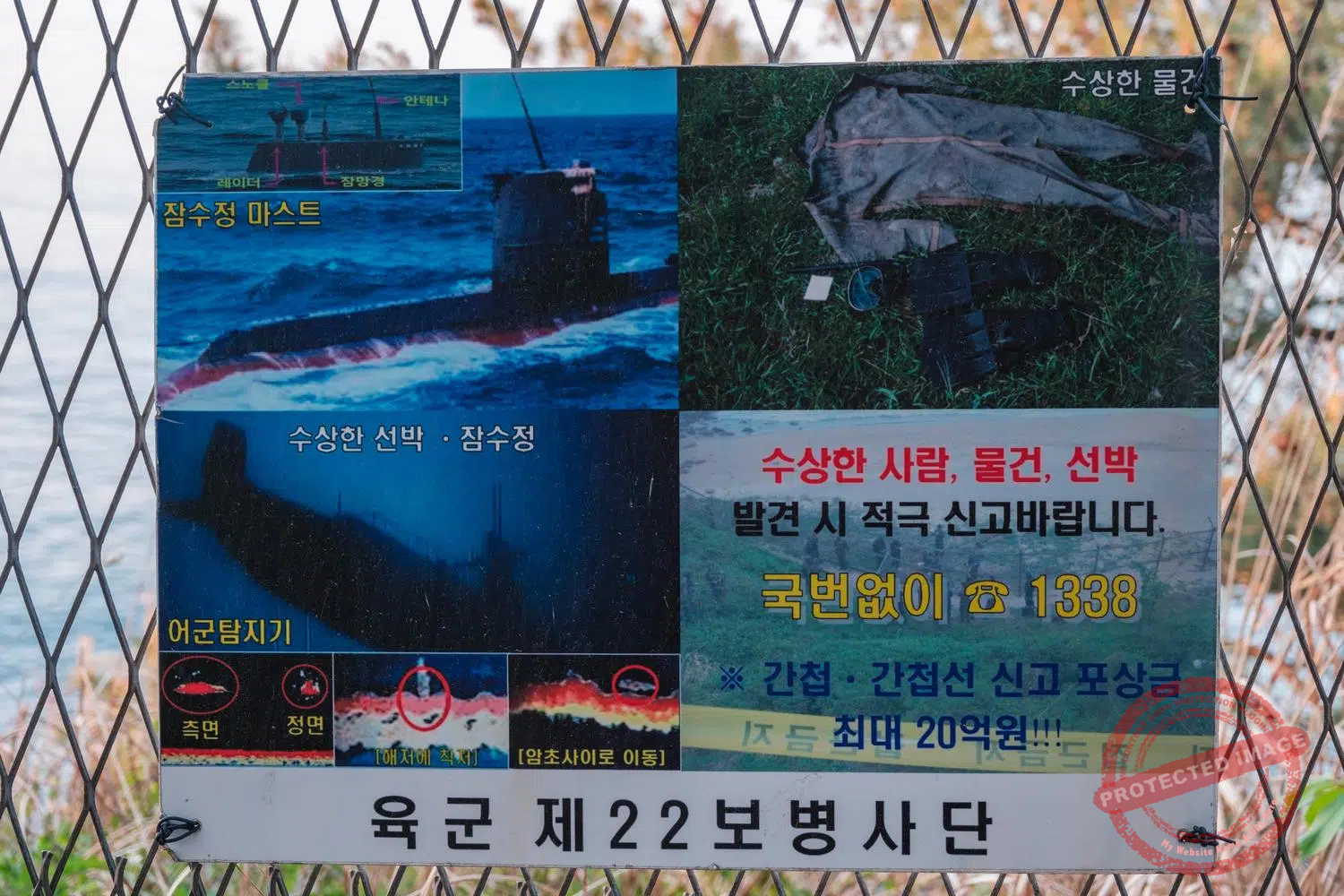
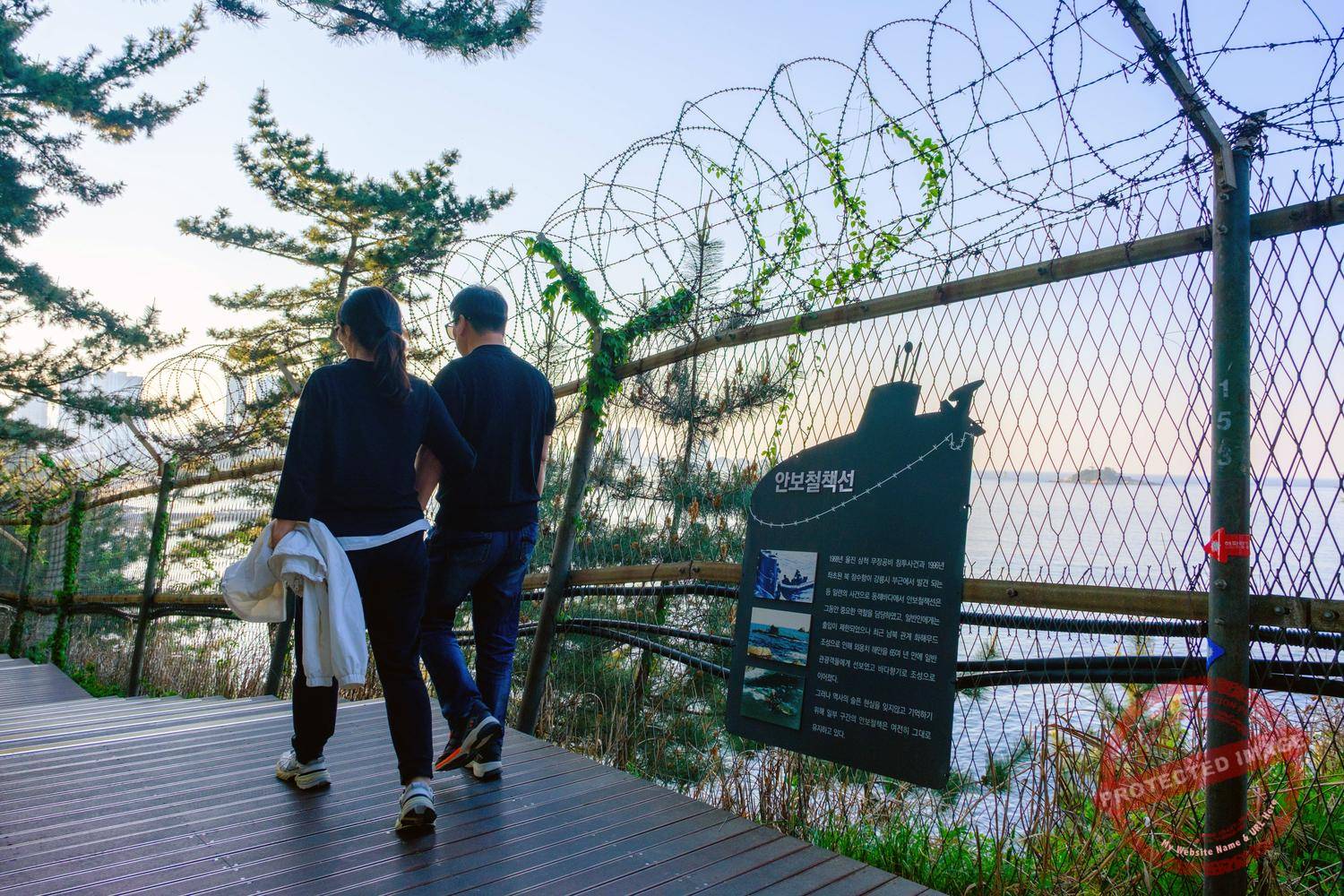
Signs on a coastal path in Sokcho ask walkers to watch out for North Korean submarines and frogmen (May 2025).
Six months earlier, a North Korean Taedong-B semi-submersible vessel had been spotted near the coast of Gangneung. The vessel escaped, but footprints and discarded equipment were later found on the beach. It is believed at least one or two agents successfully made it ashore and may have later been exfiltrated or integrated into ongoing operations. It is also believed this incident served as a preparation or test run for the far more deadly and dramatic September 1996 submarine infiltration.
Two years later, in June 1998, a North Korean submarine was found tangled in fishing nets off Sokcho. Nine crew members were found dead inside, possibly by suicide or internal execution. South Korean military recovered intelligence equipment and the incident was interpreted as a failed spy mission.
These incidents demonstrated vulnerability in South Korea’s coastal surveillance, prompting major investments in radar, sonar, and rapid response units. These days, attempts at maritime infiltration seem to have become a thing of the past, as North Korea has shifted to more asymmetric warfare, including cyberattacks, missile development and psychological operations.
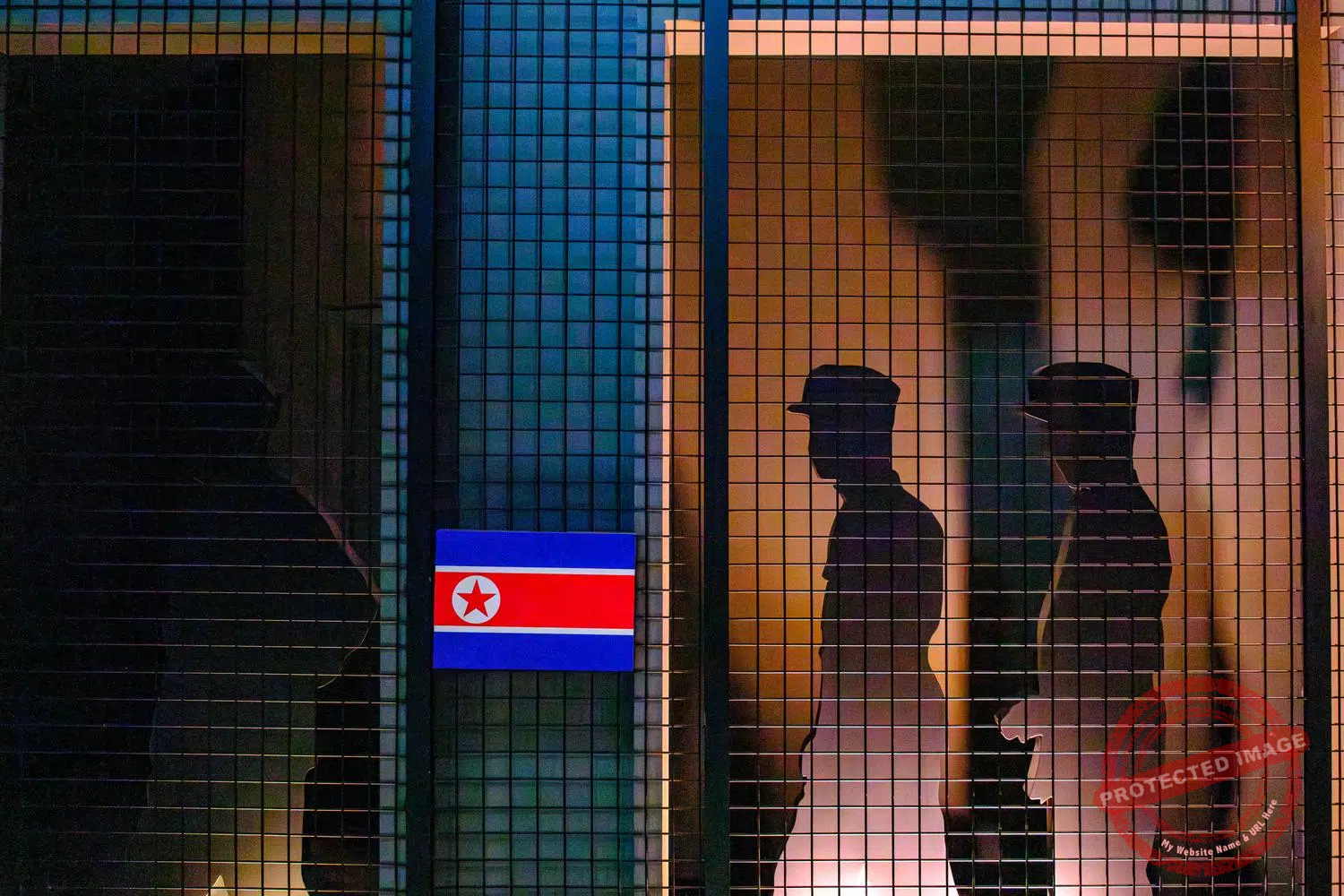
Welcome to the DMZ Museum ! (November 2024).
Near the Goseong Observatory is the very interesting DMZ Museum with a permanent exhibition where you can learn all about the DMZ, anti-personnel mines or the propaganda operations carried out by both sides. South Korean propaganda leaflets tend to highlight the pretty women to be found in the South in an attempt to lure men from the North, while the North’s propaganda is more ideological. A piece of the Berlin Wall is also on display here, just like at the Peace Culture Bunker in Seoul.
An incredibly comprehensive, informative and international museum (with a large number of explanations in English) unlike any other on Korea’s more touristy west coast.

This post was last updated on : October 23, 2025