Paroho
파로호
The scenic and tranquil “Lake of the Crushed Barbarians” on the 38th parallel where 30,000 Chinese soldiers drowned in one week.


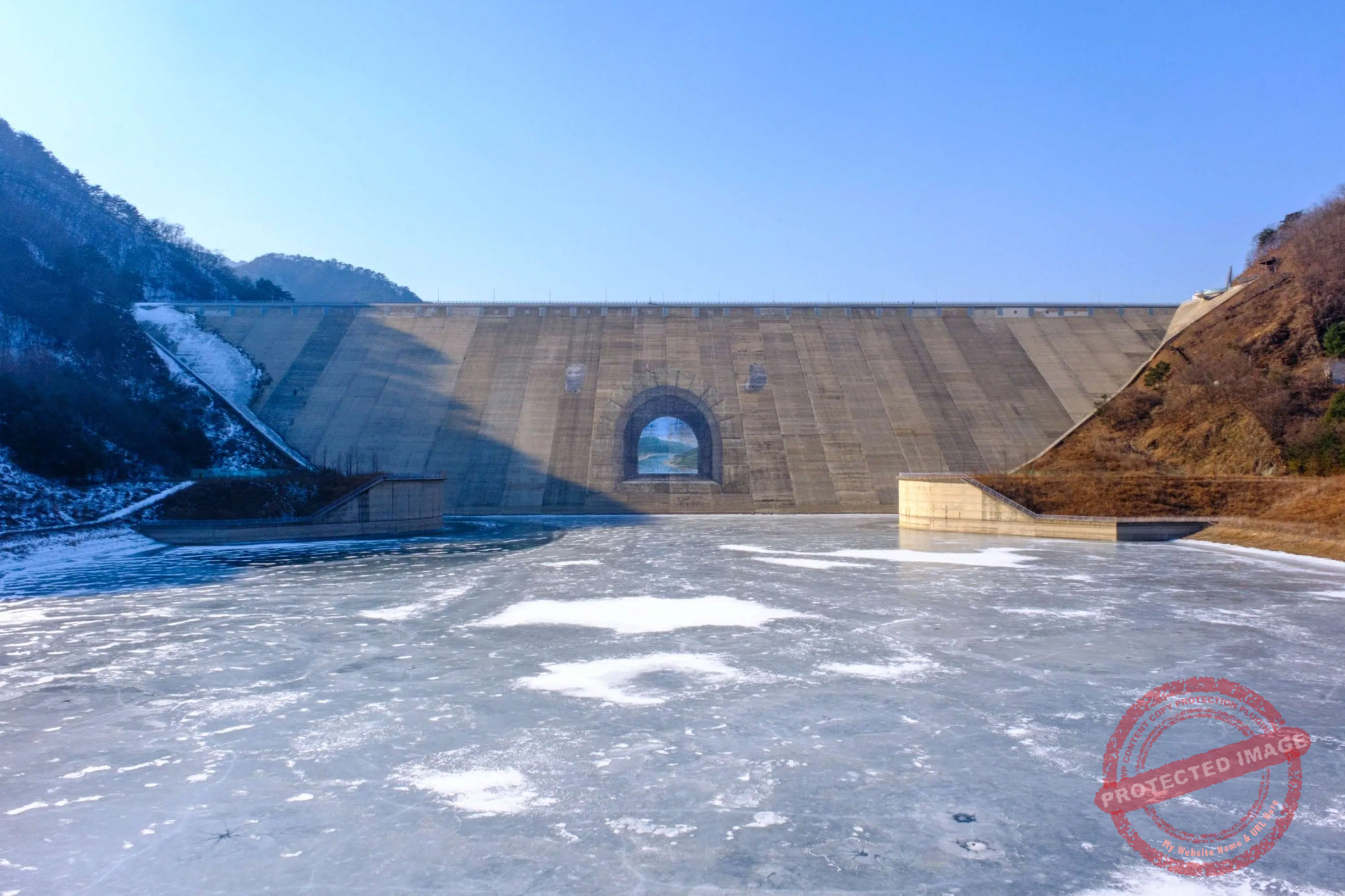
The tranquil Paroho, or “Lake of the Crushed Barbarians”, where three Chinese divisions drowned in 1951 (May 2026).
If you drive north out of Chuncheon along Route 5 and start the long climb toward the DMZ, the road eventually curls around an enormous body of water wedged between the mountains. Locals in the surrounding cities of Hwacheon and Yanggu still call it Hwacheon-ho (the Hwacheon Reservoir). Most South Koreans and a granite stele on its shore call it Paroho (파로호). Written in Sino-Korean characters as 破虜湖, it means the “Lake of the Crushed Barbarians”. A name given by South Korean president Syngman Rhee after one of the bloodiest weeks of the Korean War.
The lake was born in October 1944, in the dying months of Japanese colonial rule, when the Han River Hydroelectric Company finished pouring concrete on a 81.5-metre-high gravity dam across the upper Bukhan River. When the dam was complete, the river backed up into a long, branching reservoir that drowned valleys, rice terraces, and a dozen hamlets.
In its early years, the water had a softer name: Daebungho (대붕호), the Great Phoenix Lake, because seen from above the flooded valleys spread their wings like the mythical bird.
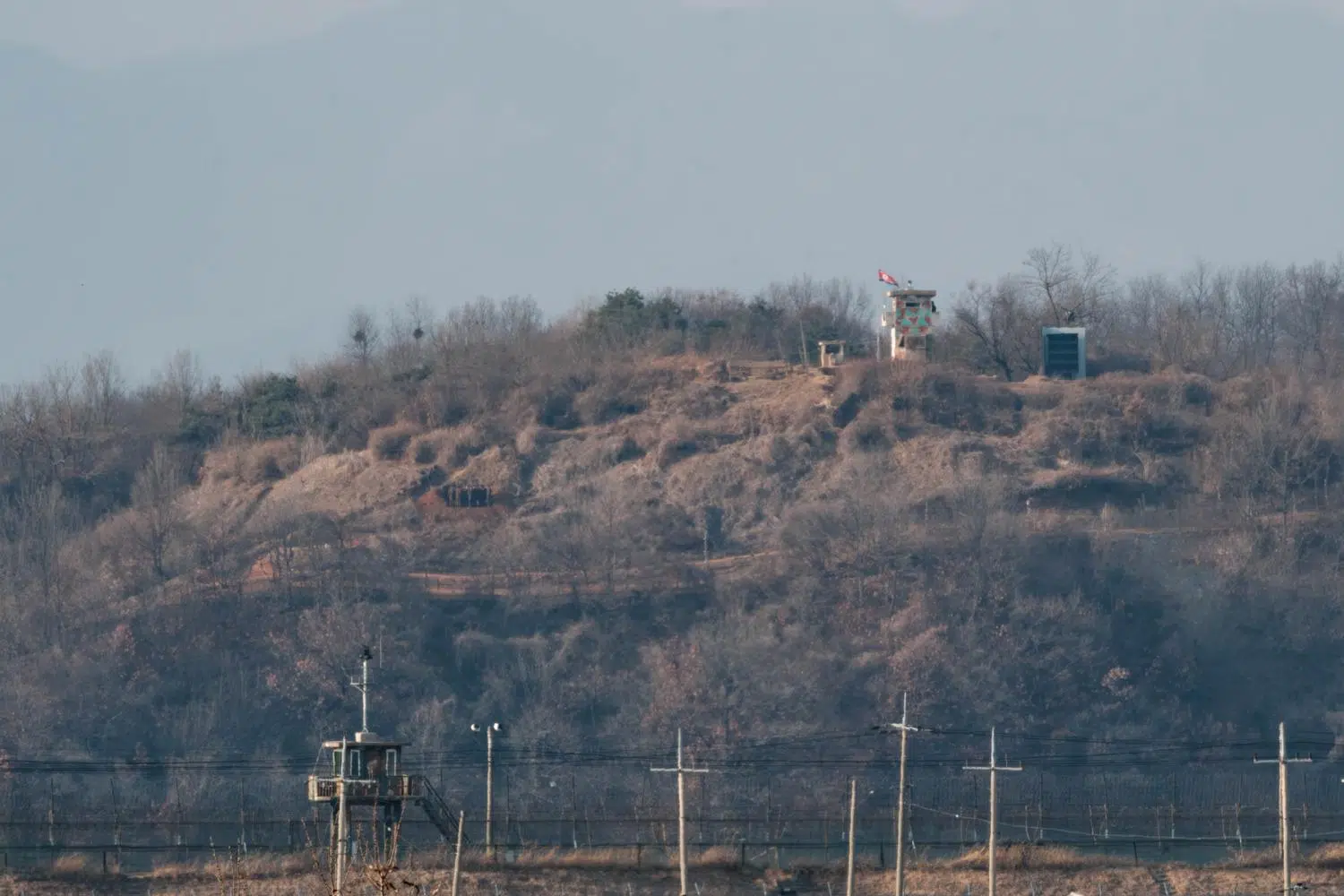
Since the 38th parallel runs right down the middle of the reservoir, Daebungho became the boundary between the American and Soviet occupation zones in 1945, and three years later, the border between the newly established Republic of Korea in the South and the Democratic People’s Republic of Korea in the North. Since the dam is located on the north side, it began supplying electricity to Pyongyang.

Mannequins depicting Chinese soldiers from the Korean War on display at the Paroho National Security Exhibition Hall (May 2026).
Then the Korean War broke out in June 1950. By the spring of 1951, the dam and its lake were the strategic prize at the centre of the Central Front. Whoever held it controlled the electricity, the water, and the only real road north into the cities of Yanggu and Inje.
In the last days of May 1951, a large Chinese offensive to the south was ending in disaster. After three weeks of mass attacks, the People’s Volunteer Army (PVA) had run out of food, ammunition and men, and was retreating in the face of UN forces, trying to fall back across the upper Bukhan River. The lake stood in their way.
The South Korean 6th Infantry Division caught up with them on the southern shore. The fighting that followed, between 26 and 30 May 1951, is known as the Battle of Paroho. Three Chinese divisions were destroyed. South Korean military accounts put Chinese losses at roughly 30,000 killed along the lake’s southern arm (Chinese sources dispute the figures to this day, and even some South Korean sources estimate the death toll at “only” 5,000). What both sides agree on is that thousands of PVA soldiers, exhausted, starving, and pinned against deep water with the dam in UN hands, did not make it back across. It is said that the lake was so filled with decomposing bodies that the villagers could not go near it for months after the massacre.
President Syngman Rhee came to Hwacheon in November 1955, two years and four months after the armistice. Standing on the southern bank above the dam, he inscribed with a brush three characters on a sheet of paper that would later be carved into a granite stele on a hillside above the water: 破 虜 湖. Paroho. Lake of the Crushed Barbarians.
The choice of words was sharp. The middle character, 虜, does not simply mean enemy. It is an old, contemptuous word, used in classical Korean and Chinese for captured foreigners, like Manchu raiders or the steppe peoples who pressed against the borders of dynastic Korea.
More than three quarters of a century after the battle, the name still draws complaints. China has objected to it more than once, on the grounds that 虜 is a slur and that no major lake on either side of the Yellow Sea ought to be named after a massacre of its citizens. Hwacheon County itself has periodically floated proposals to rebrand the lake to make it easier to market the area for tourism (the lake is popular for fishing and boating, and the road around the eastern shore is one of the prettiest drives in South Korea). So far the proposals have died. The Korean conservatives and veterans’ associations push back hard each time. Syngman Rhee’s calligraphy, engraved in stone on the lake’s shore, is not easy to walk away from, and the Phoenix won’t be rising from the ashes anytime soon.

The monument bearing the name “Paroho” (破虜湖) in Sino-Korean characters, as calligraphed in 1955 by South Korean President Syngman Rhee (May 2026).
This post was last updated on: June 16, 2026.