Blue House Raid Infiltration Place
1·21 사태 침투 지점
In 1968, 31 North Korean commandos crossed the DMZ to kill South Korea’s president. They nearly succeeded.


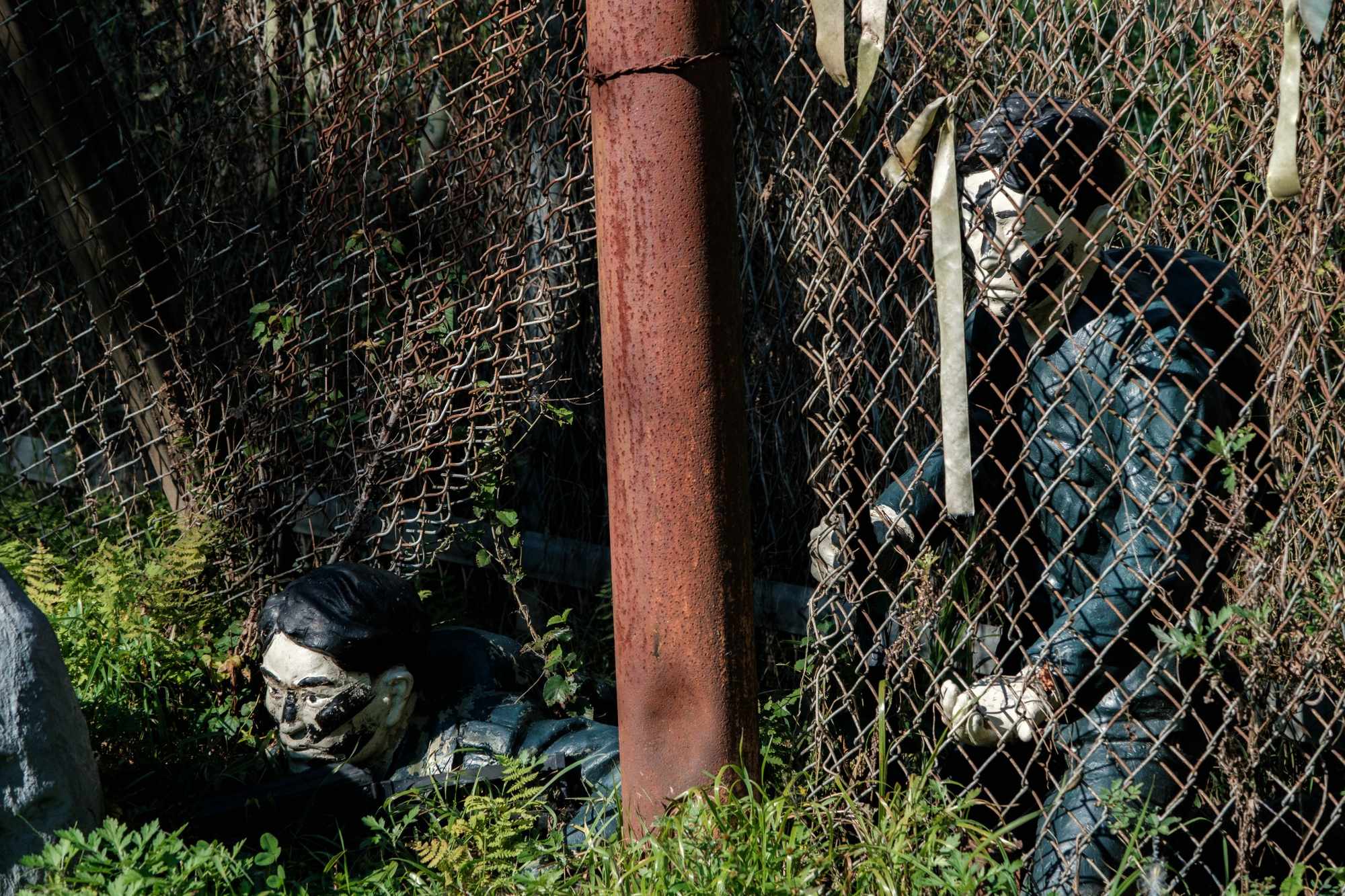
Mock commandos from the North Korean People’s Army Unit 124 infiltrate South Korea through a hole in the border fence with the aim of going to Seoul to assassinate the authoritarian president Park Chung Hee in January 1968 (October 2024).
The area around the North Korean border is rich in bizarre tourist attractions, but this re-enactment of a deadly infiltration by North Korean commandos in January 1968 is by far my favorite.
Not just because of its kitsch, but also because it recalls one of the craziest and dangerous pages in the history of the two Koreas.
No James Bond film can match the reality of the incredible epic and the consequences of this episode, also called “The Blue House Raid”, the “January 21 Incident”, or “The Kim Shin Jo Incident” after one of its protagonists.
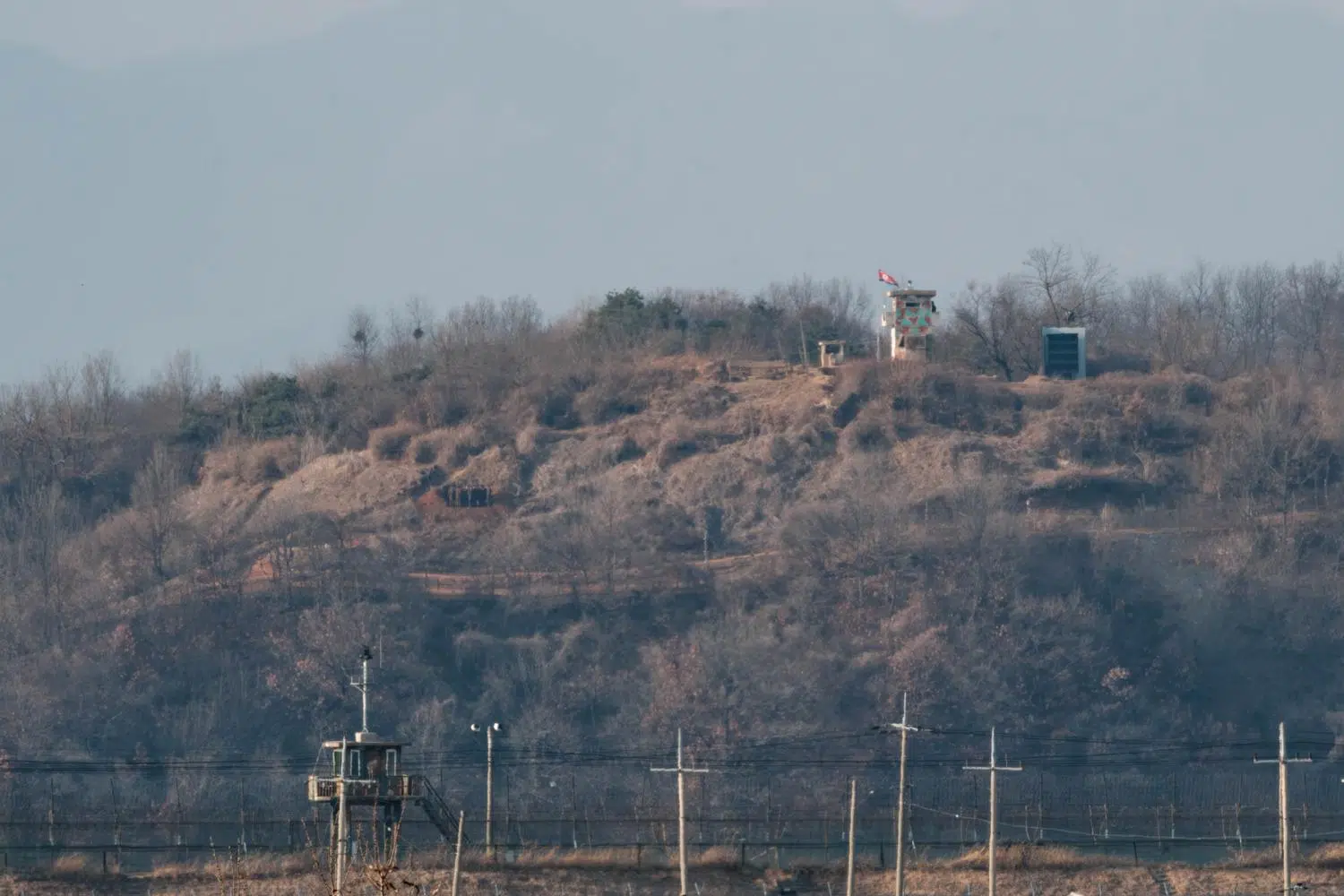
Being located on what is believed to be the actual site of the North Korean infiltration, inside the Civilian Control Zone in Yeoncheon and at the edge of the DMZ, the place is not easy to get to. A military escort is mandatory. Visitors also need to book their visit a week in advance so that security background checks can be carried out.
The site, in the middle of nowhere, is an outdoor diorama featuring a dozen mannequins, slightly larger than life-sized to make them more terrifying, depicting a ruthless North Korean killer squad infiltrating the South after having cut through a border fence.
I couldn’t find who came up with the idea to create this weird monument or when it was established. But it is likely part of “security tourism” efforts in South Korea led by right-wing governments aimed at educating the public about incidents in the DMZ area and the aggressiveness of communist North Korea (the left-wing governments prefer to promote “peace tourism” or “unification tourism”, but that’s not the point).
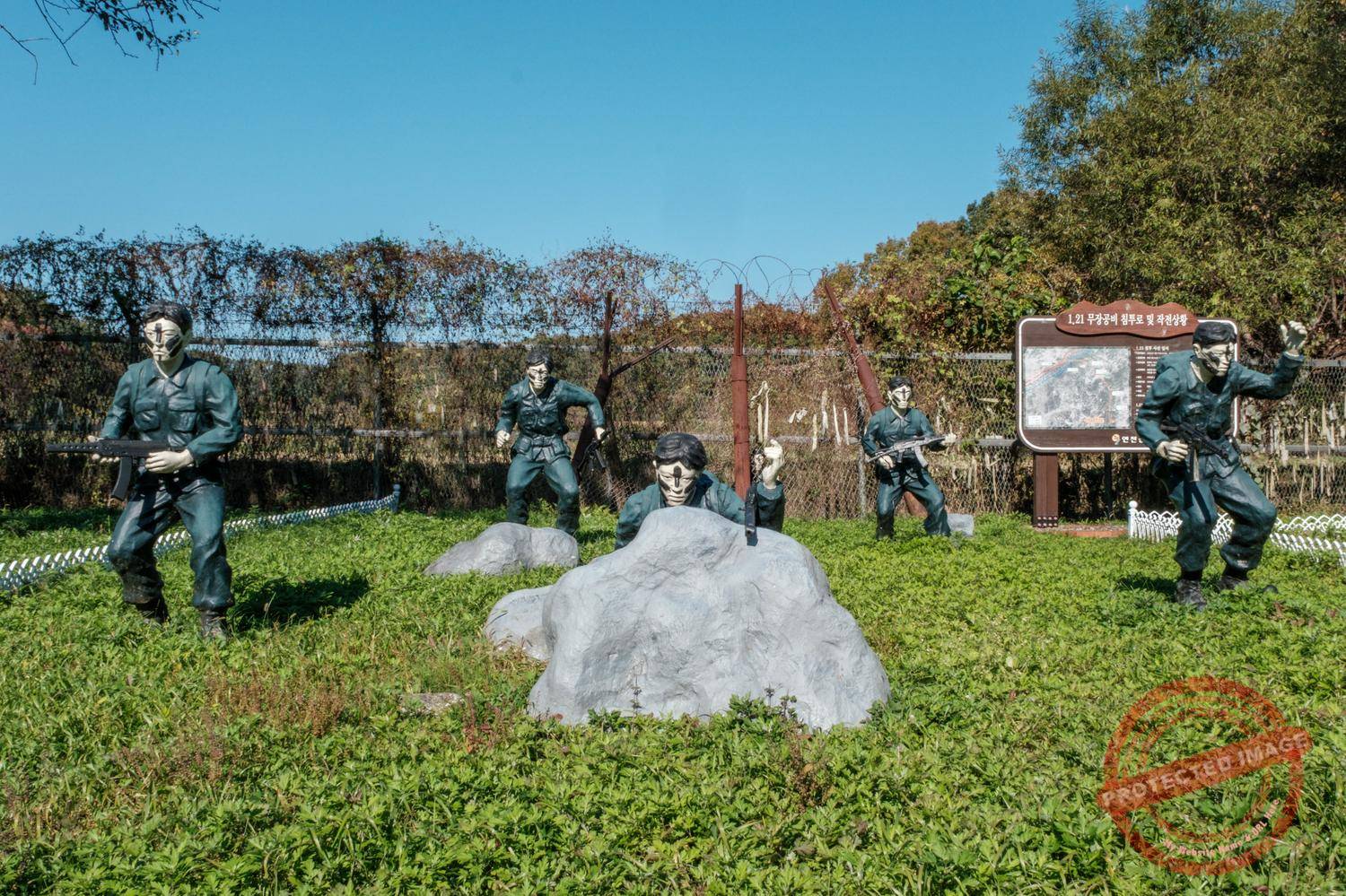
The North attacks ! (October 2024).
Back to the incident.
Just before midnight on January 17, 1968, at the worst of the harsh Korean winter, 31 commandos from the North Korean Special Forces Unit 124 quietly slipped across the DMZ, clipping the barbed wires fences, bypassing the mines and skirting the U.S. guard posts, where the sentinels were busier fighting the freezing cold with campfires visible from afar than monitoring the demarcation line.
Their mission was to reach Seoul and assassinate the South Korean president Park Chung-hee and his aides. The order given directly by North Korea’s leader Kim Il Sung was very clear:
“Bring here the head of the seditious puppet !”
They had been selected from over 10,000 soldiers for their physical strength and absolute loyalty to the regime. They had been training for two years, learning martial arts, marksmanship, knife combat, navigation, how to speak with a South Korean accent, as well as a tongue self-severing technique for a blood-letting suicide in case they were captured.
They had passed tough and gruesome tests such as walking for several days in the wilderness carrying their full 30 kg gear and without food, or digging into graves in a cemetery and sleeping next to corpses in order to hide. They had held rehearsals of the raid in a specially-constructed, full scale mock-up of the Blue House, the presidential palace in Seoul.
Each man, who thought himself invincible, was carrying a Soviet-made PPS-43 submachine gun, a TT pistol, knives and eight hand grenades.
For four days, the killer platoon made cautiously its way towards the capital, crossing the frozen Imjin River, sleeping by day and trekking by night through mountains and forests.
On January 19, four woodgatherers, all brothers, stumbled upon the North Koreans’ bivouac near the village of Beobwon. The orders were clear: if the squad came across any civilians on its march to Seoul, it was to kill them immediately and bury the bodies.
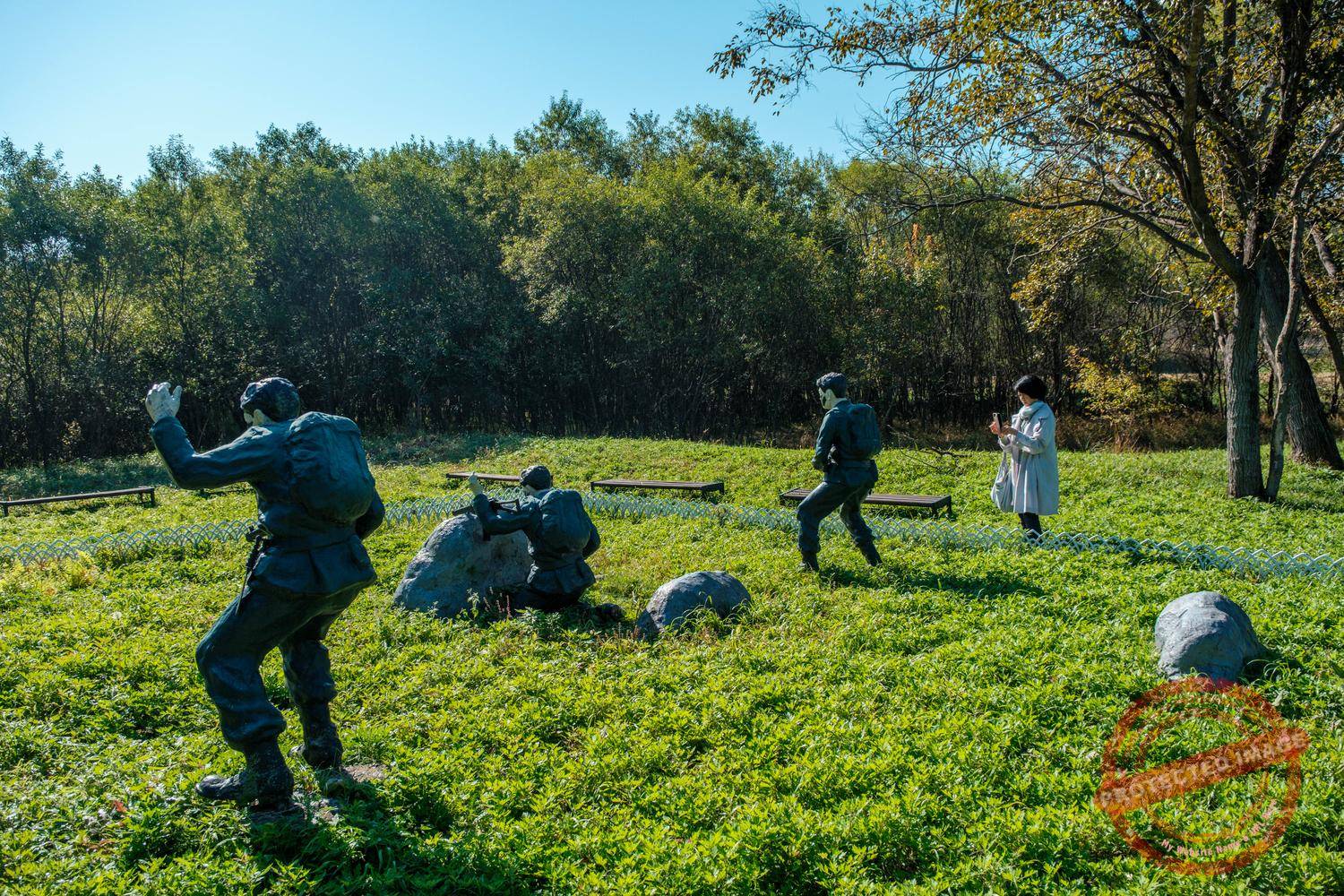
A visitor takes pictures of the mock North Korean infiltration incident (October 2024).
But burying four corpses in the frozen ground would have taken a long time. Meanwhile, the young men could have been reported missing by their family, triggering a search operation.
Perhaps blinded by his ideology, at a time when most North Koreans believed that South Korea was dreaming of being liberated by them, the unit’s leader, Kim Jong Moon, made a fatal mistake.
Instead of slaughtering the innocent villagers on the spot as he was instructed to do, he gave them a long lecture on Marxism and on the superiority of the North Korean regime, while holding them at gunpoint. Then he let them go, after making them swear allegiance to communism and promising to kill their whole family if they reported the infiltration to the authorities.
Shortly after the North Koreans turned their backs, the four panicked guys alerted the police.
The South Korean army immediately mobilized four divisions – around 60,000 soldiers – to catch the infiltrators. But the North Koreans had a head start. They increased their walking pace and entered Seoul on January 20, divided into small groups. They decided to gather the next day at Seunggasa Temple, near the Blue House, to make their final preparations.
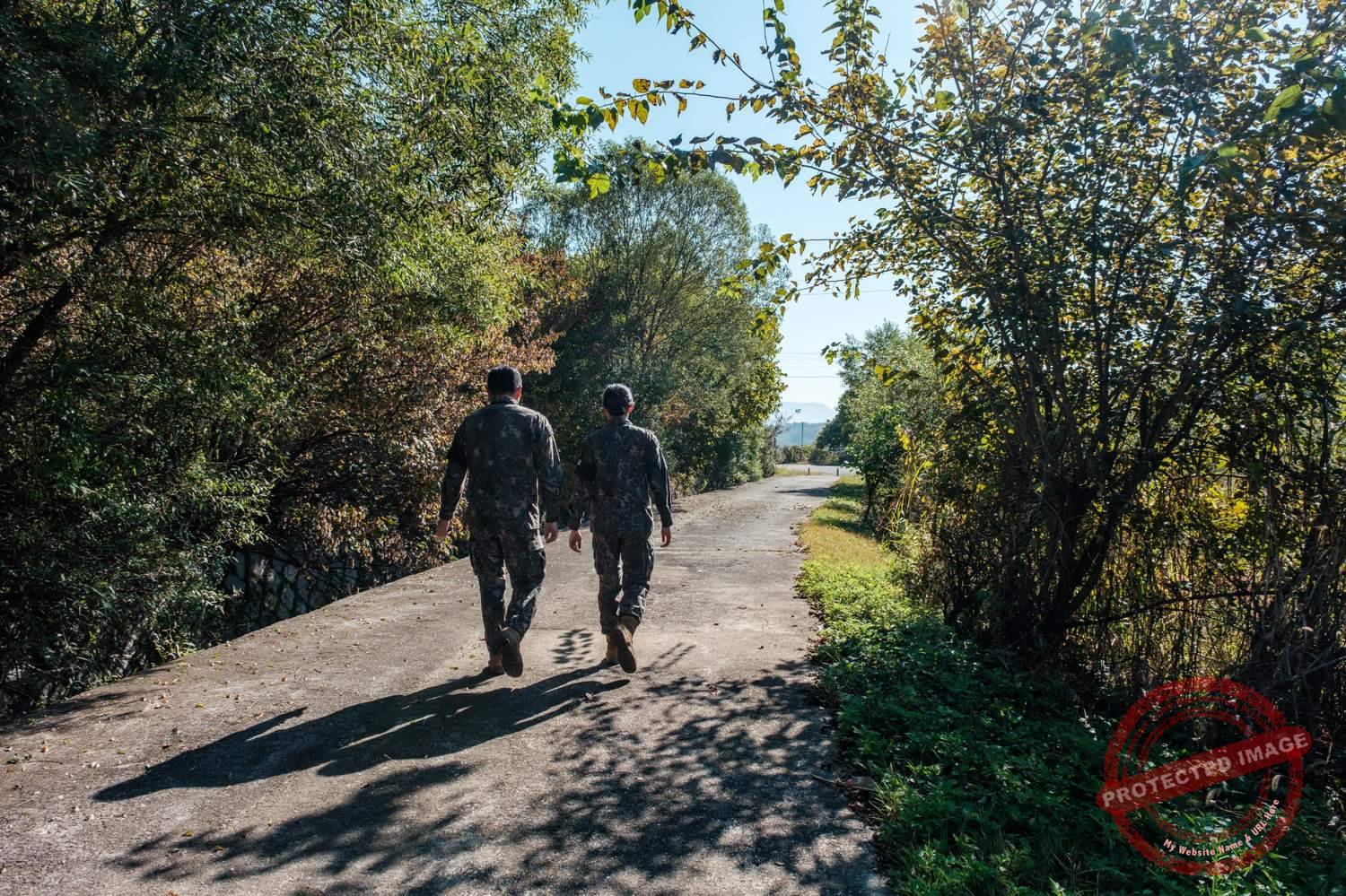
South Korean soldiers escort the author to the January 21 Incident place at the edge of the DMZ (October, 2024).
On January 21, wearing fake uniforms of the South Korean 26th Infantry Division they had brought with them, the infiltrators advanced towards the presidential palace without hiding, pretending to be soldiers returning from a counter-infiltration patrol, and smoothly passing through several checkpoints.
By 10 P.M., they had arrived at the gates of the Blue House compound, a few hundred meters from the palace itself, when a sentry became suspicious upon seeing them.
Alerted, the local police commander, Choi Gyu-sik, approached the suspicious platoon, started grilling them and asked for their identity papers. Unsatisfied with their responses, he drew his service weapon. In response, the North Koreans opened fire with their machine guns, mortally wounding Choi and another policeman.
A fierce battle broke out around the Blue House between the infiltrators and the real South Korean soldiers, soon joined by tanks. In the midst of the confusion, a school bus passing by was caught in the crossfire, riddled with bullets and hit by several grenades that killed two passengers and wounded the driver. Even today, a number of old trees in the neighbourhood still show bullet holes left over from this crazy episode.
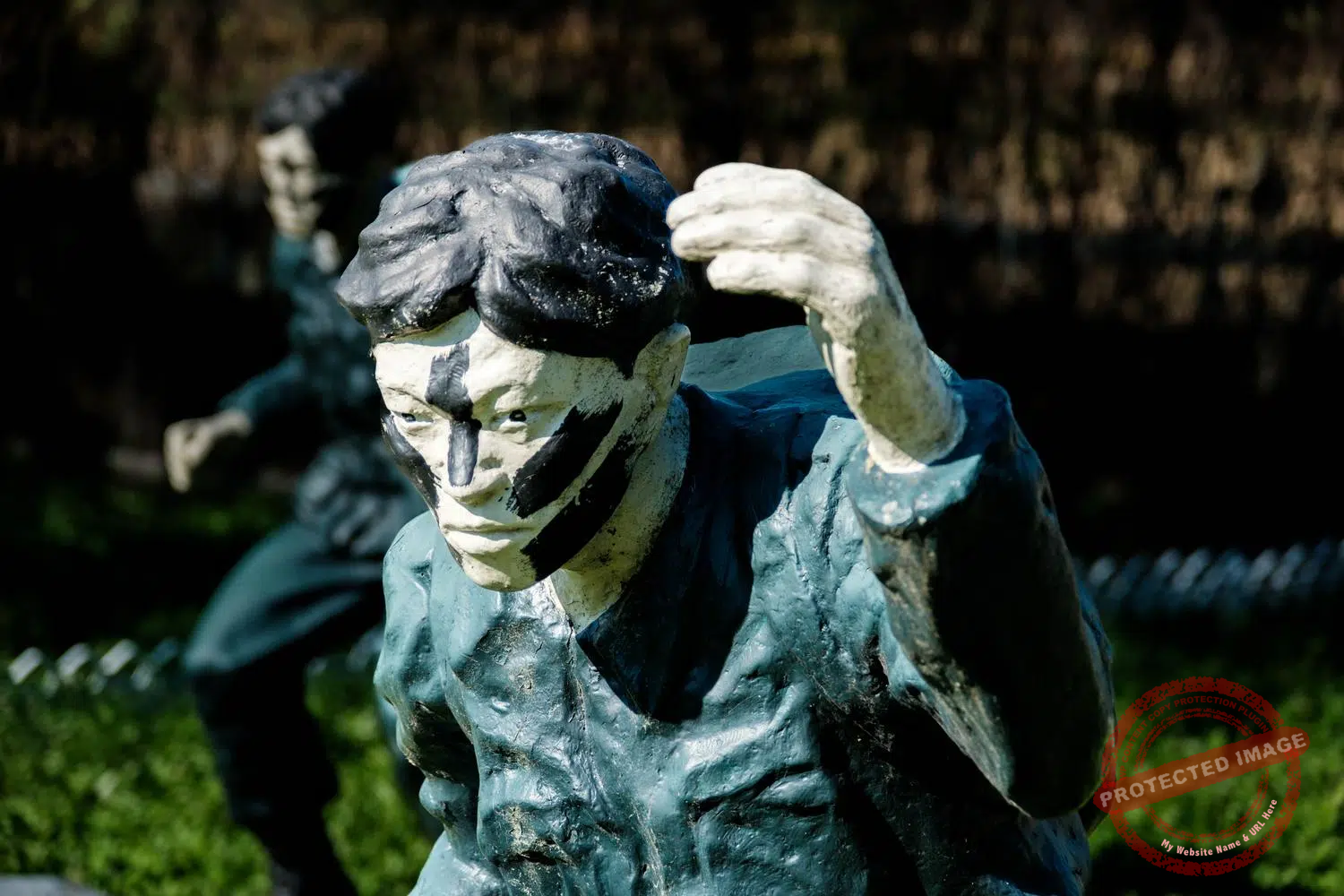
Unmasked and attacked from all sides, the squad dispersed and began its march back to North Korea.
A huge manhunt ensued, during which 29 of the 31 commandos were shot dead or blew themselves up with their grenades to avoid being caught (they are now buried in the Military Cemetery for North Korean Soldiers). A total of 68 South Korean soldiers, police officers and civilians, as well as 3 American servicemen, were also killed during the 8-day-long mayhem.
One survivor, Park Jae Kyung, managed to make his way back to North Korea where he was promoted to general. He became a vice-minister of Defence and an influential adviser to the leader Kim Il Sung.
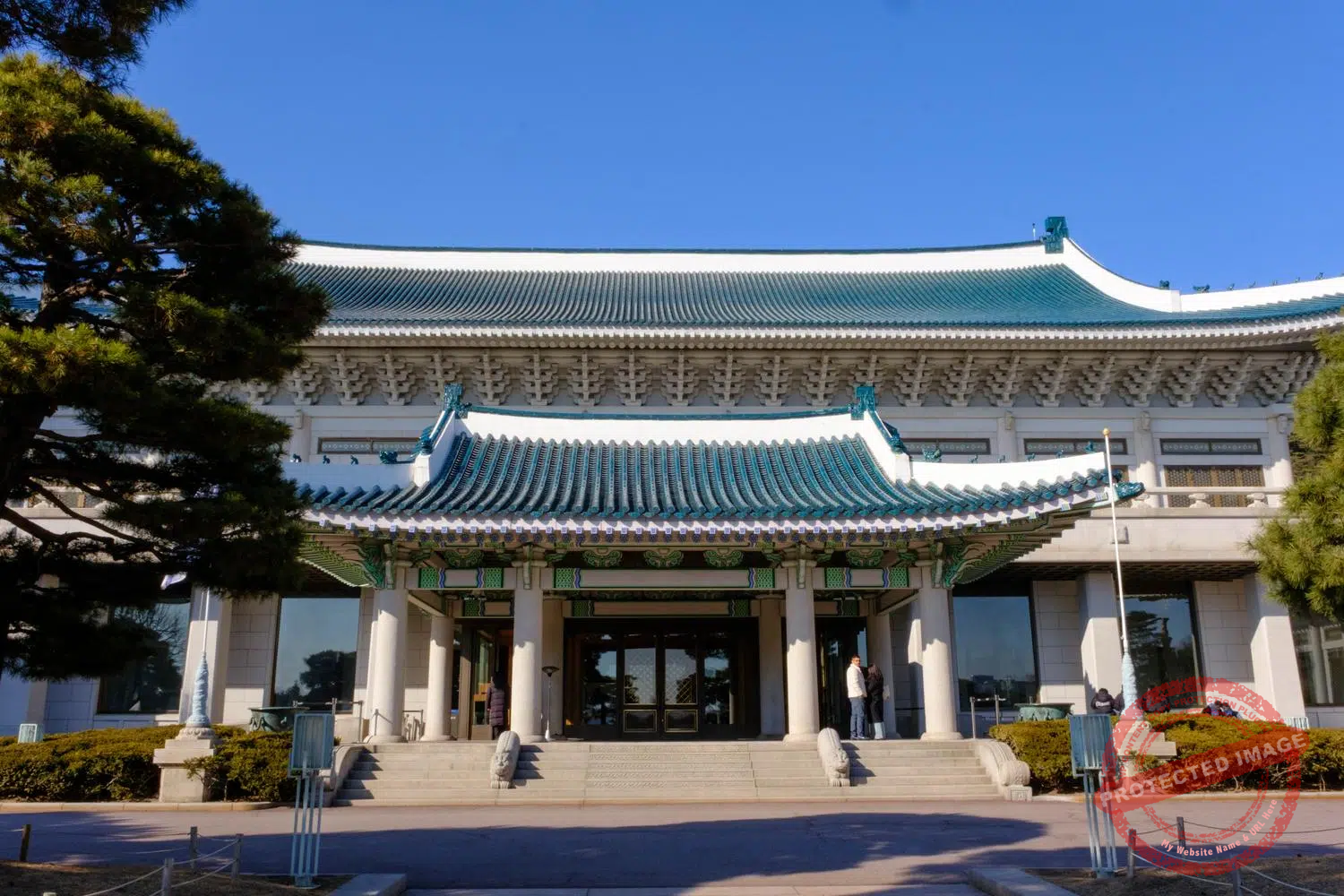
The Blue House (Cheong Wa Dae), the official residence of South Korean presidents in Seoul. With most of its tenants ending up murdered, like Park Chung-hee, toppled or jailed, the place is widely considered in South Korea to be geomantically cursed (February 2025).
The other one, Kim Shin Jo, fled the battlefield and was captured later in the night in Inwangsan, a mountain park in central Seoul. As is customary in South Korea after major arrests, he was presented to the press, and stunned the public by declaring:
“I came here to slit Park Chung-hee’s throat”.
It emerged that Kim had already infiltrated the South twice before to spy and had returned to the North undetected. After two years of interrogation, during which he gave priceless information about the raid and his training in North Korea, and after investigators had established that he had not fired a single shot from his weapons during the operation, he was pardoned in 1970 and became a South Korean citizen (following which, as is customary, all his relatives in North Korea were executed or sent to hard labor prison camps).
Being granted a new life instead of being sentenced to death as he had expected, Kim got married, had two children, converted to Christianity and became a Presbyterian pastor in 1997. He died peacefully in April 2025, aged 82, after giving numerous interviews in his later years. His weapons, as well as the wire cutters he used to cross the DMZ, are now on display at the War Memorial of Korea in Seoul.
Kim Il Sung believed that the assassination of Park, an autocrat who had seized power in a military coup in 1961, would trigger an insurrection in South Korea and, ultimately, the reunification of the country under Pyongyang’s rule.
But although Park’s authoritarian regime was responsible for blatant human rights violations, including the killings of hundreds of protesters and political opponents and the suppression of the press, it had also begun to turn South Korea’s economy around through a successful, export-oriented industrialization policy. In 1968, the formerly poverty-stricken South Korea was already a much more prosperous and advanced country than its northern neighbour, making the prospect of a communist revolution highly unlikely.
However, this incident was the most serious of what the South Koreans called the ‘Quiet War’ or the ‘Second Korean War’, a series of low-level border clashes and infiltrations that left hundreds of soldiers from both sides dead between 1966 and 1969.
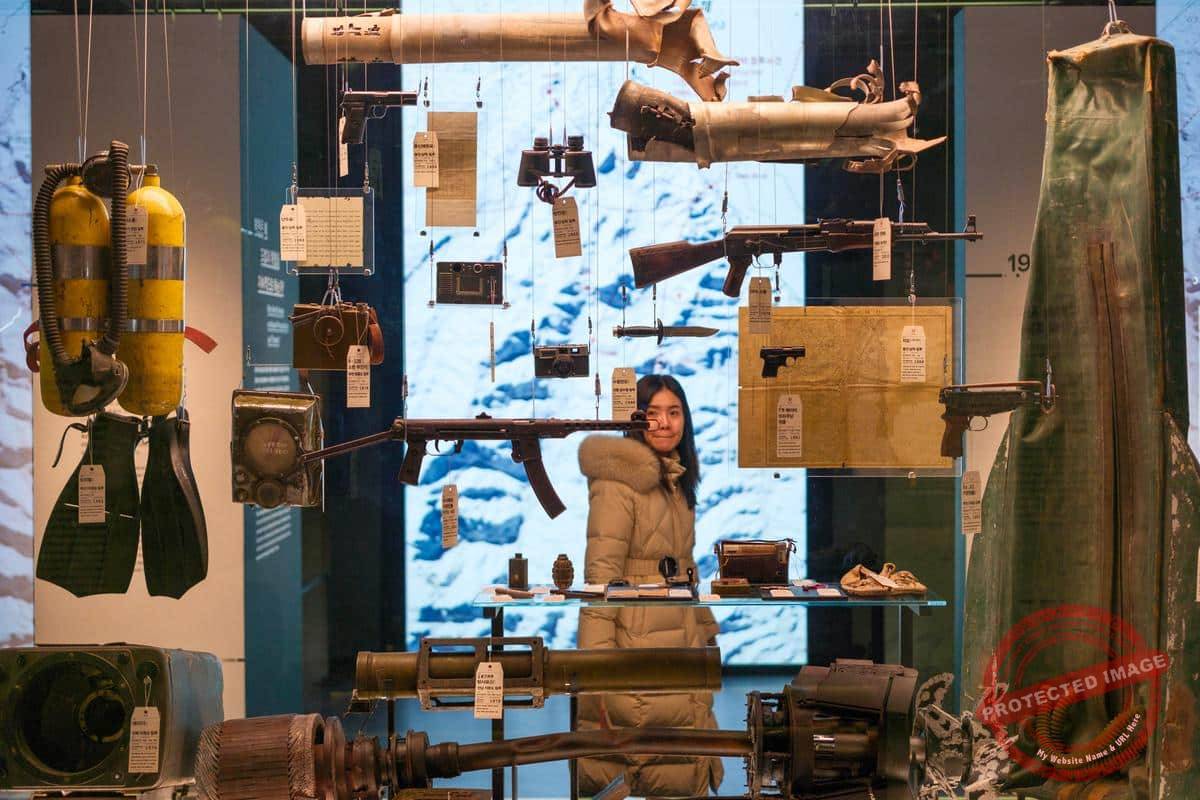
Weapons and gear seized on North Korean infiltrators, including those from Unit 124, on display in the ‘North Korean Military Provocation Room’ at the War Memorial of Korea in Seoul (February 2025).
Following the failed Blue House raid, South Korea started to get really worried. Fearing an imminent large-scale armed conflict with the North, it repatriated the 50,000 troops it had sent to Vietnam to support the United States in their war.
In the end, although it failed in its aim of eliminating Park Chung-hee, the January 21st Incident is considered to have been a strategic success for North Korea and the Communist bloc during the Cold War, as it weakened the United States in its fight against North Vietnam forces.
Park survived the Blue House raid, as well as another assassination attempt in 1974 when a North Korean agent fired at him during a speech and missed him, but killed his wife. He ended his life murdered by his own staff, shot in the head by Kim Jae Kyu, the Korean Central Intelligence Agency director, for obscure reasons during a boozy banquet in 1979.
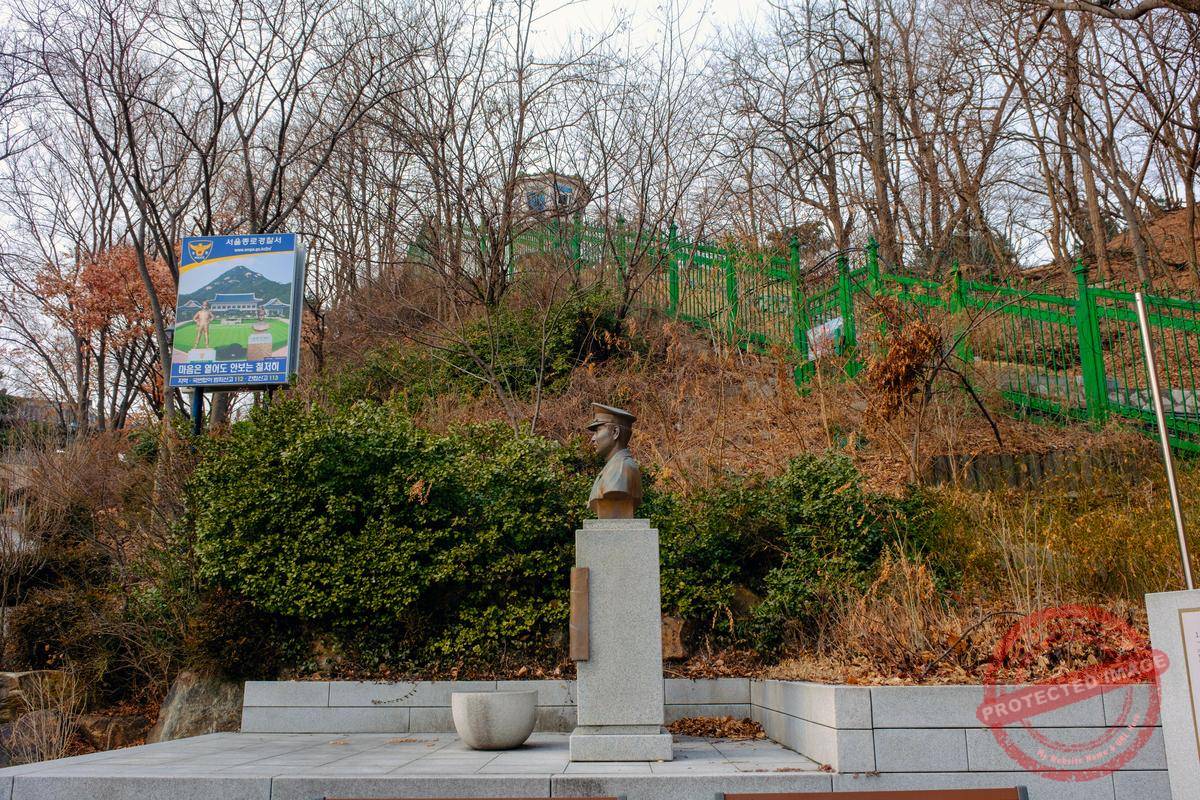
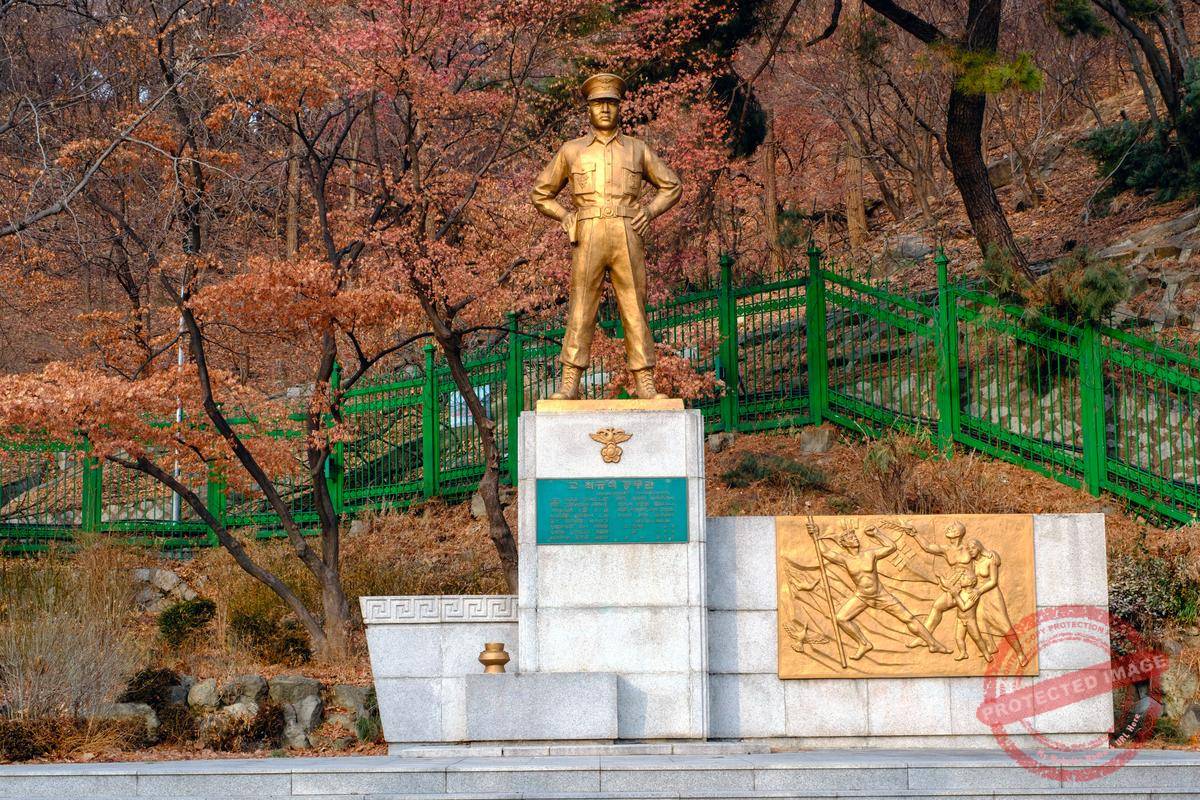
Near the fence of the Blue House compound in Seoul, on the site of the 21 January 1968 attack, statues honour the memory of commissioner general Choi Gyu-sik and assistant inspector Jung Jong-su, shot dead by the North Korean infiltrators they had just unmasked (February 2025).
The Silmido Sequel
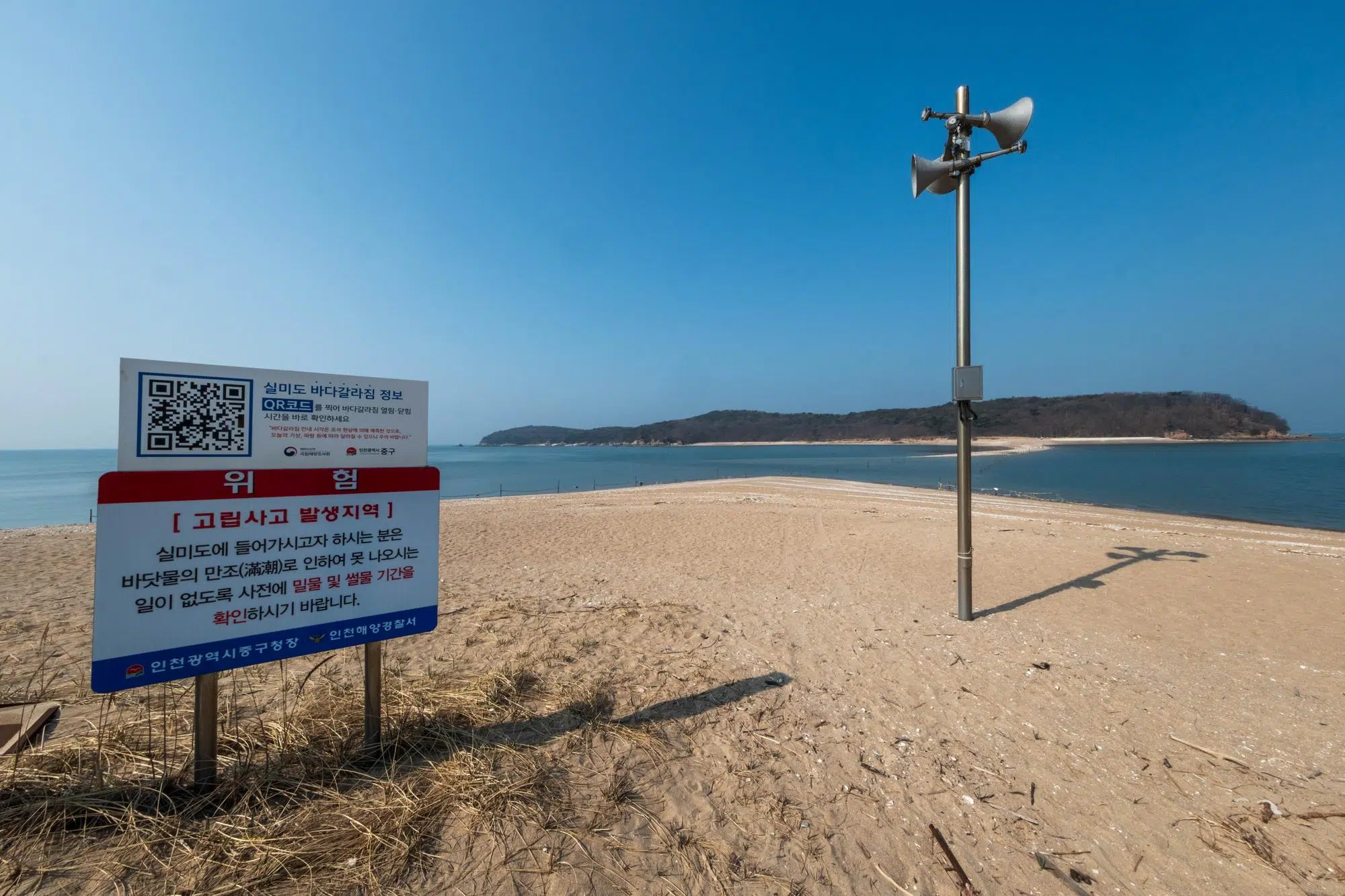
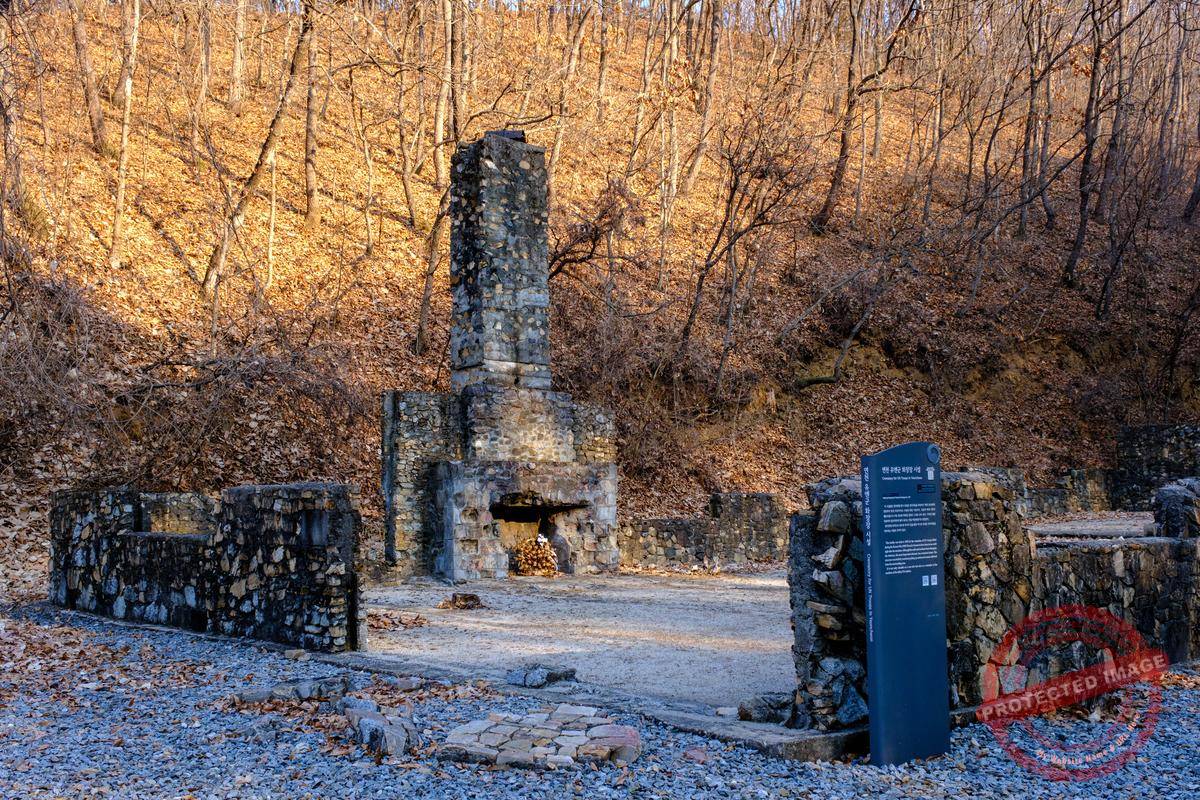
Silmido, the remote uninhabited island off the coast of Incheon where a secret South Korean assassination unit trained to kill North Korean leader Kim Il Sung, before meeting a bloody end (March 2026).
The consequences of North Korea’s failed decapitation raid on the Blue House in Seoul in January 1968 did not end there. Three months later, Park Chung-hee’s authoritarian government secretly decided to give the North Koreans a taste of their own medicine by forming its own assassination squad, Unit 684, with the aim of infiltrating the communist neighbor and liquidating its leader, Kim Il Sung.
The 31 men selected to do this underwent three years of extremely harsh training by the South Korean Air Force on Silmido, a remote island in the Yellow Sea, located close to where Seoul-Incheon International Airport now is.
Unlike elite military commandos, these 31 recruits were all civilians. They were petty criminals, unemployed men or other people drawn from marginalized backgrounds who were offered pardon, money and jobs if they succeeded in their mission. Their training included hand-to-hand combat, infiltration techniques, endurance exercises in extreme conditions, all this with little oversight. Severe beatings by the instructors were commonplace, and seven recruits died.
All for nothing: the assassination mission was quietly cancelled in August 1971 following an improvement in relations between North and South Korea.
Desperate, fearing that they were going to be summarily executed by their instructors to prevent the secret of their existence from coming to light or that they would be locked up forever on the island, the 24 survivors of Unit 684 mutinied.
On August 21, 1971, they killed 18 of their military guards, some with hammer blows, leaving only six survivors. They seized weapons and made their way to Incheon, on the mainland, where they hijacked a city bus to Seoul. The bus, which was presumably heading toward the presidential palace, was stopped in the Daebang-dong district of the capital where the army forced it to crash into a tree. Twenty members of the unit were shot or blew themselves up with hand grenades during the confrontation. Four were captured, sentenced to death by a military court, executed and secretly buried in March 1972.
The official narrative portrayed the bus hijacking bloodbath as an attempt by a group of soldiers convicted of violent crimes to escape from a military prison camp. The government suppressed the truth about the entire operation, and official records of Unit 684 remained classified.
It was thanks to a former safe-cracker turned writer that the true story—which until then had been nothing more than a rumor in South Korea—finally came to light, nearly three decades later.
In 1999, a notorious master thief, Baek Dong-ho, published Silmido, an autobiographical novel in which he claimed to have met in prison a former member of Unit 684 whilst serving time for attempted burglary, and to have, after his release, conducted his own investigation by travelling to the Silmido area and interviewing witnesses. Four years later, his book was adapted for the big screen by director Kang Woo-suk. Silmido became one of the most successful films in South Korean cinema history. Now that the truth had come to light, families of the Unit 684 trainees demanded recognition, and lawsuits were filed against the authorities.
In 2006, at last, the South Korean government acknowledged responsibility and provided financial compensation to families of the victims. In 2022, the Truth and Reconciliation Commission, established in 2005 to investigate the darkest chapters of the country’s dictatorships, recommended an investigation into the burial sites and the excavation of the remains of the former Unit 684 members, as well as a formal apology to the victims.
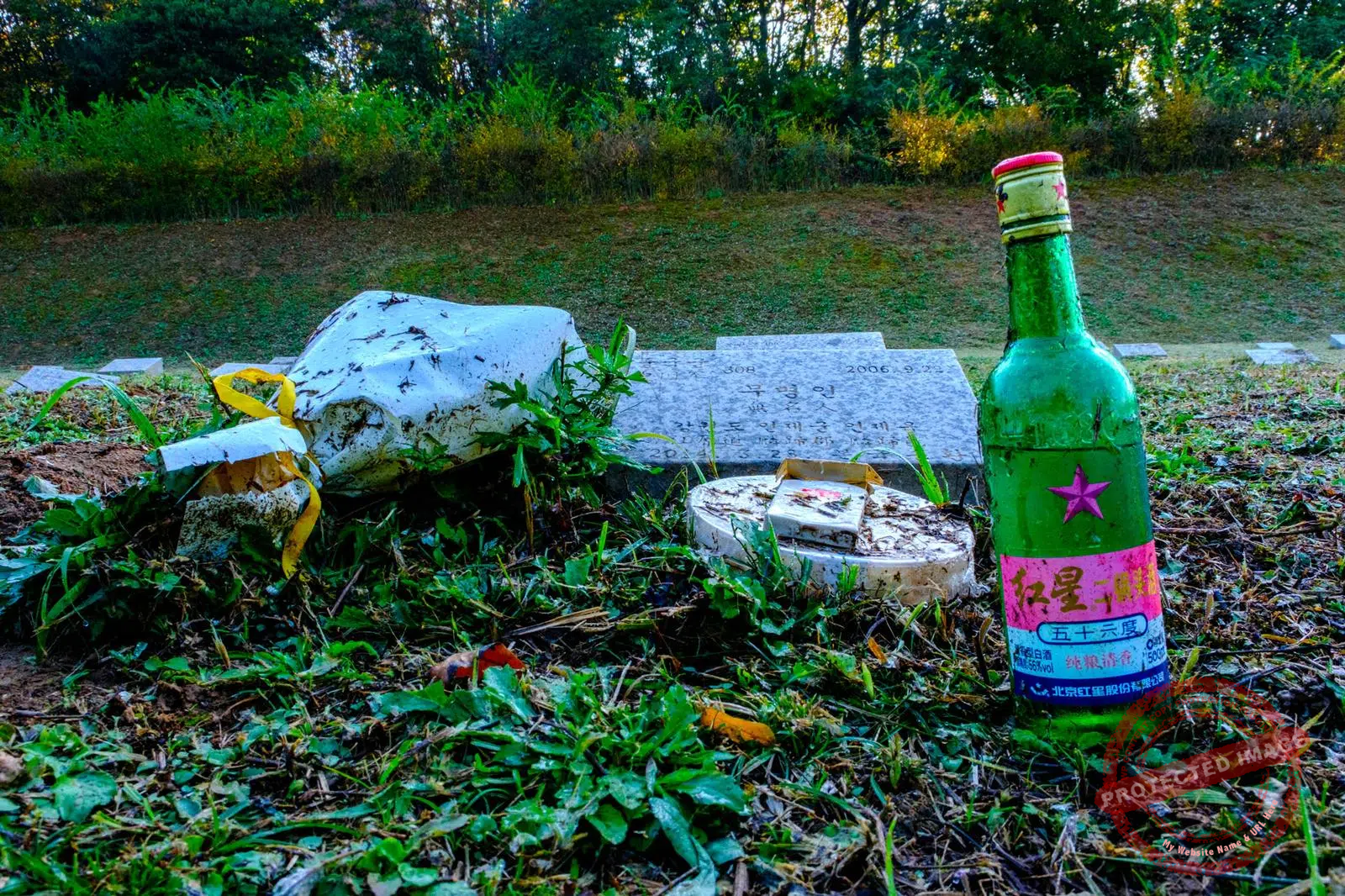
The official apology was issued in 2024 by then-Defense Minister Kim Yong-hyun. That same year, the government began searching for the missing bodies at the Goyang Cemetery, in the suburbs of Seoul, where they were believed to be located, but four of them remained unaccounted for as of May 2026.
The Silmido assassination unit remains one of the most tragic and morally complex episodes in modern South Korean history. Even though the case is no longer classified, many parts remain a mystery as officials have stated that documents describing the mission were not preserved. Thus, it is still unclear who exactly decided to create Unit 684, who ordered the cancellation of its mission, and whether or not the government planned to liquidate the trainees to ensure their silence. Historians still lack complete records of what happened, and on Silmido Island, all traces of Unit 684’s secret training camp have now vanished, having fallen into ruin, been demolished or swallowed up by vegetation.
This post was last updated on: May 18, 2026.