Center for Unified Korean Future
한반도통일미래센터
A massive venue for North-South meetings that are still waiting to take place


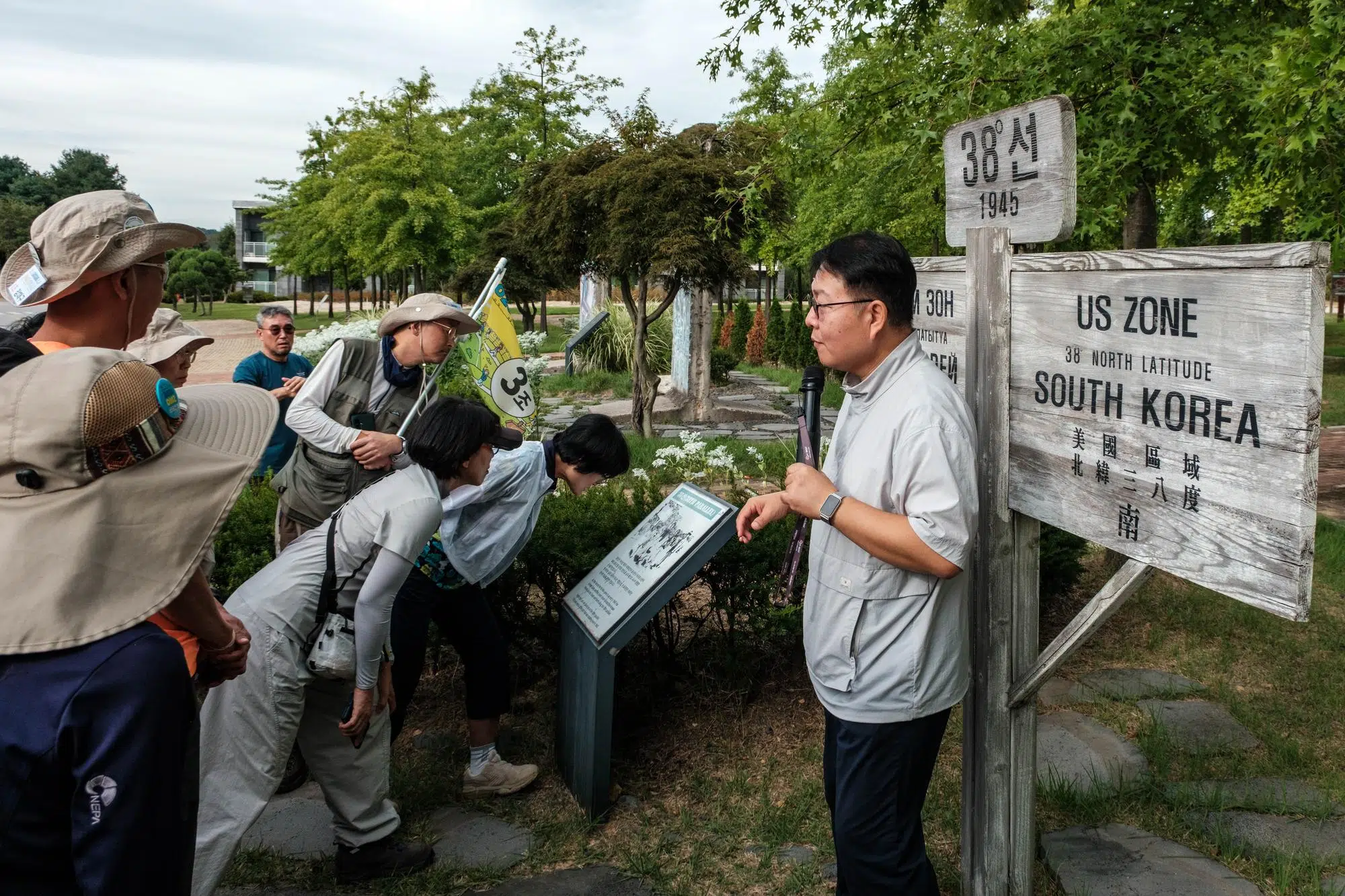
An official from the Center for a Unified Korean Future greets visitors in front of a sign marking the 38th parallel, the former boundary between the two Koreas (September 2026).
Few places capture so completely both the hopes of rapprochement between the two Koreas and their failure.
Opened in 2014 in Yeoncheon, about 14 kilometers south of the military demarcation line, the Center for Unified Korean Future was meant to host future exchanges between young people and families from both halves of the peninsula, once the two finally reconciled.
To that end, South Korea’s Ministry of Unification, which handles relations with the North, thought big: a huge campus with more than 15,000 square meters of buildings, dormitories for around 500 people, family bungallows, a football pitch, basketball and tennis courts, an open-air amphitheater, a gymnasium, a park with walking paths, a cafeteria, and many exhibition and meeting rooms. A section of the Berlin Wall, a gift from reunified Germany, is on display there.
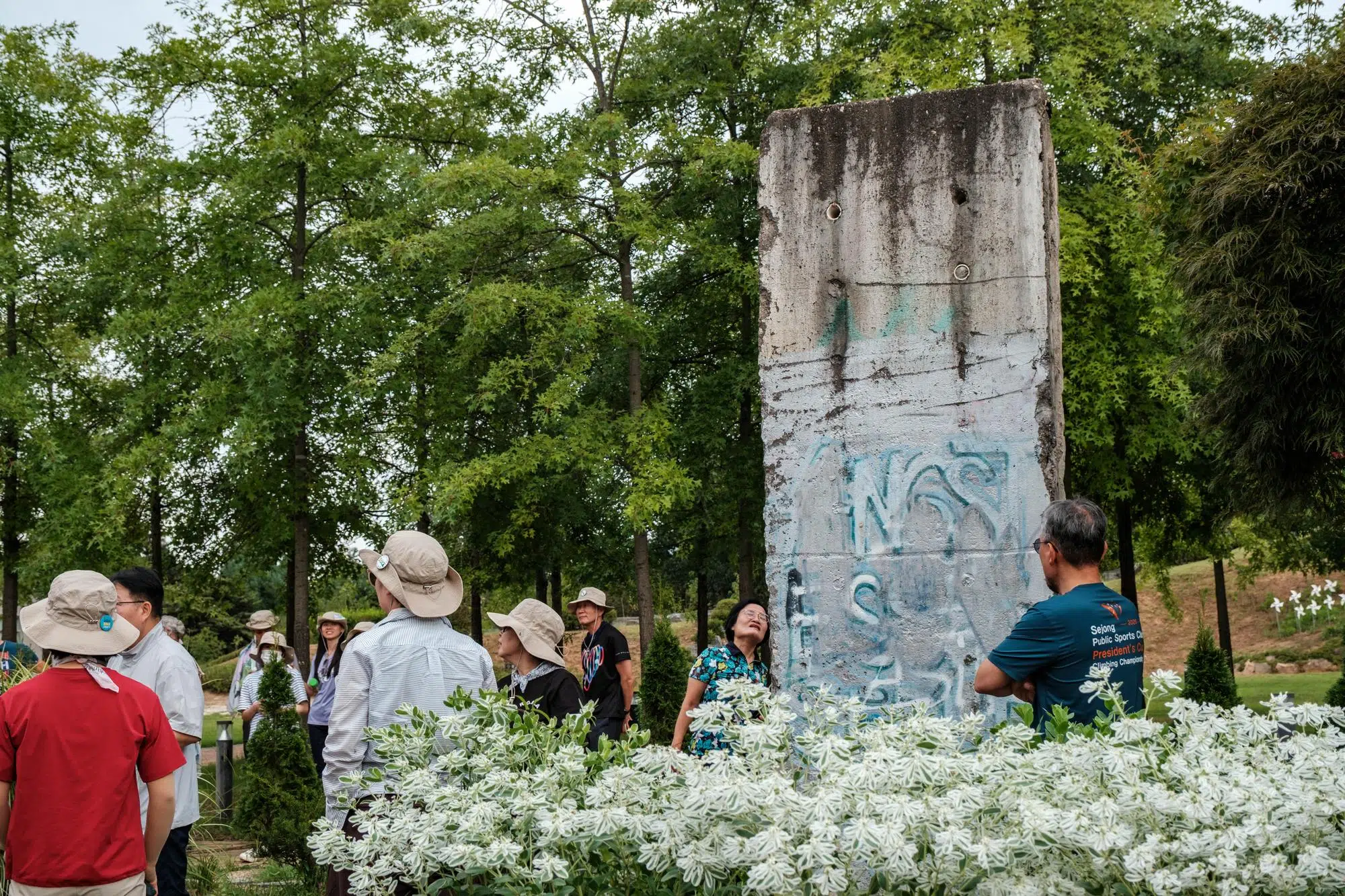
A slice of the Berlin Wall, on display at the Center for Unified Korean Future (September 2026).
The location is highly symbolic. The center sits at the confluence of the Imjin and Hantan rivers, both of which rise in North Korea, and straddles the 38th parallel, the original demarcation line between the American and Soviet occupation zones drawn in 1945, which three years later became the border between the Republic of Korea in the south and the Democratic People’s Republic of Korea in the north.
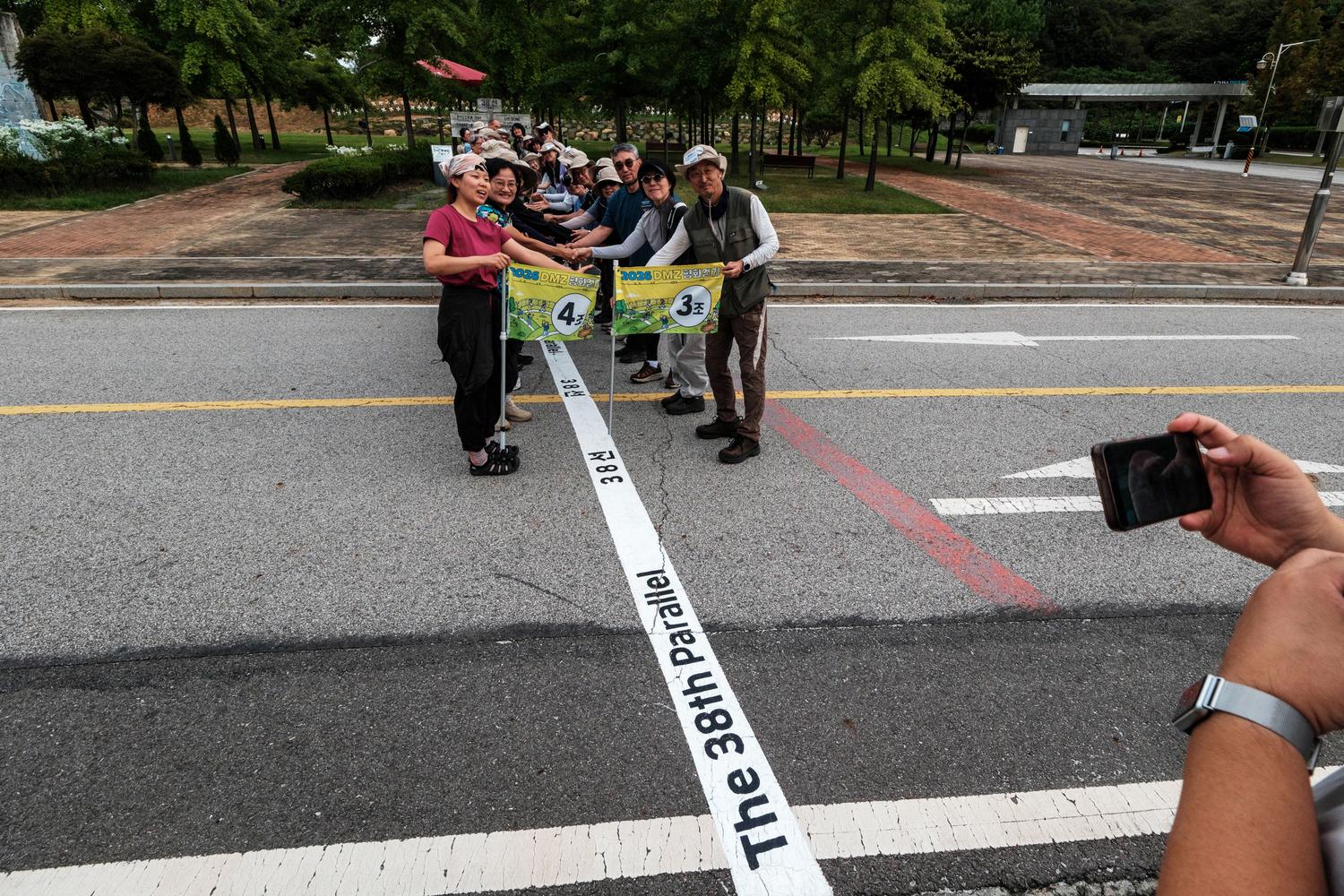
Visitors take a souvenir photo on either side of the 38th parallel at the Center for a Unified Korean Future (September 2026).
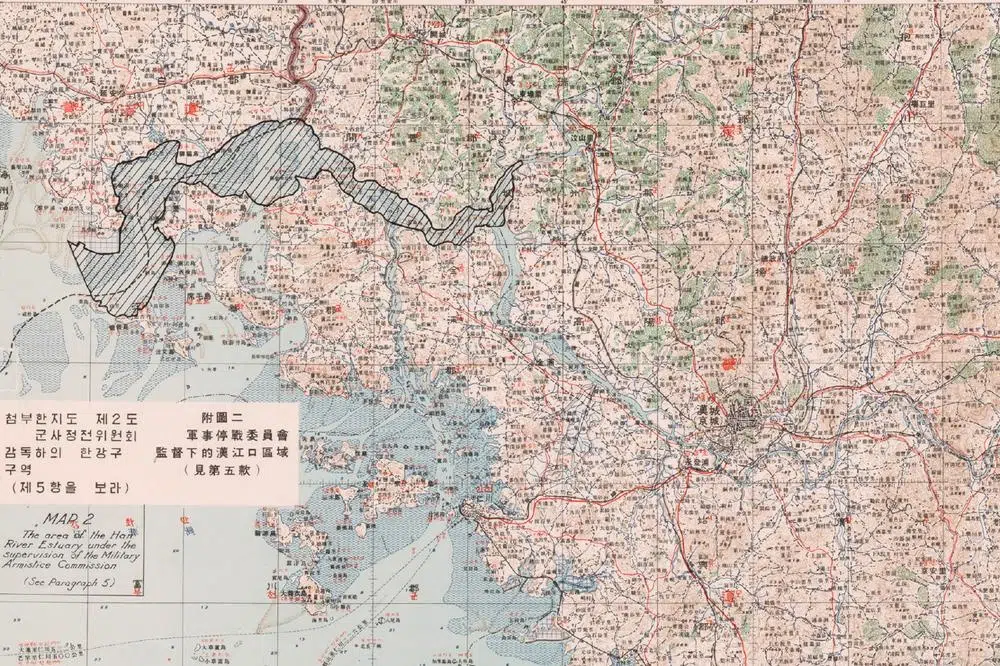
Modern maps place the 38th parallel a few hundred meters south of the center. But maps of the time, based on the old Japanese geodetic system, confirm that the boundary agreed upon by the Americans and the Soviets ran right through the middle of today’s facilities. A white line painted on the ground and a fanciful reconstruction of a border sign from the period mark the spot.
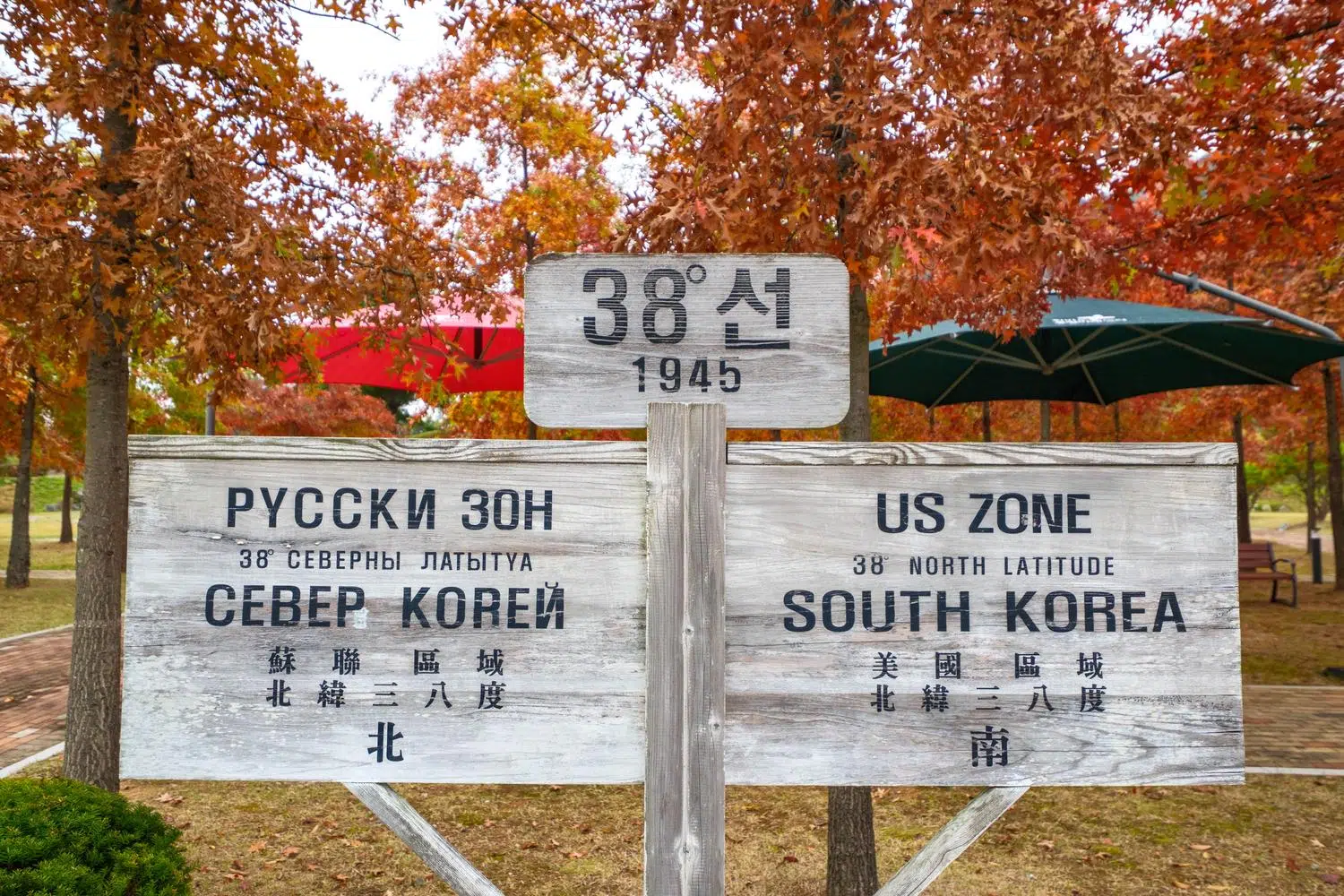
Reconstruction of a sign marking the boundary between the Soviet Union’s (anachronistically referred to as Russia) and the United States’ occupation zones along the 38th parallel (October 2026).
The project was initiated by conservative President Lee Myung-bak, who in 2008 included “the peaceful use of the DMZ” in his agenda and ordered the construction of a sports facility for young people from both Koreas.
In March 2010, the future center was presented as the flagship project of a “Korean Peninsula Ecological Peace Belt” to be developed along the Demilitarized Zone.
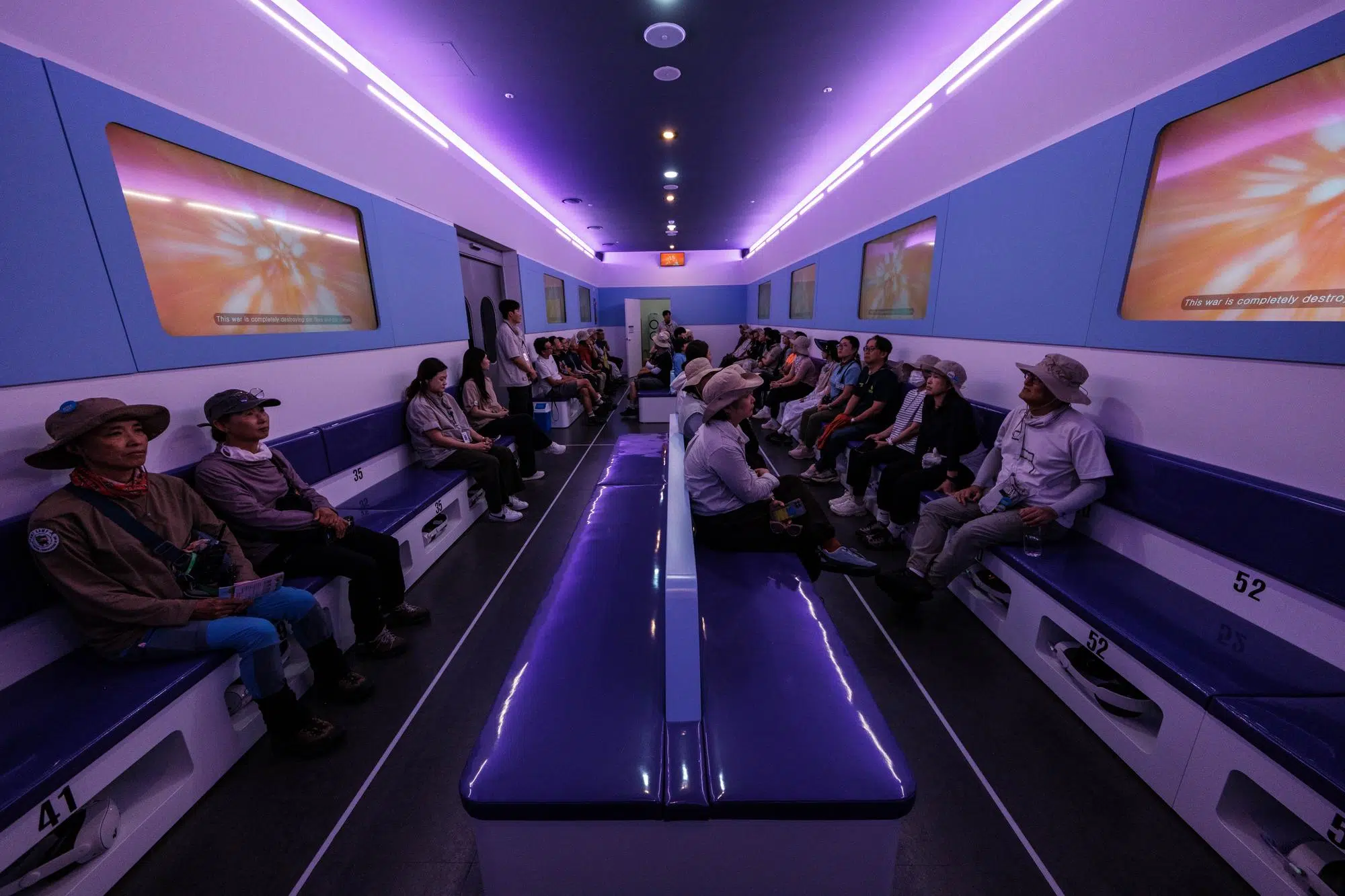
Visitors on the virtual high-speed train to reunification at the Center for a Unified Korean Future in Yeoncheon (September 2026).
The timing could not have been worse.
That same month, a North Korean submarine sank the corvette ROKS Cheonan in the Yellow Sea, killing 46 South Korean sailors. Two months later, Seoul announced measures ending virtually all exchanges with the North. And in November of that year, North Korea shelled the South Korean island of Yeonpyeong, killing four people and bringing the two Koreas to the brink of all-out war.
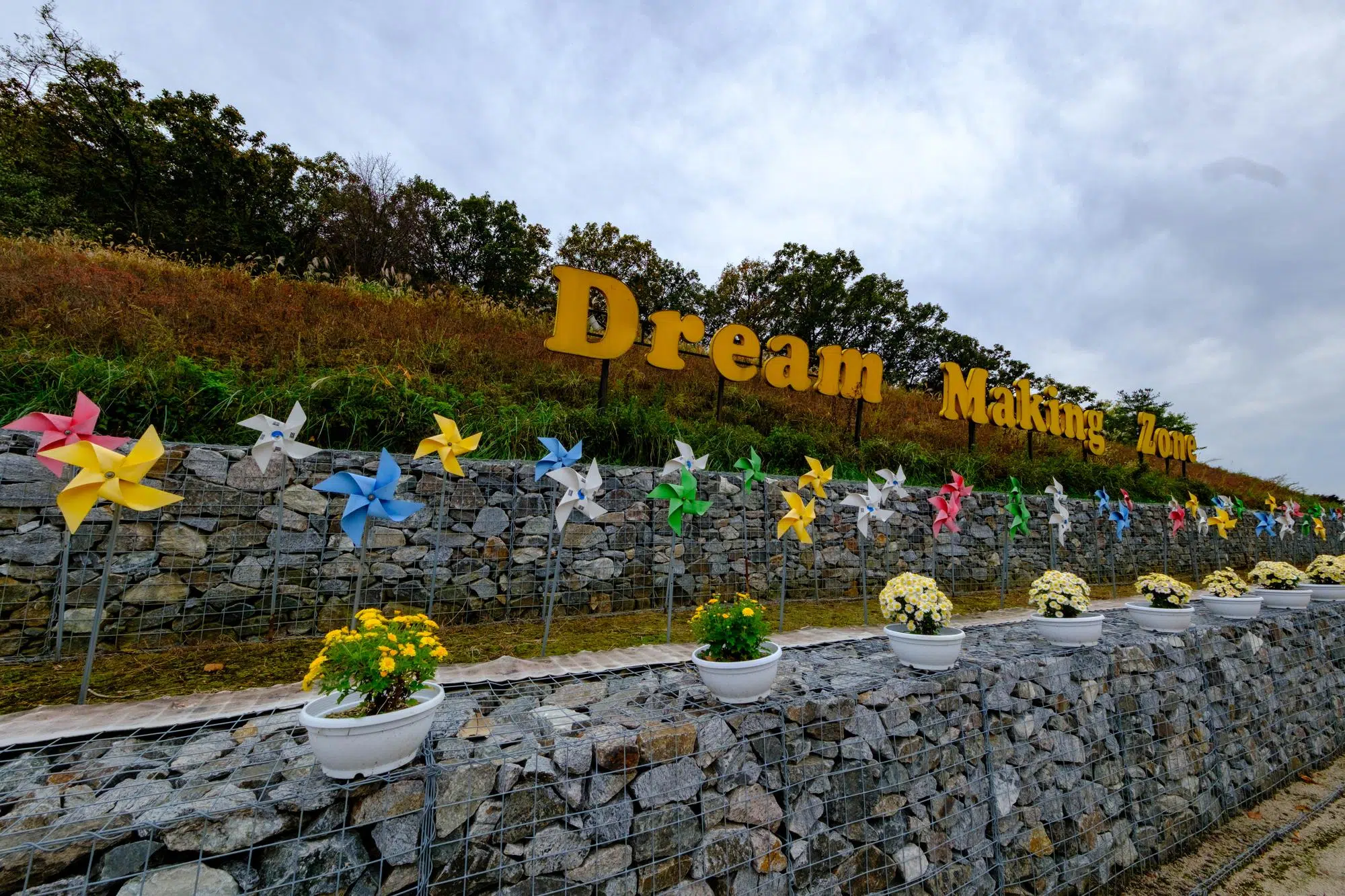
The acronym DMZ reimagined as “Dream Making Zone” (October 2026).
The project went ahead nonetheless, and construction began in November 2012 with an initial budget of 52.1 billion won (about 51 million today’s US dollars), drawn from the Inter-Korean Cooperation Fund, a pot of money set aside for exchanges with North Korea.
Several cost overruns pushed the final bill above 60 billion won and earned the center the nickname “money-eating hippo” from a progressive newspaper. On top of that came a scandal involving the theft of 93 tons of steel rebar from the site by construction workers.
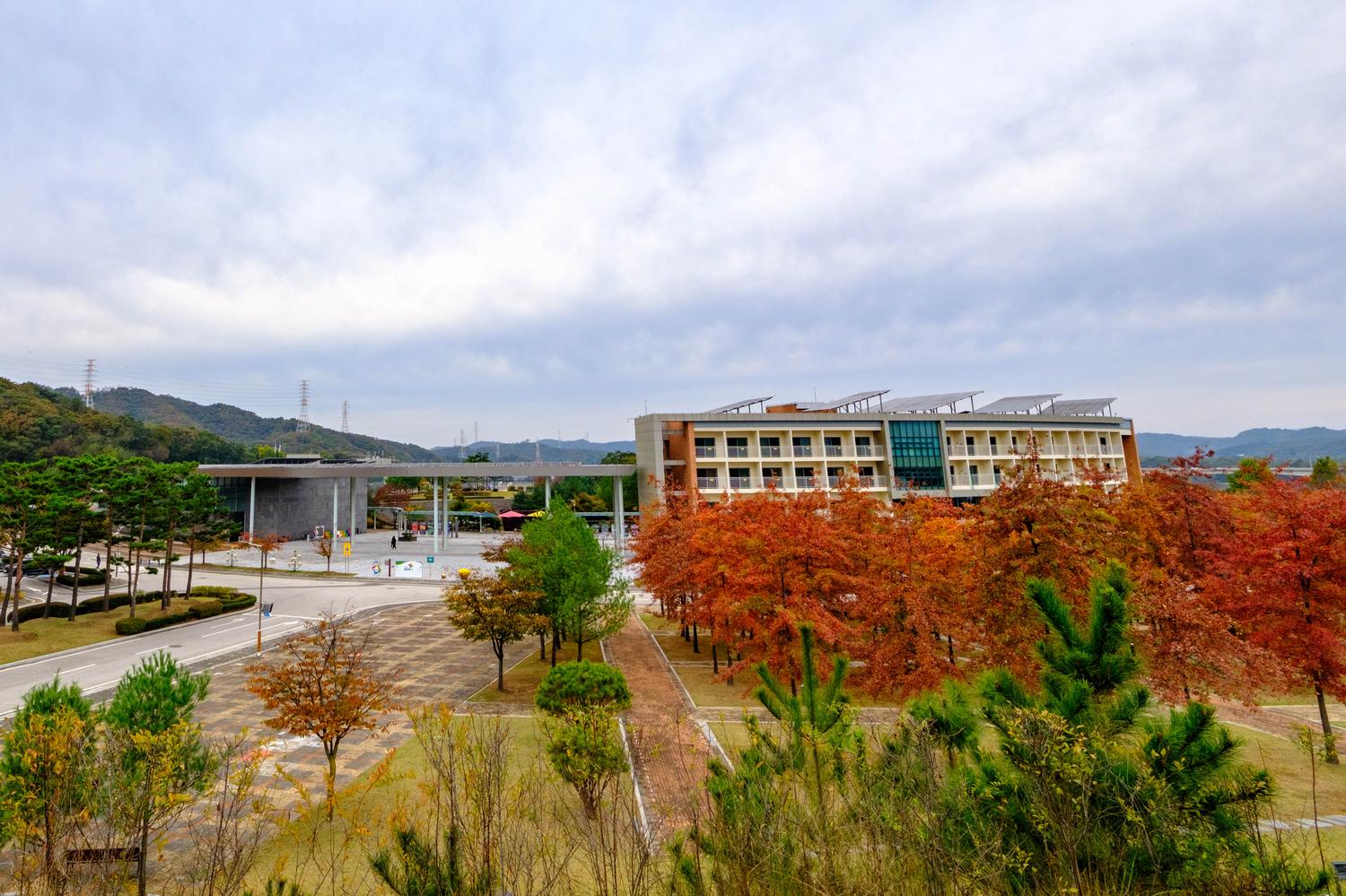
The Center for Unified Korean Future in Yeoncheon (October 2026).
The center finally opened in November 2014. Its stated purpose was twofold: to serve as a security and unification education center for South Korean youth in ordinary times, and as a venue for inter-Korean talks, family reunions and cultural exchanges when needed.
Things seemed to get off to a good start. A few days after the opening, the center hosted a group of North Korean teenagers who had come to Yeoncheon for an under-15 football tournament bringing together teams from both Koreas, Uzbekistan and China.
More than a decade later, that remains the one and only time the center has housed guests from North Korea.
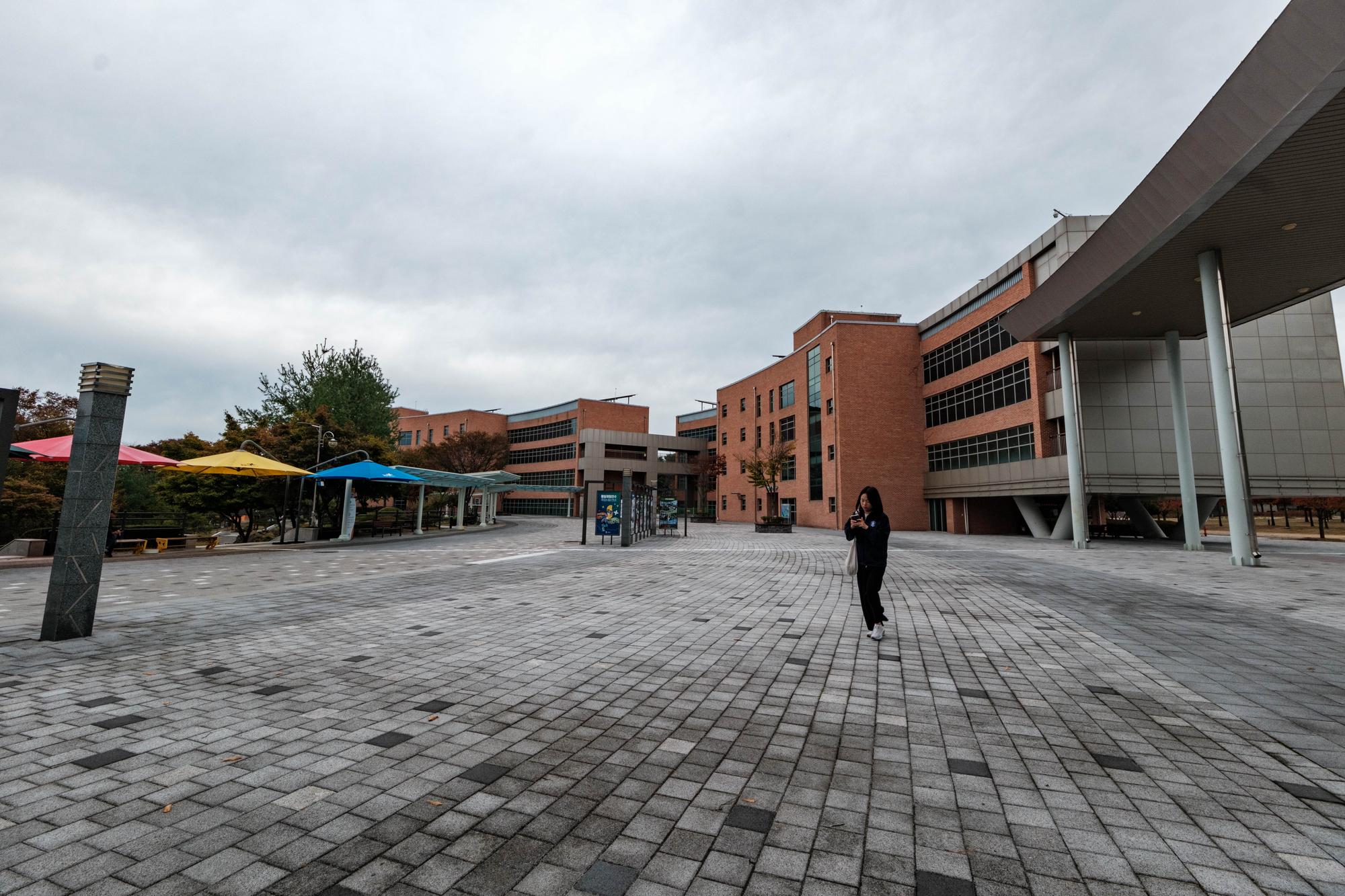
The main dormitory buildings at the Center for Unified Korean Future (October 2026).
Today, with inter-Korean exchanges a distant memory, the vast center sits underused most of the time, yet it is still kept in perfect condition in case the miracle of reconciliation happens overnight. Anywhere else in the world, such a behemoth would probably have been sold or abandoned. Here, it has simply been put on hold.
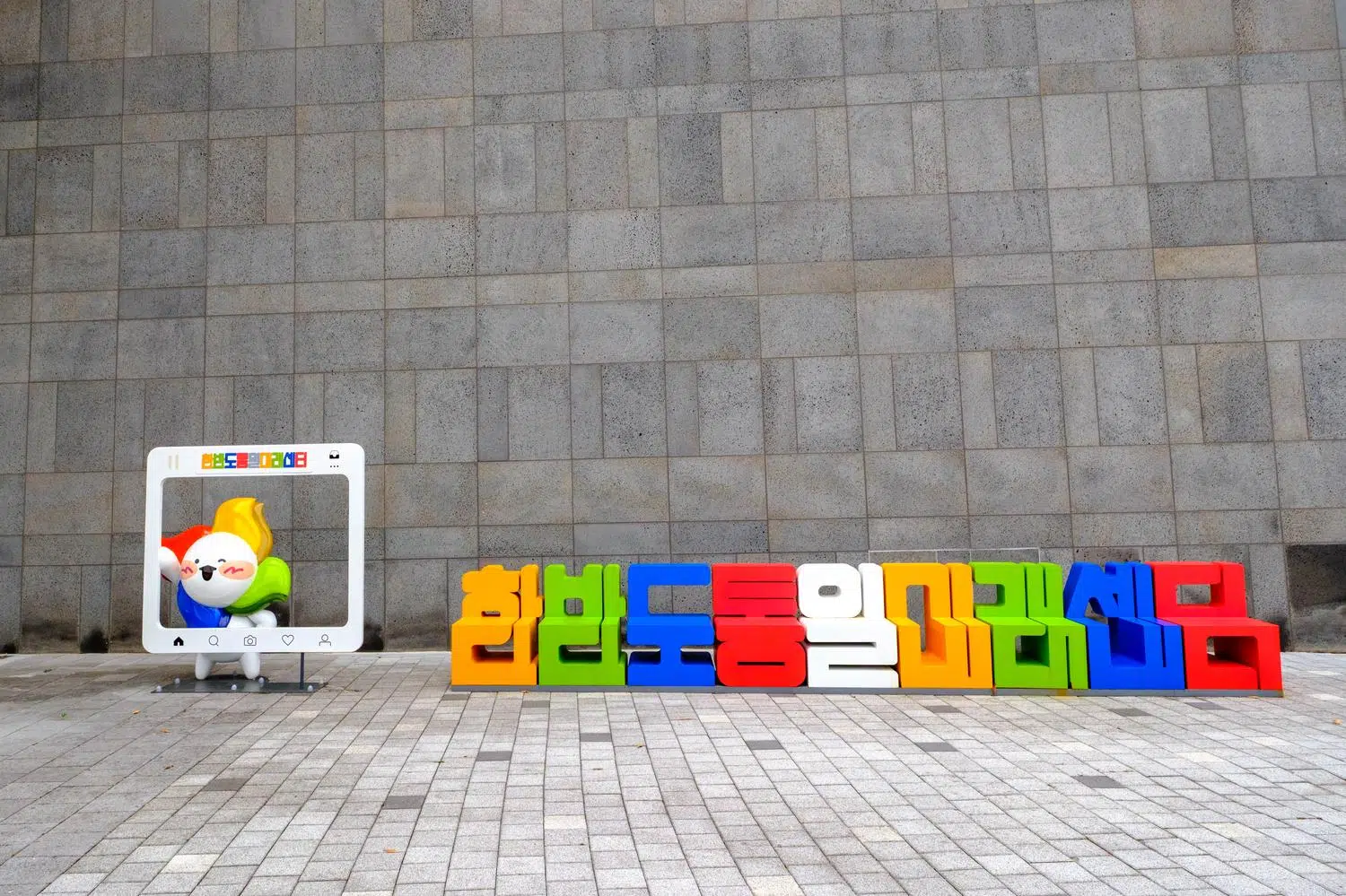
A photo zone waiting for customers (October 2026).
Apart from open days a few times a year, it is accessible only to groups with a reservation. Students, soldiers and other groups come to learn about unification through virtual reality at the Unified Future Experience Pavilion and its “KTX Tongil-ho”, a high-speed train simulator that carries its passengers toward a reunified future.
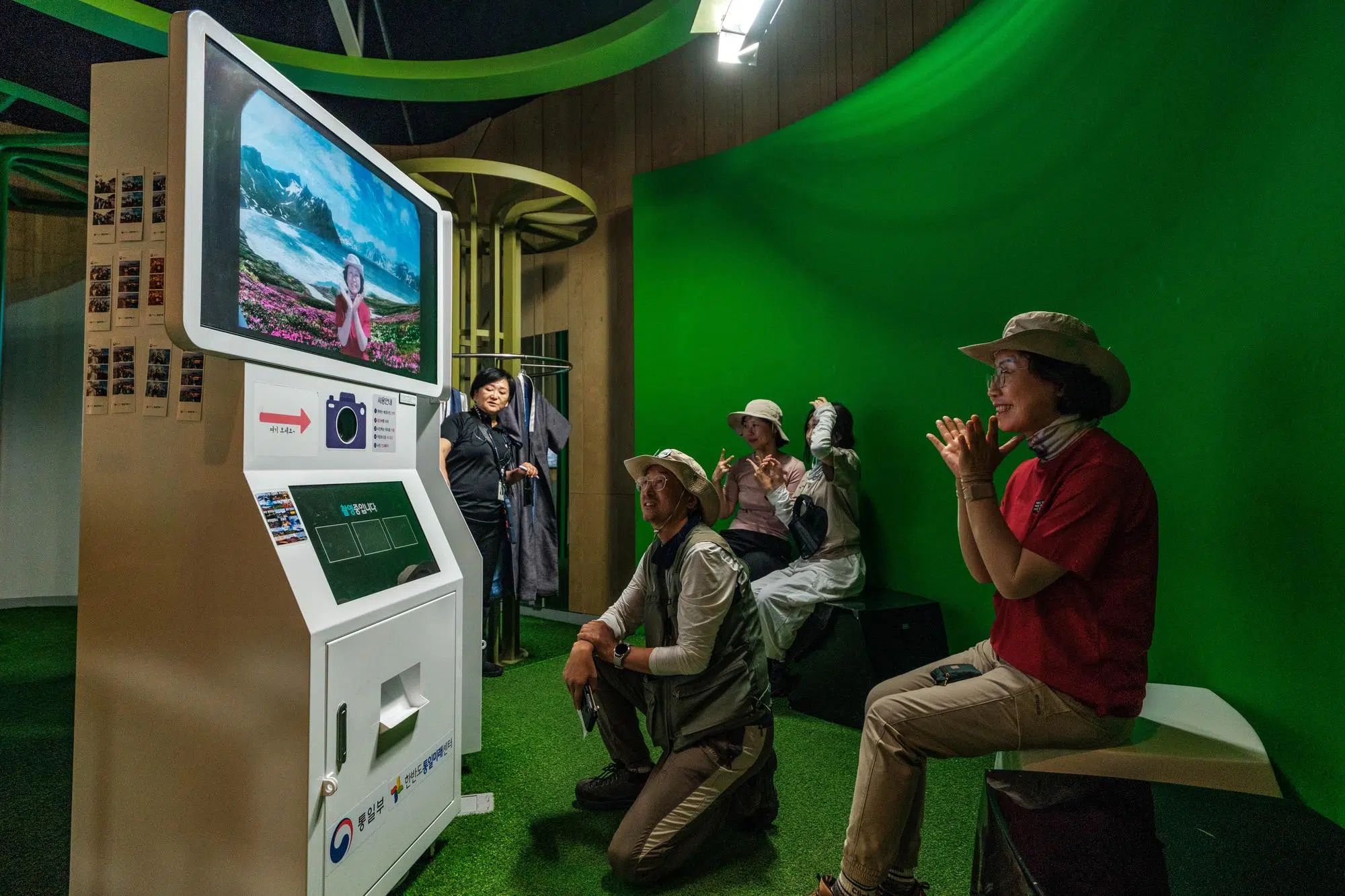
A machine allows visitors to take virtual selfies in front of famous sites in North Korea, such as the crater of Mount Paektu, as shown here (September 2026).
The center runs leadership courses for young North Korean defectors and programs for families separated between the two Koreas and overseas Koreans. It serves as an overnight stop for participants in the DMZ Peace Walks, week-long hikes organized several times each year along the boundary by the Ministry of Unification. It has also housed local residents displaced by floods, and COVID-19 patients during the pandemic.
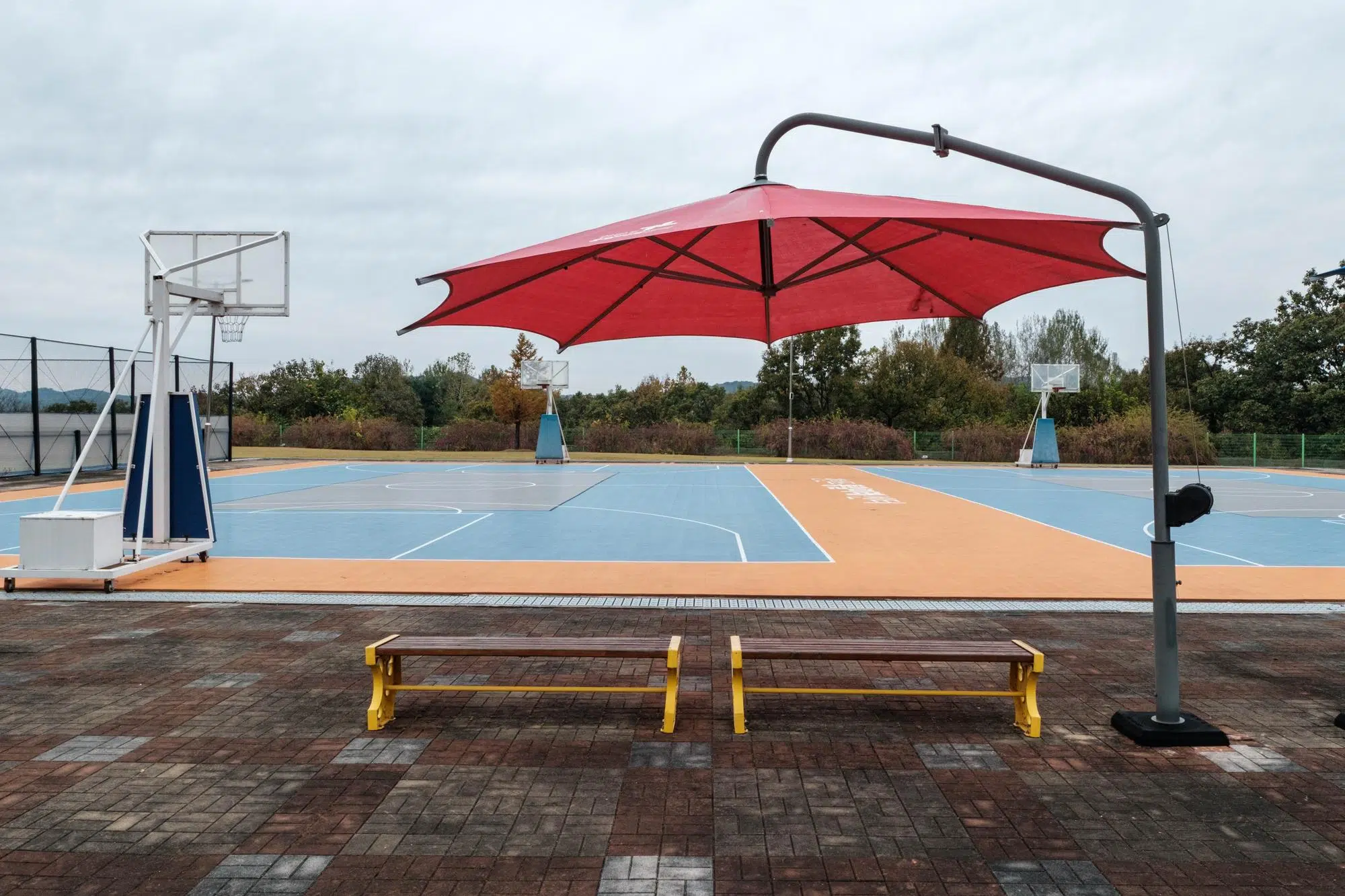
Basketball courts waiting for players from both Koreas (October 2026).
The center also runs leadership courses for young North Korean defectors and programs for families separated between the two Koreas for their consolation and communication, for overseas Koreans and foreigners. It has also housed local residents displaced by floods, and COVID-19 patients during the pandemic.
Should inter-Korean exchanges ever resume, the Center for Unified Korean Future will still be there.
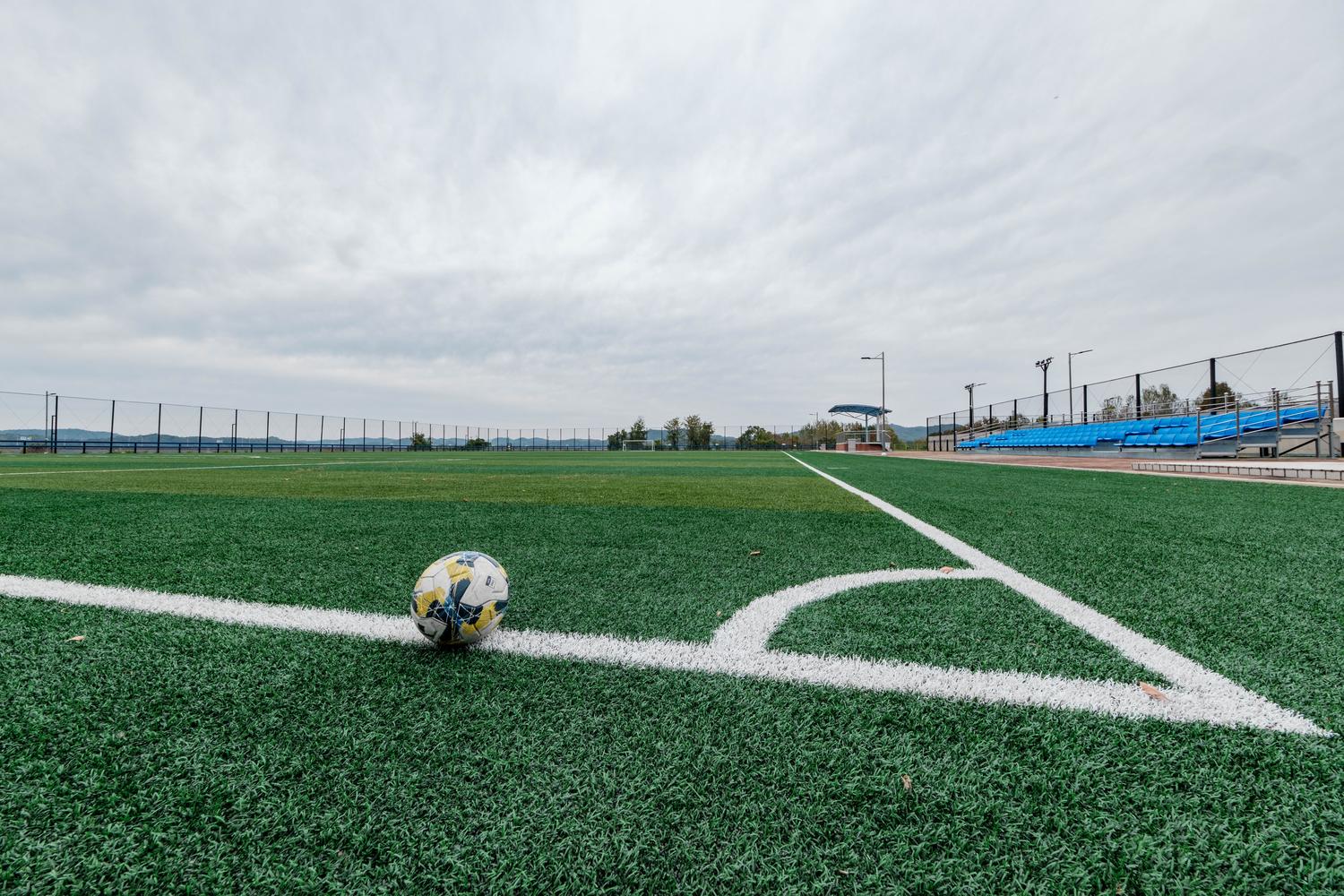
Until then, wandering among its huge, hopelessly empty dormitory buildings, through the deserted park where the acronym DMZ is reworked into “Dream Making Zone,” or across the football pitch where no one seems to have kicked a ball in a long time, leaves a strange feeling: sadness for a peaceful future that never came, mixed with respect for those who keep it alive. As if the center were a house kept ready to welcome back a relative who stopped calling long ago.
This post was last updated on: November 5, 2026.