Dorasan Station
도라산역
The last railway station in South Korea before the DMZ, built at a time when hope was still possible. A symbol as beautiful as it is useless.


The elegantly designed main concourse of Dorasan Station, the last stop before North Korea (May 2026).
Dorasan Station has never served any practical purpose, yet it remains one of the most powerful symbols of hopes for Korean reunification.
This spacious, bright and elegantly designed building, resembling a medium-sized regional airport, stands as a testament to a bygone era: that of the Sunshine Policy of rapprochement with North Korea, initiated by South Korean President Kim Dae-jung in 1998 and continued by several of his successors.
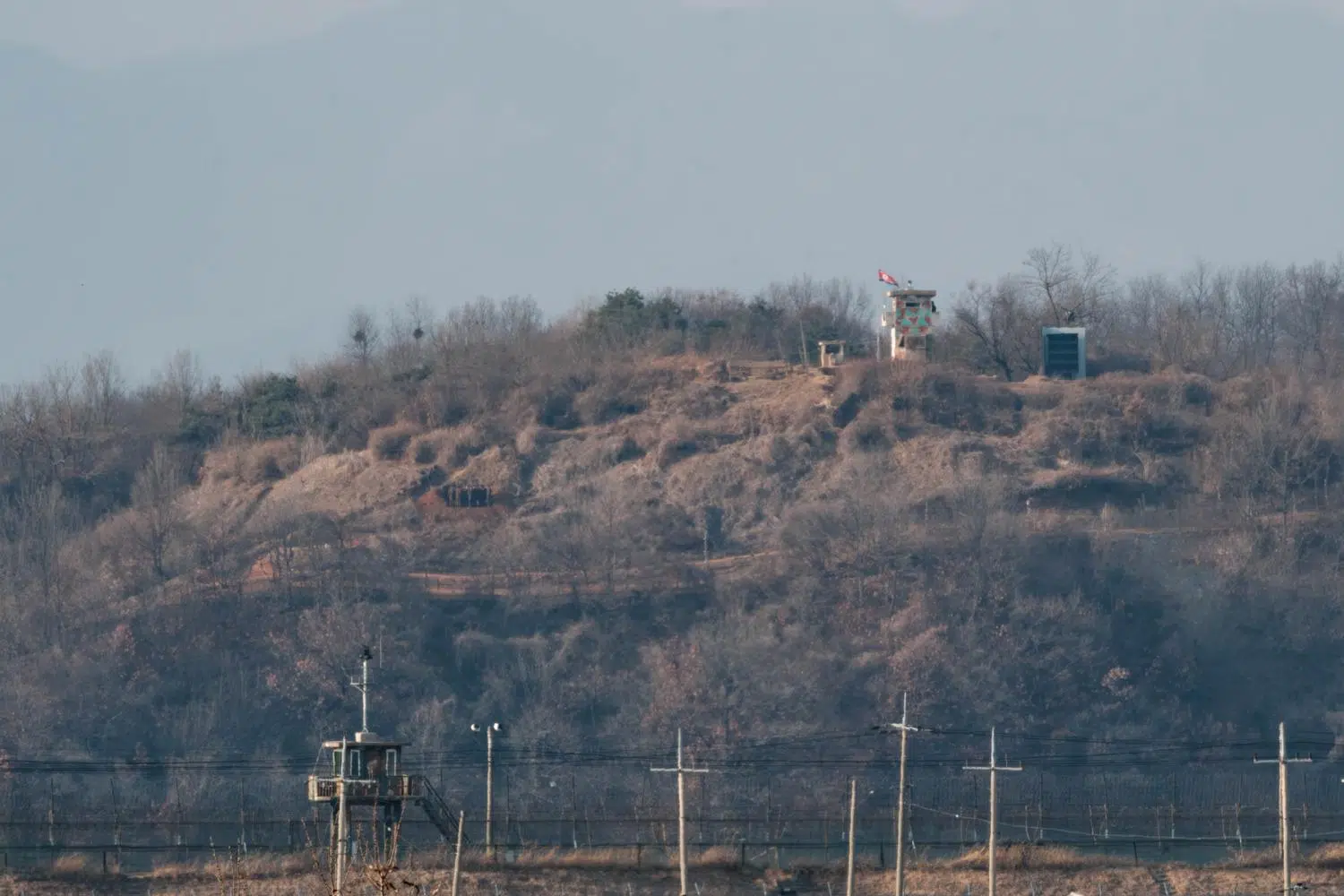
Dorasan is the last station on the South Korean railway network before the Demilitarized Zone, whose southern boundary lies just 650 meters from the platforms. It is the temporary terminus of the Gyeongui-Jungang Line, built by the Imperial Japanese Army between 1902 and 1906 to connect Seoul, Pyongyang, and Sinuiju, on the Chinese border. Originally, this strategic line continued on to the industrial regions of Manchuria and then connected to the Trans-Siberian Railway in Russia, making a Seoul-to-Paris journey by sleeper car theoretically possible.

At the end of the Korean War in 1953, the line—the backbone of Korea’s railway network—was cut in two by the DMZ. The South Korean section north of the city of Munsan, in the industrial suburbs of Seoul, was left to rust. The bridge that allowed the railroad to cross the Imjin River, just before the border, had in any case been blown to pieces by bombs at the very start of the conflict (its ruins, riddled with bullet and shell impacts, are still visible at Imjingak).
Then, in the late 1990s, came the “Sunshine Policy,” the historic inter-Korean summits, the reunions of families separated for decades, the joint march of the two Olympic teams at the 2000 Sydney Games, and with all of this, the resumption of plans to reconnect the railways between the two Koreas. A new single-track bridge over the Imjin River was completed in 2000 to extend the Gyeongui-Jungang Line to the major North Korean city of Kaesong, 16 kilometers away.

Dorasan Station opened in 2002, inaugurated with great fanfare by President Kim Dae-jung—awarded the Nobel Peace Prize two years earlier for his Sunshine Policy achievements—and his American counterpart George W. Bush. The two heads of state signed a wooden railroad tie for the occasion and inscribed a brief message of hope for reunification on it.
Dorasan was intended to serve as the gateway to the Kaesong Industrial Complex, which opened in late 2004. The rationale behind this inter-Korean cooperation project was straightforward: to allow South Korean companies to take advantage of the North’s low labor costs, while bringing hard currency into the isolated communist nation. Up to 124 South Korean companies set up operations in Kaesong, primarily to produce textiles, watches, and other low-value-added goods.
It almost worked.

A train crosses the bridge over the Imjin River, which marks the boundary of the Civilian Control Zone, heading toward Dorasan Station (November 2024).
The first train between Dorasan and Kaesong ran on May 17, 2007, five years after the station opened. That was how long it took for deminers to clear the route, for engineers to repair the tracks, and for diplomats to resolve a mountain of legal headaches (the tracks cross the DMZ, the southern part of which is not under the control of the Seoul government but under that of the United Nations Command, dominated by the United States and the only entity authorized by the armistice agreement to permit, on a case-by-case basis, crossings of the Military Demarcation Line).
That day, a South Korean train, consisting of five cars pulled by a diesel-electric locomotive and carrying about 150 guests, left Munsan Station in South Korea at 11:30 a.m. and crossed the Military Demarcation Line 45 minutes later (at exactly the same time, a North Korean train was crossing the border in the opposite direction on another section of restored inter-Korean track on the east coast of the Peninsula).

Inside the “DMZ Peace Link,” the special tourist commuter train connecting Seoul Station to Dorasan (May 2026).
In December of that same year, a regular freight service was established between Munsan/Dorasan and the Kaesong Industrial Complex, which at that time employed 100,000 people. The trains carried South Korean materials and equipment to the North and returned to the South with manufactured goods produced by the complex’s factories.
At that time, officials began talking about a regular passenger train between Seoul and Pyongyang, dreaming of a line connecting Korea to Western Europe via the Trans-Siberian Railway. At Dorasan Station, customs facilities and passport control counters were already in place for this purpose.

But the illusions did not last long. In 2008, the election of right-wing President Lee Myung-bak brought the Sunshine Policy to a halt; critics accused it of being overly optimistic toward a North Korean regime that, at the same time, was blithely conducting nuclear tests and continuing its flagrant human rights violations.
In the end, no regular passenger trains ever ran between the South and the North, and freight service ceased in November 2008, after only one year (the Kaesong Industrial Complex, meanwhile, survived until 2016, when Seoul accused Pyongyang of using its revenues to fund its missile and nuclear weapons program).

Finally, at noon on October 15, 2024, North Korea used explosives to destroy its section of the tracks—as well as the road running alongside it—just north of the border, to symbolically mark its determination to sever ties with the South irreversibly.
Dorasan Station continued to receive tourist excursion trains from Seoul until 2010, when the Ministry of Defense suspended the service after an individual attempted to walk into North Korea through the DMZ. Pulled by an old diesel locomotive, Korail’s “DMZ Train” between Seoul Station and Dorasan resumed service four years later, but ceased operations again in 2018 due to the dilapidated state of the rolling stock and low demand.

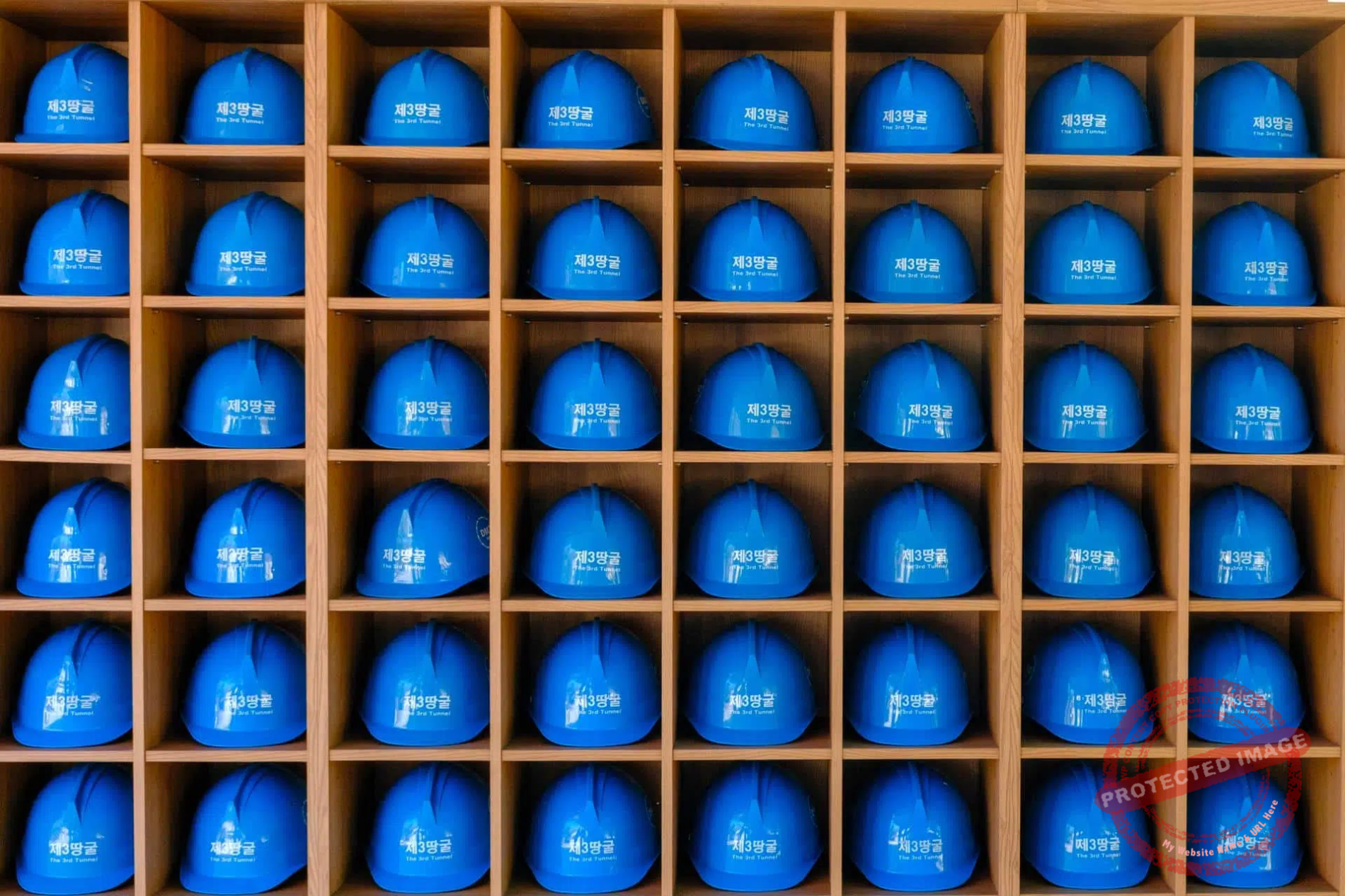
Korail quietly relaunched the line in the spring of 2026 using standard commuter trains and under a new name, the “DMZ Peace Link Train.” Departures are infrequent and, since the station is located within the tightly restricted Civilian Control Zone (CCZ), individual travel is not permitted. Security checks are conducted on board. The trip is available exclusively as part of an organized tour that also includes visits to the Dora Observatory and the Third Infiltration Tunnel.
The groups of tourists visiting Dorasan make this station the only architectural feature still showing signs of life amid a vast, ghostly border complex, which also includes a “Peace Park”, a museum, customs and immigration offices, logistics centers, warehouses, a road border crossing, and other facilities—all of which are closed.
The station, which has changed little since its construction, might still wait a long time yet for better days with its giant waiting hall where no real travelers ever wait, its “To Pyongyang” sign pointing to the platform from which no train has ever departed for Pyongyang, its perpetually closed ticket window, its useless clock, its map of a utopian “Trans Eurasian Rail Network” and its yellowing poster proclaiming: “Not the last station from the South, but the first station toward the North.”

This post was last updated on : May 9, 2026.