Rock Drops and Dragon's Teeth
용치와 낙석
North Korean T-34s rolled into Seoul in 1950. Since then, anti-tank barriers are everywhere.


“Dragon’s Teeth” anti-tank obstacles in Goyang, North of Seoul (September 2025).
Anti-tank obstacles are a common sight in South Korea, especially around Seoul. Known as ‘rock drops’, and sometimes nicknamed ‘North Korean speed bumps’, they consist of massive pre-staged concrete blocks weighing several dozen tons resting on pillars packed with explosives that can be detonated in the event of a North Korean invasion, blocking the way for armored columns and buying the defense forces some time (around 30 minutes, according to studies).
Another variety are “dragon’s teeth,” reinforced concrete obstacles shaped like pyramids, cylinders or spikes that were first used in Europe during World War II. They form a dense network of passive defenses that stretch far beyond the border, extending deep into South Korean territory. On islands in the West Sea, such as Yeonpyeong and Baengnyeong, they are placed on the beaches to sink enemy landing craft.
The South Korean Army operates two types of rock drops: the first is an overpass-type, and the second is a block-type made of cube-shaped concrete.
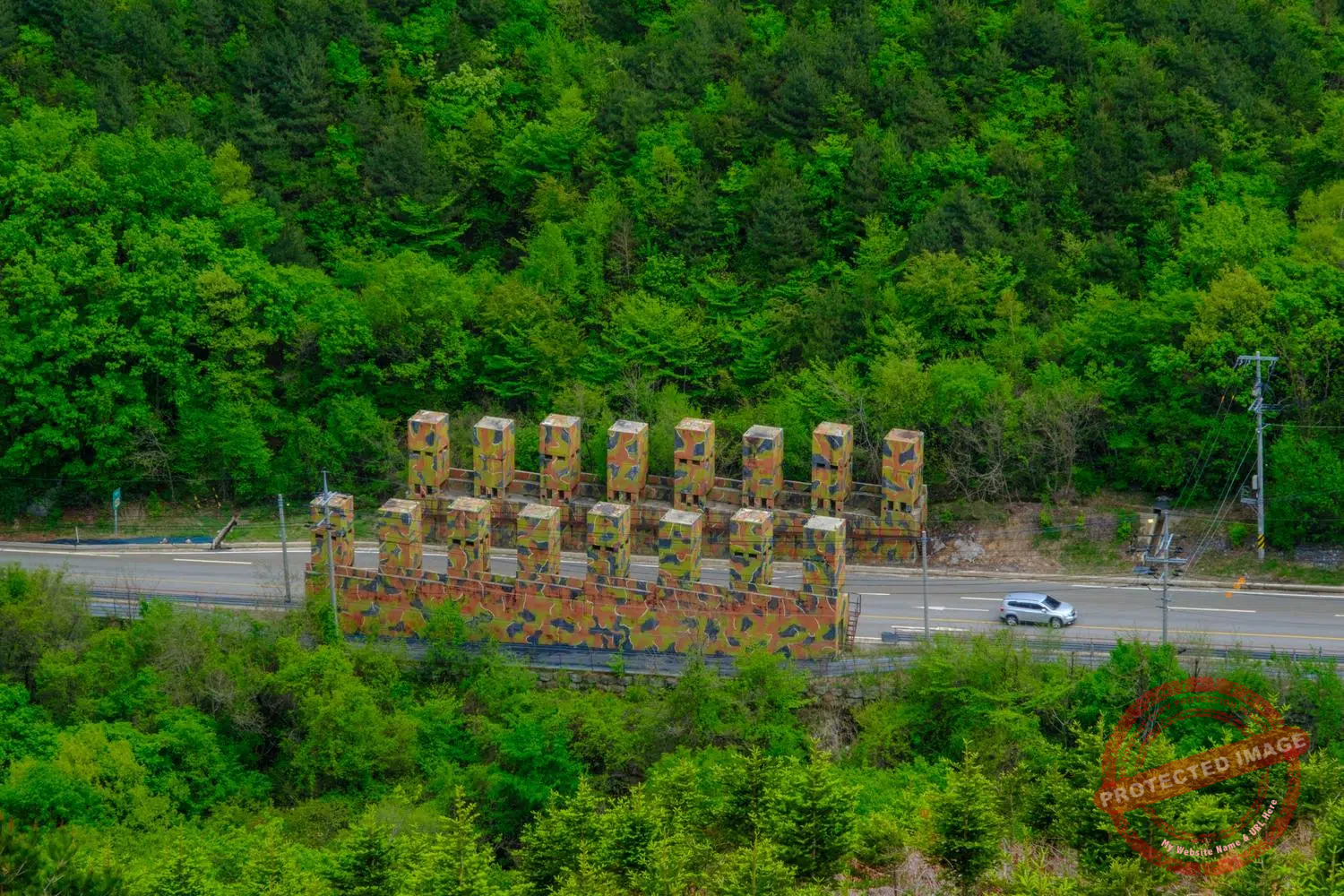
A block-type rock drop anti-tank obstacle in the Punchbowl basin (May 2025).
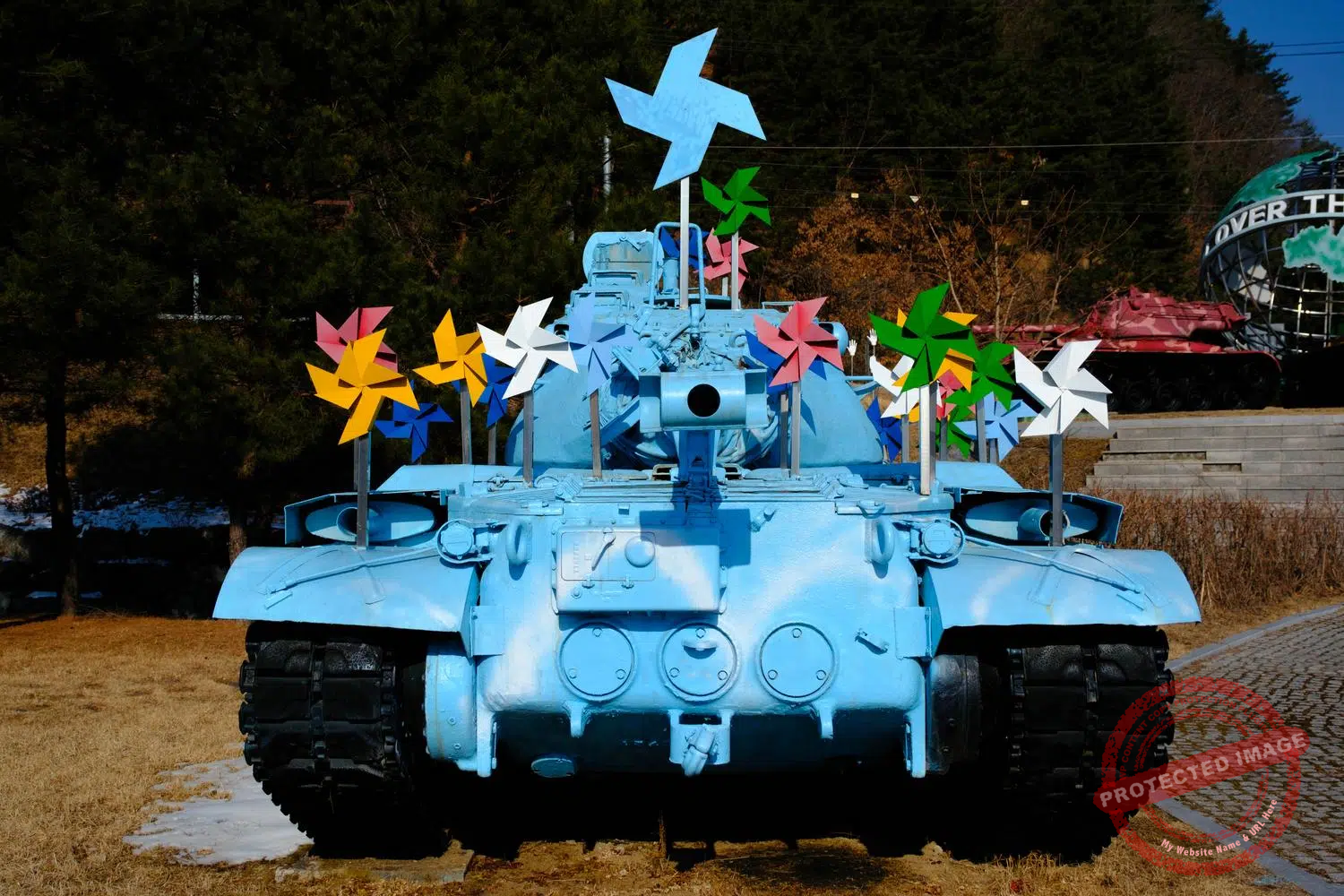
Incidentally, rock drops also often serve as an advertising medium, mainly for the South Korean military. Some have been decorated with fantasy (the prize for this goes to the town of Sanyang, in central Korea, which has transformed the concrete blocks of a rock drop into colourful science-fiction robots). Most retain their purely military character, even though in modern warfare, these obstacles are not considered as effective as before.
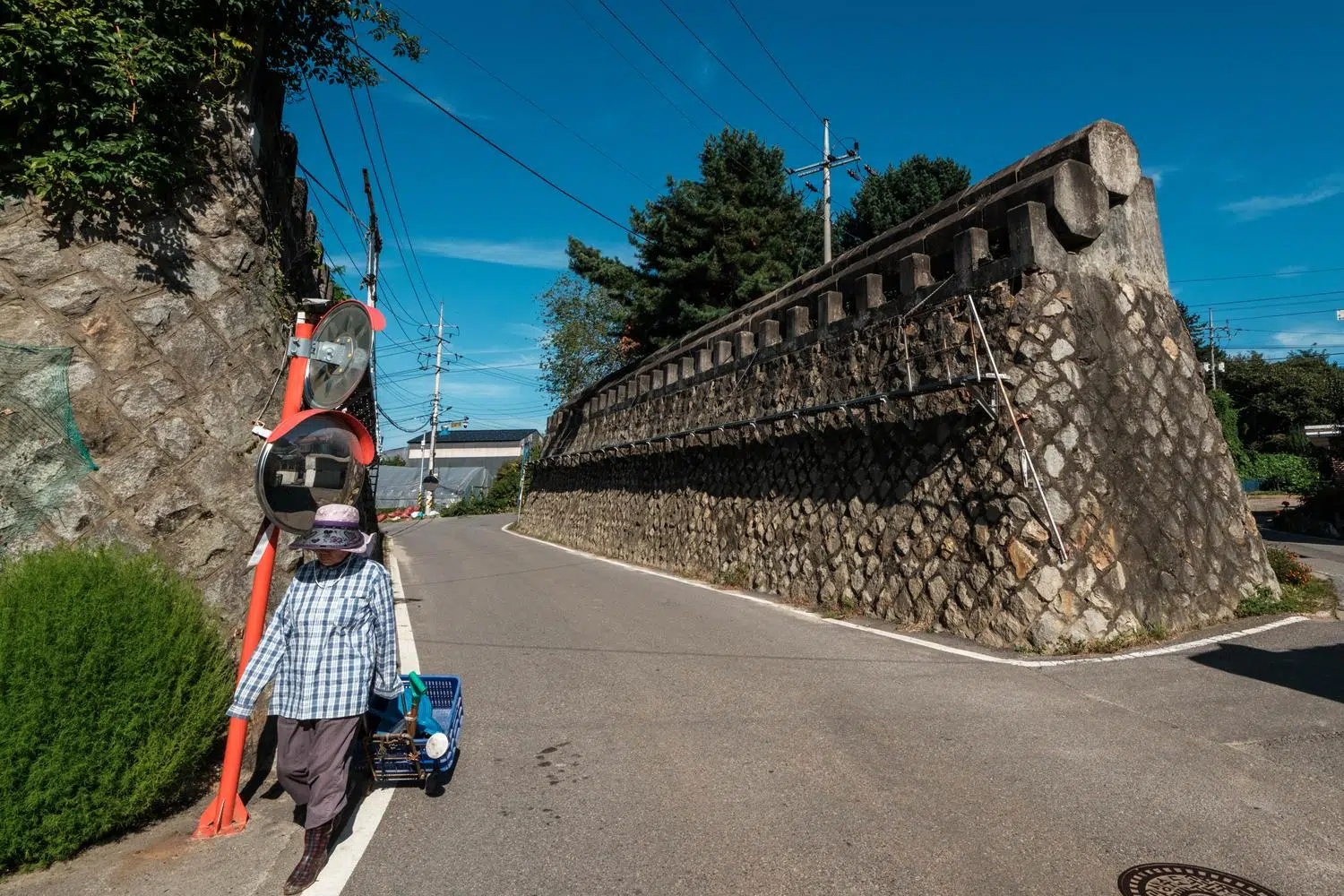
An old type of rock-drop anti-tank obstacle in Paju (September 2026).
The anti-tank barricades, most of which were built in the 1970s or before, sometimes raise concerns about road safety. These concrete behemoths are designed to be blown up quickly in the event of an enemy attack.
Some of them – such as those situated on the Jayu-ro highway at the north-western exit of Seoul – see hundreds of thousands of vehicles pass beneath them every day, without anyone really knowing whether their structural integrity and resistance to constant vibrations are regularly checked or not. Others are located at bottleneck spots for tactical purposes and are known to cause traffic jams and accidents.

An overpass-type rock drop anti-tank barricade decorated with a giant painting celebrating the South Korean 7th Infantry Divison (“Chilsung”) on the road between Hwacheon and Sanyang, on the Central Front (May 2026).
Old rock drops are also regularly accused of damaging the urban environment, which raises the question of whether they should be dismantled or replaced with more eco-friendly solutions. In June 2026, the ministry of Defense announced plans to remove 23 military obstacles considered to have lost tactical utility in the border areas of Paju and Yanggu starting 2027.
The fear of tanks is a legacy of the trauma caused when hundreds of North Korean Soviet-made T-34s rolled into Seoul at the start of the Korean War in 1950, destroying everything in their path (for their part, the North Koreans, traumatized by the rains of American bombs that reduced most of their cities to rubble, are obsessed with building air-raid shelters and digging tunnels, even though there are anti-tank obstacles there as well).
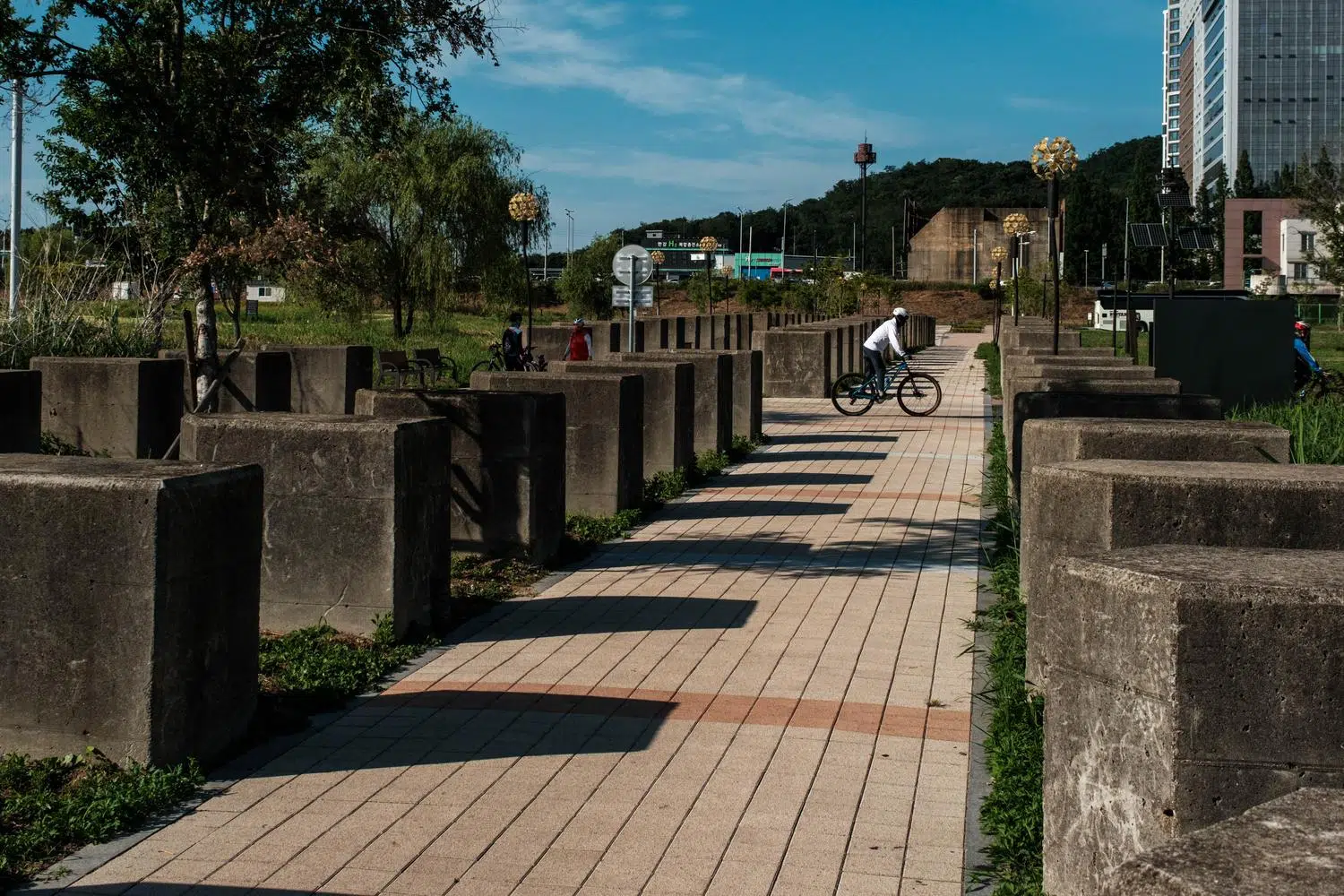
Yongchi Park (“Dragon’s Teeth Park”) in Goyang (June 2026).
Sometimes, an entire city serves as a shield.
Ilsan New Town, developed north of Seoul in the early 1990s to alleviate the housing shortage in the capital, was conceptualized with military deterrence in mind. A framework agreement, signed between the South Korean military high command and the Korea Land Development Corporation, stipulated that Ilsan must “have the outward appearance of a peaceful town, whilst meeting the requirements of a strategically important military town”.
Consequently, at least 30 of the city’s high-rise apartment blocks were arranged to serve as a massive defense wall. The interior partitions are made of plywood so that they can be quickly demolished to facilitate the movement of marksmen taking up positions. Many north-south streets are deliberately narrower than they ought to be. Parks, sports fields and even children’s playgrounds can be quickly converted into fire positions and military helipads. Some apartment complexes, such as Seongjeo Village 5, are intentionally built low to serve as obstacles without obstructing the lines of fire of artillery units positioned further back.
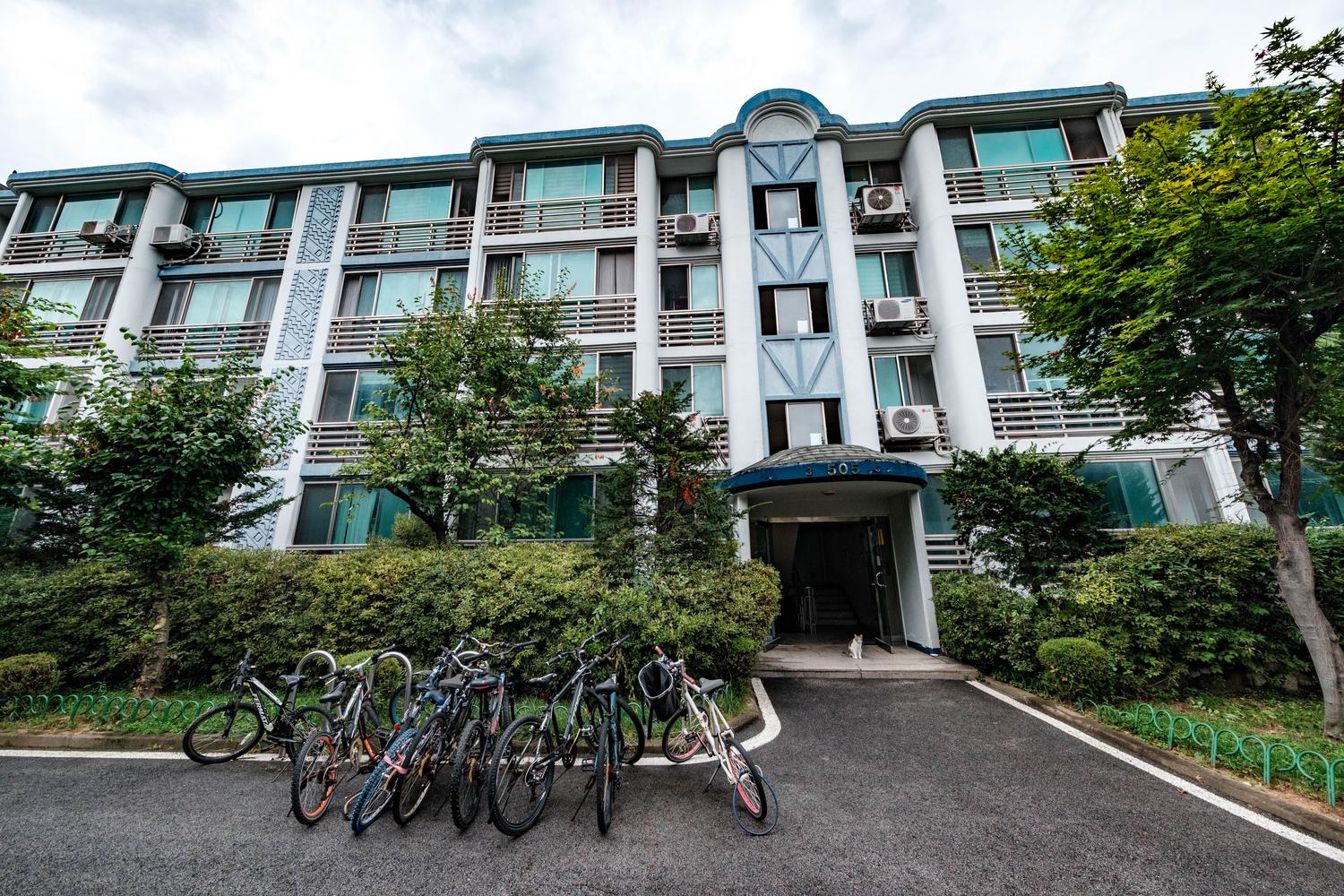
On the front line of defense: the buildings in the Seongjeo Village 5 residential complex in Ilsan New Town, in the northern suburbs of Seoul, are intentionally limited to four stories to serve as barriers against an invasion without obstructing the line of fire for the artillery positioned further back. Dozens of apartment blocks built in the 1990s in Ilsan would have to be able to transform into a massive defensive infrastructure in the event of an invasion by North Korea, which lies 15 km away, and turn into a hellish scene of Stalingrad-style urban combat (August 2026).
In the event of a ground invasion, the city is designed to become a hellish urban battleground, to such an extent that it is nicknamed ‘Ilsangrad’ in military circles, in reference to the Battle of Stalingrad during the Second World War, the ultimate symbol of urban warfare.
The same pattern applies to Uijeongbu, also situated in a historic North Korean invasion corridor northeast of Seoul, and other new towns in the same situation.
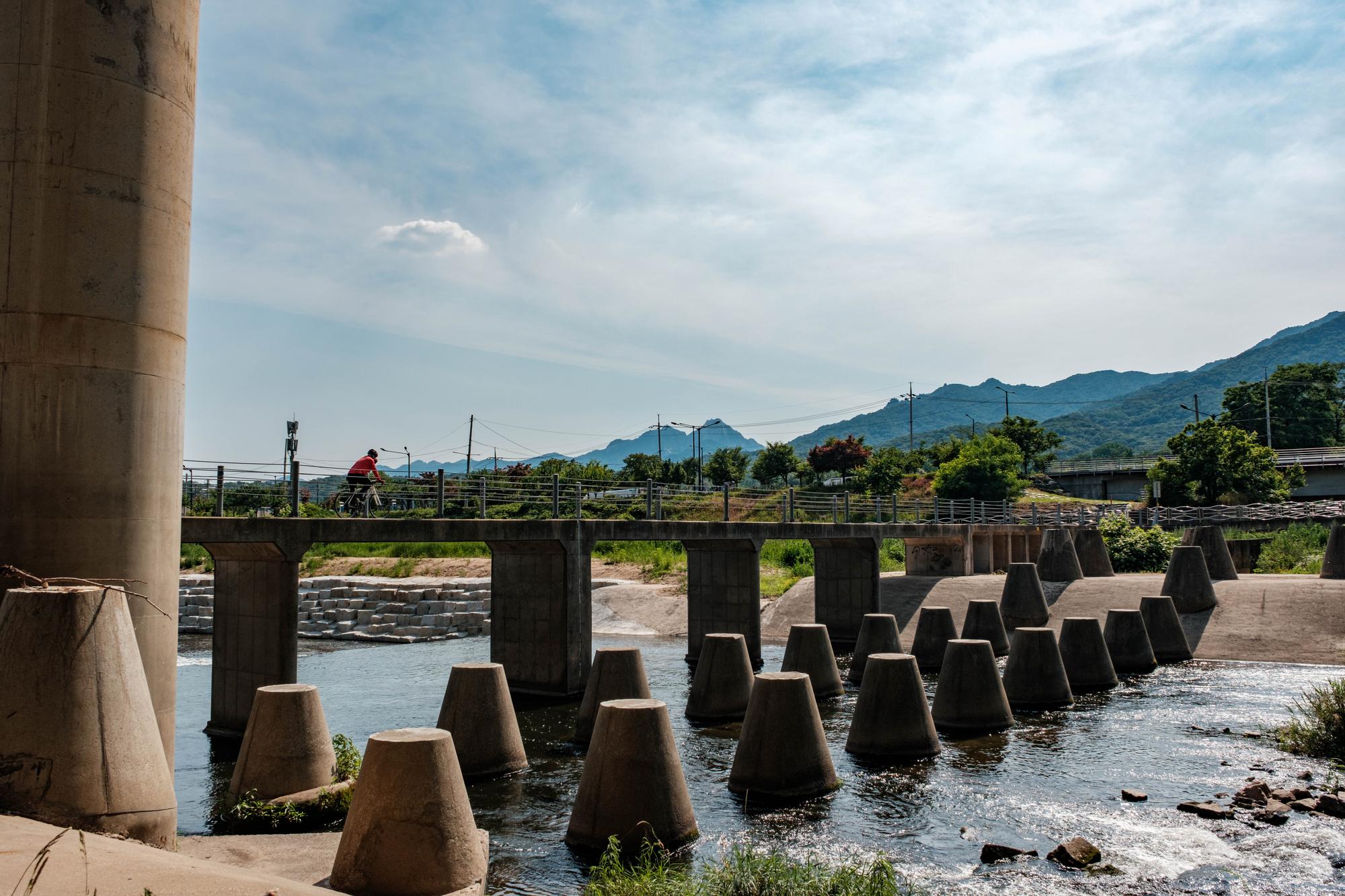
Dragon’s teeth-style anti-tank obstacles block the Jungnangcheon Stream in Uijeongbu, located in a bottleneck between mountains northeast of Seoul that is considered a potential invasion corridor (June 2026).
In 1994, Defense Minister Lee Byung-tae confirmed before the South Korean National Assembly that the satellite towns around the capital were being planned according to “a new concept that uses the newly built cities as barriers in the event of an emergency”, which caused quite a stir, as many mistakenly believed that apartment buildings would be blown up without a second thought to serve as a wall.
Walking through Ilsan New Town nowadays, it is hard to believe that the defensive purpose of these buildings is still relevant. North Korea, which can be glimpsed from the top of a small hill in one of the city’s parks, is just 15 kilometres away as the crow flies. If you want peace, prepare for war, and in the event of an all-out confrontation, Seoul’s overcrowded outer suburbs would be a prime target for North Korean special forces in terms of sabotage and terrorist operations.
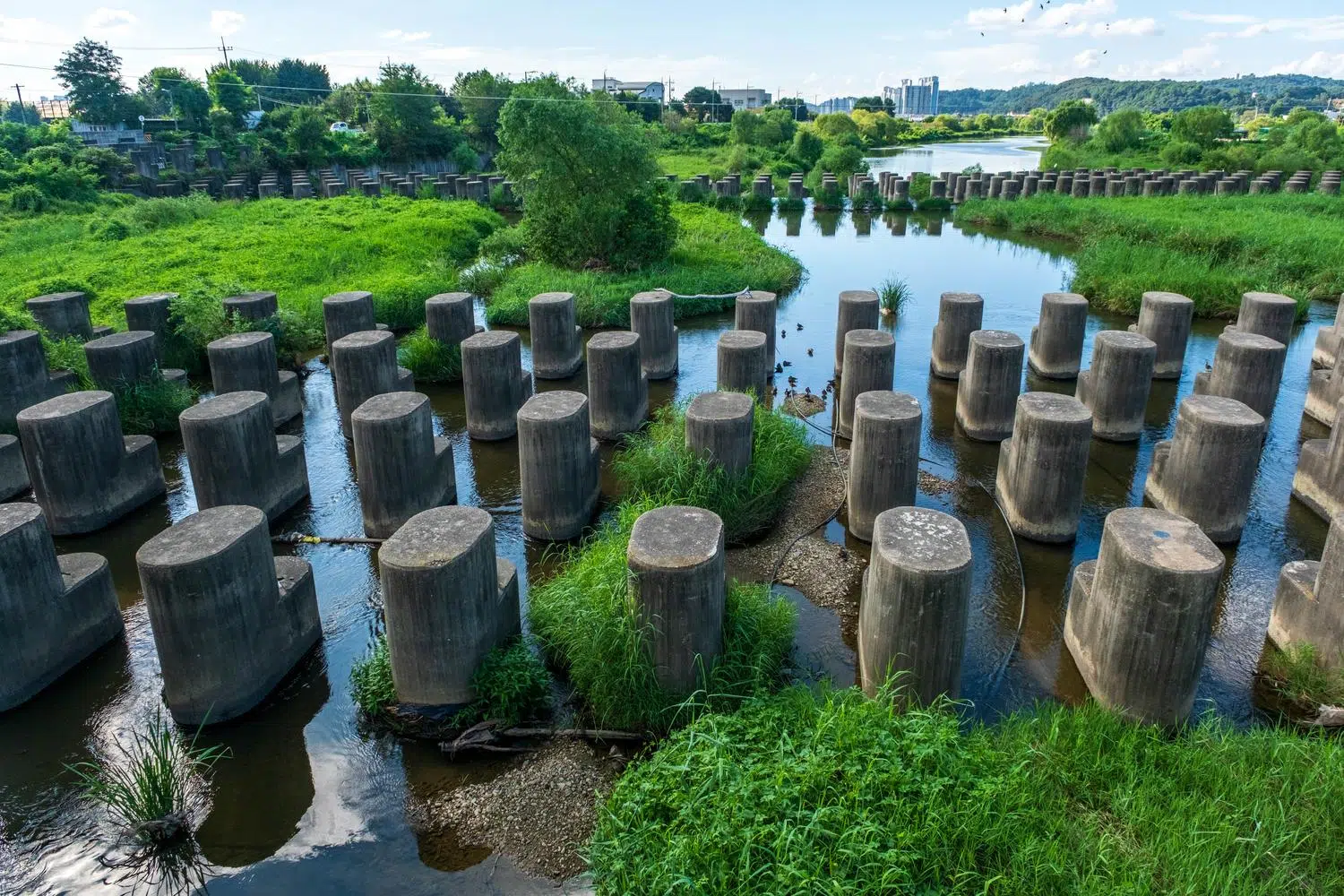
Rows of dragon’s teeth on the Gongleungcheon stream in Goyang (August 2026).
But the prospect of seeing communist armoured divisions sweep through like in 1950, and the streets of Ilsan transformed into a bloody “Ilsangrad”, is no longer realistic, at a time when the superiority of the South Korean and U.S. conventional forces over those of the North is seen as overwhelming, and when Pyongyang has made a structural choice in favor of asymmetric warfare, relying on its missile and nuclear weapons programmes and on cyberattacks to intimidate its neighbor.
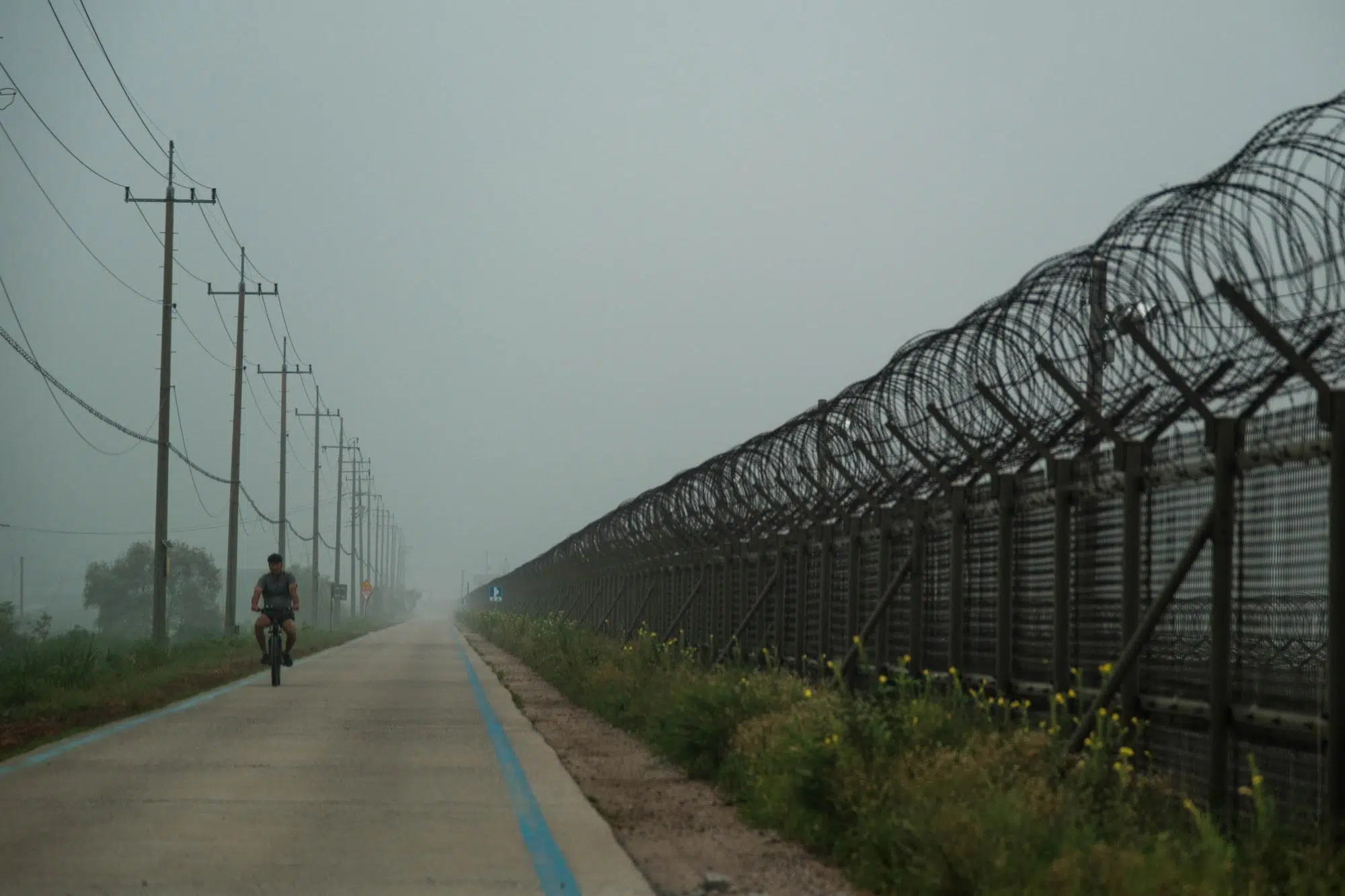
Anti-infiltration fortifications along the Han River in Gimpo, north of Seoul (August 2026).
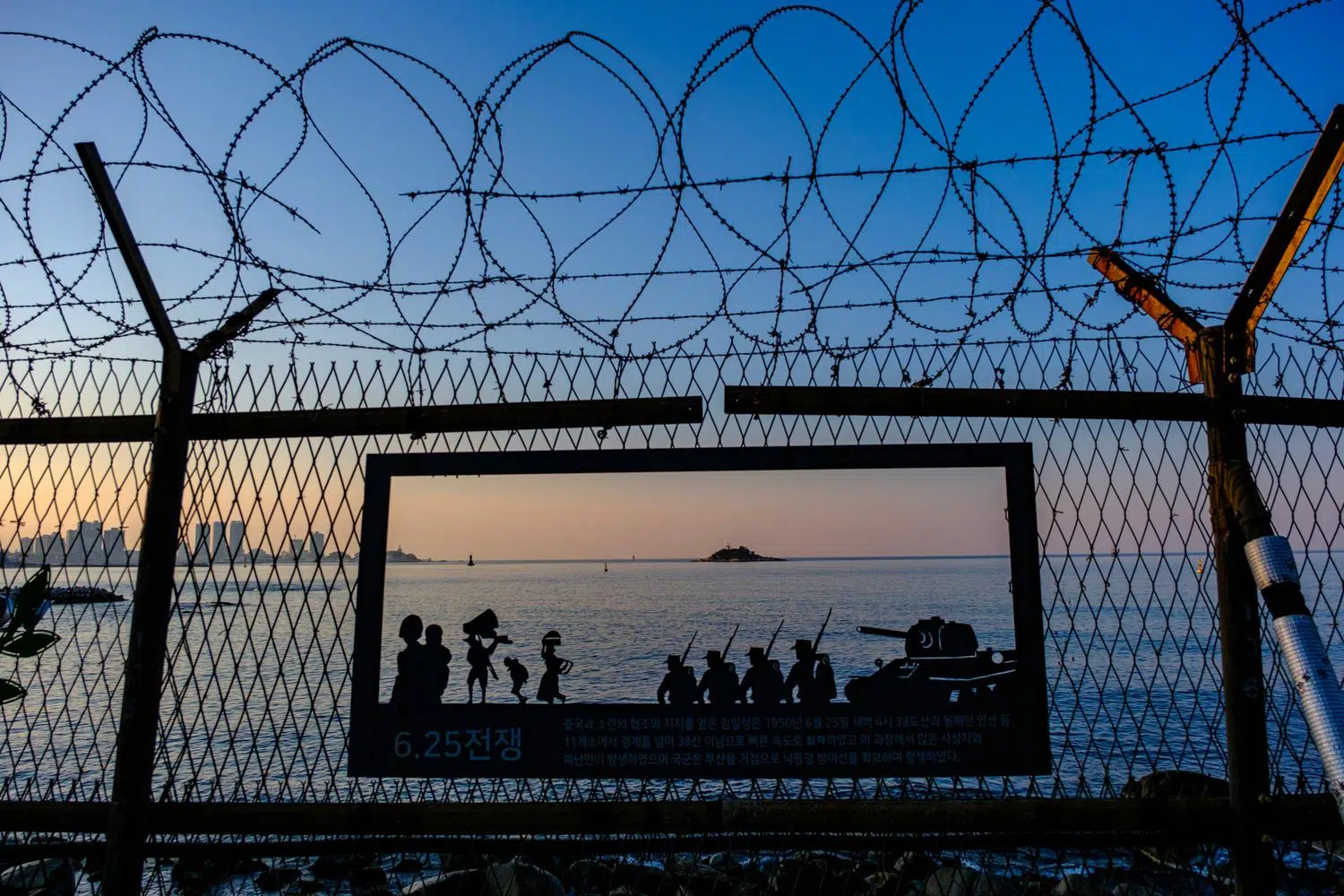
In addition to rock drops, dragon’s teeth and civilian buildings designed to serve as shields, there are thousands of kilometers of barbed wire fences and other fortifications along the border and coastline of Korea, often three or four layers thick, or even more, to prevent any invasion or infiltration.
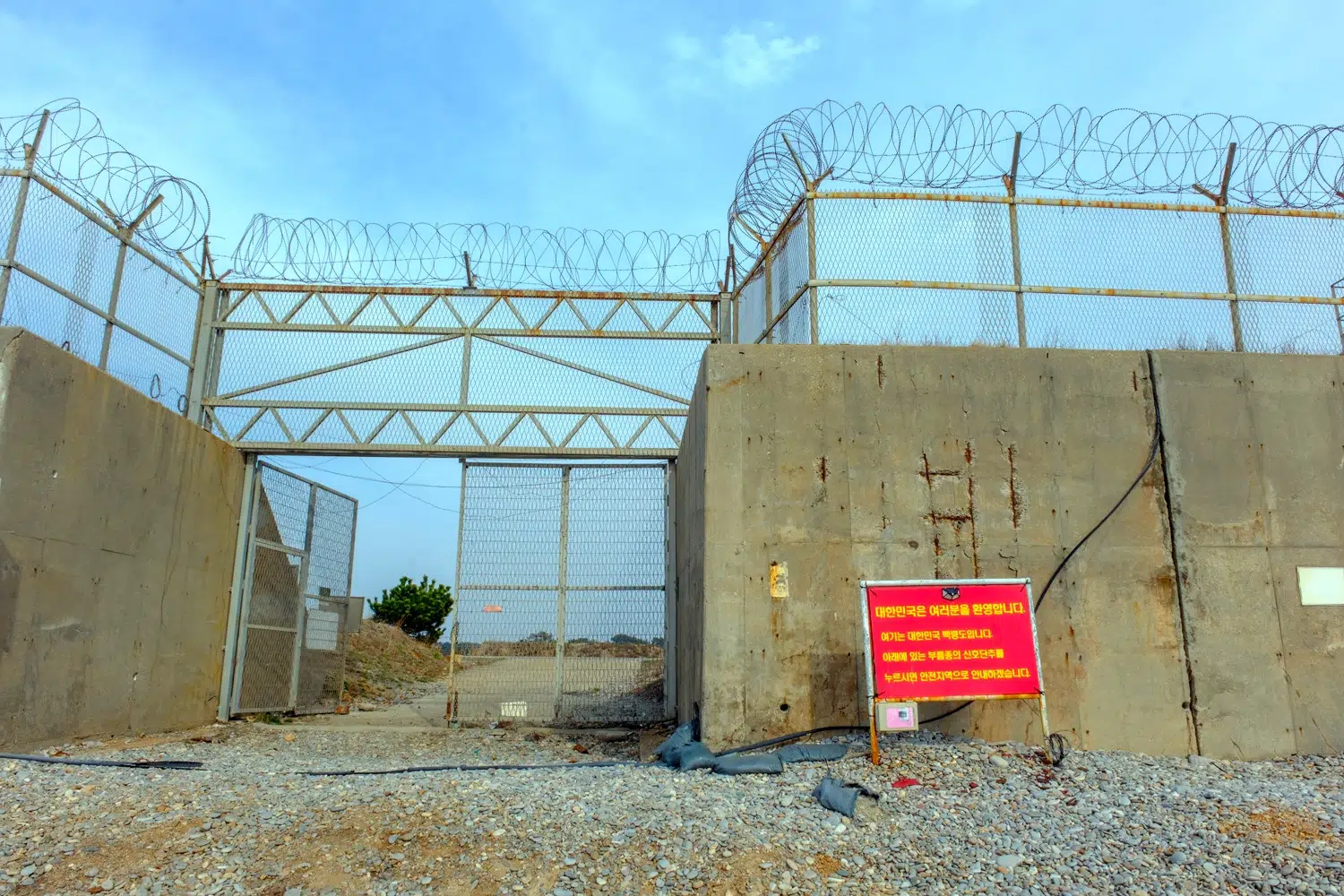
The gate in Baengnyeong Island‘s coastal fortifications is closed at night, but an intercom is available for defectors arriving on the beach. The red sign says: “The Republic of Korea welcomes you. This is Baengnyeong Island, South Korea. If you press the button on the call bell below, we will guide you to a safe area.” (March 2025).
South Korea began to seal its border tightly in the late 1960s when armed incidents and infiltrations (the craziest and bloodiest of which remains that of January 21, 1968) began to spiral out of control.
At regular intervals along the northern side of these fortifications, intercoms allow any North Korean defectors who have managed to reach this point to call on the South Korean military for help.
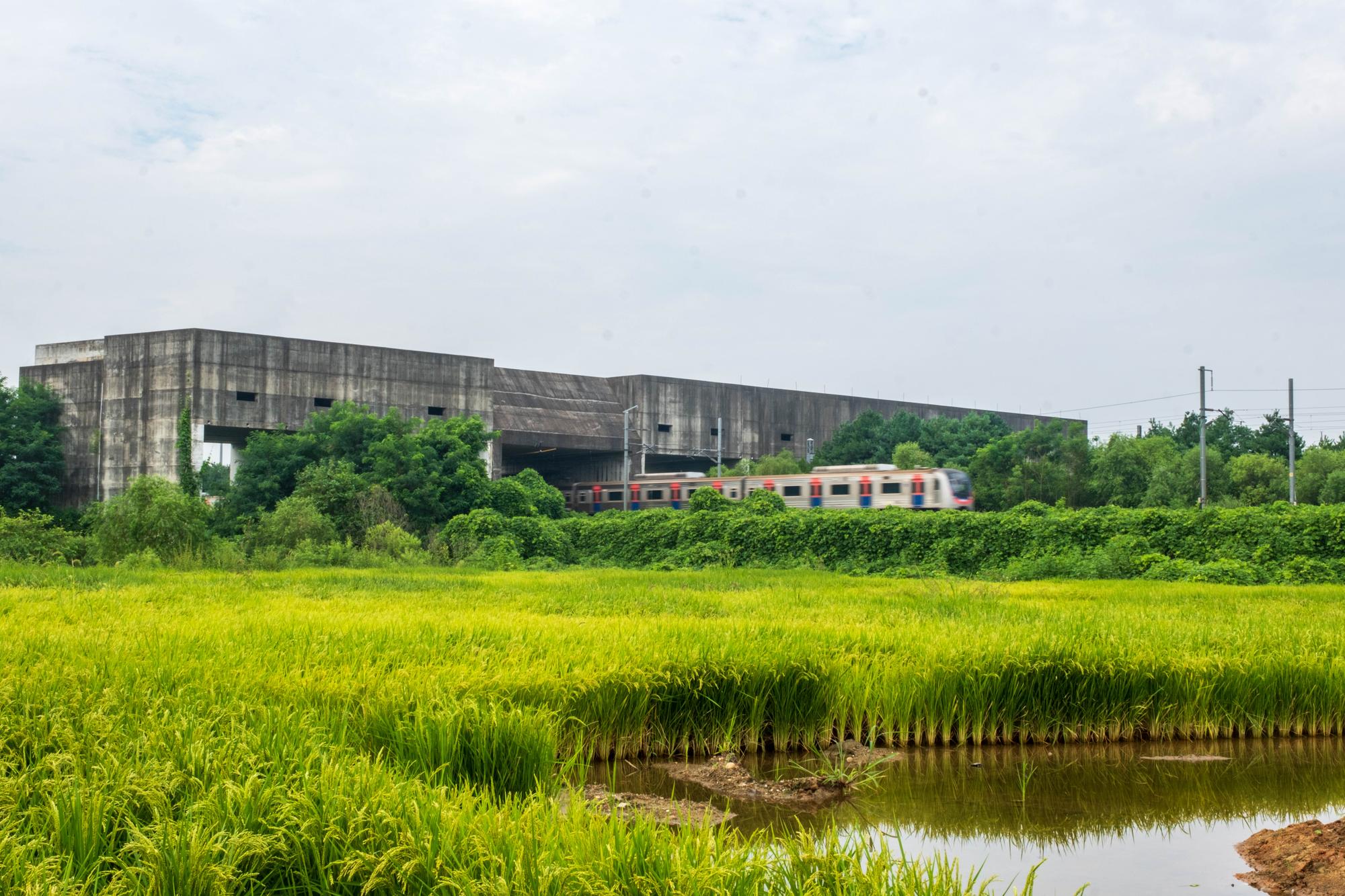
A bunker and “rock drop” railway obstacle on the line connecting Seoul to the North Korean border (August 2026).
The sophistication of the defences south of the DMZ has increased year on year. Originally, simple beer bottles filled with pieces of metal were hung on the fence to act as makeshift alarms in the event of an attempted breach. These have long since been replaced by sensors, surveillance cameras and other advanced technologies.
But the double or triple rows of concertina wire fences remain in place along the entire 248-kilometre length of the DMZ, as well as along the coastlines near North Korea and right up to the outskirts of Seoul on the banks of the Han River, preserving the grim nature of this border.
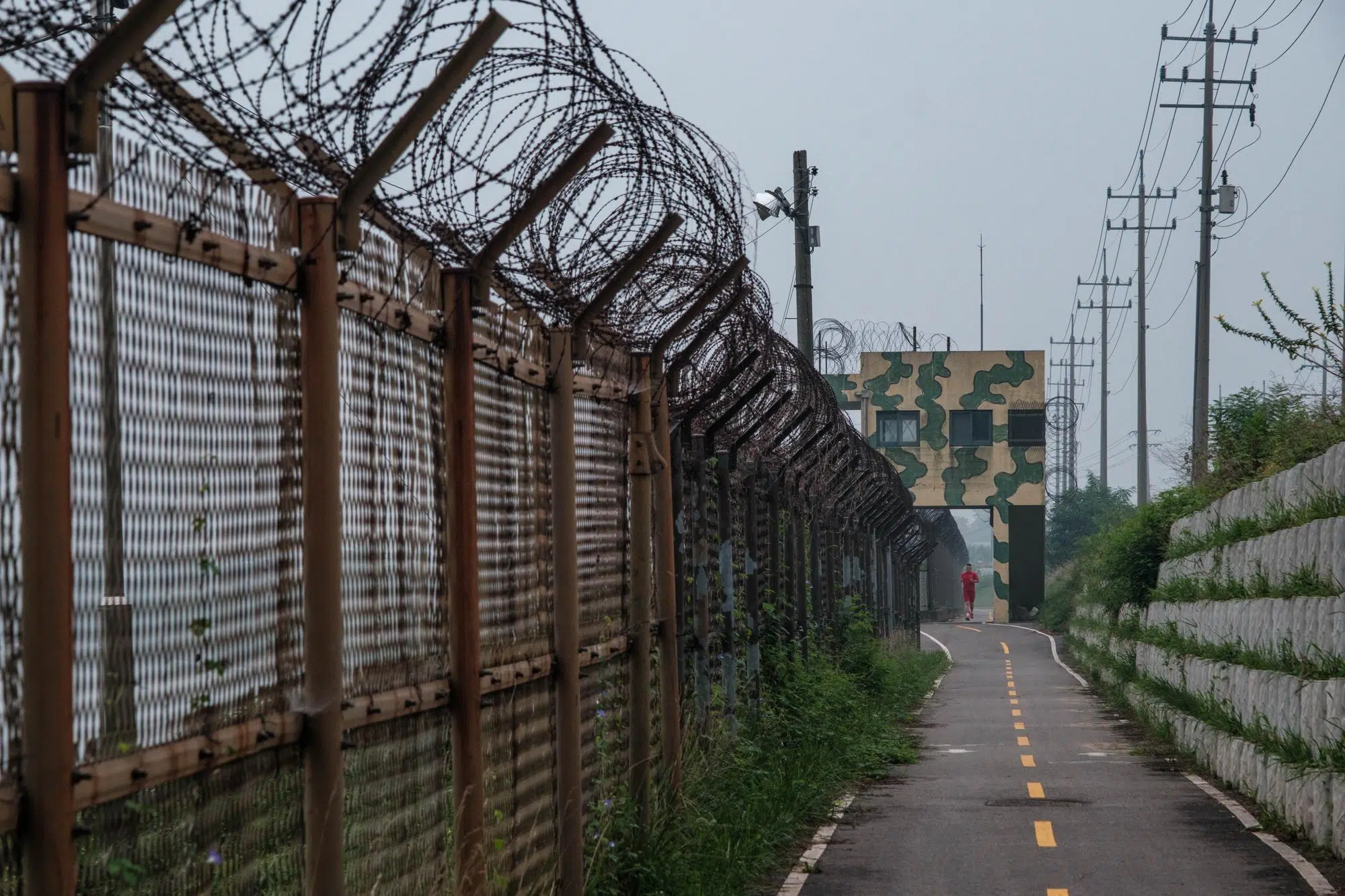
Anti-infiltration fortifications along the Han River in Gimpo, north of Seoul (August 2026).
This Korean version of the Iron Curtain is even more impenetrable than its former European counterpart and, unlike the latter, can never be crossed without risking death.
Border barriers are now so much a part of the landscape in South Korea that it is difficult to imagine that once upon a time, long ago, they did not exist.

Final fence before North Korea on Gyodong Island (May 2025).
As for the obstacles on the northern side of the border, information is obviously scarcer.
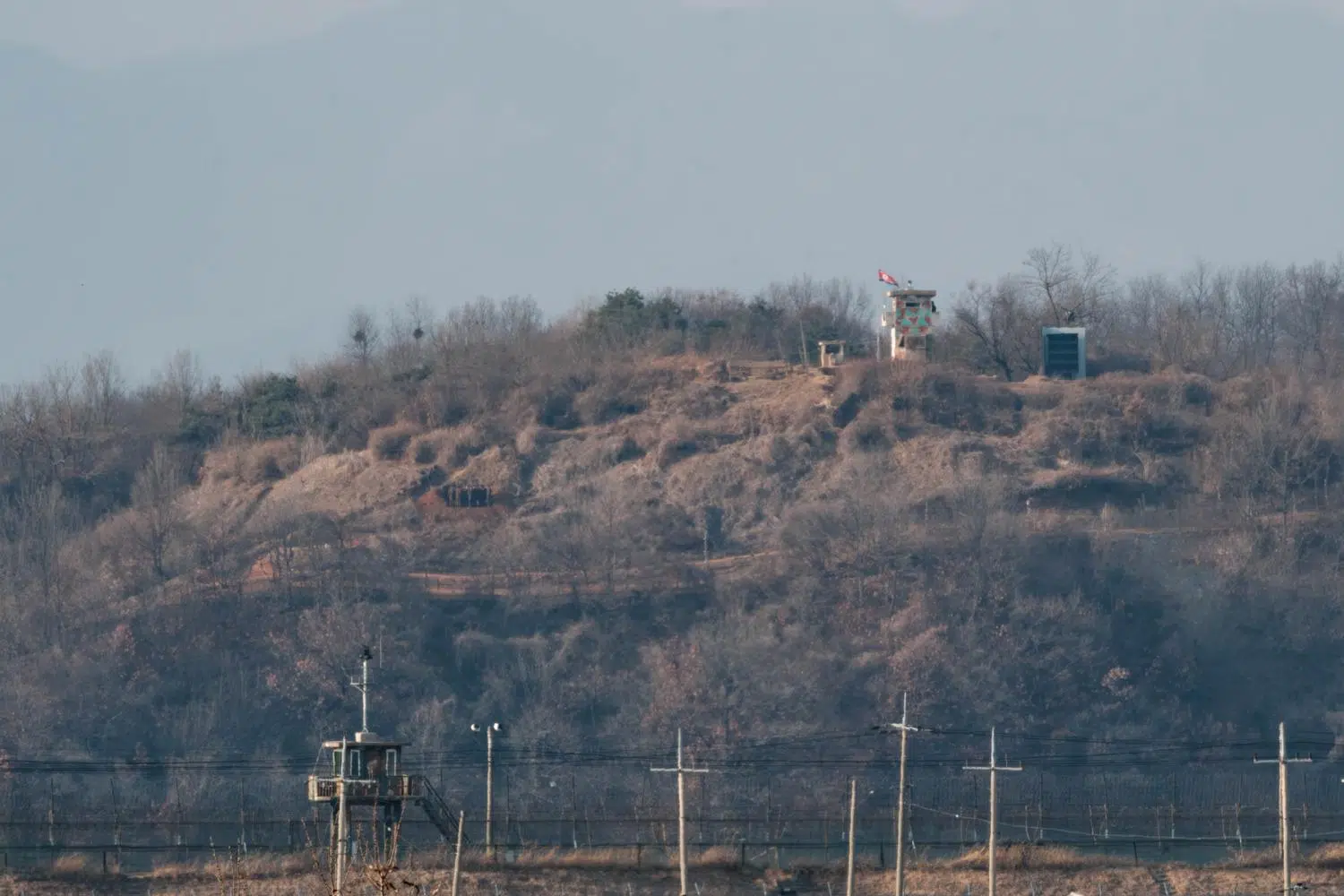
North Korea’s side of the DMZ is defined by two rows of electrified fencing, running the length of the peninsula. Behind them lies an almost uninterrupted web of observation posts, bases, and artillery positions. Pyongyang has significantly reinforced its side of the border since December 2023, when leader Kim Jong Un declared South Korea an “enemy” state with which any reunification was impossible.
By October 2025, satellite imagery showed North Korea had built four clusters of four to five meters tall concrete anti-tank barriers, each measuring approximately 2.5 kilometers, north of the Military Demarcation Line. Military analysts assessed that the new structures did not resemble conventional anti-tank obstacles and appeared designed to divide an area rather than stop an armored advance. South Korea’s Joint Chiefs of Staff offered another interpretation of the construction wave: that North Korea’s activities were aimed at strengthening internal control, blocking its own troops and residents from defecting southward.
Six Minutes to Cover

In Seoul, almost every subway station serves as an air-raid shelter. Whilst the red, green and white signs marking them out are easily overlooked, it is hard not to notice the extreme, dizzying depths one descends into to reach the platforms, and the transparent cabinets where gas masks and other survival equipment are stored.
It is estimated that between 800 and 1,000 artillery pieces are deployed north of the DMZ, of which around 500 are believed to be aimed at Seoul. South Korea possesses sophisticated high-altitude interception systems against missiles. M167 Vulcan 20mm rotary cannons and other surface-to-air batteries are installed on the rooftops of Seoul’s skyscrapers to protect the city against drones or warplanes. But a saturation barrage of shells and rockets launched by North Korea from the border, virtually at point-blank range, on the metropolitan area and its 26 million inhabitants would be a very different matter.
North Korea’s deadly bombardment of the South Korean island of Yeonpyeong in November 2010 is recent enough to serve as a reminder that an attack on the country is not a science-fiction scenario. In May 2026, North Korea announced the deployment of new artillery systems and multiple rocket launchers along its border with the South. A few weeks earlier, it had tested tactical ballistic missiles equipped with cluster warheads, a direct threat to its neighbour. In addition, the 2017 assassination at Kuala Lumpur International Airport of Kim Jong Un’s brother, Kim Jong Nam, carried out as part of a plot by North Korean intelligence services using the VX nerve agent, provided irrefutable evidence of Pyongyang’s capacity to produce highly lethal chemical weapons.
In response to these developments, Seoul has brought forward to 2029 the deployment of its Low Altitude Missile Defence (LAMD) system, dubbed the “Korean Iron Dome”, originally planned for 2035. But for the time being, no system would be capable of countering a sudden conventional artillery barrage fired at Seoul with flat, high-speed trajectories.
The result is that the first line of defense for the capital’s residents is a metro station, a basement or an underground car park. There are more than 17,000 air-raid shelters across South Korea, including 3,200 in Seoul, all marked on navigation apps such as Naver or KakaoMap.
The alert takes the form of sirens and loud push notifications sent to every mobile phone in the area. The procedure is simple: everyone to the shelters immediately, and tune in to the public broadcaster KBS Radio 1 for instructions from the authorities. There are three types of civil defence alerts: the preventive alert, which signals a situation likely to escalate; the air-raid alert in the event of an imminent or ongoing attack; and the nuclear, biological and chemical alert (though almost none of the shelters are designed to withstand a nuclear attack).
Each 170 mm shell fired by a North Korean Koksan self-propelled howitzer (the “Juche Cannon”) would take between two and six minutes to reach the centre of Seoul. That is the time available to the millions of inhabitants of the megacity to get to safety.
A reality that most South Koreans tend to overlook: the yearly civil defence drills are ignored by almost everybody, and very few people know where the nearest shelter is. The closest one to my home is the basement of a large hotel, but when, as a law-abiding citizen, I rushed there for a drill in 2023, I stumbled upon a wedding that was taking place without the slightest interruption. In May the same year, when a genuine air-raid alert was mistakenly triggered at 6.32 am following the launch by North Korea of a rocket carrying a satellite, nobody did anything. I was out on the street at the time, in the government district of Seoul: none of the many police officers on duty outside the ministries showed the slightest reaction, so incongruous did the wail of the air-raid sirens around the high-rise buildings seem on that early morning.
This post was last updated on : September 13, 2026.