Glossary of the Korean Division: DMZ, JSA, CCZ and Border Terms


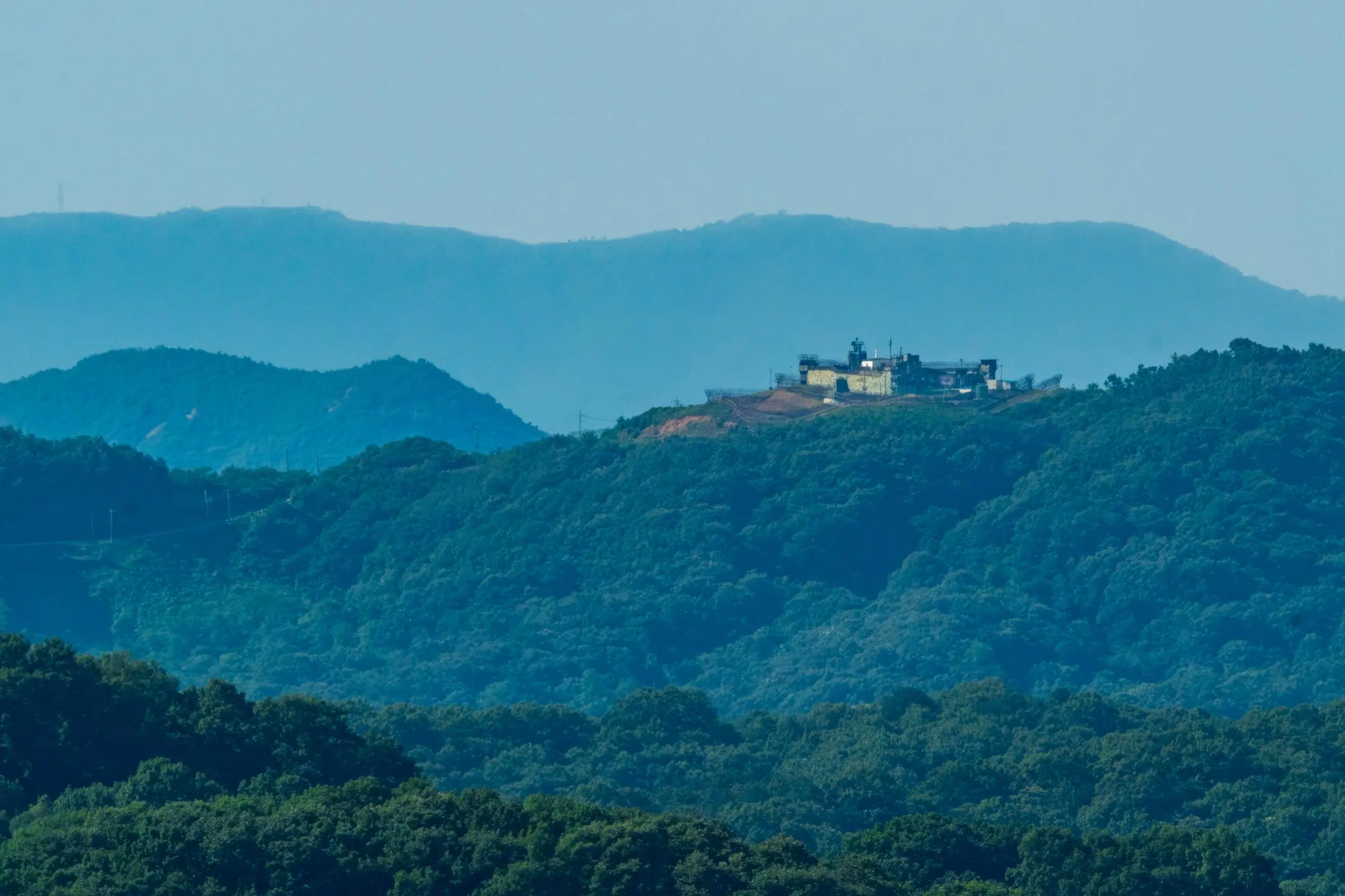
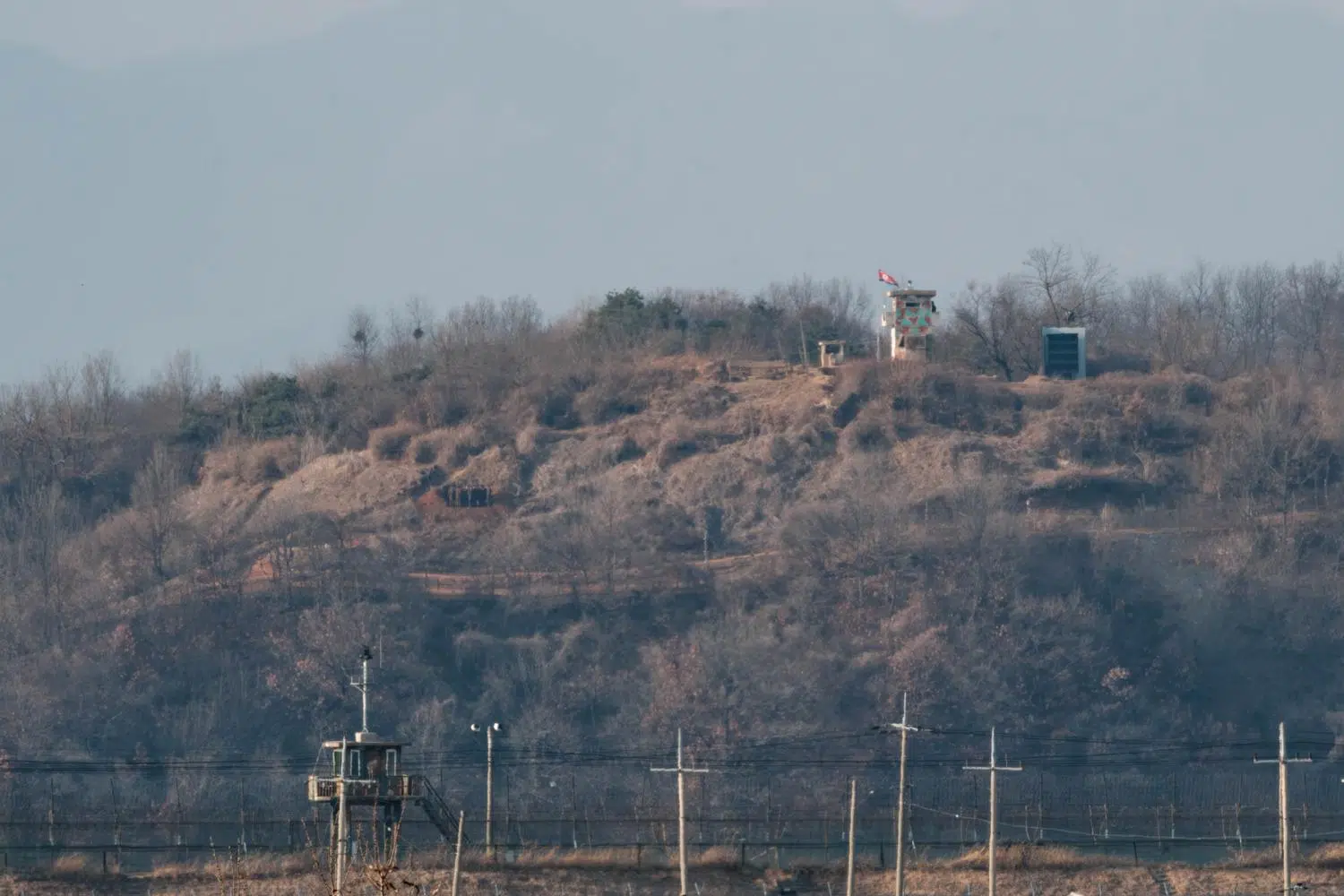
A South Korean guard post (GP) inside the DMZ (June 2026).
The Korean Division has generated its own vocabulary: military acronyms, political concepts, border infrastructures, and historical references that can be difficult to understand. This glossary brings together the key technical terms used throughout K-Scar and in news reports or military documents regarding the DMZ or the security situation on the Korean Peninsula.
For the history of how the border was established and more detailed explanations, see Understand the Korean Division. For a brief history of inter-Korean relations since the Korean War and their impact on the border, see Frozen Line, Shifting Border.
AA (Armistice Agreement): The ceasefire accord that ended active combat in the Korean War on July 27, 1953. Signed at Panmunjeom by representatives of the United Nations Command (UNC), the Korean People’s Army (KPA), and the Chinese People’s Volunteers (CPV), it established the Military Demarcation Line (MDL), created the Demilitarized Zone (DMZ), and set up mechanisms such as the Military Armistice Commission (MAC) and the Neutral Nations Supervisory Commission (NNSC) to oversee compliance with the ceasefire. The agreement suspended hostilities but did not constitute a peace treaty, meaning that the two Koreas remain technically at war. The Armistice Agreement continues to provide the legal framework governing the Korean border and relations between the opposing military forces. Notably, the Republic of Korea (South Korea) did not sign the agreement, as President Syngman Rhee opposed any settlement that left the peninsula divided. Read the full document of the agreement.
AROE (Armistice Rules of Engagement): The special rules governing the use of force by United Nations Command (UNC) personnel operating within the Korean Armistice Area, particularly in and around the Demilitarized Zone (DMZ). Derived from the Armistice Agreement (AA), the AROE are designed to maintain the ceasefire, prevent escalation, and ensure that military personnel respond to incidents in a measured and controlled manner. They define the circumstances under which force may be used, establish procedures for handling armistice violations, and seek to balance force protection with the broader objective of preserving stability along the Korean border. Because the Korean Peninsula remains governed by an armistice rather than a peace treaty, the AROE differ in important respects from conventional wartime rules of engagement.
AWPM (Aircraft Warning Panel Marker): Also called Aviation Warning Panel Marker. A visual warning device used along the Demilitarized Zone (DMZ) to prevent aircraft from accidentally entering restricted airspace. Managed under United Nations Command (UNC) regulations, AWPMs consist of large red panels mounted on the ground and tilted toward the sky so they can be easily seen by pilots and helicopter crews. A total of 877 AWPMs are deployed at intervals of approximately 300 to 400 metres along the Southern Limit Line (SLL) of the DMZ, with additional markers placed inside the DMZ itself. Their purpose is to provide an immediate visual warning that an aircraft is approaching the Korean Tactical Zone (KTZ), a tightly controlled airspace established to prevent violations of the Armistice Agreement. See Airspace Scares.
CCL (Civilian Control Line): The southern boundary of the Civilian Control Zone (CCZ), typically consisting of barbed-wire fences, watchtowers, other surveillance equipment, and military checkpoints.
CCZ (Civilian Control Zone): A restricted area located immediately south of the Demilitarized Zone (DMZ) in South Korea. Established after the Korean War to enhance security along the border, the CCZ is subject to special regulations that limit civilian access, construction, and land use. Entry is controlled through military checkpoints, and occasional visitors generally require authorization or must join organized tours. The zone is home to farming communities, military installations, and important ecological habitats. Varying in width, from a few hundred meters to several tens of kilometers, the CCZ serves as a buffer between the heavily fortified DMZ and the rest of South Korea.
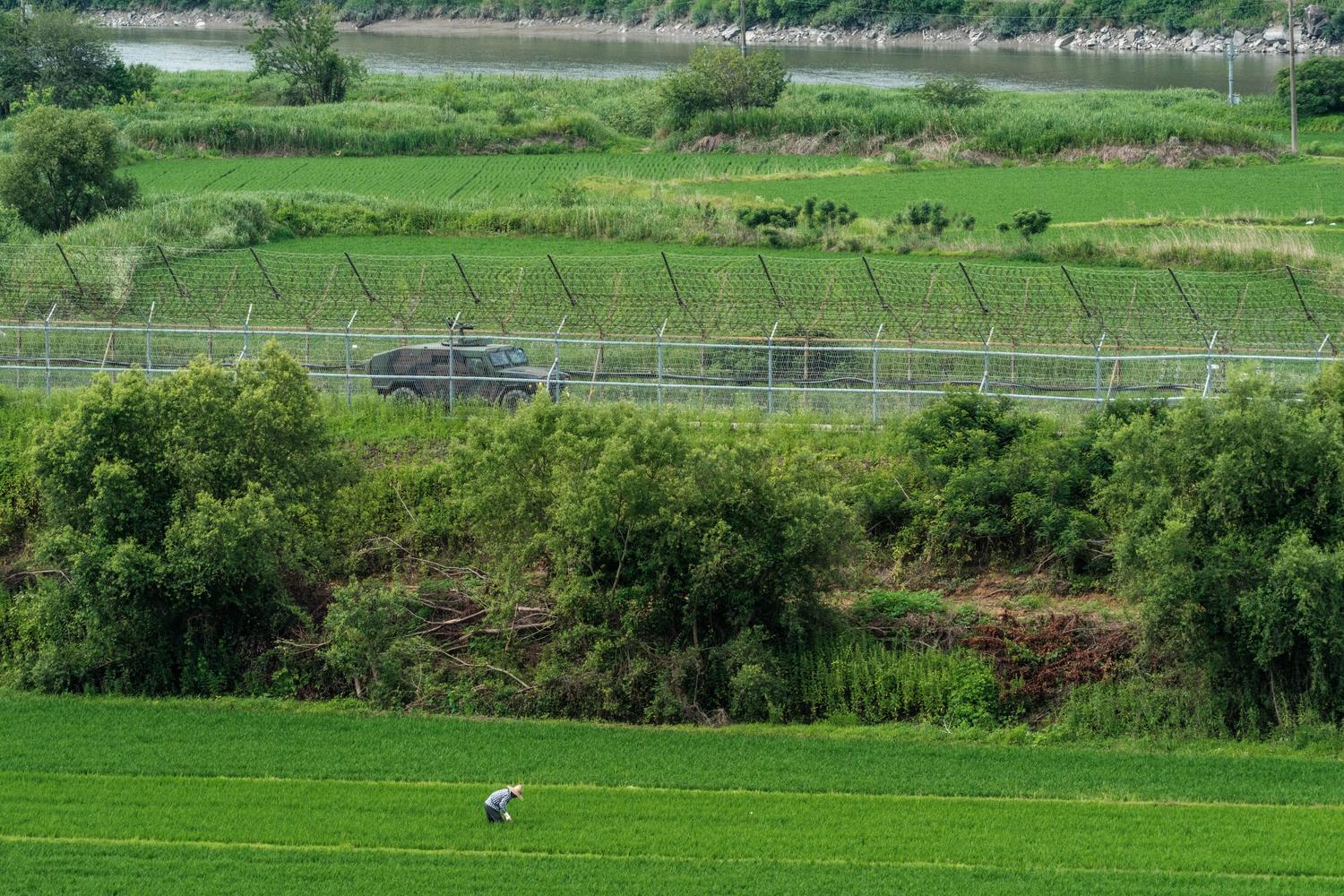
A farmer works in a rice paddy adjacent to the Civilian Control Line (CCL) in Paju (June 2026).
CFC (Combined Forces Command): The joint military headquarters responsible for coordinating the defense of South Korea in the event of war or a major security crisis. Established in 1978 by the Republic of Korea (ROK) and the United States, the CFC integrates South Korean and U.S. military forces under a unified command structure designed to ensure combined planning, training, and operations. During peacetime, national forces remain under their respective chains of command, but the CFC maintains detailed contingency plans and conducts regular joint exercises to deter aggression and prepare for potential conflict. Headquartered in South Korea, the CFC is a cornerstone of the U.S.-ROK military alliance. See also: OPCON (Operational Control).
CP (Checkpoint): A controlled access point operated by military or security personnel to regulate movement in and around restricted areas near the Korean border. Checkpoints are commonly found along roads on the Civilian Control Line (CCL) and certain sectors of the Demilitarized Zone (DMZ).
CPV (Chinese People’s Volunteers): Also known as the People’s Volunteer Army (PVA). The military force deployed by the People’s Republic of China during the Korean War from 1950 to 1953. To prevent open war with the United States and other UN members, China designated regular People’s Liberation Army (PLA) troops as “volunteers”.
DEOP (Demilitarized Zone Education and Orientation Program): The authorized educational tours that take place within the Korean Demilitarized Zone (DMZ). The United Nations Command (UNC), which has exclusive jurisdiction over the southern part of the DMZ, has designated 15 specific locations that are maintained to allow for safe, escorted access for educational and orientation activities within the buffer zone. These sites include the Dora Observatory and the Third Infiltration Tunnel.
DMZ (Demilitarized Zone): A 248-kilometer-long buffer zone between the two Koreas, established by the 1953 Armistice Agreement. The DMZ, which runs across the Korean Peninsula from east to west, is four kilometers wide in total—two kilometers on each side of the Military Demarcation Line (MDL). The southern part of the DMZ is a territory under the exclusive jurisdiction of the United Nations Command (UNC) even though, in practice, its surveillance is carried out almost entirely by the South Korean military. Its southern limit is called Southern Limit Line (SLL) or South Boundary Line (SBL). In principle, combat troops, heavy weapons, and fortifications are prohibited within the DMZ. In practice, neither side complies with any of these prohibitions.
DPRK (Democratic People’s Republic of Korea): Official name of North Korea.
GOP (General Outpost): A frontline military position located immediately south of the Demilitarized Zone (DMZ) and operated by the Republic of Korea Army (ROKA). Unlike Guard Posts (GP), which are situated inside the DMZ itself, GOPs are positioned along the southern boundary of the DMZ and form the first continuous line of South Korean defenses facing North Korea. Connected by fences, patrol roads, observation posts, and surveillance systems, they are responsible for monitoring the border, detecting infiltrations, and responding to security incidents. The term GOP is specific to the South Korean military and has no direct official equivalent in the terminology used by North Korean forces.
GOP Fence: An informal term used by the United Nations Command (UNC) and the South Korean military to describe the fortified fence connecting the General Outposts (GOP) along the DMZ, in order to distinguish it from the South Boundary Line of the DMZ (SBL). The latter, defined by the Armistice Agreement, runs exactly two kilometers south of the Military Demarcation Line (MDL). The GOP fence, however, can run either inside or outside the DMZ. The fact that most of the GOP fence runs inside the DMZ illustrates the many violations of the Armistice Agreement, under which, in principle, no military activity is permitted inside the buffer zone. In some places, such as the Eulji Observatory above the Punchbowl Basin, the GOP fence runs less than 300 meters from the MDL, far from the two kilometers stipulated in the armistice agreement.
GP (Guard Post): A fortified military outpost located inside the Demilitarized Zone (DMZ). Operated by either North Korean or South Korean forces, GPs are used to monitor activity along the Military Demarcation Line (MDL), conduct surveillance, and maintain a military presence within the DMZ. Typically positioned on elevated terrain, they are equipped with observation facilities, communications systems, and defensive positions. For decades, dozens of GPs have been facing each other across the DMZ, making them some of the closest military positions on the Korean Peninsula. Following the 2018 inter-Korean military agreement, several GPs were dismantled on both sides as a confidence-building measure, although most remain in operation or have been put back into service since then.
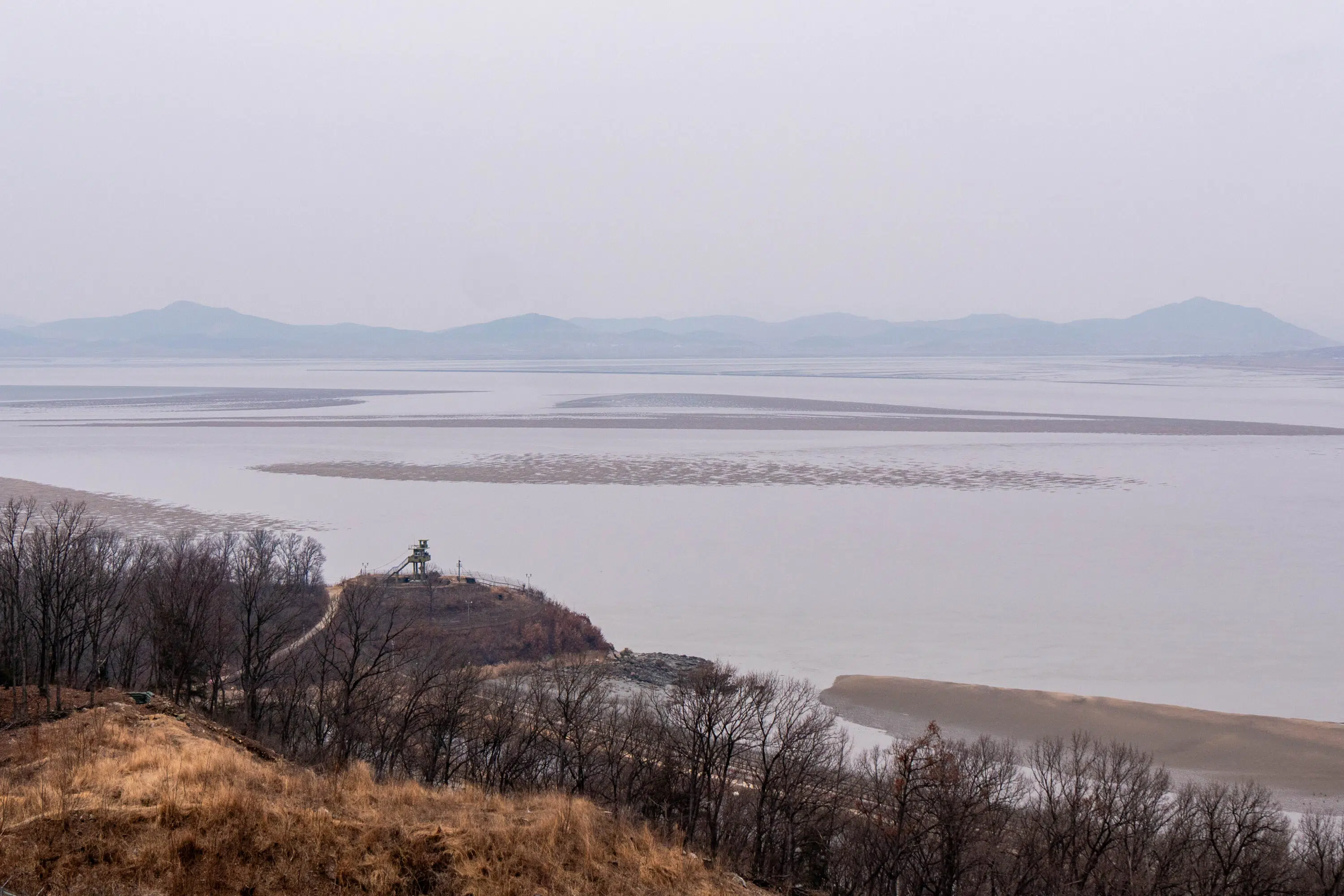
The Han River Estuary as seen from Ganghwa Island (March 2024).
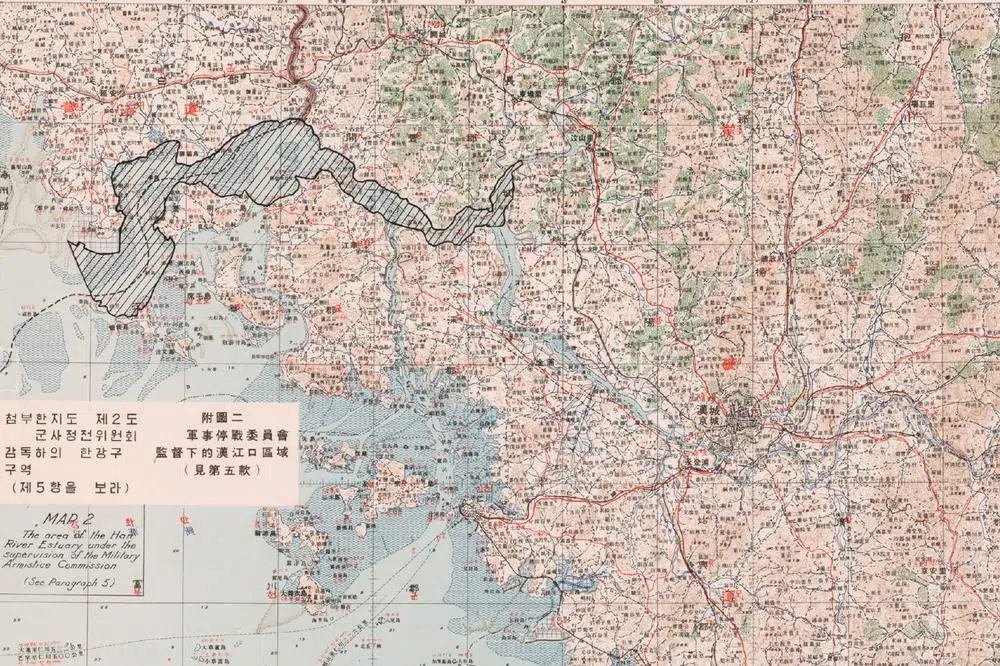
HRE (Han River Estuary): Also called the Neutral Zone of the Han River Estuary. The 67-kilometer-long estuary where the waters of the Han, Imjin, and Yesong rivers meet before flowing into the Yellow Sea. Under the Armistice Agreement, this area was designated as a neutral area open to civilian navigation by both sides. In practice, military tensions, security restrictions, and the absence of inter-Korean cooperation have prevented its use as originally envisioned. See Han River Estuary.
JCS (Joint Chiefs of Staff): The highest military planning and operational body of South Korea’s armed forces. Headed by the Chairman of the Joint Chiefs of Staff, it is responsible for advising the President and the Minister of National Defense, overseeing joint military operations, and coordinating the activities of the Army, Navy, Air Force, and Marine Corps. In the event of a military crisis or conflict with North Korea, the JCS plays a central role in directing South Korean military operations and coordinating with the Combined Forces Command (CFC) and United States Forces Korea (USFK).
JSA (Joint Security Area): A heavily guarded and roughly 800×800 metre-wide security enclave located at Panmunjeom, within the Demilitarized Zone (DMZ), where representatives of North Korea, South Korea, and the United Nations Command (UNC) have met since the end of the Korean War. Developed around the truce village where the Korean Armistice Agreement was signed on July 27, 1953, the JSA became the principal venue for military negotiations, diplomatic contacts, and inter-Korean dialogue. The JSA is bisected by the Military Demarcation Line (MDL) and is best known for its conference buildings that straddle the divide between North and South. The JSA is also referred to as the Military Armistice Commission Headquarters Area (MACHA). See the page on the JSA.
KAMD (Korea Air and Missile Defense): South Korea’s multilayered network designed to detect, track, and intercept North Korean aircraft and ballistic missiles. Developed in response to the growing missile threat from North Korea, KAMD integrates radar systems, command-and-control networks, and interceptor missiles operated by the Republic of Korea Armed Forces. Its architecture includes systems such as the Patriot PAC-2 and PAC-3, the domestically developed Cheongung (KM-SAM), and the long-range L-SAM. Together with the Kill Chain pre-emptive strike concept and the Korea Massive Punishment and Retaliation (KMPR) doctrine, KAMD forms one of the three pillars of South Korea’s national defense strategy against North Korea’s missile and nuclear capabilities.
KATUSA (Korean Augmentation to the United States Army): A program established during the Korean War in 1950 to integrate selected South Korean soldiers into U.S. Army units stationed on the Korean Peninsula. While remaining members of the Republic of Korea Army, KATUSA soldiers serve alongside American troops. Assigned through a competitive selection process that places strong emphasis on English-language proficiency, KATUSA personnel perform a wide range of military duties. The program remains a unique feature of the U.S.-ROK alliance.
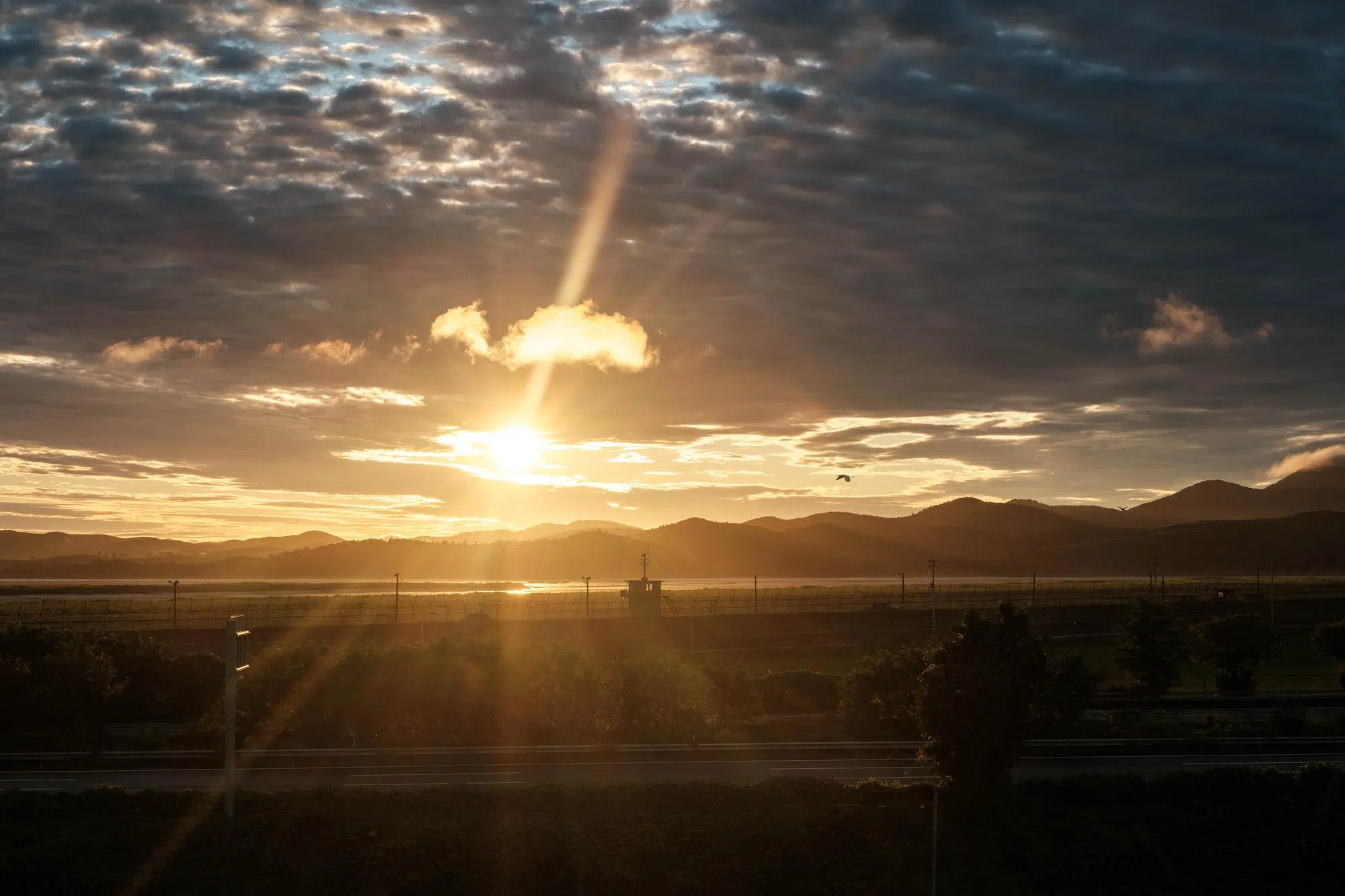
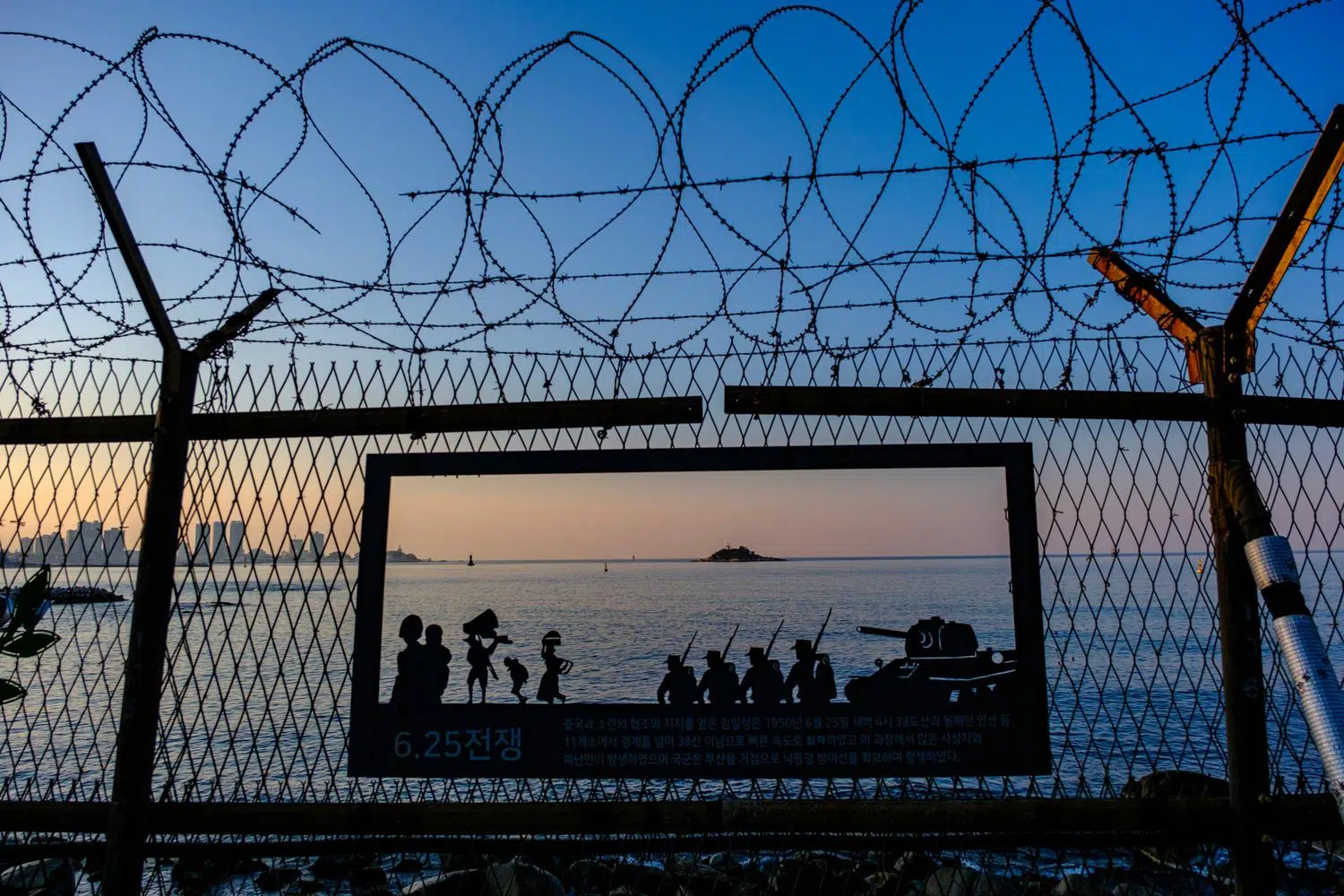
Sunset over North Korea and the Imjin River, seen from behind the South Korean border fence in Paju (August 2026).
Kill Chain: A pre-emptive strike concept designed to detect signs of an imminent North Korean missile attack and neutralize the threat before launch. The system relies on a network of intelligence, surveillance, and reconnaissance (ISR) assets, including satellites, reconnaissance aircraft, drones, radars, and other sensors, to identify missile preparations in real time. If an attack is judged to be imminent, South Korea’s armed forces may conduct precision strikes against missile launchers, command facilities, and related military targets. Developed in response to North Korea’s growing missile and nuclear capabilities, the Kill Chain constitutes the first pillar of South Korea’s three-axis defense system, alongside Korea Air and Missile Defense (KAMD) and Korea Massive Punishment and Retaliation (KMPR).
KMPR (Korea Massive Punishment and Retaliation): A South Korean military doctrine designed to deter North Korea by threatening overwhelming retaliation against its leadership and key military facilities in the event of a major attack, particularly one involving nuclear weapons. Developed in the 2010s following North Korea’s advancing nuclear and missile programs, KMPR envisions large-scale precision strikes against command centers, leadership compounds, missile bases, and other strategic targets. The doctrine is intended to convince North Korean decision-makers that any attack on South Korea would result in unacceptable consequences. KMPR forms one of the three pillars of South Korea’s defense strategy, alongside the Kill Chain and the Korea Air and Missile Defense (KAMD) system.
KPA (Korean People’s Army): The North Korean army.
KPAF (Korean People’s Army Air Force): The North Korean air force.
KPAN (Korean People’s Army Navy): The North Korean navy.
KTZ (Korean Tactical Zone): A restricted airspace established by the United Nations Command (UNC) along the Korean Demilitarized Zone (DMZ) to prevent incidents between military aircraft operating near the border. Extending along the entire length of the DMZ, the KTZ is subject to strict flight controls designed to reduce the risk of accidental airspace violations and military escalation. Aircraft entering the zone require prior authorization and must comply with specific operational procedures. The KTZ reflects the continuing application of armistice-era security measures in the air domain, complementing the controls that exist on the ground and at sea. To help pilots identify the limits of this sensitive area, hundreds of Aircraft Warning Panel Markers (AWPM) have been installed along the DMZ, providing a visual warning to aircraft approaching restricted airspace. See Airspace Scares.
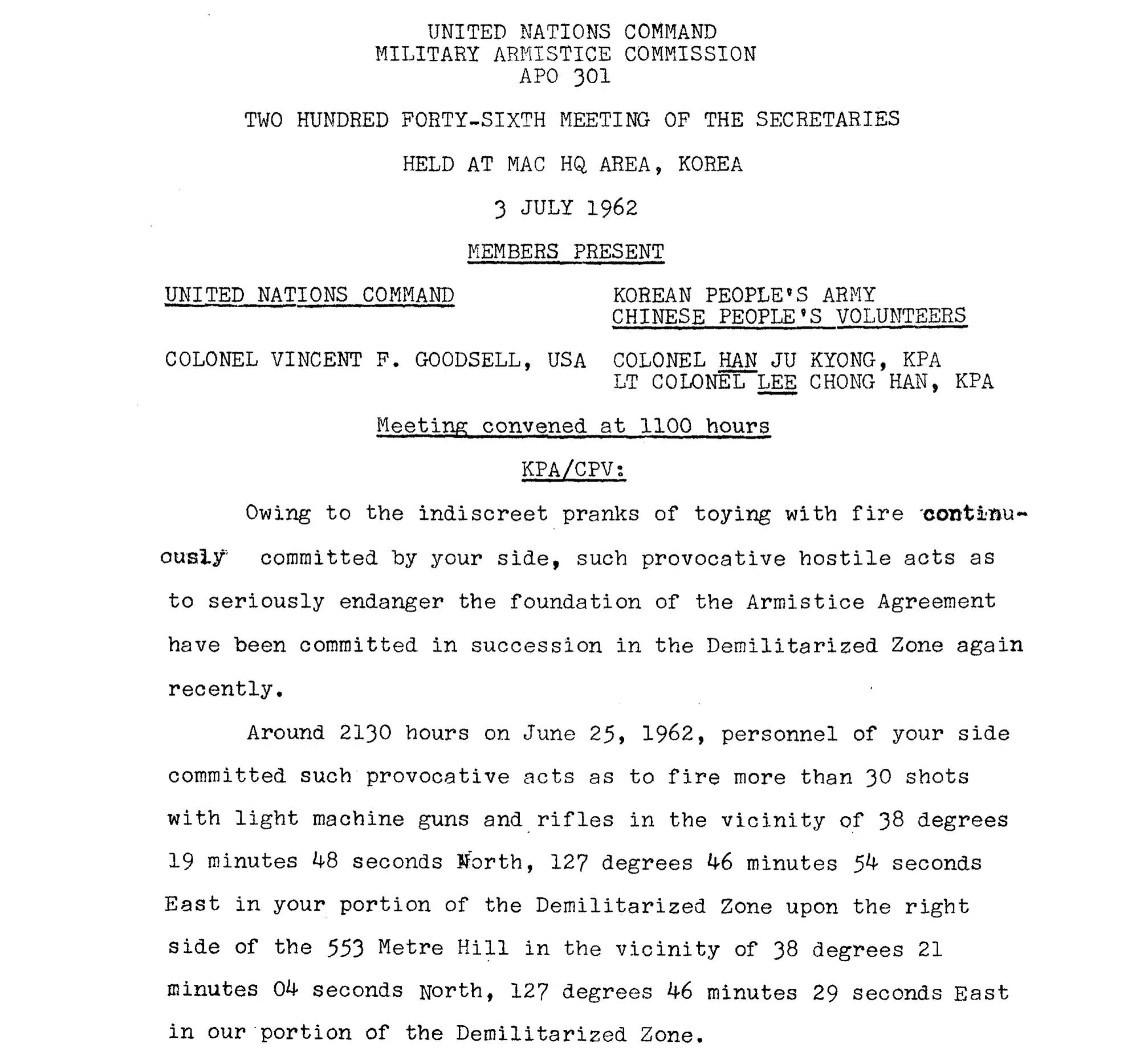
Third party content – Transcript of a tense meeting of the Military Armistice Commission (MAC) in Panmunjeom in 1962 (Ike Skelton Combined Arms Research Library Digital Library, read the full document here).
MAC (Military Armistice Commission): Established under the Korean Armistice Agreement, along with the Neutral Nations Supervisory Commission (NNSC) to supervise the implementation of the ceasefire and address violations of the armistice. Originally composed of representatives from the United Nations Command (UNC), the Korean People’s Army (KPA), and the Chinese People’s Volunteers (CPV), the commission served as the primary mechanism for communication and dispute resolution between the opposing sides after the Korean War. For decades, MAC meetings were held at the Joint Security Area (JSA) in Panmunjeom to discuss incidents along the Demilitarized Zone (DMZ) and maintain the armistice regime. North Korea and the Chinese People’s Volunteers (CPV) officially withdrew from the MAC in 1994, declaring that they would no longer recognize the body (North Korea had stopped attending the meetings since a South Korean general was appointed to the MAC three years earlier). Although regular meetings ceased and its practical role has been completely undermined, the MAC still exists formally.
MACHA (Military Armistice Commission Headquarters Area): The area established at Panmunjeom to host the activities of the Military Armistice Commission (MAC) and other organizations responsible for implementing the Korean Armistice Agreement. In operational and everyday language, the MACHA is referred to as the Joint Security Area (JSA). The MACHA includes conference buildings, administrative offices, security facilities, and support infrastructure, both north and south of the Military Demarcation Line (MDL). The southern part is called UNC-MACHA (United Nations Command MACHA) and the northern part is called KPA-MACHA (Korean People’s Army MACHA).
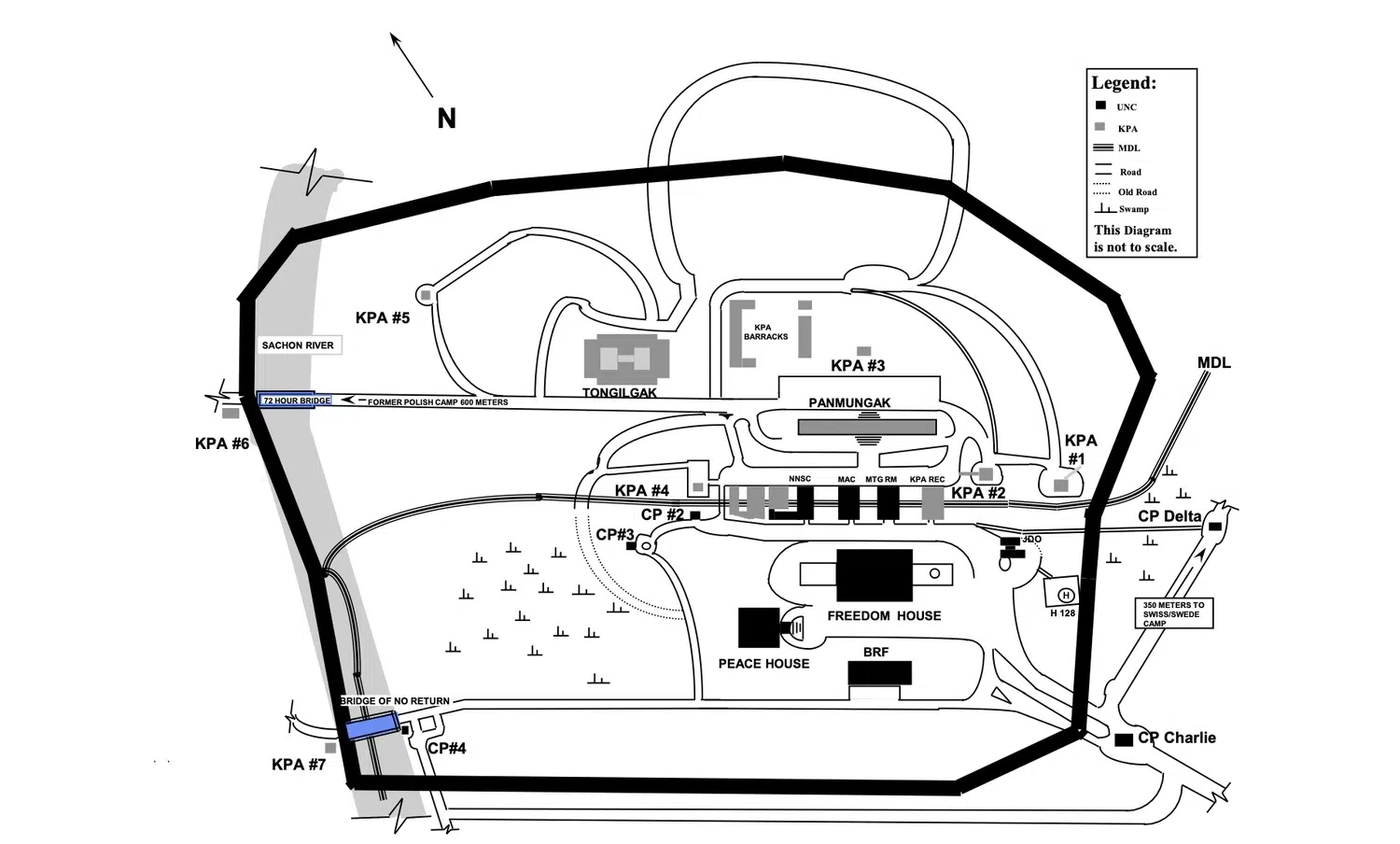
Third party content – The map of the MACHA (Military Armistice Commission Headquarters Area) in Panmunjeom, also called Joint Security Area (JSA), as published in the United Nations Command Regulation 551-4 in July 2023.
MDL (Military Demarcation Line): The line separating North Korea from South Korea, which corresponds exactly to the front line on the day the armistice was signed, July 27, 1953. Located in the center of the DMZ, the MDL was originally marked by 1,292 signs written in Korean and English on the South Korean side, and in Korean and Chinese on the North Korean side. Most of these signs have disappeared due to lack of maintenance.
MOU (Ministry of Unification): The South Korean government agency responsible for policies related to North Korea, inter-Korean relations, humanitarian exchanges, and the long-term goal of Korean reunification. Established in 1969 under a different name and reorganized several times since, the ministry develops and implements Seoul’s policy toward Pyongyang, oversees inter-Korean dialogue and cooperation projects, and supports programs for North Korean defectors resettling in South Korea.
NLL (Northern Limit Line): A maritime control line established unilaterally by the United Nations Command (UNC) in the Yellow Sea following the Korean War. Running between the west coast of the Korean Peninsula and the five South Korean-controlled islands located near North Korea (including Yeonpyeong and Baengnyeong), the line has served for decades as the practical limit of routine naval operations by South Korean and UNC forces. The NLL was not defined in the 1953 Korean Armistice Agreement, which addressed only the military demarcation line on land and the neutral status of the Han River Estuary (HRE), and specified that the five West Sea Islands (WSI) belonged to the South. While South Korea regards the NLL as the de facto maritime border and an essential mechanism for maintaining stability and preventing military clashes at sea, North Korea rejects its legitimacy and has proposed alternative maritime demarcation lines. The waters around the NLL have been the scene of numerous naval incidents and remain one of the most sensitive flashpoints on the Korean Peninsula. See Blurry Seas, Bloody Wars.
NNRC (Neutral Nations Repatriation Commission): A former international body established by the Korean Armistice Agreement of 1953 to oversee the repatriation of prisoners of war following the Korean War. Chaired by India and including representatives from Sweden, Switzerland, Poland, and Czechoslovakia, the commission was tasked with managing prisoners who refused immediate repatriation and ensuring that their return was conducted in accordance with the terms of the armistice. Operating through the Custodian Force India (CFI), the NNRC supervised prisoner camps, facilitated interviews and explanations by both sides, and organized the final disposition of thousands of prisoners. Its mission was temporary and ended after the completion of the repatriation process.
NNSC (Neutral Nations Supervisory Commission): Established by the Korean Armistice Agreement along with the Military Armistice Commission (MAC), the NNSC was tasked with monitoring compliance with the ceasefire, inspecting military activities and investigating armistice violatis. It was originally composed of representatives from Sweden, Switzerland, Poland, and Czechoslovakia. The latter country withdrew following the country’s division into the Czech Republic and Slovakia in 1993. Poland was expelled from its camp at Panmunjeom by North Korea in 1995 but remains an official member. Switzerland and Sweden are still present on the ground. See Swiss and Swedish Camp.
NWI (Northwest Islands): See West Sea Islands (WSI).
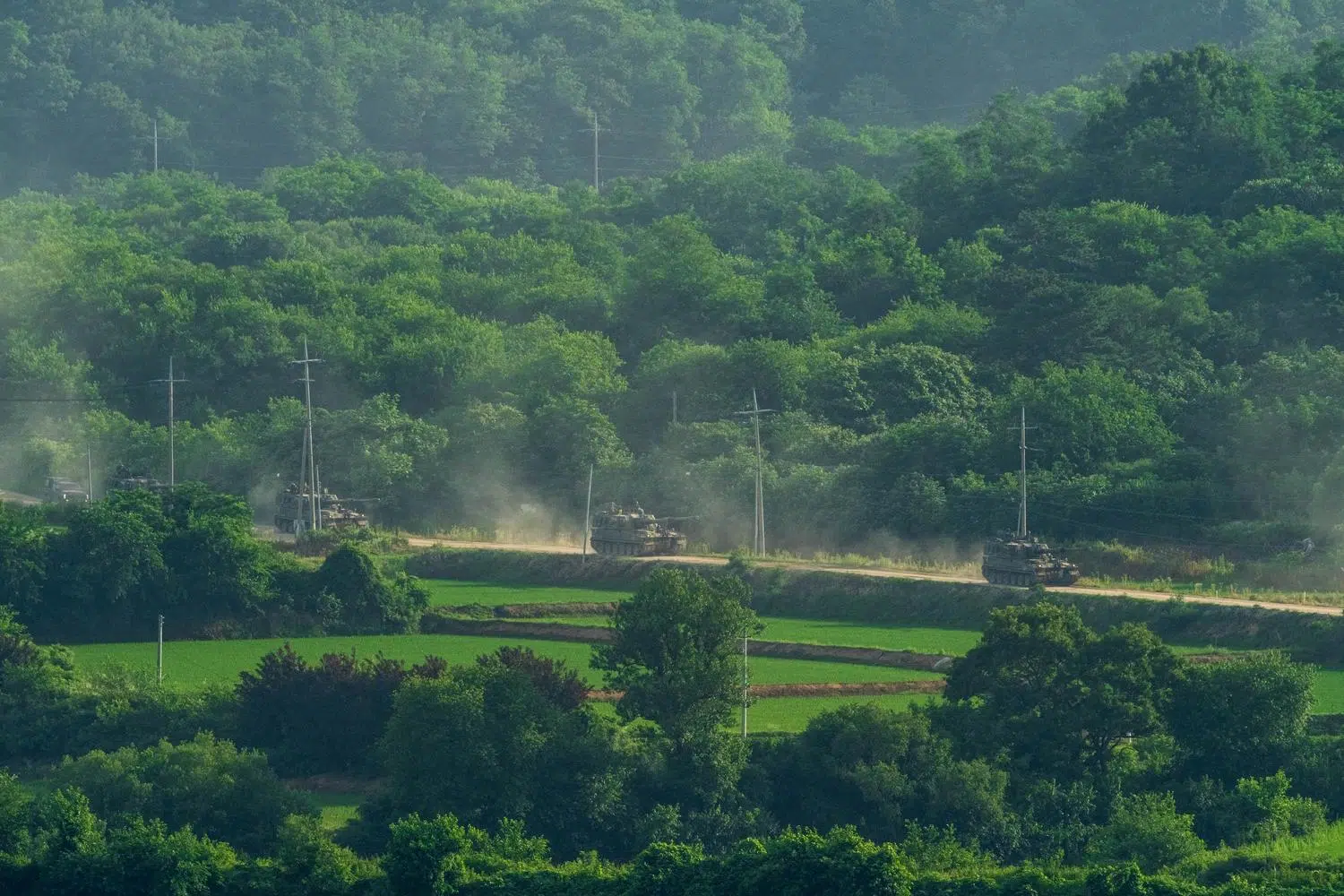
South Korean military exercises near the DMZ (June 2026)
OP (Observation Post): A military position established to monitor and report activity in a designated area. Along the Korean border, OPs are typically located on elevated terrain overlooking the Demilitarized Zone (DMZ) or other sensitive areas. Unlike Guard Posts (GP), which are defensive positions inside the DMZ, Observation Posts are primarily dedicated to surveillance and intelligence gathering. Some of them are accessible to civilian visitors.
OPCON (Operational Control): On the Korean Peninsula, the term refers to the authority to direct South Korean and U.S. military forces in the conduct of military operations. Since the creation of the Combined Forces Command (CFC) in 1978, wartime operational control of designated Republic of Korea Armed Forces units has been exercised through the combined command structure led by a U.S. general with a South Korean general as his deputy, a situation unique in the world. In peacetime, however, South Korean forces remain under the operational control of the Republic of Korea’s own military chain of command. The transfer of wartime OPCON to a future South Korean-led combined command has been a major issue in U.S.-ROK alliance discussions since the early 2000s.
PVA (People’s Volunteer Army): see Chinese People’s Volunteers (CPV) above.
ROK (Republic of Korea): Official name of South Korea.
ROKA (Republic of Korea Army): The South Korean army.
ROKAF (Republic of Korea Air Force): The South Korean air force.
ROKMC (Republic of Korea Marine Corps): South Korea’s amphibious warfare force and one of the four main branches of the Republic of Korea Armed Forces. Founded in 1949, the corps specializes in amphibious assaults, rapid-reaction operations, coastal defense, and the protection of strategically important islands. The ROKMC maintains a particularly strong presence in the West Sea Islands (WSI), which lie close to the Northern Limit Line (NLL).
ROKN (Republic of Korea Navy): The South Korean navy.
SBL (South Boundary Line): The southern limit of the Demilitarized Zone (DMZ). Also called Southern Limit Line (SLL).
SLL (Southern Limit Line ): Same as Southern Boundary Line (SBL) above.
Terms of Armistice (TOA): A term that collectively describes the provisions of the Armistice Agreement (AA) itself, as well as the supplementary agreements to the armistice and agreements related to armistice implementation.
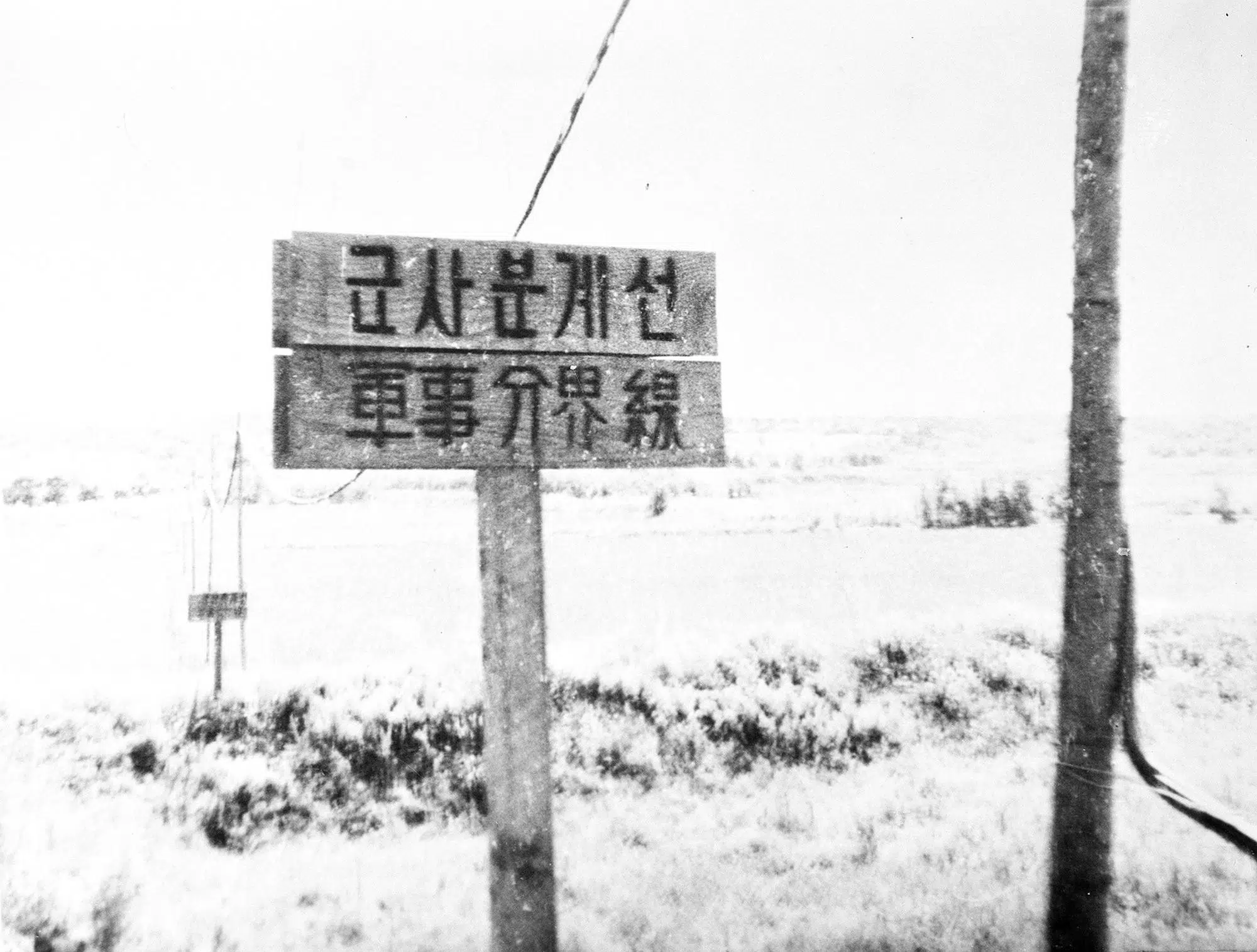
Third party content – A Military Demarcation Line (MDL) marker seen from the north side, written in Korean and Chinese, in 1957 (National Archives of Korea).
Three-Axis System: Also called Three-Pillar System. South Korea’s integrated defense strategy for countering North Korea’s nuclear and missile threats. Developed in response to Pyongyang’s advancing ballistic missile and nuclear weapons programs, it combines three complementary military capabilities: the Kill Chain, designed to detect and strike imminent missile threats before launch; Korea Air and Missile Defense (KAMD), intended to intercept missiles that have already been launched; and Korea Massive Punishment and Retaliation (KMPR), a doctrine aimed at deterring aggression through the threat of overwhelming retaliatory strikes against North Korea’s leadership and strategic assets. Together, these three components form the core of South Korea’s deterrence and defense posture.
TC (Transportation Corridor): A designated route crossing the Korean Demilitarized Zone (DMZ) that allows the controlled movement of people, vehicles, and goods between North and South Korea. Established through inter-Korean agreements and coordinated under armistice procedures, these corridors were created to support cooperative projects such as the Kaesong Industrial Complex and tourism to Mount Kumgang on the east coast of the Peninsula. The two corridors are now completely closed, as North Korea has mined them and blocked them with trenches and anti-tank obstacles.
UNC (United Nations Command): A multinational military command established in July 1950 to coordinate the forces supporting South Korea during the Korean War. Led by the United States and operating under a United Nations mandate, the UNC brought together military contingents from 16 countries that contributed combat forces to the conflict. Following the signing of the Armistice Agreement in 1953, the command remained in place to help maintain the armistice and oversee its implementation. Its headquarters are located nowadays at Camp Humphreys in Pyeongtaek, south of Seoul.
UNC-CDR (Commander, United Nations Command): The senior military officer responsible for leading the United Nations Command (UNC). Since the creation of the UNC, the position has always been held by a United States Army four-star general who simultaneously serves as Commander of United States Forces Korea (USFK) and, in wartime planning, Commander of the Combined Forces Command (CFC).
UNCMAC (United Nations Command Military Armistice Commission): The United Nations Command’s (UNC) component of the Military Armistice Commission (MAC). Although the MAC has not functioned as originally intended for many years, UNCMAC remains active. Its personnel are drawn from the United States, South Korea, the United Kingdom and rotating officers from other UNC countries, all appointed by the UNC Commander (UNC-CDR). The 1991 appointment, the first of its kind, of a South Korean Army general, whose country is not a signatory to the Armistice Agreement, to the UNCMAC triggered North Korea’s boycott of the MAC, which has continued ever since.
UNCMAC-S (United Nations Command Military Armistice Commission-Secretariat): The administrative and operational staff element that supports the United Nations Command Military Armistice Commission (UNCMAC). Its role is to maintain records, coordinate communications, manage access procedures, prepare official documentation, and support inspections, visits, and activities within areas governed by the Armistice Agreement.
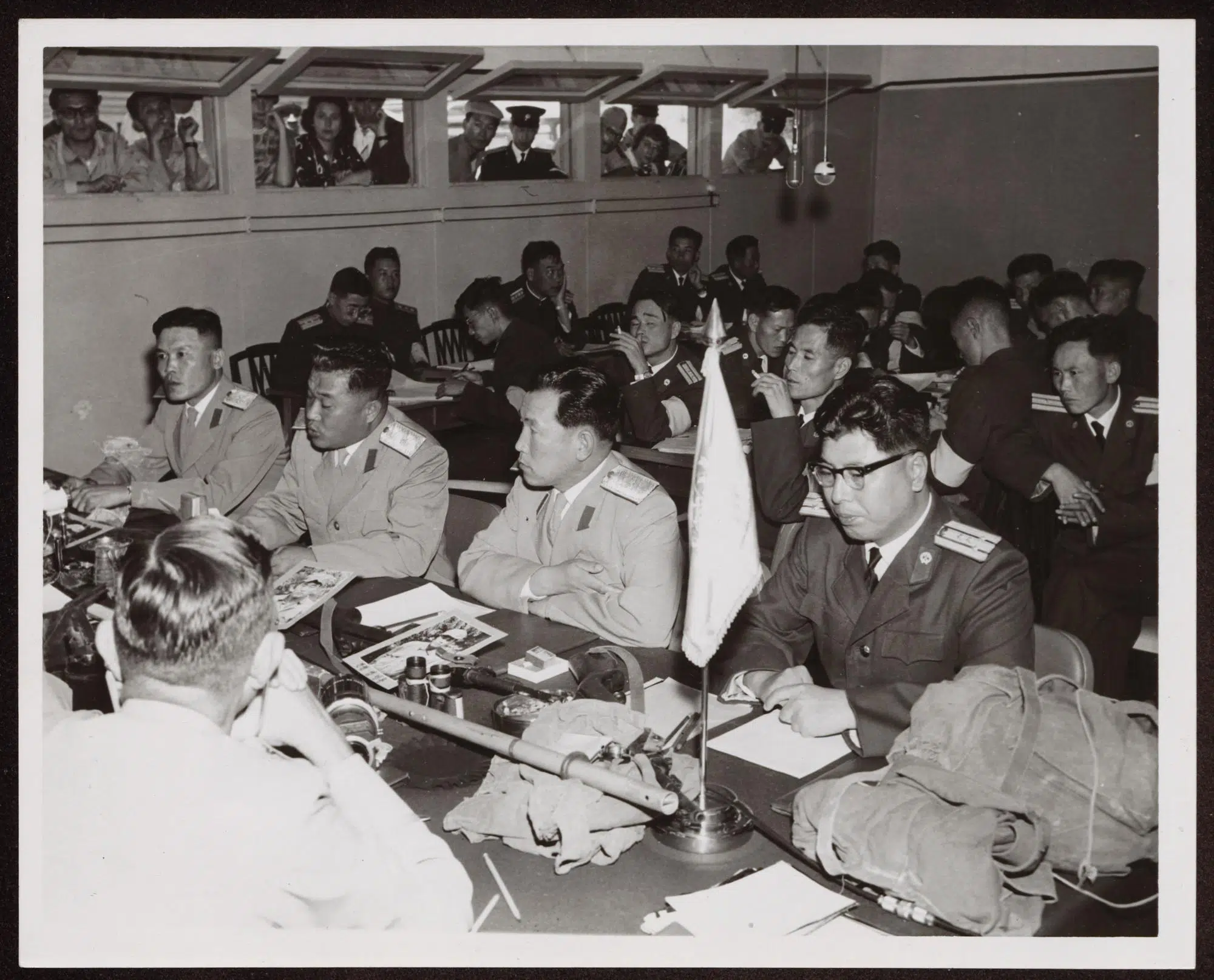
Third party content – The communist side representatives at a Military Armistice Commission (MAC) meeting in 1963 in Panmunjeom (Michael J. Zagray Collection, East Carolina University).
UNMCK (United Nations Memorial Cemetery in Korea): Established in Busan during the Korean War (1950-1953), it is the only cemetery in the world administered by the United Nations. The site contains the graves of more than 2,300 military personnel from UN member states who died during the conflict.
UNCSB-JSA (United Nations Command Security Battalion-Joint Security Area): The military unit responsible for security within the Joint Security Area (JSA) at Panmunjeom, and for ensuring the safety of civilians in the village of Daesong-dong in the DMZ. Operating under the United Nations Command (UNC) and based at Camp Bonifas, on the edge of the DMZ, the unit is historically composed of both U.S. and South Korean personnel. It traces its origins to the Joint Security Force (JSF), which guarded the JSA during the Cold War. Since the 2000s, its day-to-day operations have increasingly relied on South Korean personnel, while the unit remains under the authority of the UNC. See Joint Security Area.
USFK (United States Forces Korea): The unified command responsible for all U.S. military forces stationed in South Korea. Established in 1957, and now headquartered at Camp Humphreys in Pyeongtaek, south of Seoul, USFK coordinates the activities of U.S. Army, Air Force, Navy, Marine Corps, and Space Force personnel assigned to Korea. While closely linked to both the Combined Forces Command (CFC) and the United Nations Command (UNC), USFK is a separate organization. It represents one of the largest permanent overseas deployments of U.S. military personnel.
WSI (West Sea Islands): Also called Northwest Islands (NWI). A group of South Korean-controlled islands located in the Yellow Sea (known in Korea as the West Sea), close to the North Korean coast and near the Northern Limit Line (NLL). The term refers to the five inhabited islands of Baengnyeong-do, Daecheong-do, Socheong-do, Yeonpyeong-do, and U-do, which remained under United Nations Command (UNC) and South Korean control after the Korean War. Because of their proximity to North Korea, the islands have long held strategic military importance and have been the scene of several inter-Korean naval clashes and military incidents, including the shelling of Yeonpyeong Island in 2010.
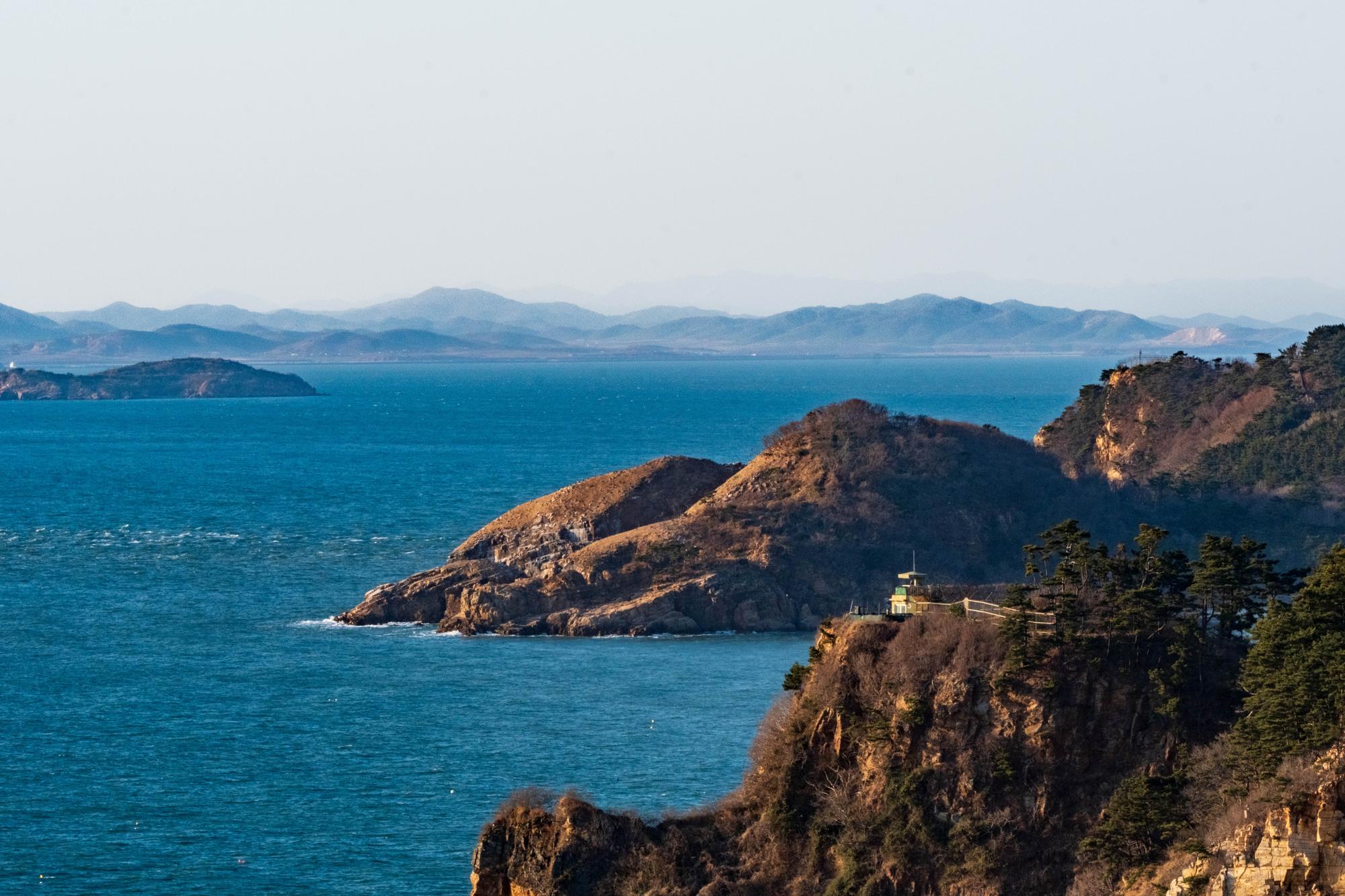
The North Korean mainland seen from the remote South Korean island of Yeonpyeong (March 2025).
This glossary was last updated on: September 26, 2026.